ToolMage
Sign in

Best 5 Chatbot AI tools for Ai Tools

Popular Chatbot AI tools in Ai Tools include Talkberry, Castello.ai, UX Design GPT, Math.bot, and bestflights.ai, helping you work more efficiently.

Castello.ai
Freemium

Castello.ai

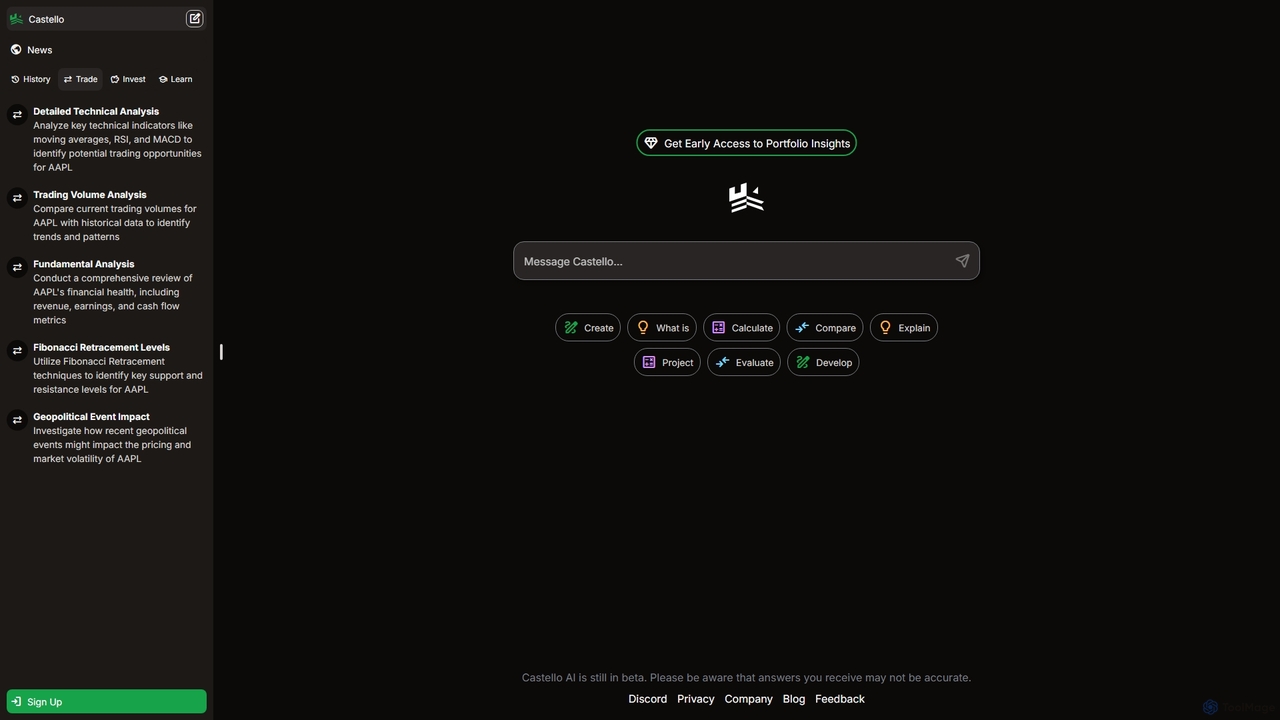
Castello.ai is a conversational AI platform designed for investors and traders. It simplifies complex financial analysis by providing detailed technical, fundamental, and geopolitical insights through a user-friendly chat interface. Ask questions in natural language to get instant, data-driven analysis on stocks and market trends, empowering you to make smarter investment decisions.

Chatbot
Visits 4.9KFavorites 137Likes 114
Math.bot
Freemium

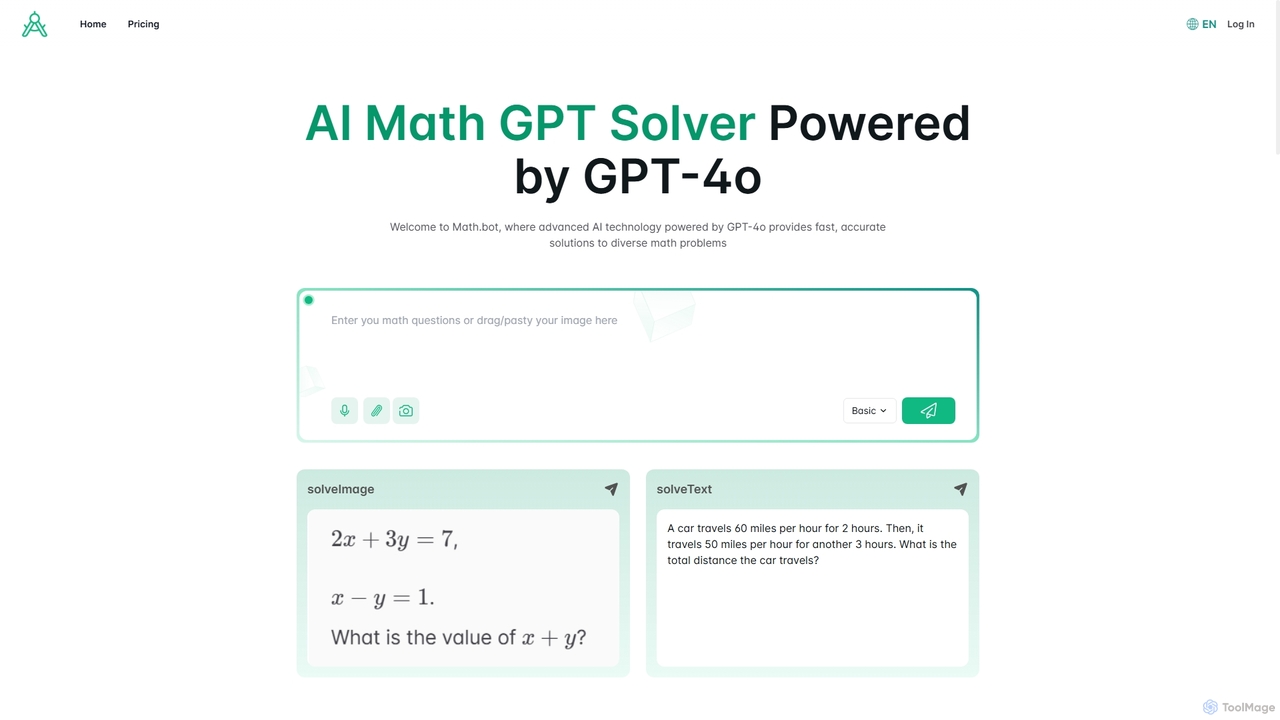
Math.bot

Math.bot is an advanced AI math solver powered by GPT-4o. It provides instant, step-by-step solutions for a wide range of math problems, from algebra to calculus. Users can upload a photo, type a problem, or use the interactive chat tutor for homework help, exam preparation, and mastering complex concepts 24/7.

Chatbot
Visits 4.1KFavorites 108Likes 99
UX Design GPT
Freemium

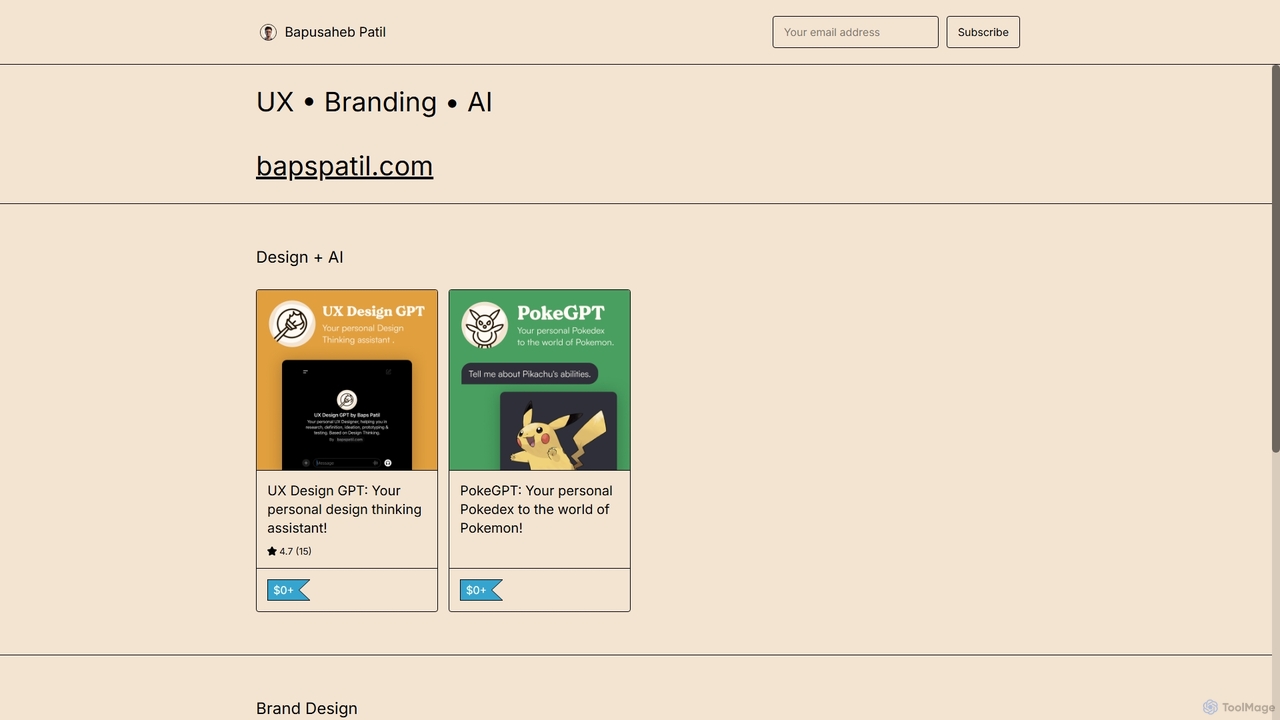
UX Design GPT

UX Design GPT is a personal AI assistant for designers, built on the Design Thinking framework. Powered by OpenAI and enriched with over 6 years of the creator's real-world expertise, it guides users through research, ideation, prototyping, and testing to streamline the entire UX design workflow.

Chatbot
Visits 4.1KFavorites 78Likes 89
bestflights.ai
Free

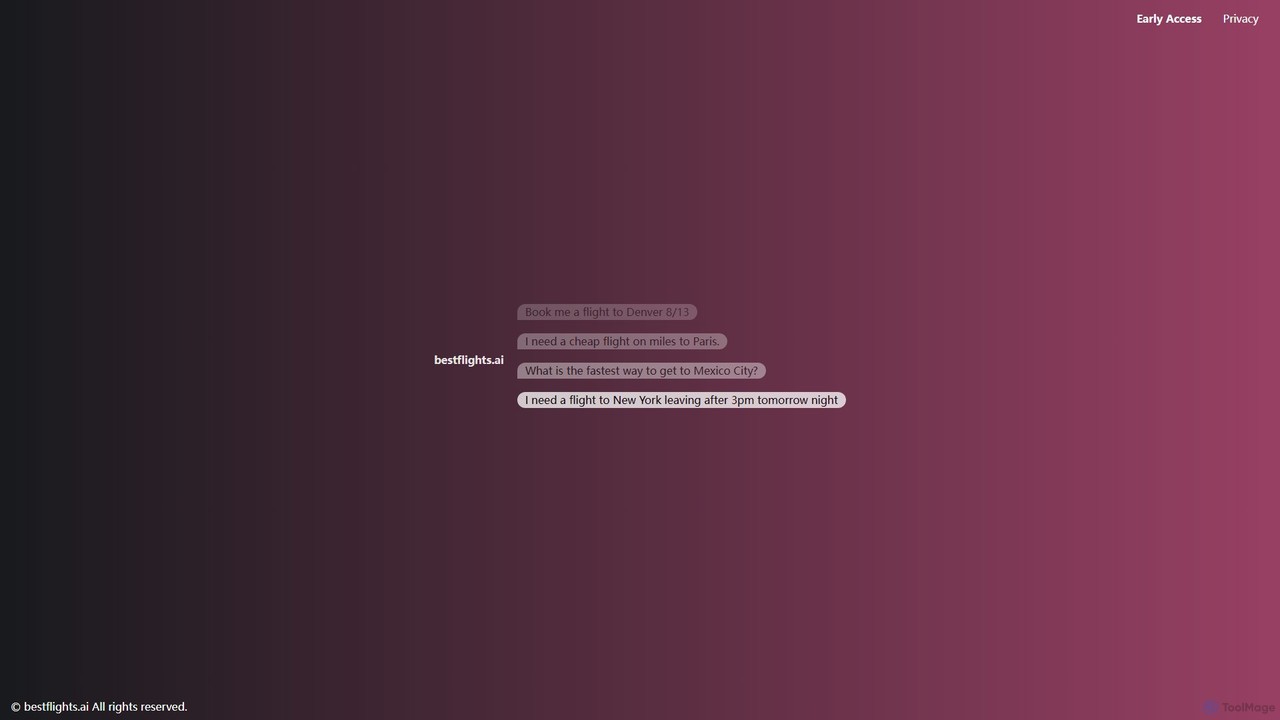
bestflights.ai

bestflights.ai is an AI-powered flight search engine that uses natural language to find the best travel options. Simply type your request, like "cheap flight to Paris on miles," and the AI assistant will instantly search and present curated flight deals, simplifying the booking process.

Chatbot
Visits 4.1KFavorites 84Likes 96
Talkberry
Freemium

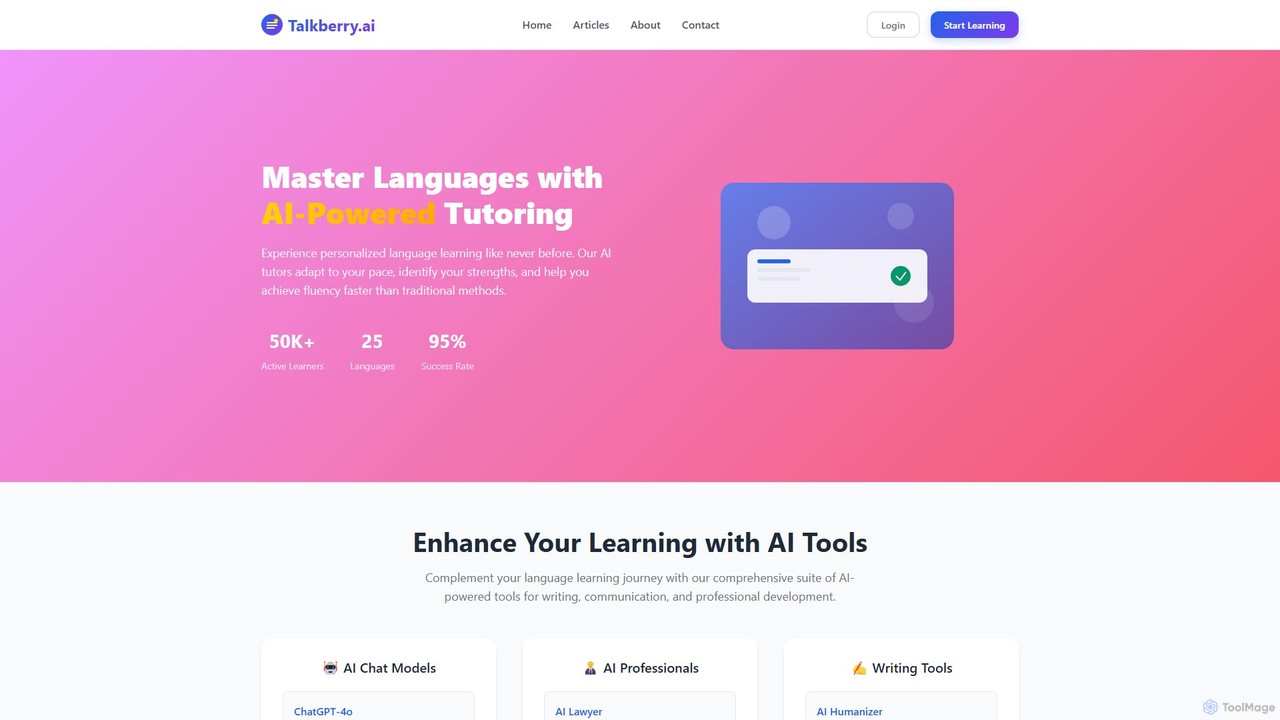
Talkberry

Talkberry is an AI-powered platform revolutionizing language learning. It offers personalized tutoring with real-time feedback on pronunciation and grammar, interactive conversations in realistic scenarios, and an adaptive curriculum. Beyond language, Talkberry provides a comprehensive suite of AI tools, including professional assistants (AI Lawyer, Psychologist), advanced writing aids, and communication enhancers, making it a versatile tool for both personal and professional development.

Chatbot
Visits 5KFavorites 150Likes 151

About Chatbot

Chatbot tools are AI-powered applications designed to simulate human conversation through text or voice. They leverage Natural Language Processing (NLP) and Large Language Models (LLMs) to understand user intent and provide relevant, real-time responses. These tools are widely used to automate customer support, generate leads, and provide personalized user experiences 24/7. Unlike simple rule-based bots, modern AI chatbots can handle complex queries, learn from interactions, and maintain conversational context.

Core Features

  • Natural Language Understanding (NLU): Accurately interpret user intent, entities, and sentiment from unstructured text and voice inputs.
  • Conversational Flow Builder: Visually design and manage multi-turn dialogue paths, often with no-code or low-code interfaces.
  • Multi-channel Integration: Deploy seamlessly across websites, mobile apps, and messaging platforms like WhatsApp, Slack, or Facebook Messenger.
  • Knowledge Base Integration: Connect to internal documents, FAQs, or external APIs to provide accurate and up-to-date information.
  • Analytics and Reporting: Track key metrics such as user engagement, resolution rates, and common queries for continuous improvement.

Applicable Scenarios

Chatbots are invaluable in sectors like e-commerce for product recommendations and order tracking, in healthcare for appointment scheduling, and in finance for account inquiries. They serve roles from customer service agents aiming to reduce response times to marketing teams looking to qualify leads automatically.

Selection Criteria

When selecting a chatbot tool, evaluate its NLP capabilities and language support. Consider the ease of use of its conversation builder and the range of available integrations with your existing CRM or helpdesk software. Also, assess the analytics features for performance tracking and the scalability of its pricing model as your user base grows.

Featured tool rankings

Chatbot use cases

1

Automate 24/7 Customer Support

An e-commerce store manager uses an AI chatbot to provide instant support outside of business hours. The chatbot is integrated with their knowledge base to answer common questions about shipping policies, return procedures, and product specifications. For order-specific inquiries, it securely accesses the order management system to provide real-time status updates. This approach reduces support ticket volume by over 40% and significantly improves customer satisfaction by offering immediate assistance at any time.

2

Qualify Sales Leads on a Website

A marketing manager for a B2B SaaS company deploys a chatbot on their pricing page. The bot proactively engages visitors, asking qualifying questions about their company size, role, and specific needs. Based on the responses, it can direct high-value prospects to book a demo directly in a sales representative's calendar or guide smaller leads to a self-service trial. This automated process increases qualified lead capture by 25% and ensures the sales team spends their time on the most promising opportunities.

3

Streamline New Employee Onboarding

An HR department uses a chatbot to create a consistent and engaging onboarding experience. The bot, integrated into the company's communication platform like Slack, guides new hires through essential first-day tasks, such as setting up accounts and completing paperwork. It also serves as an always-on resource for answering common questions about company policies, benefits, and IT setup. This frees up HR personnel from repetitive inquiries and helps new employees feel supported and productive from day one.

4

Provide Personalized Product Recommendations

An online fashion retailer implements a chatbot as a personal shopping assistant. The bot initiates a conversation by asking about the user's style preferences, occasion, and budget. Using this information, it queries the product catalog via an API and presents a curated selection of items. It can also suggest complementary accessories to complete an outfit. This interactive and personalized approach boosts conversion rates by making the discovery process easier and more engaging for shoppers, leading to a higher average order value.

5

Automate Internal IT Helpdesk Support

An IT support lead in a large corporation implements a chatbot to handle common employee technical issues. The bot is trained on the IT knowledge base and can guide users through troubleshooting steps for problems like Wi-Fi connectivity, VPN setup, and software installation. For more complex issues, such as password resets, it integrates with identity management systems to perform the action securely. This automation resolves over 50% of routine IT tickets instantly, freeing up the helpdesk team to focus on critical infrastructure tasks.

6

Gather User Feedback and Conduct Surveys

A product manager for a mobile app uses a chatbot to collect in-context user feedback. Instead of relying on email surveys with low response rates, the chatbot can be triggered within the app after a user completes a specific action, like using a new feature. It asks a few short, targeted questions in a conversational manner. This method results in higher engagement and provides the product team with immediate, contextual insights that are more valuable for informing future development and improving the user experience.

Chatbot FAQ

What is an AI Chatbot?

An AI Chatbot is a software program that uses artificial intelligence, particularly Natural Language Processing (NLP), to simulate human-like conversations with users. Unlike older rule-based bots that follow rigid scripts, AI chatbots can understand user intent, handle variations in language, and learn from interactions to improve their responses over time. They are commonly used on websites, in apps, and on messaging platforms to provide 24/7 customer support, generate leads, and automate tasks.

How to choose the right Chatbot tool?

To choose the right chatbot tool, consider these key factors:

  • NLU Quality: Assess how well the bot understands user intent and context, especially for your industry's specific terminology.
  • Ease of Use: Look for a visual, no-code or low-code conversation builder that allows your team to create and update flows easily.
  • Integration Capabilities: Ensure it can connect seamlessly with your essential systems, such as CRM, helpdesk software, and messaging platforms.
  • Analytics: The tool should provide clear dashboards to track performance, identify user pain points, and measure ROI.
  • Scalability: Choose a platform with a pricing model that can grow with your business and handle increasing conversation volumes.
What's the difference between an AI Chatbot and a rule-based bot?

The main difference lies in how they process information. A rule-based bot follows a predefined script or decision tree. It relies on specific keywords and can only respond to questions it has been explicitly programmed to answer. In contrast, an AI Chatbot uses Natural Language Processing (NLP) to understand the meaning and intent behind a user's query, even if it's phrased in different ways. AI chatbots can handle more complex conversations, learn from data, and provide more flexible, human-like interactions, while rule-based bots are best for simple, repetitive FAQ tasks.

What are the key features of a modern Chatbot platform?

Modern chatbot platforms typically offer a suite of powerful features. Key among them are a sophisticated Natural Language Understanding (NLU) engine to interpret user input, a visual drag-and-drop conversation builder for easy creation of dialogue flows, and multi-channel deployment options for web, mobile, and social messaging. They also include robust integration capabilities with third-party systems like CRMs and APIs, detailed analytics for monitoring performance, and often support for multiple languages to serve a global audience.

Who can benefit from using a Chatbot?

A wide range of businesses and roles can benefit from chatbots. E-commerce companies use them to automate support and boost sales. B2B businesses leverage them for lead generation and qualification. HR departments streamline onboarding and internal queries. IT teams automate helpdesk tasks. Essentially, any organization that deals with a high volume of repetitive inquiries or wants to provide instant, 24/7 engagement can significantly improve efficiency and user experience by implementing a chatbot.