Figflow is an AI-powered tool that automates the conversion of Figma designs into developer-ready user stories. With a single click, it generates clear, structured documentation, including acceptance criteria, test scenarios, and story point estimations, streamlining the design-to-development handoff and saving teams hours of manual work.

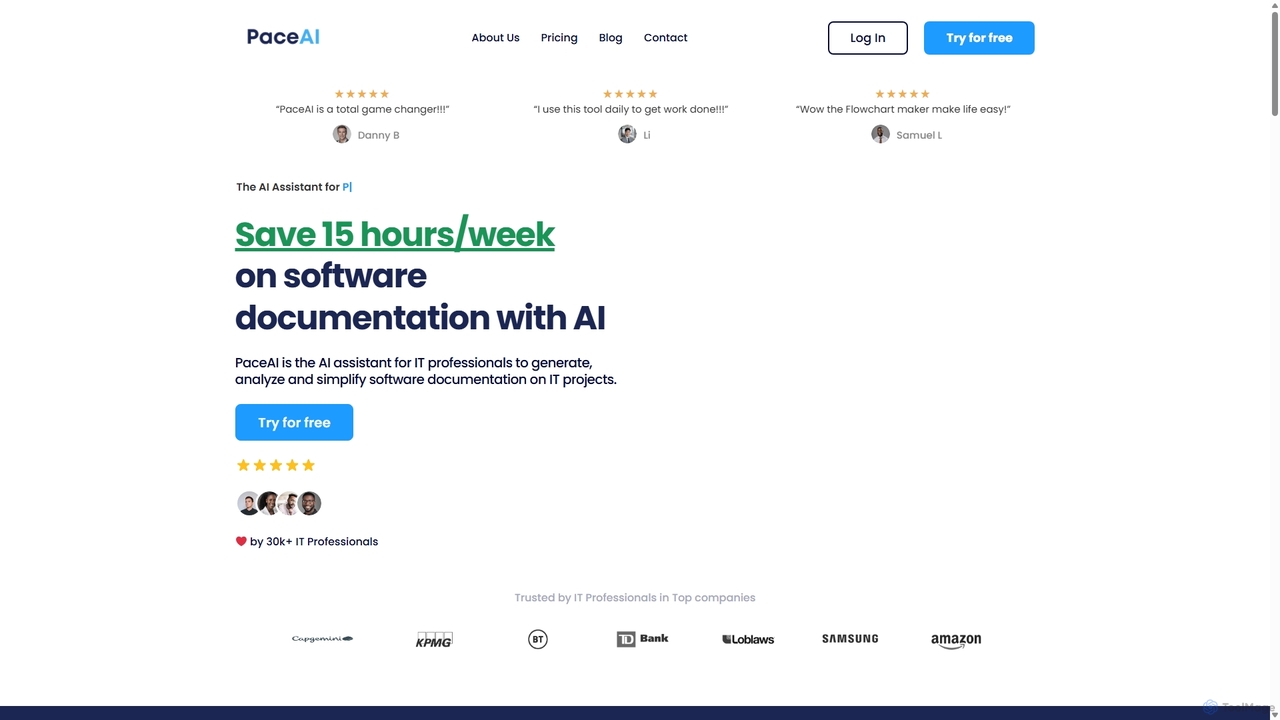
PaceAI is an AI-powered assistant for IT professionals, designed to streamline software documentation. It offers over 35 specialized tools to generate, analyze, and simplify documents across the entire software development lifecycle (SDLC). From creating user stories and business requirements to generating flowcharts and product visions, PaceAI helps teams save significant time, improve communication, and ensure clarity on IT projects. It's trusted by over 30,000 professionals to enhance productivity and collaboration.
Product overview
Figflow Product overview
Figflow is an AI-powered tool that automates the conversion of Figma designs into developer-ready user stories. With a single click, it generates clear, structured documentation, including acceptance criteria, test scenarios, and story point estimations, streamlining the design-to-development handoff and saving teams hours of manual work.

PaceAI Product overview
PaceAI is an AI-powered assistant for IT professionals, designed to streamline software documentation. It offers over 35 specialized tools to generate, analyze, and simplify documents across the entire software development lifecycle (SDLC). From creating user stories and business requirements to generating flowcharts and product visions, PaceAI helps teams save significant time, improve communication, and ensure clarity on IT projects. It's trusted by over 30,000 professionals to enhance productivity and collaboration.
Detailed feature comparison
| Feature | Figflow | PaceAI |
|---|---|---|
| Primary category | Design Handoff | Requirements Management |
| Added | 2025-08-13 | 2025-08-04 |
| Pricing | Freemium | Freemium |
| Official website | www.figflow.io | paceai.co |
| Product type | Website | Website |
| Performance data | ||
| User rating | Not verified | Not verified |
| Comments | 0 | 0 |
| Monthly visits | 1.2K | 3.4K |
| Monthly growth | 20% | -32.8% |
| Favorites | 105 | 116 |
| Details | View details | View details |
Figflow vs PaceAI monthly traffic
Compare Figflow and PaceAI by monthly reach, traffic trend, visit depth, top regions, and acquisition sources.
How to interpret the traffic data
In the Figflow vs PaceAI monthly traffic comparison, Figflow currently shows 1.2K visits and PaceAI shows 3.4K; PaceAI has about 2.9 times the visible traffic of Figflow, an absolute difference of about 2.3K visits. This reflects visible reach, not feature quality or paid users.
Both tools provide verified traffic details, so monthly trends, visit depth, regions, and acquisition sources can be compared on the same basis.
Figflow monthly traffic:
Latest traffic
Monthly traffic trend
- 2025/9: 359 Monthly visits
- 2026/1: 2K Monthly visits
- 2026/2: 2.5K Monthly visits
- 2026/3: 1.2K Monthly visits
- 2026/4: 987 Monthly visits
- 2026/5: 1.2K Monthly visits
Top regions
Top 5 countries/regions
| Country/region | Percentage | Traffic |
|---|---|---|
| 🇧🇷Brazil | 64.9% | 768 |
| 🇿🇦South Africa | 35.1% | 416 |
Search keywords
PaceAI monthly traffic:
Latest traffic
Monthly traffic trend
- 2025/9: 14.7K Monthly visits
- 2026/1: 7.3K Monthly visits
- 2026/2: 4.4K Monthly visits
- 2026/3: 5.5K Monthly visits
- 2026/4: 5.1K Monthly visits
- 2026/5: 3.4K Monthly visits
Top regions
Top 5 countries/regions
| Country/region | Percentage | Traffic |
|---|---|---|
| 🇺🇸United States | 70.35% | 2.4K |
| 🇮🇳India | 29.65% | 1K |
Search keywords
Usage comparison
Compare the core capabilities of Figflow and PaceAI
Figflow Core features
PaceAI Core features
Use cases
Figflow Use cases
PaceAI Use cases
Figflow vs PaceAI:In-depth comparison and selection guidance
First decide whether the products solve the same kind of need
This in-depth Figflow vs PaceAI comparison uses only the product records, taxonomy, audience, traffic, and community signals available on this page. Figflow is primarily listed under “Design Handoff”, while PaceAI is primarily listed under “Requirements Management”, so the first decision is whether your actual task matches their recorded scope.
The structured fields currently show these decision-relevant differences: Primary category (Figflow: Design Handoff; PaceAI: Requirements Management); Monthly visits (Figflow: 1.2K; PaceAI: 3.4K); Monthly growth (Figflow: 20%; PaceAI: -32.8%); Favorites (Figflow: 105; PaceAI: 116); Website (Figflow: www.figflow.io; PaceAI: paceai.co). These facts are more useful for selection than brand visibility alone.
What market visibility and monthly traffic mean
In the Figflow vs PaceAI monthly traffic comparison, Figflow currently shows 1.2K visits and PaceAI shows 3.4K; PaceAI has about 2.9 times the visible traffic of Figflow, an absolute difference of about 2.3K visits. This reflects visible reach, not feature quality or paid users.
Both tools provide verified traffic details, so monthly trends, visit depth, regions, and acquisition sources can be compared on the same basis.
If public market visibility is an important first-pass criterion, investigate PaceAI first. The final choice should still follow taxonomy, use case, and a real trial because higher traffic does not prove broader capabilities or better workflow fit.
Product positioning, use cases, and roles
Figflow and PaceAI currently overlap in shared categories: Documentation and Project Management; shared tags: agile development, product management, and project management. This can place both on the same shortlist, but it does not prove equal implementation, depth, or cost.
Figflow's unique categories/tags are Design Handoff, design handoff, design to code, developer tools, documentation, figma, productivity, and user stories; PaceAI's are Requirements Management, business analysis, flowchart maker, IT professional, requirements generation, SDLC, software documentation, and user story. These unique fields are the strongest differentiators: validate the product whose recorded scope matches the task instead of following traffic alone.
What ratings, comments, and favorites can tell you
Figflow has no verified rating, 0 comments, 105 favorites, and 95 likes;PaceAI has no verified rating, 0 comments, 116 favorites, and 122 likes。
Neither product has enough rating or comment samples for a credible reputation ranking.
Selection guidance by actual need
When to evaluate Figflow first
Put Figflow on the priority trial list when the task aligns with “Design Handoff” and especially Design Handoff, design handoff, design to code, developer tools, documentation, and figma. This follows recorded positioning and does not imply unlisted capabilities are absent.
Figflow also currently records: pricing is freemium, product type is website, 1.2K verified monthly visits, no verified user rating. Verify any hard requirement around price, platform, or reach before trial, and do not let sparse review data substitute for testing.
When to evaluate PaceAI first
Put PaceAI on the priority trial list when the task aligns with “Requirements Management” and especially Requirements Management, business analysis, flowchart maker, IT professional, requirements generation, and SDLC. This follows recorded positioning and does not imply unlisted capabilities are absent.
PaceAI also currently records: pricing is freemium, product type is website, 3.4K verified monthly visits, no verified user rating. Verify any hard requirement around price, platform, or reach before trial, and do not let sparse review data substitute for testing.
How to validate the recommendation before deciding
The available data describes positioning, public visibility, and community signals, but it cannot prove output quality, speed, integration effort, privacy, or long-term cost in your workflow. Before deciding, run the same representative tasks in Figflow and PaceAI, then record completion time, accuracy, manual corrections, and the real paid threshold. A like-for-like trial turns this comparison into a defensible adoption decision.
Comparison FAQ
How should I choose between Figflow and PaceAI?
Where does this comparison data come from?
What do unknown fields mean?
Related AI tools

PaceAI
PaceAI is an AI-powered assistant designed for IT professionals to streamline the software development lifecycle (SDLC). It automates the generation, analysis, and simplification of software documentation, saving users up to 15 hours per week. With over 35 specialized tools, it helps create user stories, business requirements, flowcharts, and product vision documents, ensuring clarity and reducing miscommunication between technical and business teams.
Documentation
Userdoc
Userdoc is an AI-powered software requirements platform that helps modern teams build better software faster. It automates the creation of user stories, acceptance criteria, test cases, and technical specifications, and can even reverse-engineer existing code into clear documentation. It's designed to improve collaboration, reduce rework, and serve as a single source of truth for development projects.
Code Assistant
Ticket Artisan
Ticket Artisan is an AI-powered tool that transforms UI design screenshots into detailed, developer-ready tickets for project management platforms like Jira and Asana. It automates the tedious process of writing user stories and technical tasks, bridging the gap between design and development. By analyzing visual elements, it helps product managers, designers, and developers streamline sprint planning, reduce ambiguity, and accelerate the development lifecycle, ensuring design fidelity is maintained from concept to code.
Handoff
Stoorai
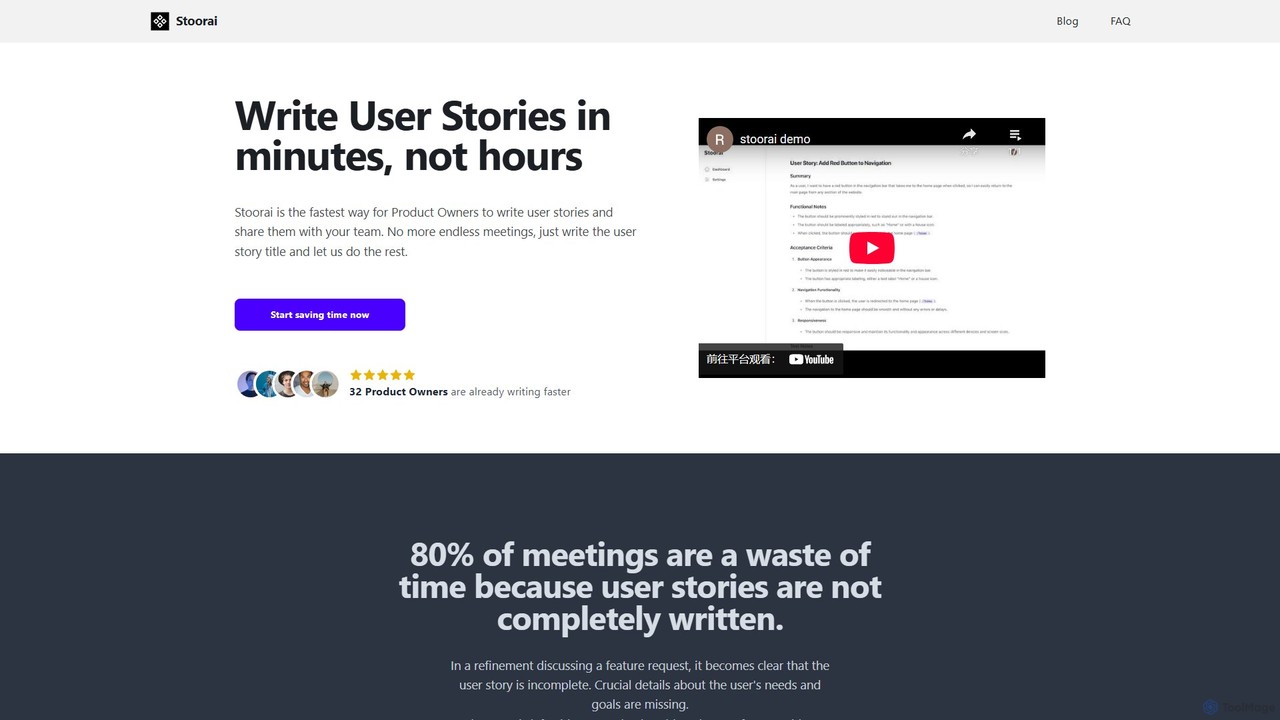
Stoorai is an AI-powered tool designed for Product Owners and agile teams to generate comprehensive user stories in minutes. By simply providing a title, users can create detailed, well-structured stories, saving hours of writing time, reducing meeting fatigue, and improving team clarity and productivity.
Agile Development
metastory
metastory is an AI-powered platform designed for Product Owners and Business Analysts to accelerate and streamline the requirement gathering process. It combines AI assistance for generating user stories and specs with UI-based documentation and seamless JIRA and Figma integration, acting as an intelligent pre-Jira tool.
Planning
prdkit
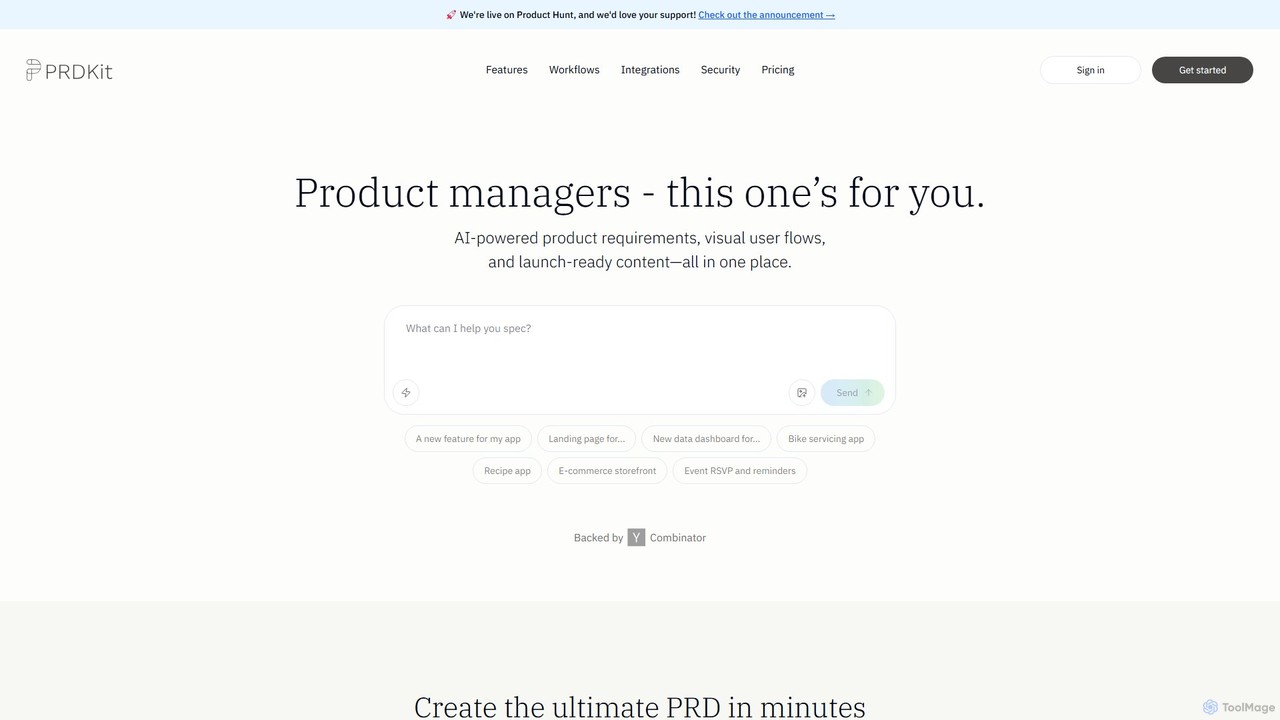
prdkit is an AI-powered platform designed for product managers to streamline the creation of product requirements documents (PRDs), visual user flows, and launch-ready content. By simply chatting with the AI, users can transform ideas into comprehensive, structured documentation and visual assets in minutes, accelerating the entire product development lifecycle.
Product Management
Reqops
Reqops is an AI-powered platform that automates the software requirements process. It transforms UX designs, documents, and other artifacts into detailed, implementation-ready requirements, user stories, and test cases in minutes. Designed for product managers, designers, and developers, it streamlines workflows, enhances collaboration, and accelerates the software delivery lifecycle.
Prototyping
Signlz
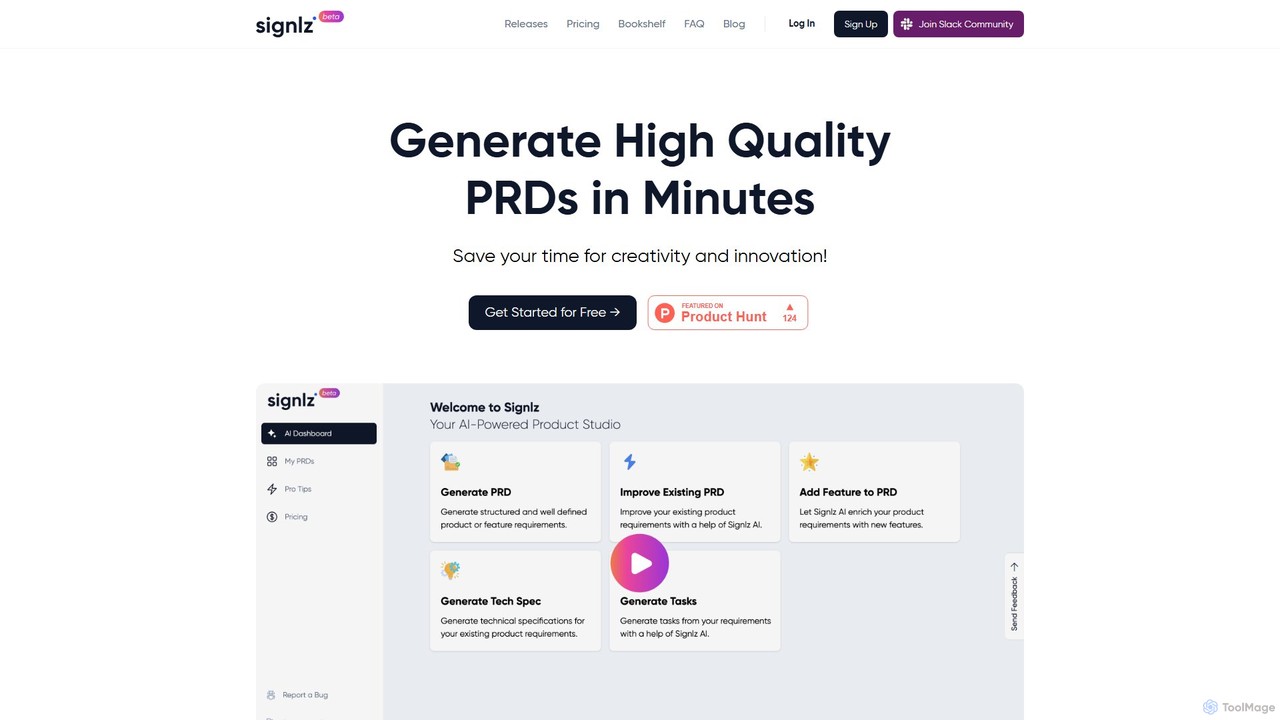
Signlz is an AI-powered platform designed for product managers to streamline the creation of Product Requirements Documents (PRDs). It transforms simple prompts into structured, professional PRDs, technical specifications, and actionable user stories. With seamless Jira integration and a specialized knowledge base of product management frameworks, Signlz automates tedious documentation, allowing product teams to focus on innovation and strategy.
Workflow Automation
Full.CX
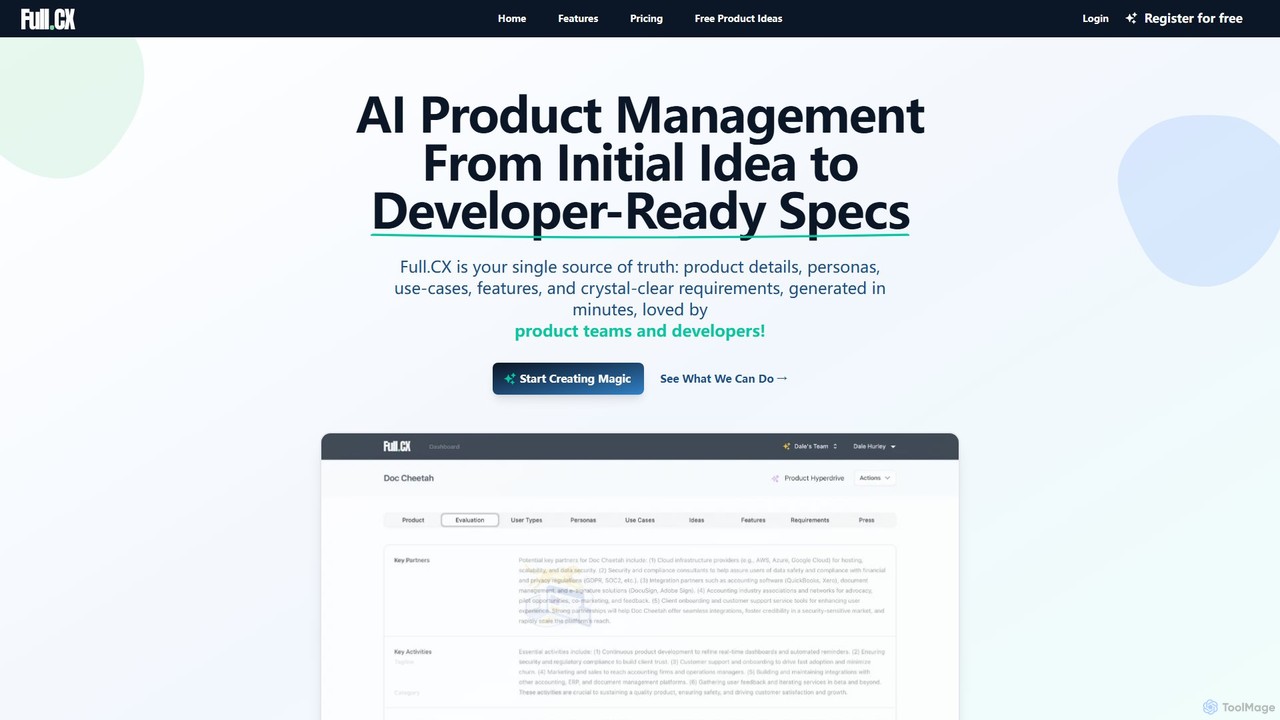
Full.CX is an AI-powered product management platform designed to transform ideas into developer-ready specifications. It streamlines the entire process from ideation to creating detailed product profiles, user personas, features, and acceptance criteria, fostering better collaboration between product teams and developers.
Documentation
Gluecharm
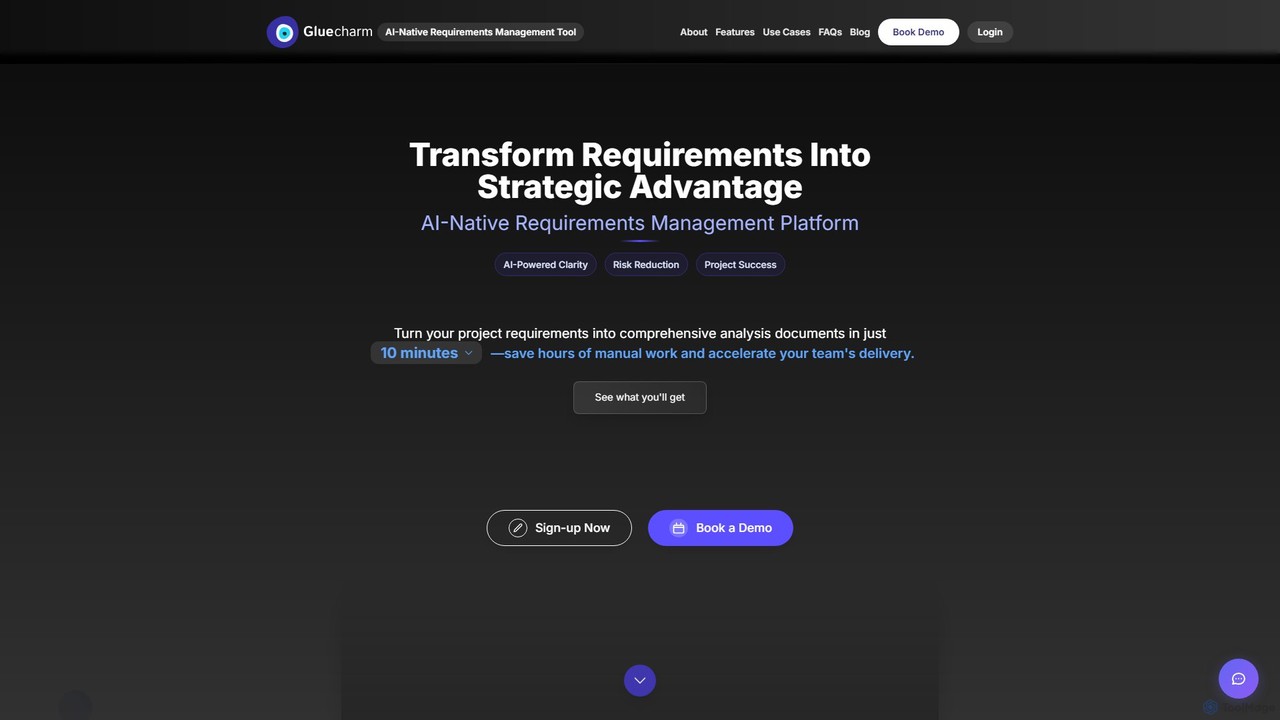
Gluecharm is an AI-native requirements management platform designed to streamline the software development lifecycle. It automates the gathering, analysis, and documentation of project requirements, transforming stakeholder inputs into comprehensive specifications and actionable user stories in minutes, saving significant time and reducing project risks.
Requirements Management
Proddy.io
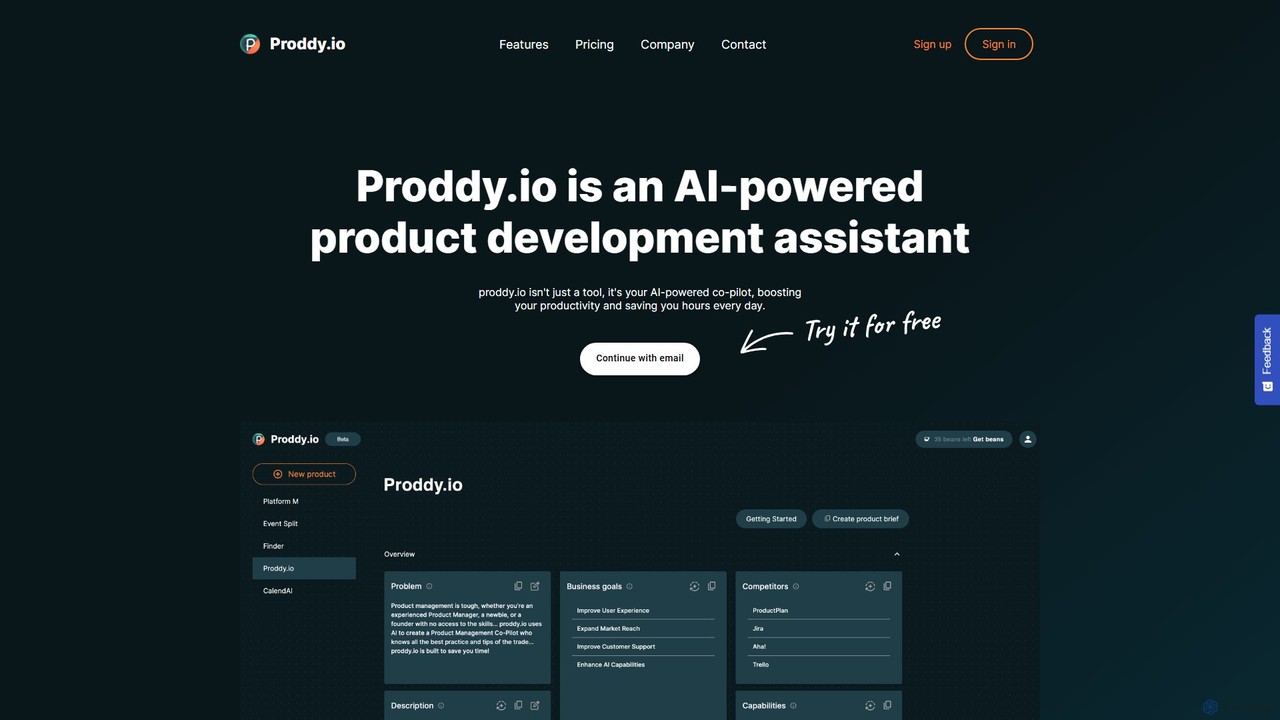
Proddy.io is an AI-powered co-pilot for product managers, designed to streamline the entire product development lifecycle. It transforms simple instructions into professional product documentation, such as detailed product briefs, user stories, and release notes, in minutes. By automating tedious documentation tasks and analyzing customer feedback, Proddy.io saves product teams hours of work, allowing them to focus on strategy and innovation. It's the ideal assistant for product managers, founders, and entrepreneurs looking to accelerate their workflow and build better products faster.
Project Management
ChatPRD
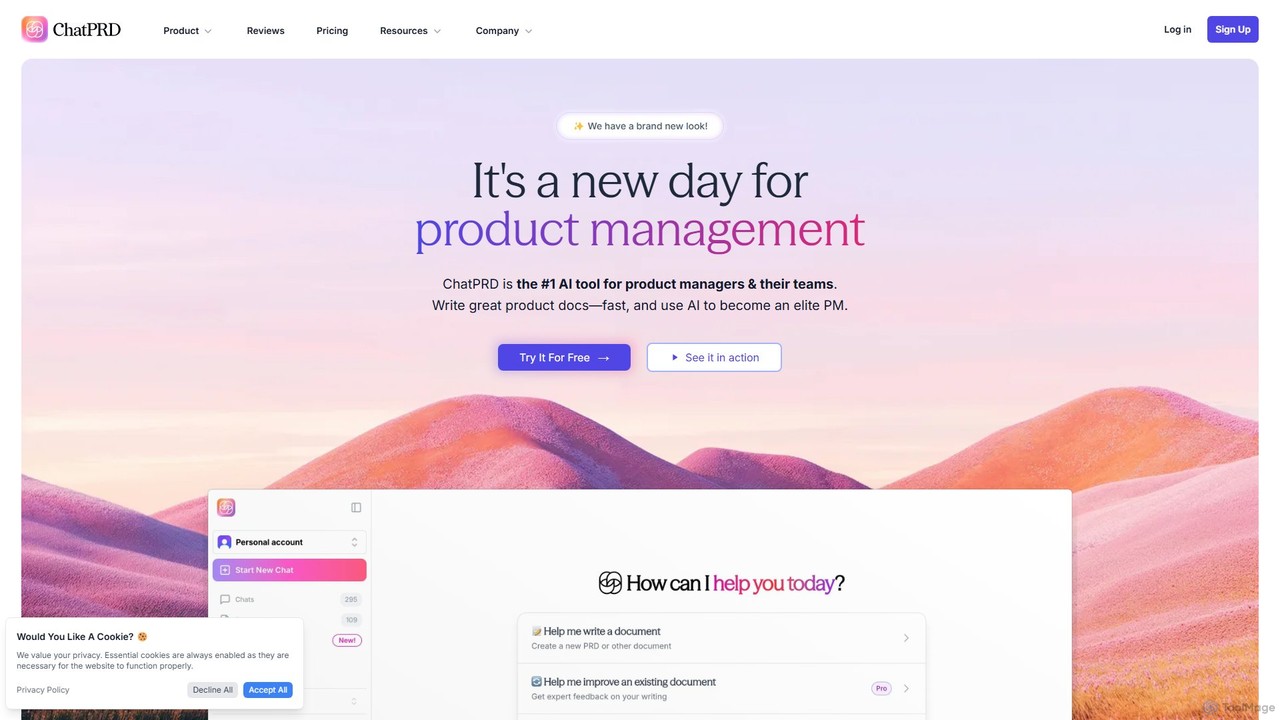
ChatPRD is the #1 AI copilot designed for product managers and their teams. It streamlines the creation of high-quality product documents, such as Product Requirements Documents (PRDs), from a simple idea. Enhance your specs, brainstorm goals and metrics, and get AI-powered coaching to become an elite PM, saving hours of work and improving team clarity.
Product Management
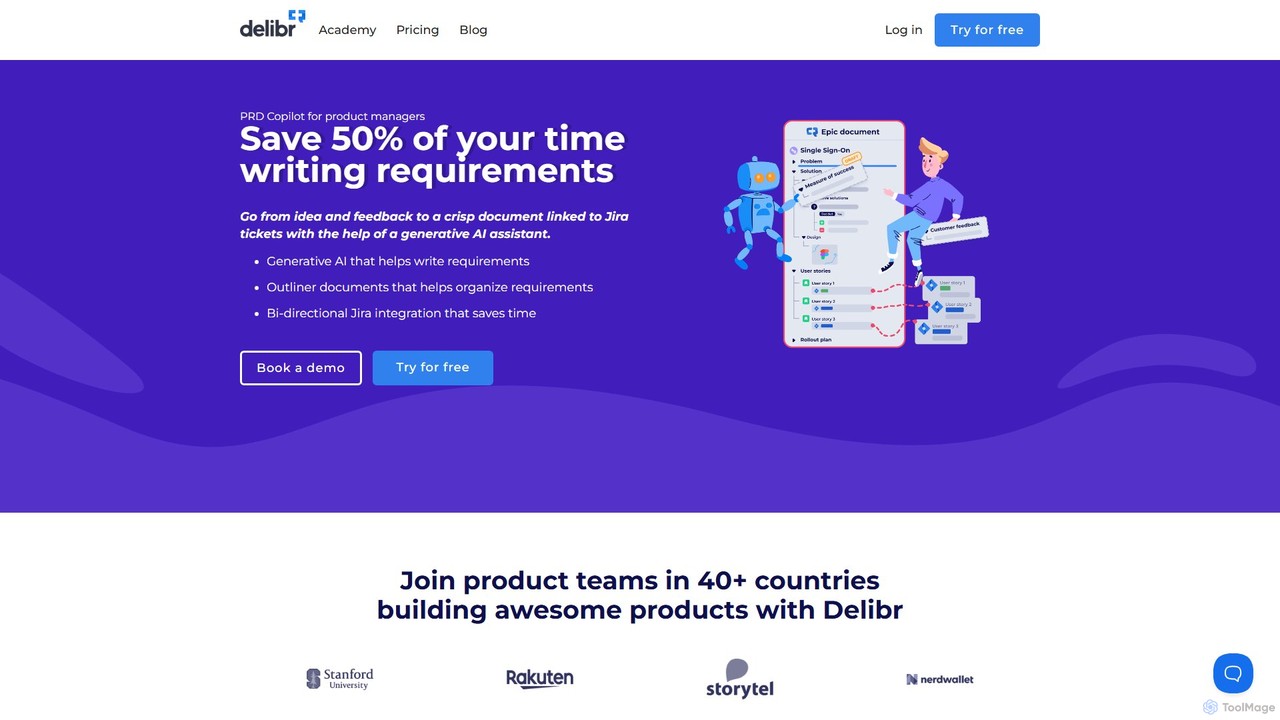
Delibr
Delibr is an AI-powered platform for product teams to create clear, collaborative, and structured product requirement documents. It streamlines the process from ideation to Jira, helping teams define features, user stories, and acceptance criteria with AI assistance, ensuring alignment and consistency.
Product Management
Kypso
Kypso is an AI platform for engineering teams that automates software development operations. It uses pre-built and custom AI agents, called "champions," to handle tasks like code reviews, scrum management, incident response, and backlog grooming. By integrating with your existing tools, Kypso helps teams increase productivity and focus on delivering value.
Code Review
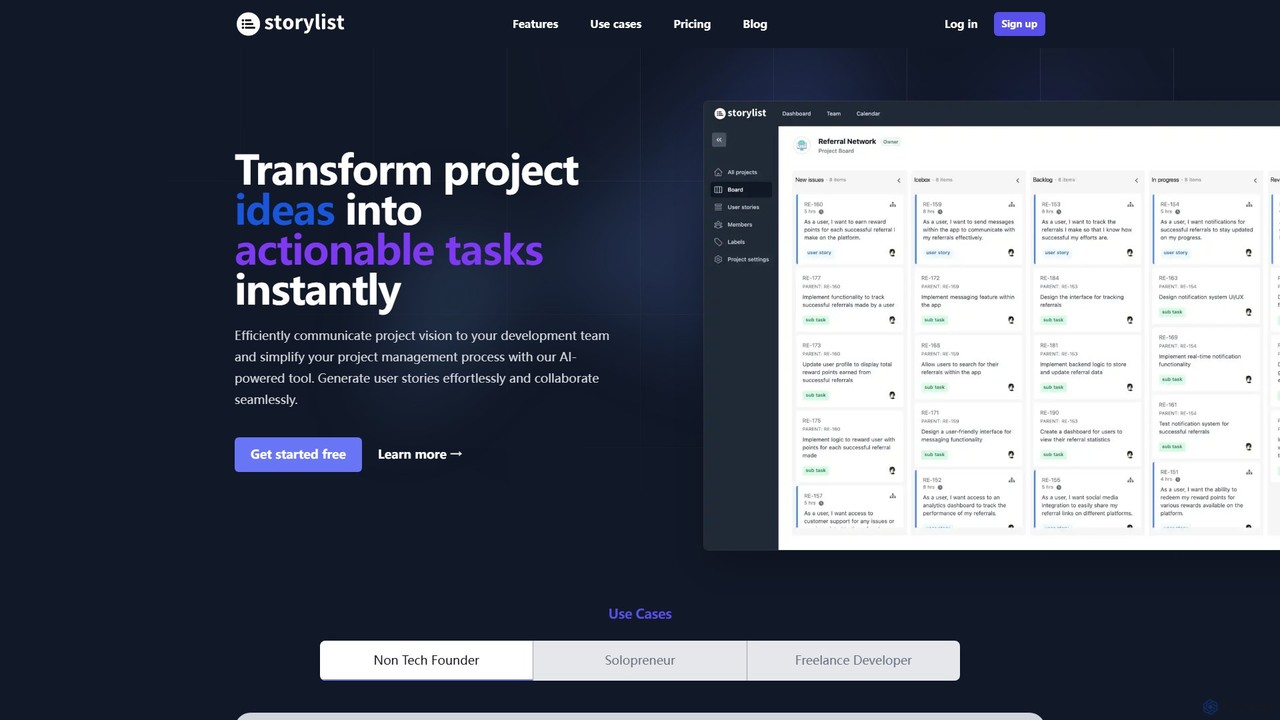
Storylist
Storylist is an AI-powered project management tool that instantly transforms project ideas into actionable user stories and tasks. It streamlines communication between teams, provides automatic time estimates, and integrates seamlessly with GitHub to accelerate development workflows.
Task Management