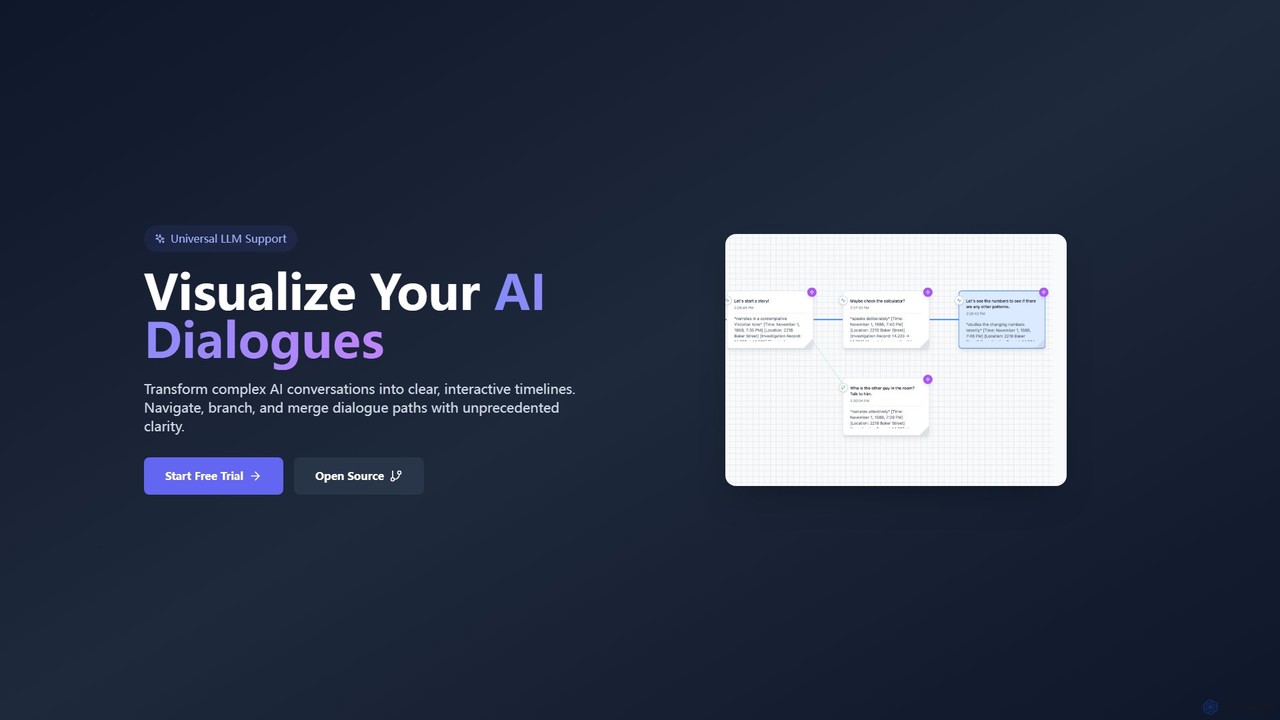
A developer-centric platform for visualizing, managing, and debugging complex AI conversations. Transform text logs into interactive, branching timelines to streamline development and enhance clarity for any Large Language Model (LLM).
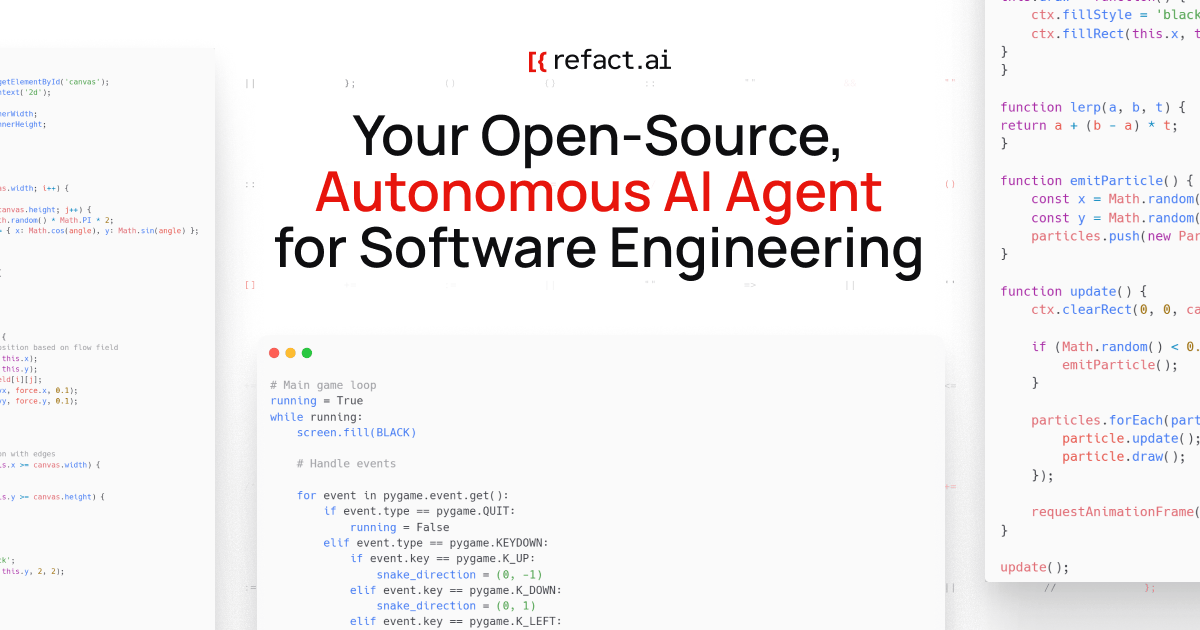
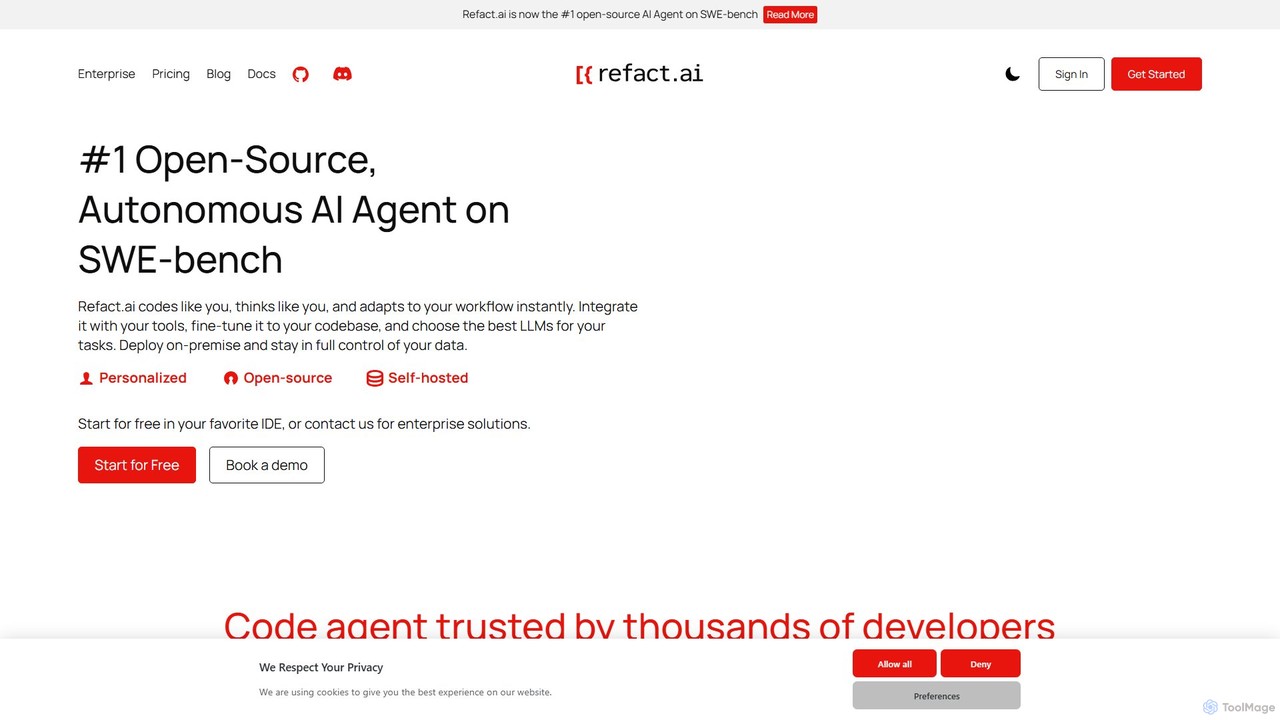
Refact is an open-source, self-hostable, and autonomous AI coding agent. It integrates into your IDE to act as a digital twin, automating coding tasks, providing context-aware completions and chat, and adapting to your codebase for maximum productivity and data privacy.
Product overview
Forking Path Product overview
A developer-centric platform for visualizing, managing, and debugging complex AI conversations. Transform text logs into interactive, branching timelines to streamline development and enhance clarity for any Large Language Model (LLM).
Refact Product overview
Refact is an open-source, self-hostable, and autonomous AI coding agent. It integrates into your IDE to act as a digital twin, automating coding tasks, providing context-aware completions and chat, and adapting to your codebase for maximum productivity and data privacy.
Detailed feature comparison
| Feature | Forking Path | Refact |
|---|---|---|
| Primary category | Model Management | Code Assistant |
| Added | 2025-08-05 | 2025-08-09 |
| Pricing | Freemium | Freemium |
| Official website | www.forkingpath.xyz | refact.ai |
| Product type | Website | Website |
| Performance data | ||
| User rating | Not verified | Not verified |
| Comments | 0 | 0 |
| Monthly visits | 3.5K | 112.8K |
| Monthly growth | Not verified | 49.4% |
| Favorites | 108 | 100 |
| Details | View details | View details |
Forking Path vs Refact monthly traffic
Compare Forking Path and Refact by monthly reach, traffic trend, visit depth, top regions, and acquisition sources.
How to interpret the traffic data
In the Forking Path vs Refact monthly traffic comparison, Forking Path currently shows 3.5K visits and Refact shows 112.8K; Refact has about 31.8 times the visible traffic of Forking Path, an absolute difference of about 109.2K visits. This reflects visible reach, not feature quality or paid users.
Only Refact has complete third-party traffic details; Forking Path uses visits recorded inside ToolMage. These scopes cannot estimate market share directly, and on-site views should not be treated as the product’s total website traffic.
Forking Path monthly traffic:
Latest traffic
Refact monthly traffic:
Latest traffic
Monthly traffic trend
- 2025/9: 77.5K Monthly visits
- 2026/1: 60.3K Monthly visits
- 2026/2: 44.7K Monthly visits
- 2026/3: 88.8K Monthly visits
- 2026/4: 75.5K Monthly visits
- 2026/5: 112.8K Monthly visits
Top regions
Top 5 countries/regions
| Country/region | Percentage | Traffic |
|---|---|---|
| 🇺🇸United States | 35.47% | 40K |
| 🇮🇳India | 25.58% | 28.9K |
| 🇳🇬Nigeria | 15.43% | 17.4K |
| 🇮🇩Indonesia | 12.33% | 13.9K |
| 🇬🇧United Kingdom | 11.19% | 12.6K |
Traffic sources
| Source type | Percentage | Traffic |
|---|---|---|
| Direct | 79.07% | 89.2K |
| Referral | 20.93% | 23.6K |
Search keywords
Usage comparison
Compare the core capabilities of Forking Path and Refact
Forking Path Core features
Refact Core features
Use cases
Forking Path Use cases
Refact Use cases
Forking Path vs Refact:In-depth comparison and selection guidance
First decide whether the products solve the same kind of need
This in-depth Forking Path vs Refact comparison uses only the product records, taxonomy, audience, traffic, and community signals available on this page. Forking Path is primarily listed under “Model Management”, while Refact is primarily listed under “Code Assistant”, so the first decision is whether your actual task matches their recorded scope.
The structured fields currently show these decision-relevant differences: Primary category (Forking Path: Model Management; Refact: Code Assistant); Monthly visits (Forking Path: 3.5K; Refact: 112.8K); Favorites (Forking Path: 108; Refact: 100); Website (Forking Path: www.forkingpath.xyz; Refact: refact.ai); Added (Forking Path: 2025-08-05; Refact: 2025-08-09). These facts are more useful for selection than brand visibility alone.
What market visibility and monthly traffic mean
In the Forking Path vs Refact monthly traffic comparison, Forking Path currently shows 3.5K visits and Refact shows 112.8K; Refact has about 31.8 times the visible traffic of Forking Path, an absolute difference of about 109.2K visits. This reflects visible reach, not feature quality or paid users.
Only Refact has complete third-party traffic details; Forking Path uses visits recorded inside ToolMage. These scopes cannot estimate market share directly, and on-site views should not be treated as the product’s total website traffic.
The current traffic scope is not sufficient for a reliable product ranking. Treat monthly visits as a market-interest signal, then decide using taxonomy, use cases, pricing, and a like-for-like trial rather than reading exposure as product capability.
Product positioning, use cases, and roles
Forking Path and Refact currently overlap in shared categories: Debugging; shared tags: AI agent, debugging, and developer tool. This can place both on the same shortlist, but it does not prove equal implementation, depth, or cost.
Forking Path's unique categories/tags are Model Management, Workflow, API, chatbot development, conversational AI, dialogue visualization, llm, and prompt engineering; Refact's are Code Assistant, Refactoring, Automation, code assistant, code completion, IDE plugin, jetbrains, and open source. These unique fields are the strongest differentiators: validate the product whose recorded scope matches the task instead of following traffic alone.
What ratings, comments, and favorites can tell you
Forking Path has no verified rating, 0 comments, 108 favorites, and 108 likes;Refact has no verified rating, 0 comments, 100 favorites, and 103 likes。
Neither product has enough rating or comment samples for a credible reputation ranking.
Selection guidance by actual need
When to evaluate Forking Path first
Put Forking Path on the priority trial list when the task aligns with “Model Management” and especially Model Management, Workflow, API, chatbot development, conversational AI, and dialogue visualization. This follows recorded positioning and does not imply unlisted capabilities are absent.
Forking Path also currently records: pricing is freemium, product type is website, 3.5K on-site monthly views, no verified user rating. Verify any hard requirement around price, platform, or reach before trial, and do not let sparse review data substitute for testing.
When to evaluate Refact first
Put Refact on the priority trial list when the task aligns with “Code Assistant” and especially Code Assistant, Refactoring, Automation, code assistant, code completion, and IDE plugin. This follows recorded positioning and does not imply unlisted capabilities are absent.
Refact also currently records: pricing is freemium, product type is website, 112.8K verified monthly visits, no verified user rating. Verify any hard requirement around price, platform, or reach before trial, and do not let sparse review data substitute for testing.
How to validate the recommendation before deciding
The available data describes positioning, public visibility, and community signals, but it cannot prove output quality, speed, integration effort, privacy, or long-term cost in your workflow. Before deciding, run the same representative tasks in Forking Path and Refact, then record completion time, accuracy, manual corrections, and the real paid threshold. A like-for-like trial turns this comparison into a defensible adoption decision.
Comparison FAQ
How should I choose between Forking Path and Refact?
Where does this comparison data come from?
What do unknown fields mean?
Related AI tools

Plandex
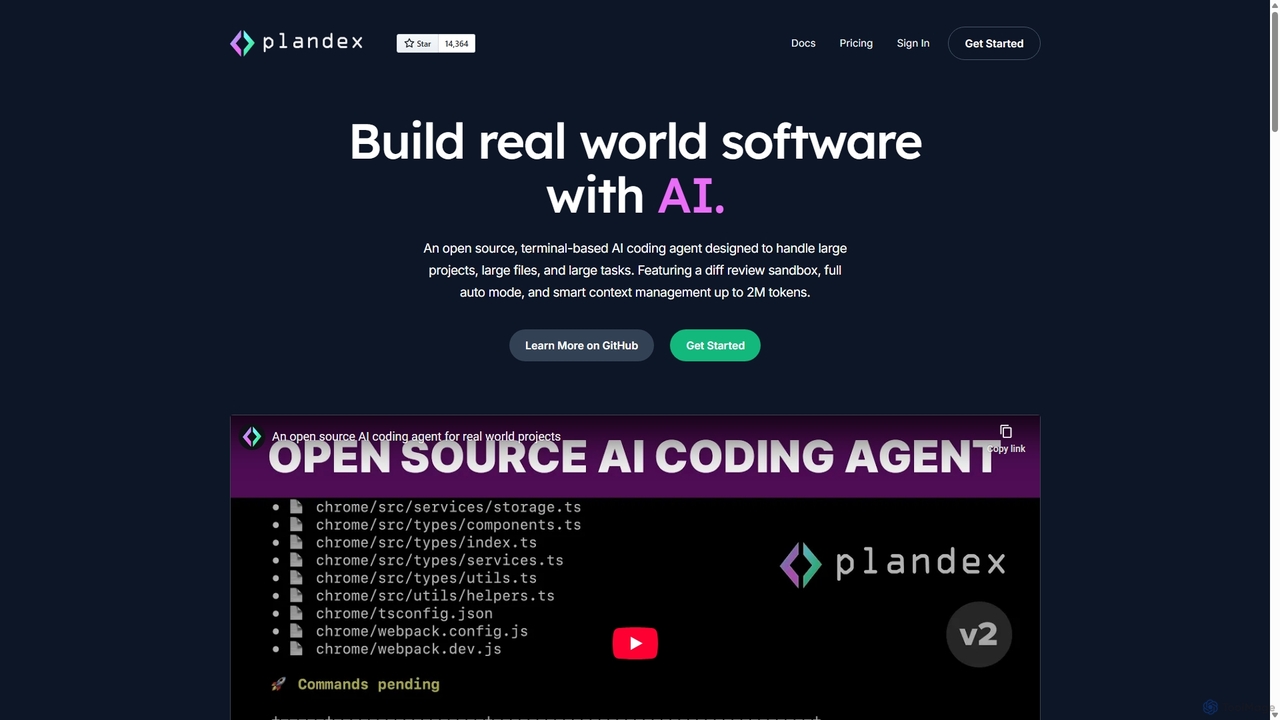
Plandex is an open-source, terminal-based AI coding agent designed for complex, large-scale software development tasks. It excels at handling large projects and files with its 2M token context window. Featuring a diff review sandbox, configurable autonomy, and multi-model support, Plandex empowers developers to build, debug, and refactor entire applications with AI assistance, ensuring control and productivity in a dev-friendly workflow.
Code Generation
Aider
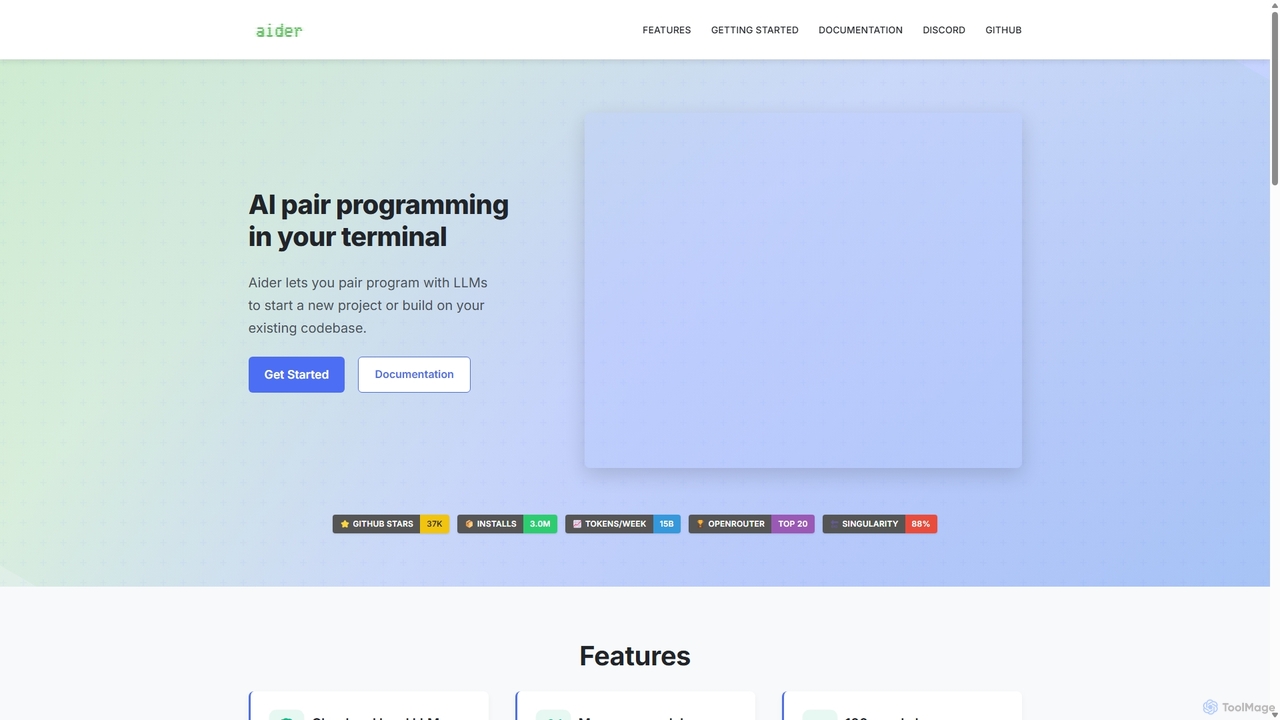
Aider is an AI-powered pair programmer that operates directly in your terminal. It intelligently maps your entire codebase, providing full project context for complex tasks. Seamlessly integrated with Git, it automates commits and allows you to manage AI-driven changes with familiar tools. Aider supports over 100 programming languages, connects to leading cloud and local LLMs, and even accepts voice and image inputs, making it a versatile and powerful assistant for any developer seeking to accelerate their workflow and improve code quality.
Programming
papert
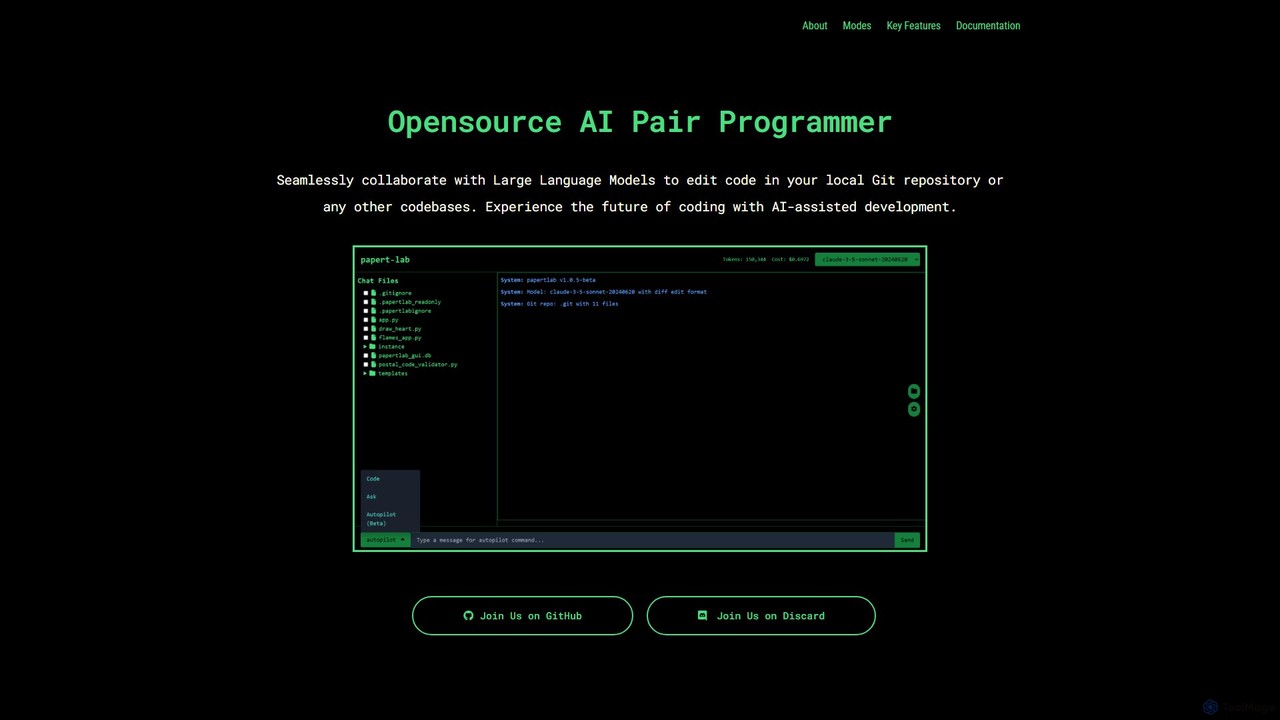
papert is an open-source AI pair programmer that integrates with your local Git repository. It allows developers to collaborate with LLMs like GPT-4o and Claude 3.5 Sonnet to ask questions, edit code across multiple files, refactor, debug, and automate routine coding tasks.
Debugging
AnythingLLM
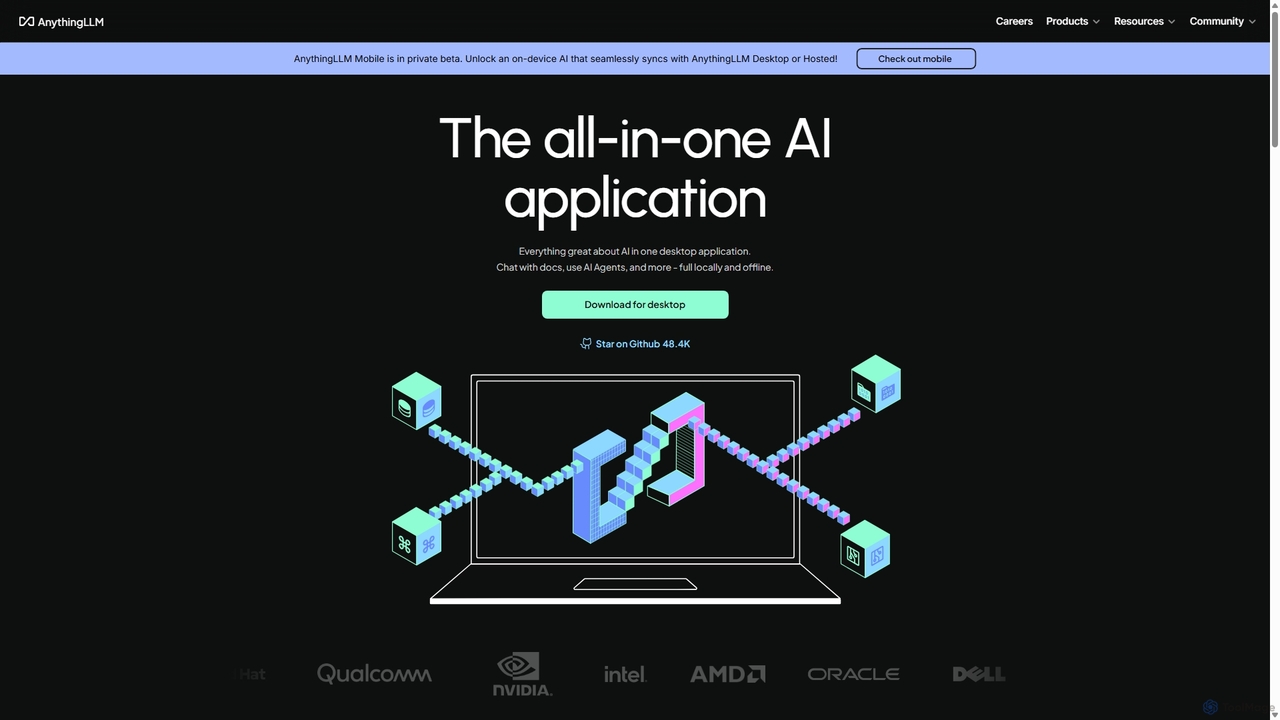
AnythingLLM is an open-source, all-in-one AI application that runs locally on your desktop or can be self-hosted. It allows you to create a private knowledge base from any document, chat with your data, and utilize powerful AI agents while ensuring complete data privacy and control.
Document Management
Safurai
Safurai is an AI-powered IDE extension that acts as a virtual assistant for software developers. It helps with coding, debugging, and refactoring, aiming to streamline the development process and improve code quality directly within your favorite IDE like VS Code and JetBrains.
Code Generation
Morph
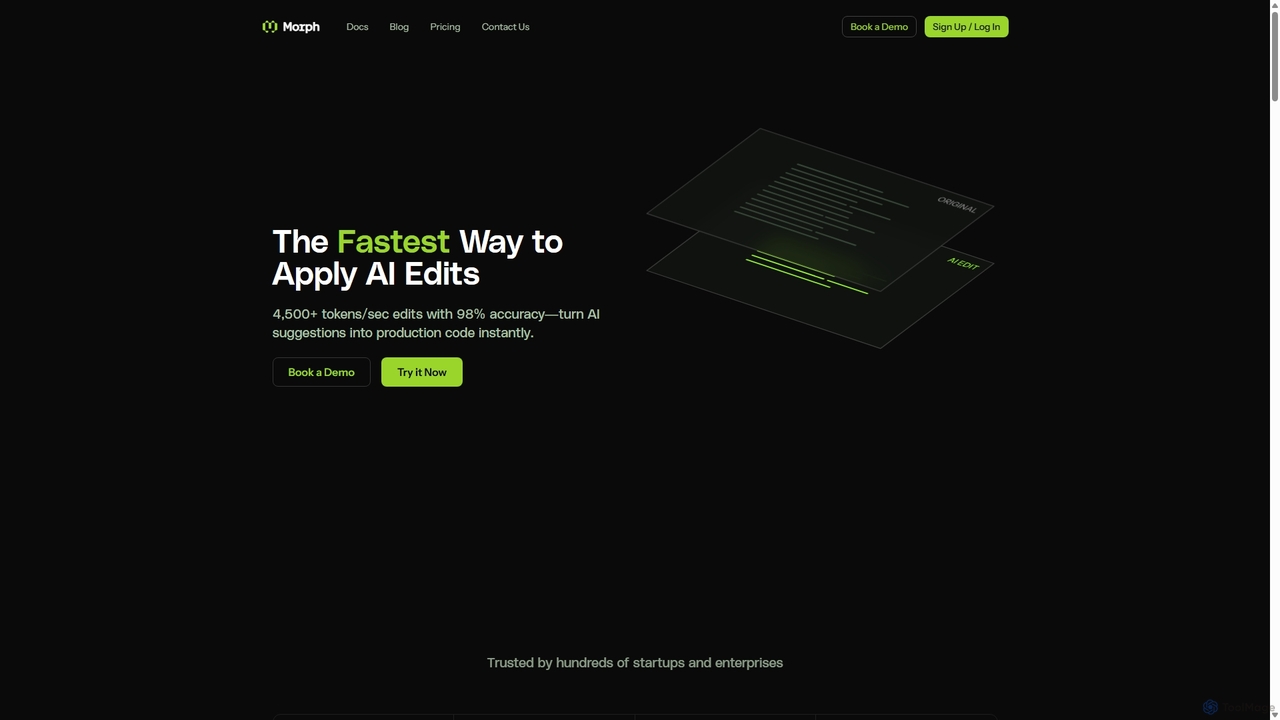
Morph is an API-first platform for developers, providing the fastest and most accurate way to apply AI-generated edits to code and files. With speeds of 4,500+ tokens/sec and 98% accuracy, it empowers AI agents to perform reliable, semantic modifications, bridging the gap between AI suggestions and production-ready implementation.
Infrastructure
All Hands AI (OpenHands)
All Hands AI (OpenHands) is a leading open-source AI coding agent designed to automate software development. It helps engineers with tasks like code reviews, refactoring, bug fixing, and test generation. Available as a flexible SaaS, self-hosted, or open-source solution, it integrates with tools like GitHub and GitLab to accelerate development cycles and improve code quality.
Code Generation
Fitten Code
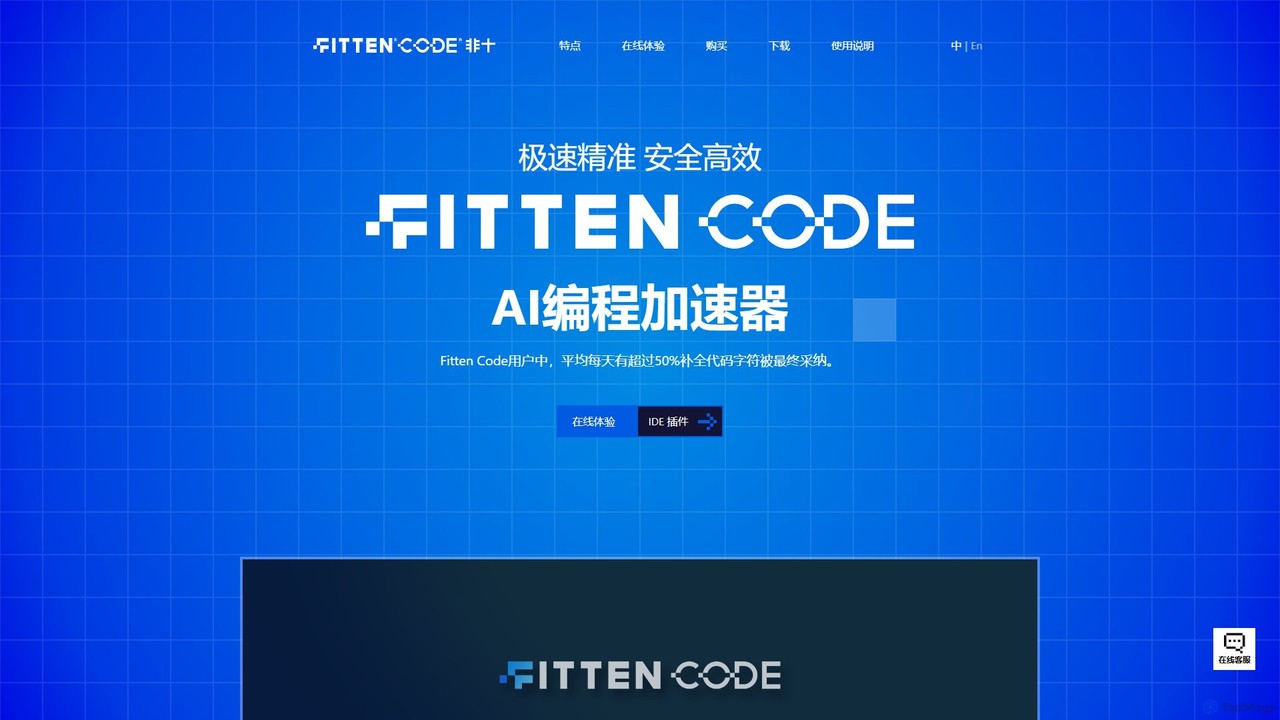
Fitten Code is a next-generation AI programming assistant designed to accelerate software development. It offers ultra-fast code completion, intelligent Q&A, automated unit test generation, and code optimization. Built by a Tsinghua PhD team, it supports major IDEs and languages, significantly boosting developer productivity while ensuring data privacy.
Code Generation
Baidu Comate
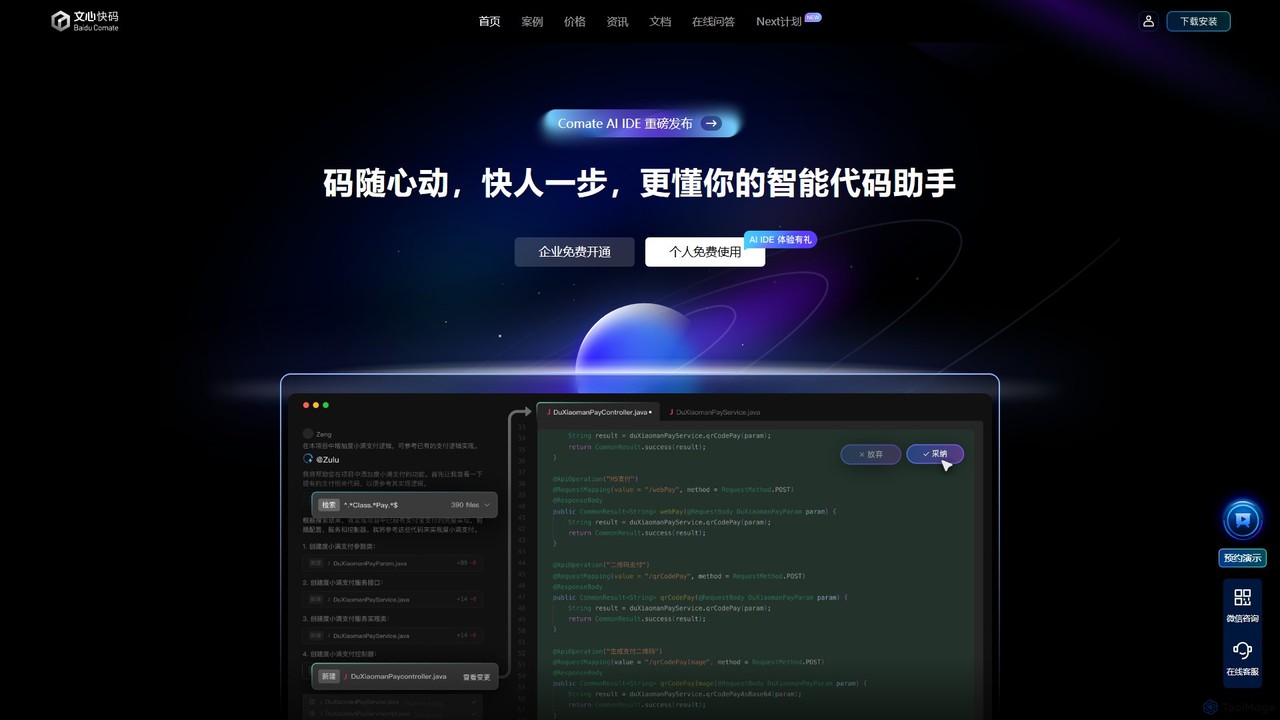
Baidu Comate is an intelligent AI code assistant powered by Baidu's Wenxin large language model. It integrates seamlessly into IDEs like VS Code and JetBrains to provide real-time code completion, code generation from natural language, bug fixing, and unit test creation, significantly boosting developer productivity.
Code Generation
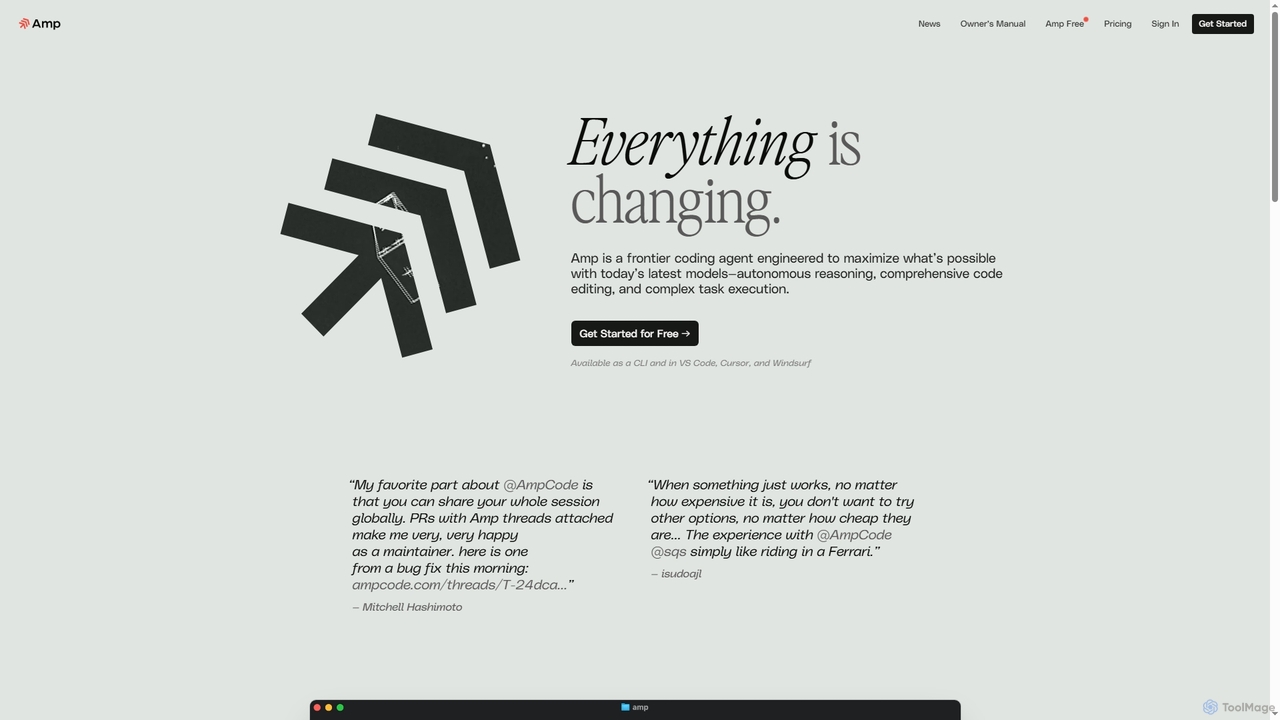
Amp
Amp is a frontier AI coding agent designed for developers. It operates as a CLI and within IDEs like VS Code, automating complex tasks such as code editing, debugging, and refactoring. Amp leverages the latest AI models to provide autonomous reasoning and execution, enhancing developer productivity through features like subagents, an Oracle for complex analysis, and deep IDE integration.
Code Assistant
Jyek
Jyek is an AI agent platform that understands objectives, creates execution plans, uses tools, and delivers verifiable results for complex, multi-step tasks.
Automation
Codeium
Codeium is an AI-powered code acceleration toolkit that provides free, ultra-fast code completion, in-editor chat, and other intelligent features. It supports over 70 programming languages and integrates seamlessly with more than 40 popular IDEs to help developers code faster and more efficiently.
Code Assistant
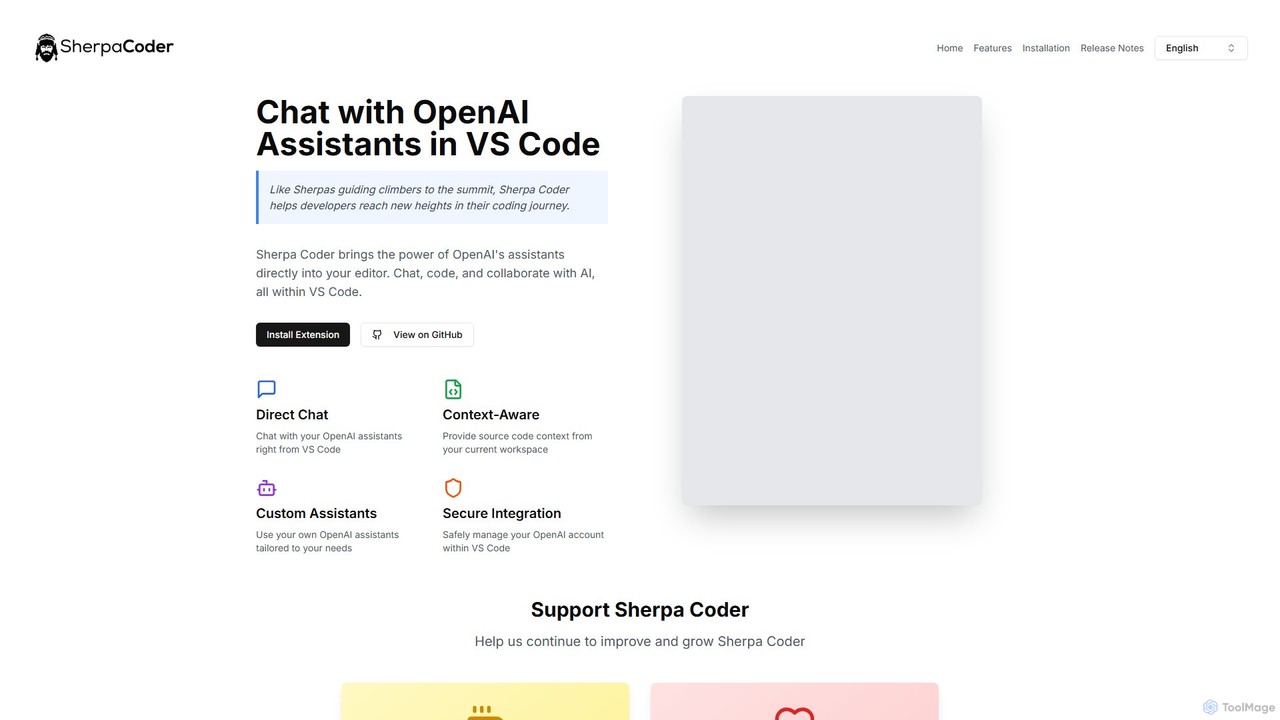
Sherpa Coder
Sherpa Coder is a free VS Code extension that integrates OpenAI Assistants directly into your editor. It enhances developer productivity by enabling context-aware chat, custom AI assistant usage, and seamless collaboration with AI for coding, debugging, and learning, all within the VS Code environment.
Code Generation
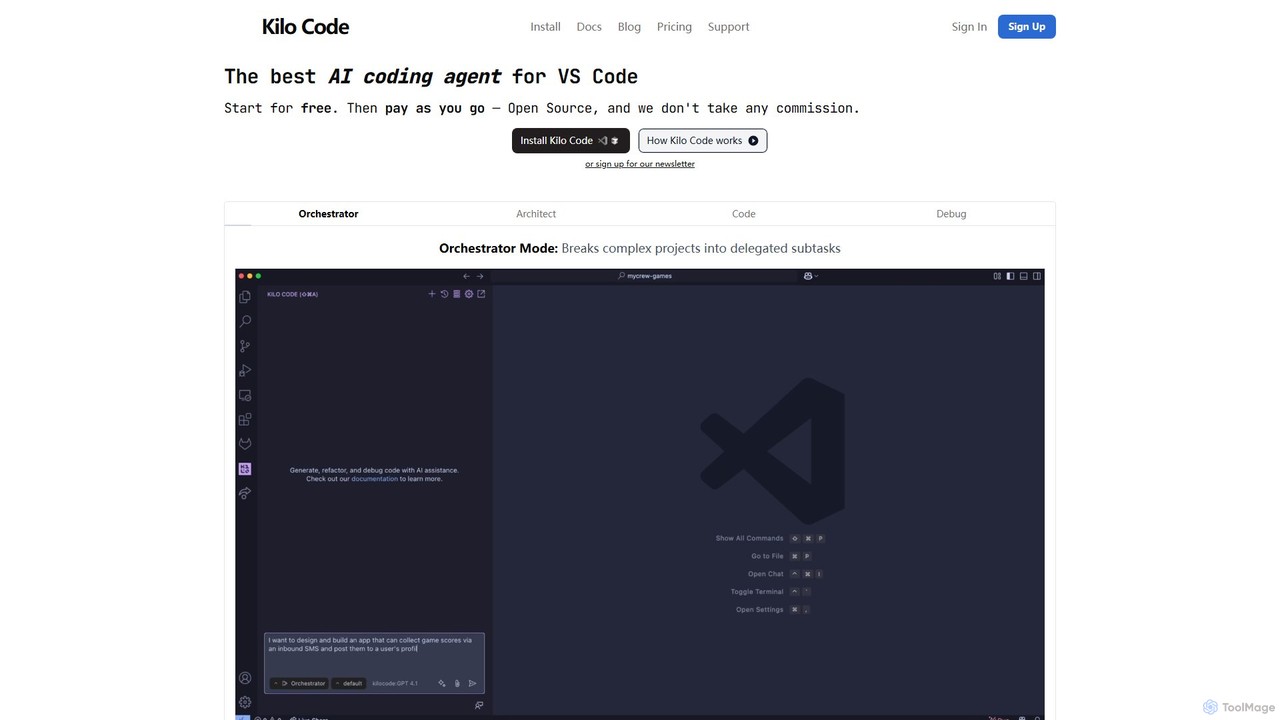
Kilo Code
Kilo Code is a powerful, open-source AI coding agent for VS Code. It features a multi-agent system (Orchestrator, Architect, Code, Debug) to automate complex development tasks, from design to debugging. It's highly customizable, context-aware, and prioritizes user privacy with a "bring your own key" model and no data training.
Code Assistant
LangSearch
LangSearch provides free Web Search and Semantic Rerank APIs designed to connect LLM applications with clean, accurate, real-world context. It supports natural language queries, hybrid search, and offers a highly efficient reranker to improve result accuracy for AI agents, chatbots, and RAG systems.
Llm