

Lightchain
vs
Rido Protocol
A comprehensive comparison of the core features, performance, user experience, and pricing strategies of two excellent AI tools
Providing objective and detailed selection advice based on real data and user feedback
Overview
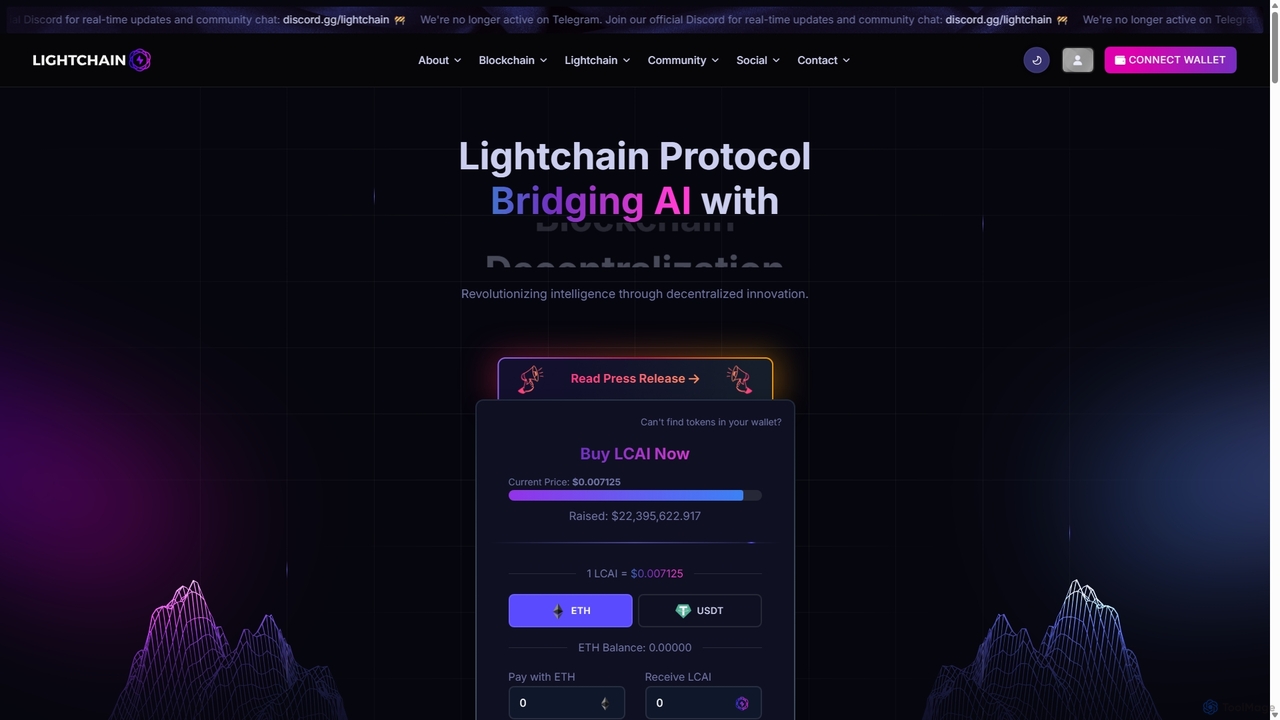
Lightchain Overview
Discover Lightchain, a revolutionary Layer 1 blockchain integrating AI at its core. Featuring Proof of Intelligence (PoI) and an AI Virtual Machine (AIVM) for building smarter, decentralized applications.
Rido Protocol Overview
Discover Rido Protocol, a Web3 platform for secure personal data ownership, control, and monetization. Build decentralized AI applications, trade data in a fair marketplace, and reclaim your digital sovereignty.

Detailed Feature Comparison
Comprehensive comparison of the core features and characteristics of two AI tools
| Features | Lightchain | Rido Protocol |
|---|---|---|
| Main Categories | Layer 1 | Decentralized Infrastructure |
| Inclusion Date | 2025-09-06 | 2025-09-07 |
| Pricing Type | Is Paid | Is Paid |
| Official Website | https://lightchain.ai/ | https://rido.io/ |
| Tool Type | Website | Website |
| Performance Data | ||
| User Rating | No Rating Yet | No Rating Yet |
| User Reviews | 0 reviews | 0 reviews |
| Monthly Visits | 45.2K | 2.2K |
| Details | View Details | View Details |
Compare Traffic / Monthly Visits
Lightchain's traffic
Lightchain Current monthly visible visits are 45.2K.
Latest Traffic
Monthly Traffic Trend
Geography
Top 5 Countries/Regions
| Country/Region | Percentage | Traffic |
|---|---|---|
|
🇺🇸
United States
|
75.46% | 34.1K |
|
🇯🇵
Japan
|
8.85% | 4.0K |
|
🇦🇺
Australia
|
6.95% | 3.1K |
|
🇧🇷
Brazil
|
5.74% | 2.6K |
|
🇨🇦
Canada
|
3.00% | 1.4K |
Traffic source
| Source Type | Percentage | Traffic |
|---|---|---|
|
Direct Access
|
94.27% | 42.6K |
|
Referral
|
5.73% | 2.6K |
Popular Keywords
Rido Protocol's traffic
Rido Protocol Current monthly visible visits are 2.2K.
Latest Traffic
Monthly Traffic Trend
Geography
Top 5 Countries/Regions
| Country/Region | Percentage | Traffic |
|---|---|---|
|
🇺🇸
United States
|
75.04% | 1.7K |
|
🇮🇳
India
|
21.46% | 475 |
|
🇳🇿
New Zealand
|
3.50% | 77 |
Popular Keywords
Usage Comparison
Compare Lightchain and Rido Protocol 's Advantages
Lightchain's Core Features
Rido Protocol's Core Features
Use Cases
Understand the specific application scenarios and functional characteristics of the two AI tools
Lightchain Use Cases
Rido Protocol Use Cases
Applicable Job
Learn which professions and roles are suitable for using these two AI tools
Lightchain Applicable Job
Rido Protocol Applicable Job
Lightchain vs Rido Protocol:In-depth Comparison Analysis and Selection Recommendations
Comprehensive comparison and evaluation based on real data and user feedback
Market Performance and User Preference Analysis
- Core positioning: Lightchain leans more toward Layer 1, while Rido Protocol leans more toward Decentralized Infrastructure.
- Traffic Signal: Lightchain currently has higher monthly traffic, serving as a reference for market attention.
- Neither tool has reviewed ratings yet; it is recommended to prioritize comparing functional positioning, price, and actual trial experience.
Lightchain has about 45.2K monthly visits, higher than Rido Protocol at 2.2K. Use this as a signal of market attention, not as product quality by itself.
In-depth Analysis of User Engagement
Both tools have third-party traffic analysis records, allowing comparison of visits, dwell time, pages per visit, and bounce rate; these metrics should be considered alongside the tool's purpose.
User Reviews vs. Community Feedback
Lightchain has no reviewed ratings yet. Rido Protocol has no reviewed ratings yet.
Product Positioning and Application Scenario Analysis
Lightchain is in Layer 1 with a Is Paid pricing model; Rido Protocol is in Decentralized Infrastructure with a Unknown pricing model. Prioritize fit for your specific tasks rather than traffic or default ratings alone.
Frequently Asked Questions
FAQs about these two tools to help you better understand their features and differences
What are the biggest differences between the two?
Lightchain is primarily positioned in Layer 1, while Rido Protocol is primarily positioned in Decentralized Infrastructure. Which one suits you depends on which type of use case and workflow you need more.
Which tool is better to try first?
Lightchain currently has higher market attention, making it suitable for initial understanding; the final decision should still be based on specific functional needs after trial.
How should ratings and traffic data be interpreted?
Ratings only count reviewed user comments; no default 5-star rating is given when there are no comments. Traffic is used to gauge market attention but cannot solely represent product quality.
Related Tool Recommendations
Discover more excellent AI tools of the same kind

TraceUI
An open-source framework that gives AI agents the full design context of any website, enabling brand-consistent ad generation …
An open-source framework that gives AI agents the full design context of any website, enabling brand-consistent ad generation and mockup creation.

Brila
Brila uses AI and the Jobs To Be Done framework to analyze your Google Maps reviews and automatically …
Brila uses AI and the Jobs To Be Done framework to analyze your Google Maps reviews and automatically generate a website with compelling, customer-centric messaging for your local business.

MashuPack
A browser-based tool that packages a local code repository into a single structured text file, enabling AI models …
A browser-based tool that packages a local code repository into a single structured text file, enabling AI models like ChatGPT and Claude to navigate and understand the codebase as a virtual project for enhanced analysis.
Agentium
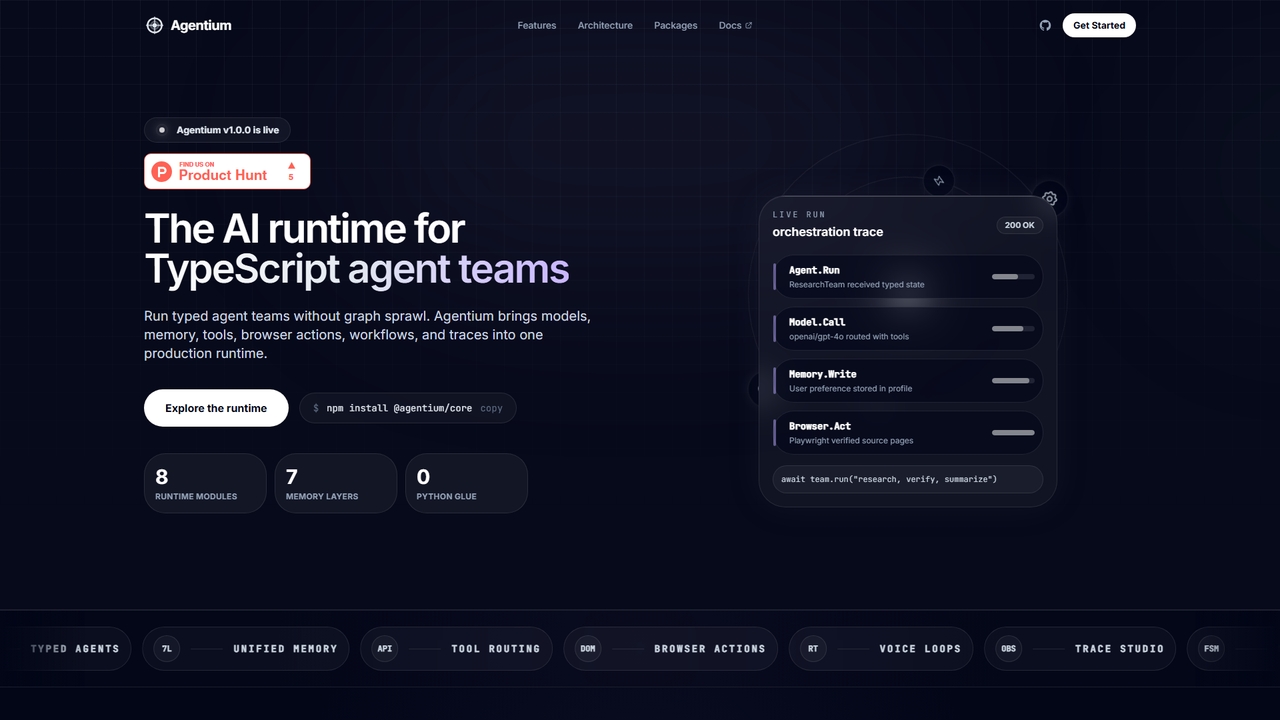
Agentium is an AI runtime for TypeScript agent teams, providing a unified platform for orchestration, memory, tools, and …
Agentium is an AI runtime for TypeScript agent teams, providing a unified platform for orchestration, memory, tools, and observability to build sophisticated agent systems.

TongueType
TongueType is a 100% private, offline voice dictation app for macOS. It uses the Whisper AI model locally …
TongueType is a 100% private, offline voice dictation app for macOS. It uses the Whisper AI model locally on Apple Silicon, requiring no cloud, accounts, or subscriptions. Simply hold a hotkey, speak, and your words appear instantly. It's free forever, with a one-time Pro upgrade.
Regent
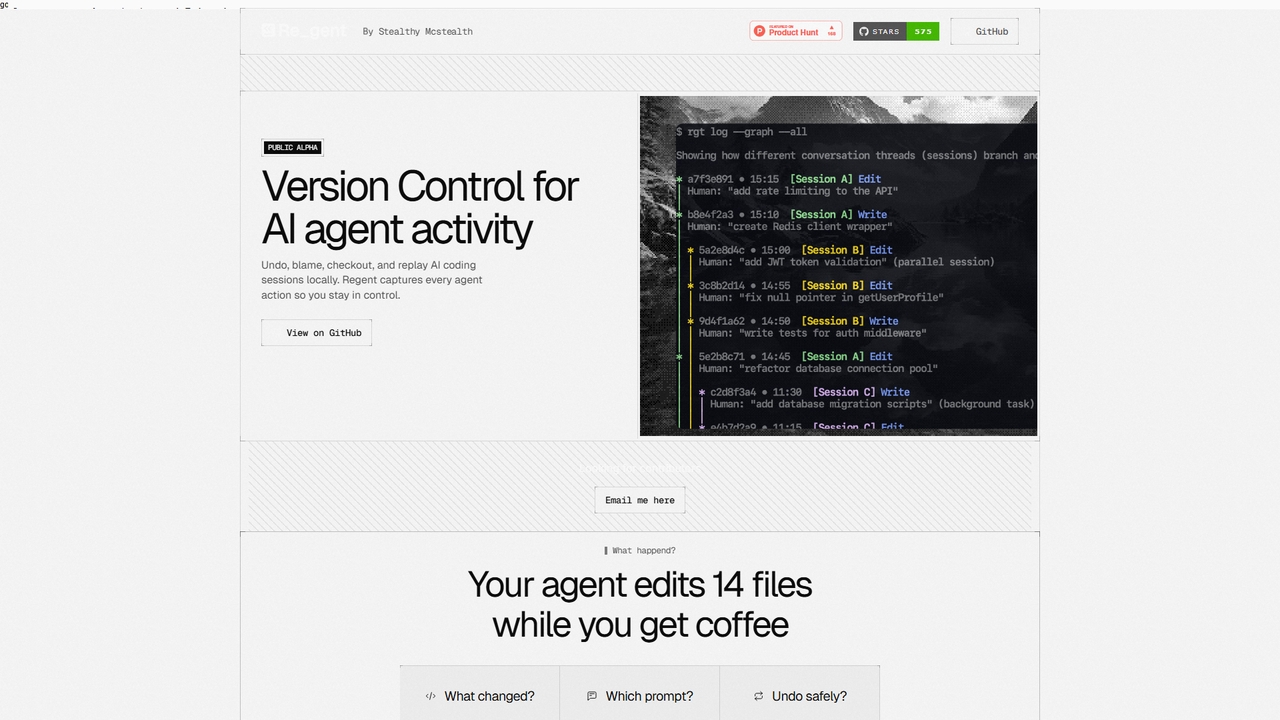
Regent is a version control system specifically designed for AI coding agents. It tracks every action, prompt, and …
Regent is a version control system specifically designed for AI coding agents. It tracks every action, prompt, and change made by agents like Claude Code and Codex, allowing you to audit, blame, undo, and replay agent sessions locally, providing an essential layer of oversight for AI-driven development.
InstaVM
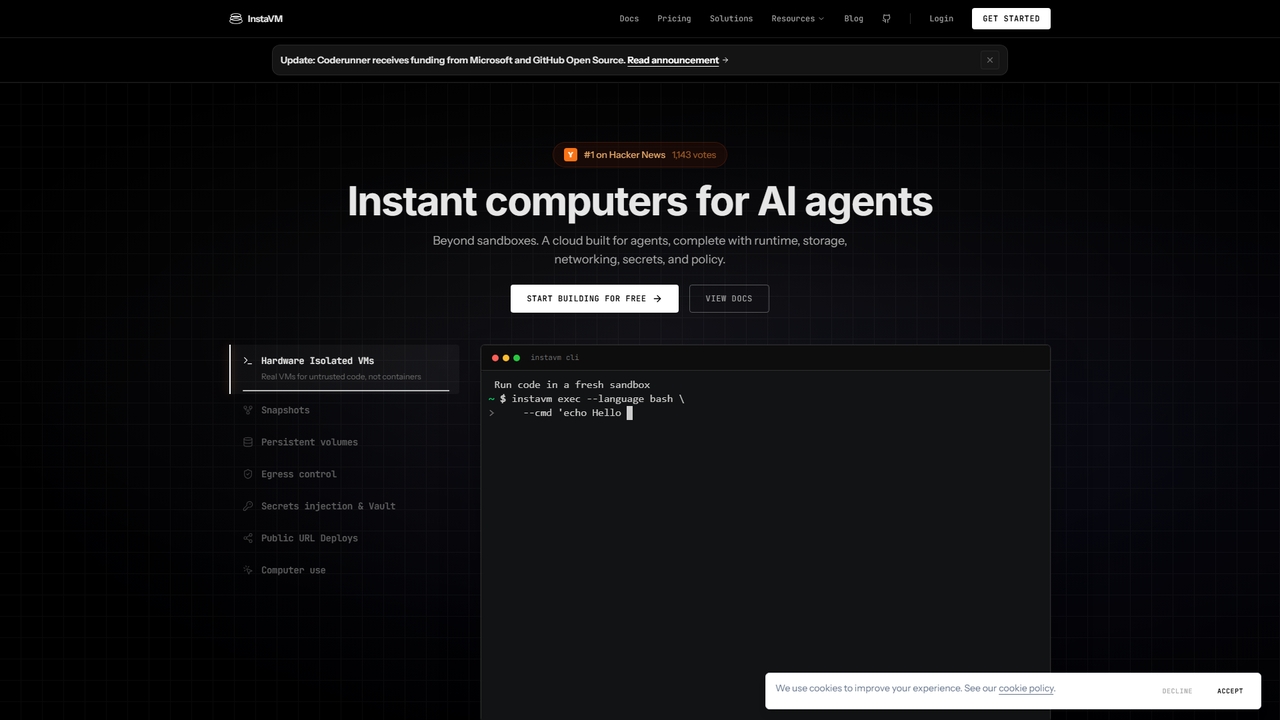
InstaVM is a production-grade sandbox built for AI agents, offering hardware-isolated virtual machines with persistent state, secure networking, …
InstaVM is a production-grade sandbox built for AI agents, offering hardware-isolated virtual machines with persistent state, secure networking, and secret management. It provides a complete Linux environment for safely executing untrusted code from agents, with sub-200ms cold starts and seamless deployment.
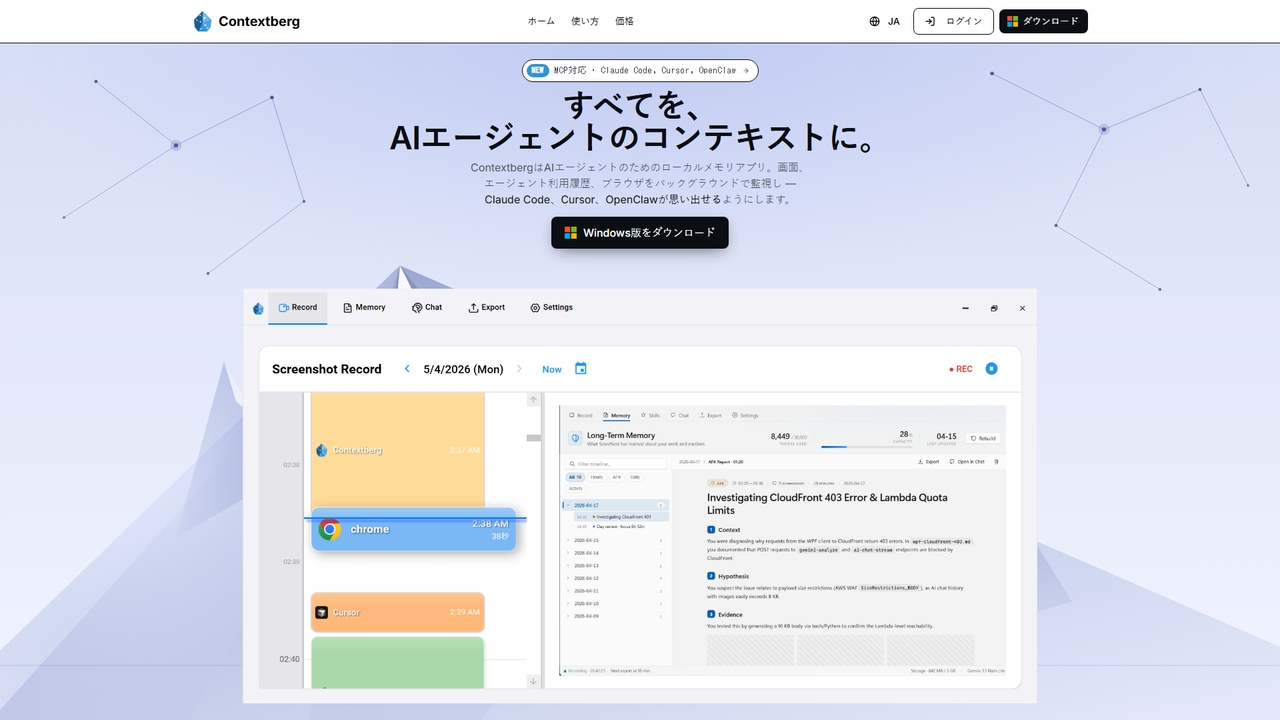
Contextberg
A local-first memory application for AI agents. It monitors screen activity, inputs, and browser usage in the background …
A local-first memory application for AI agents. It monitors screen activity, inputs, and browser usage in the background to provide context via MCP to coding agents like Claude Code, Cursor, and OpenClaw, enhancing productivity by eliminating repetitive re-entry.
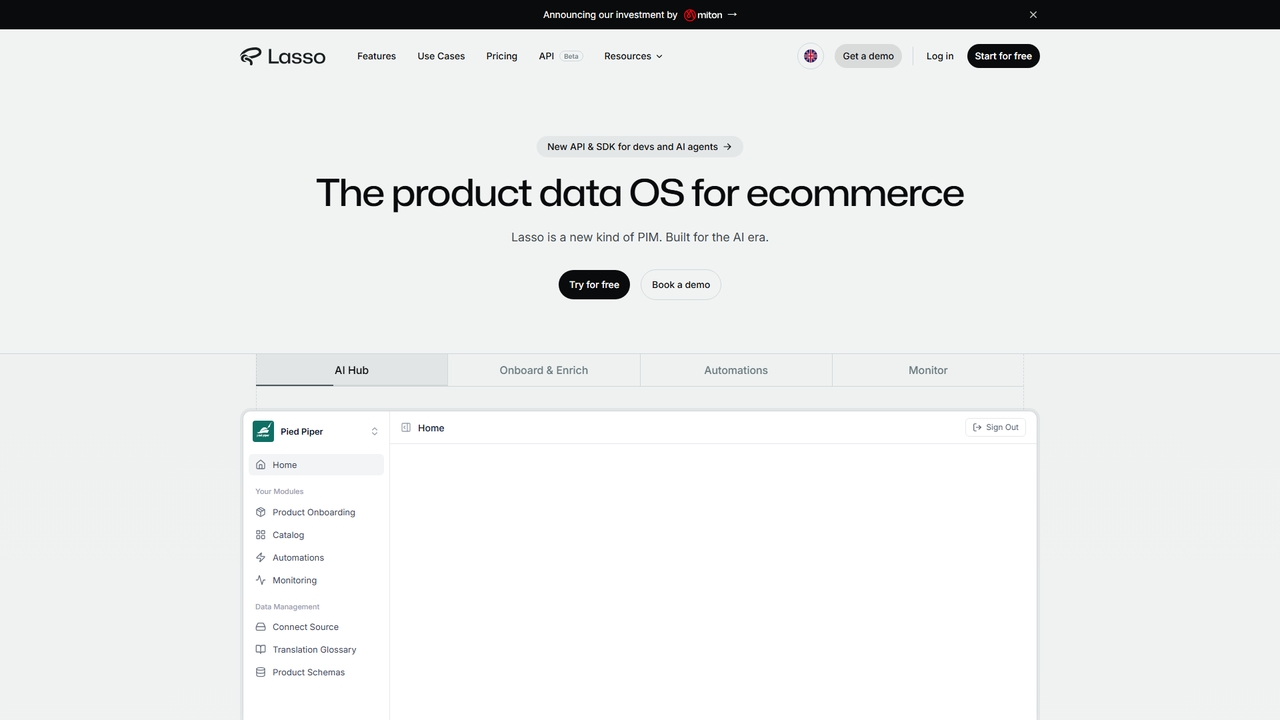
ProductLasso
ProductLasso is an AI-powered PIM (Product Information Management) platform for ecommerce. It automates data enrichment, supplier onboarding, and …
ProductLasso is an AI-powered PIM (Product Information Management) platform for ecommerce. It automates data enrichment, supplier onboarding, and competitive monitoring using thousands of specialized AI agents, helping teams save hundreds of hours weekly.
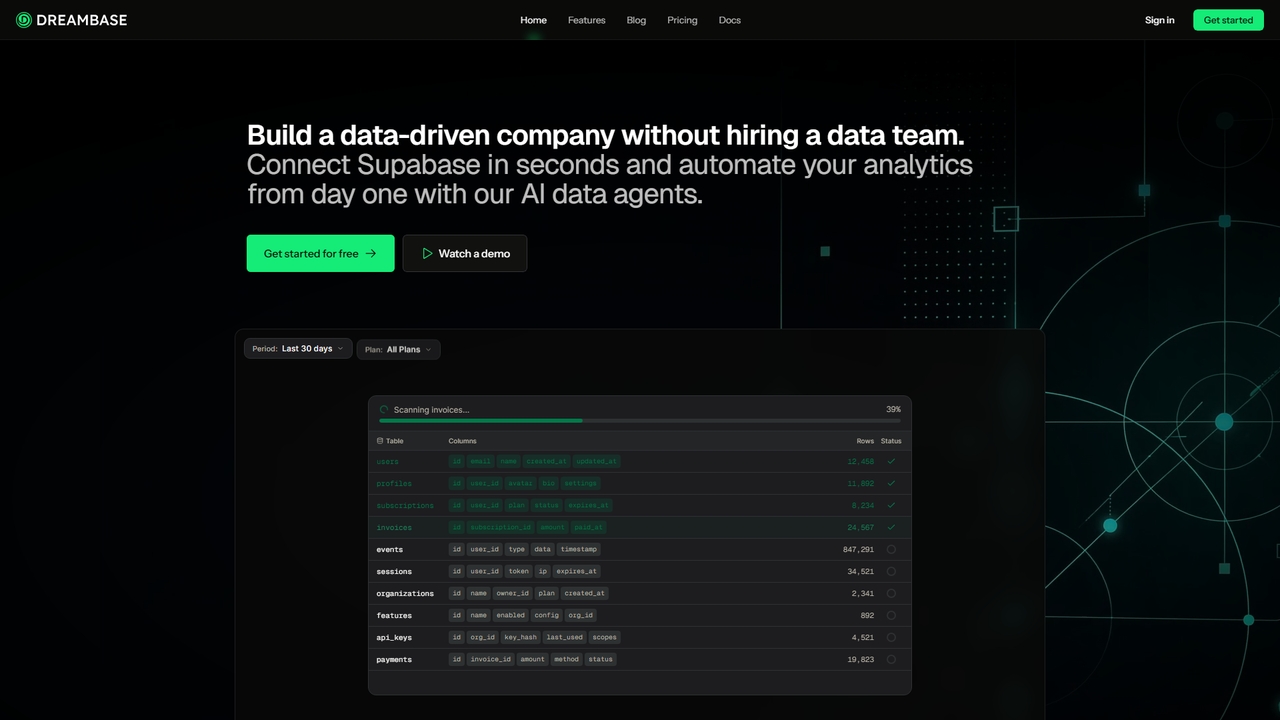
Dreambase
An AI-native analytics platform that connects directly to your Supabase database, providing instant dashboards, reports, and actionable insights …
An AI-native analytics platform that connects directly to your Supabase database, providing instant dashboards, reports, and actionable insights with minimal setup.

Trismik
Compare 50+ LLMs on your own data in minutes. Make evidence-based model decisions on quality, cost, and speed …
Compare 50+ LLMs on your own data in minutes. Make evidence-based model decisions on quality, cost, and speed without guesswork.
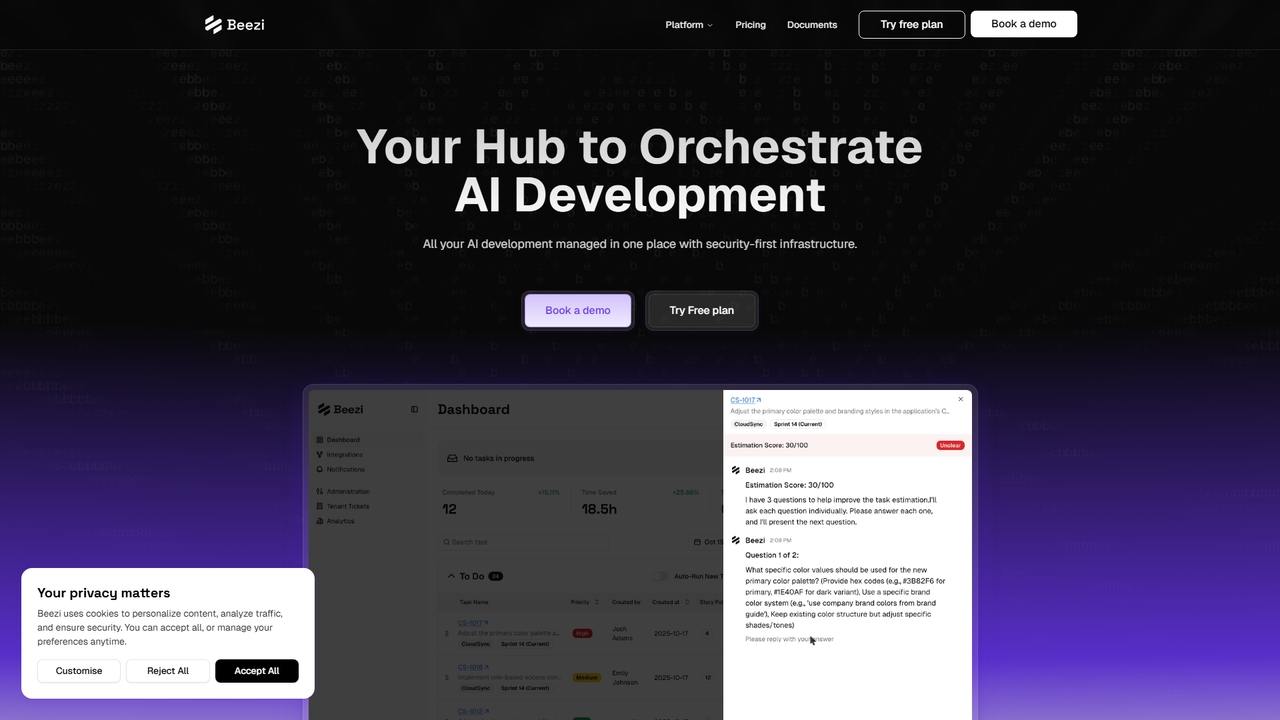
Beezi
Orchestrate AI development in one place. Beezi integrates with GitHub, Jira, and Slack to plan, code, and ship …
Orchestrate AI development in one place. Beezi integrates with GitHub, Jira, and Slack to plan, code, and ship features with intelligent AI agents, smart model routing, and real-time analytics.

Hive
Hive is an open-source, multi-agent AI swarm platform where autonomous coding agents collaborate and compete to solve and …
Hive is an open-source, multi-agent AI swarm platform where autonomous coding agents collaborate and compete to solve and improve upon complex programming tasks and benchmarks. It fosters collective intelligence for code optimization, algorithm enhancement, and performance benchmarking across various domains.
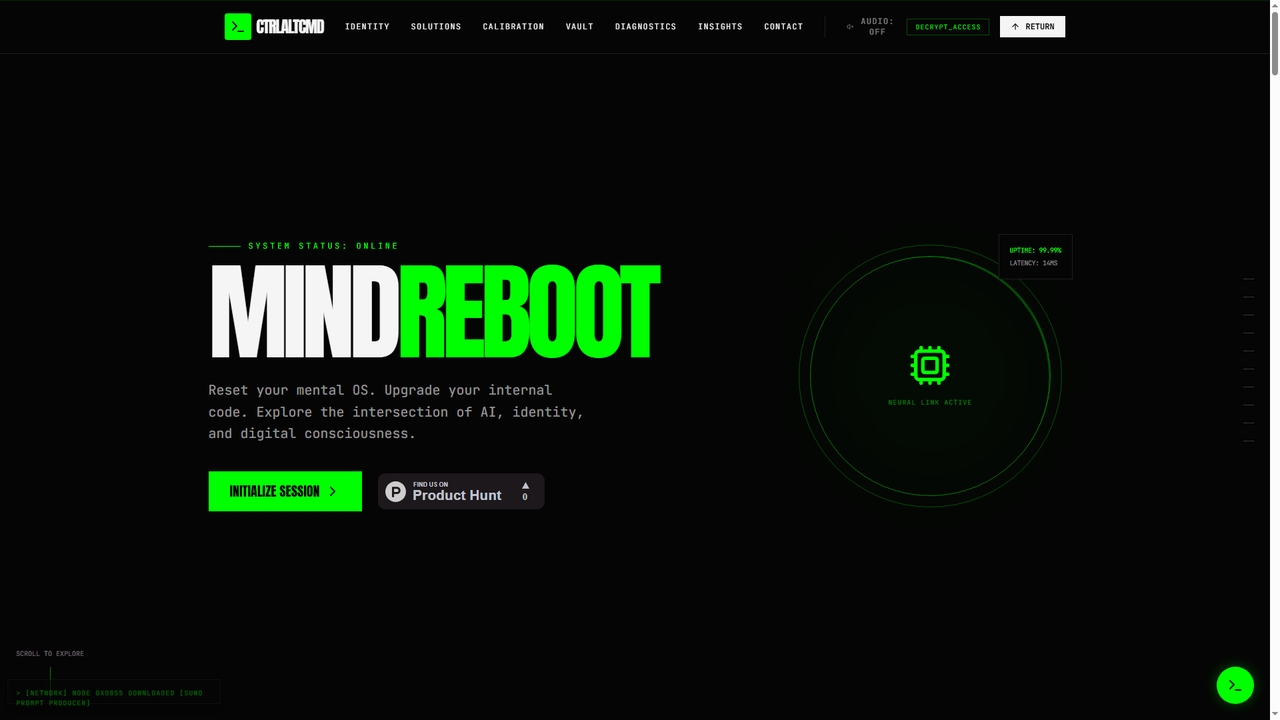
Ctrlaltcmd
Ctrlaltcmd is a digital platform and community focused on the intersection of AI, human consciousness, and digital identity. …
Ctrlaltcmd is a digital platform and community focused on the intersection of AI, human consciousness, and digital identity. It offers tools like AI writing prompts, cognitive frameworks, visual deconstruction kits, and premium digital assets (such as the Mind OS Debug Kit) to help users reset their mental state, explore alternate identities, and optimize cognitive performance.
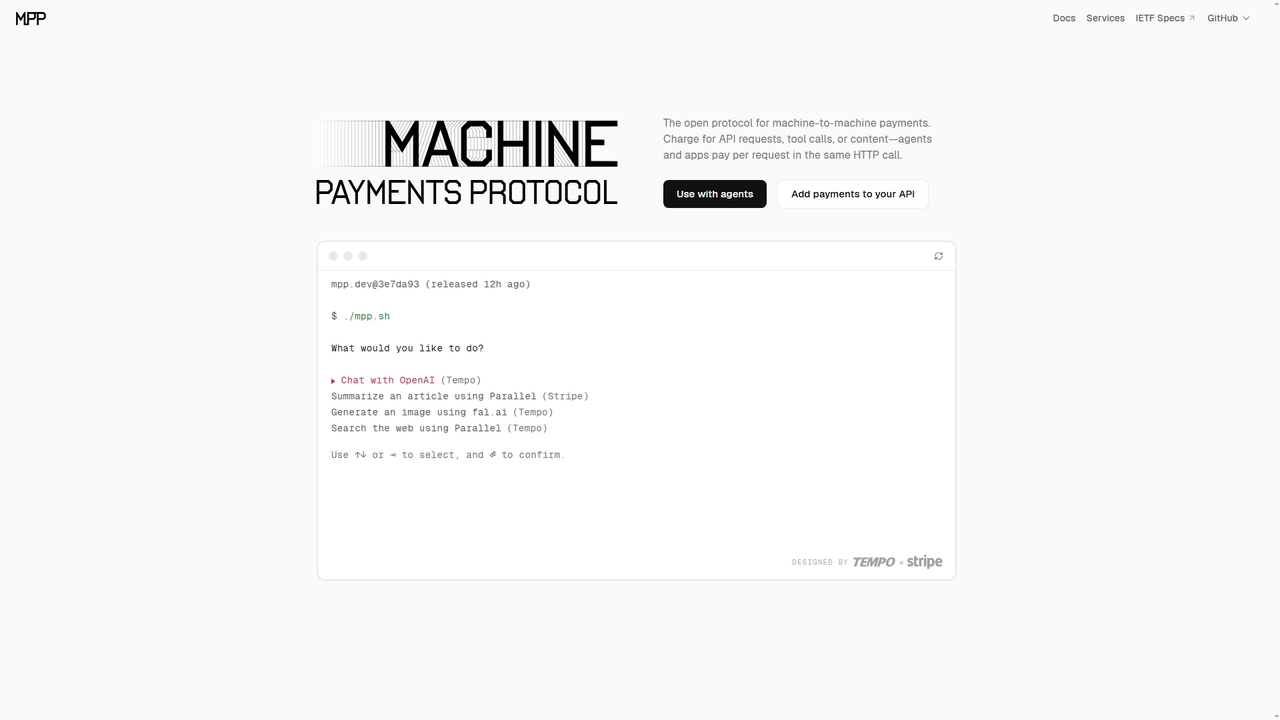
MPP
MPP (Machine Payments Protocol) is an open standard for machine-to-machine payments, enabling agents, apps, and humans to pay …
MPP (Machine Payments Protocol) is an open standard for machine-to-machine payments, enabling agents, apps, and humans to pay for API requests, tool calls, or content within the same HTTP call. It eliminates the need for complex payment integrations and manual API key management.