

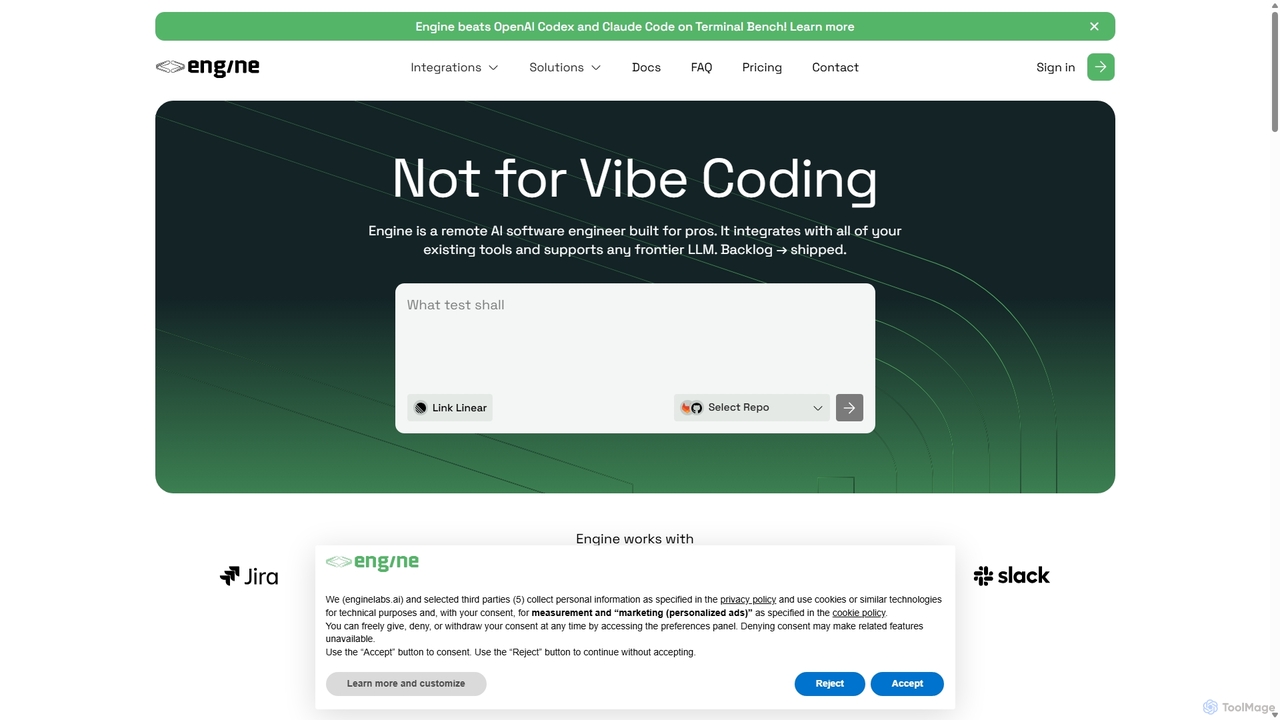
Backengine Overview
Backengine is a revolutionary platform designed to drastically simplify the process of building and deploying backend APIs powered by Large Language Models (LLMs). It empowers developers to transform natural language prompts into fully functional, scalable, and production-ready APIs without writing complex server-side code or managing infrastructure. By focusing on a declarative, prompt-centric approach, Backengine allows you to go from an idea to a live AI-powered endpoint in minutes, not weeks. It's the ultimate tool for developers, startups, and product teams looking to rapidly prototype and launch generative AI features.
How to use Backengine
Getting started with Backengine is incredibly straightforward. The workflow is designed to be intuitive for developers of all skill levels:
- Define Your API: Start by creating a simple configuration file (e.g.,
Backengine.yml). In this file, you define your API endpoints, specify the HTTP methods (GET, POST, etc.), and outline the expected request inputs and response outputs. - Write Your Logic as a Prompt: For each endpoint, you write the core logic as a natural language prompt. This prompt instructs the LLM on how to process the input data. You can insert user inputs directly into your prompt, creating dynamic and context-aware AI logic.
- Choose Your Model: Select the Large Language Model you want to power your API. Backengine integrates with leading models from providers like OpenAI and Anthropic, giving you the flexibility to choose the best one for your task.
- Deploy Instantly: With a single command, deploy your API to Backengine's managed infrastructure. The platform handles everything from server provisioning and auto-scaling to security and logging, allowing you to focus solely on your application's functionality.
- Integrate and Iterate: Once deployed, you receive a unique URL for your API endpoint. You can immediately start calling it from your frontend application, mobile app, or any other service. You can easily update your prompts and redeploy to iterate on your AI features.
Core Features of Backengine
- LLM-Powered Logic: The core of Backengine is its ability to use natural language prompts as backend logic, offloading complex tasks like text generation, summarization, classification, and data extraction to powerful LLMs.
- Declarative API Definition: Define your entire backend structure in a simple, human-readable YAML file. This makes your API easy to understand, version control, and manage.
- Serverless Infrastructure: Backengine is fully serverless. You never have to worry about managing servers, containers, or scaling. The platform automatically scales your APIs to handle any amount of traffic.
- Multi-Model Support: Seamlessly switch between different LLMs (e.g., GPT-4, Claude 3) to find the perfect balance of performance, cost, and capability for your specific use case.
- Structured I/O: Enforce schemas for your API requests and responses. Backengine ensures that the data flowing in and out of the LLM is structured correctly, preventing errors and making integration easier.
- Built-in Authentication & Security: Secure your endpoints with API keys and other standard authentication mechanisms, ensuring that only authorized users can access your services.
Use Cases for Backengine
Backengine is versatile and can be used to build a wide array of AI-powered applications and features:
- AI-Powered Chatbots: Quickly build and deploy backend logic for customer support bots, personal assistants, or interactive characters.
- Content Generation Tools: Create APIs that generate blog posts, marketing copy, social media updates, or product descriptions based on user prompts.
- Data Processing & Analysis: Develop endpoints that can summarize long documents, extract key information from unstructured text, classify user feedback, or analyze sentiment.
- Rapid Prototyping: Test new AI product ideas in hours instead of weeks. Build functional prototypes to demonstrate to stakeholders or test with early users without investing in heavy backend development.
- Internal Tools: Build custom internal tools for your team, such as a tool to automatically categorize support tickets or summarize meeting transcripts.
Advantages of Backengine
Using Backengine provides a significant competitive edge for building AI products:
- Unmatched Speed: Go from concept to a deployed, scalable API faster than any traditional development method. This accelerates your development cycle and time-to-market.
- Reduced Complexity: Abstract away the complexities of backend development, LLM integrations, and cloud infrastructure. This lowers the barrier to entry for creating sophisticated AI applications.
- Focus on Value: Spend your time perfecting your AI prompts and user experience, not on writing boilerplate code, managing dependencies, or configuring servers.
- Cost-Effective: The serverless model means you only pay for what you use. This avoids the cost of idle servers and reduces overall infrastructure expenses, especially for startups and new projects.
- Scalability by Default: Built on a robust, scalable architecture, your APIs can handle sudden spikes in traffic without any manual intervention.
Pricing and Plans
Backengine offers a flexible pricing structure to suit projects of all sizes, from individual hobbyists to large enterprises.
- Free Plan: Ideal for getting started, personal projects, and testing. This plan typically includes a generous number of free requests per month, allowing you to build and deploy a functional application at no cost.
- Pro Plan: Designed for production applications and startups. This plan offers a significantly higher request limit, access to more powerful models, faster response times, and standard support. Pricing is usually a monthly subscription with potential overages based on usage.
- Enterprise Plan: A custom solution for large-scale applications with specific needs. This plan includes unlimited usage, dedicated infrastructure options, premium support, enhanced security features, and custom model integrations. Contact sales for a custom quote.
Backengine Alternatives
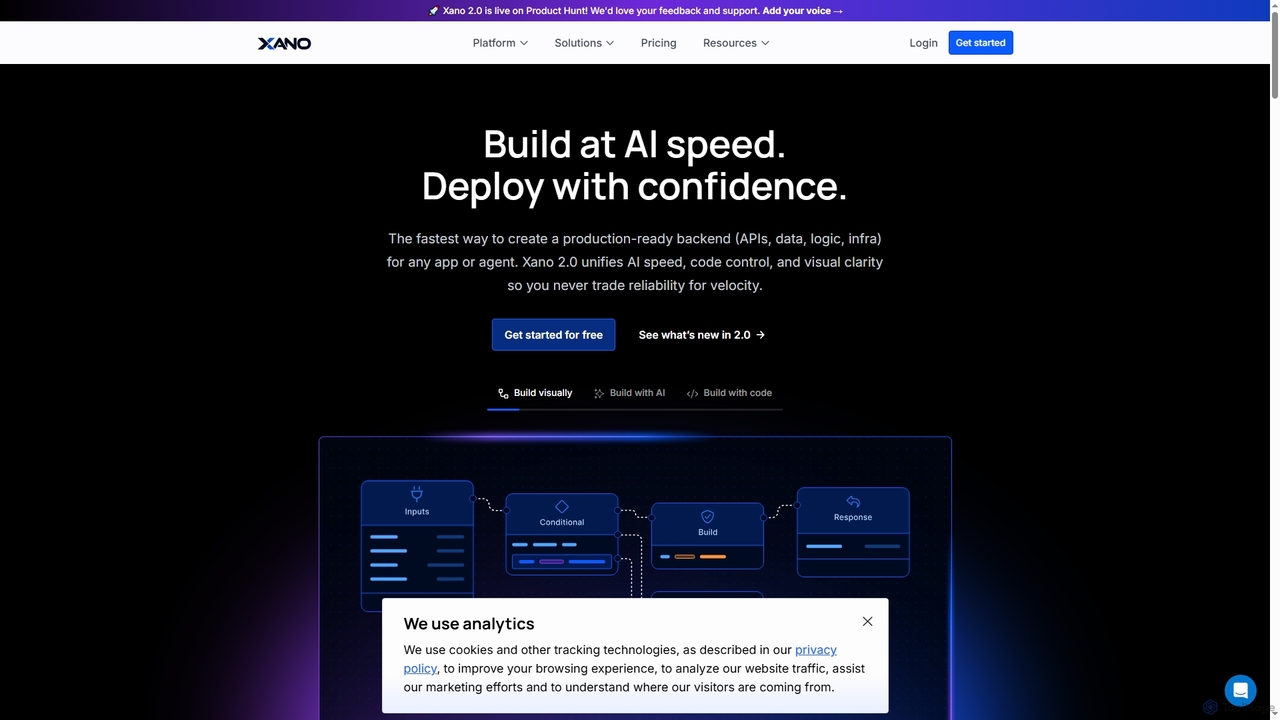
Xano
Xano is a scalable no-code backend platform that empowers developers and teams to build production-ready applications and AI agents at speed. It provides a unified solution for APIs, a managed Postgres database, visual logic, and auto-scaling infrastructure, eliminating the need for complex DevOps.
Agent Building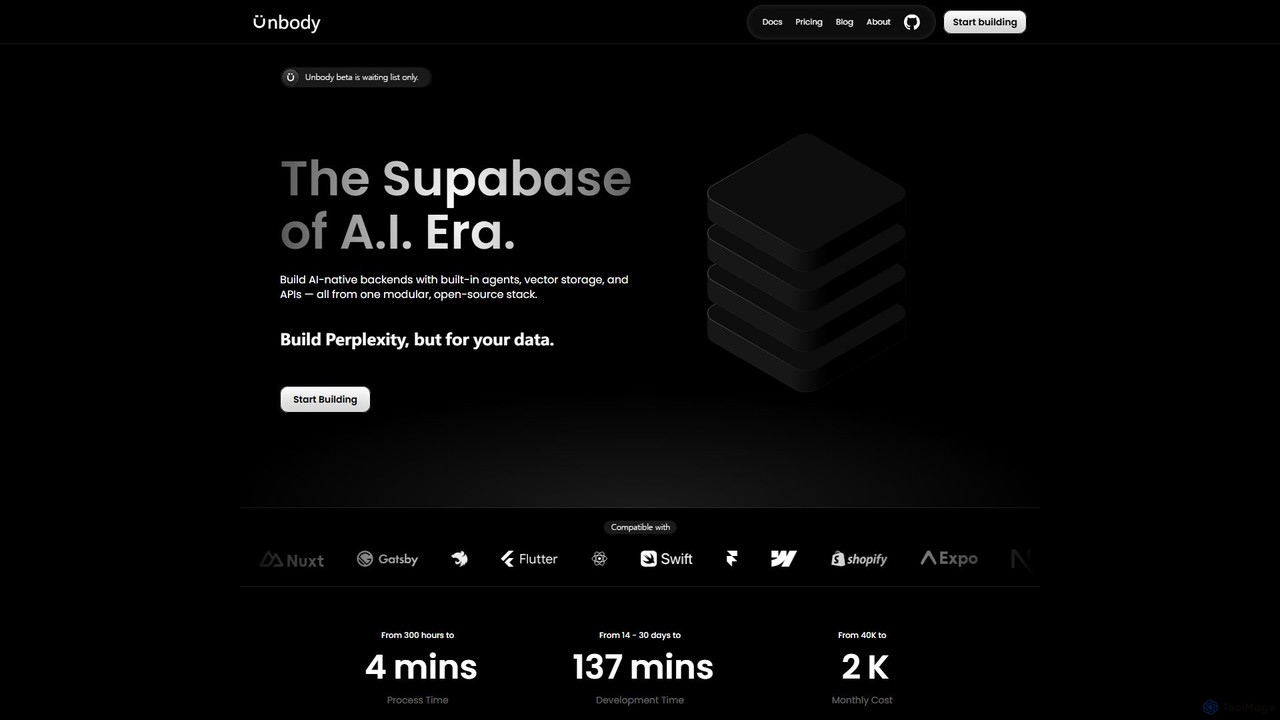
Unbody
Unbody is an AI-native development stack, described as the "Supabase of the AI Era." It provides developers with a modular, open-source backend featuring built-in agents, vector storage, and a unified API. This allows for the rapid and cost-effective creation of intelligent, adaptive applications by transforming any data into a queryable knowledge base, eliminating the need for fragmented systems and complex AI pipelines.
Vector Database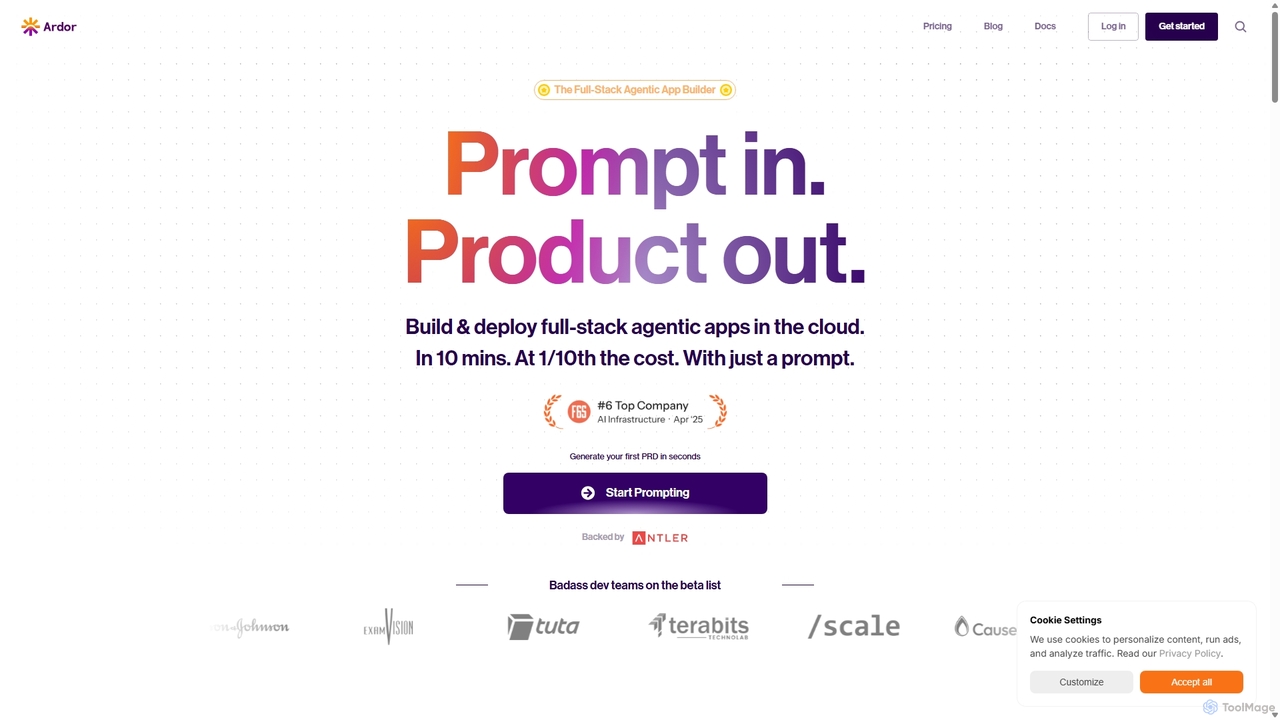
Ardor
Ardor is a full-stack, multi-agent platform that revolutionizes software development by enabling users to build, deploy, and monitor complete agentic AI applications from a single prompt. It automates the entire software development lifecycle (SDLC), drastically reducing development time from months to minutes and cutting costs by up to 90%. Ideal for developers, startups, and enterprises looking to accelerate innovation.
Agent Builder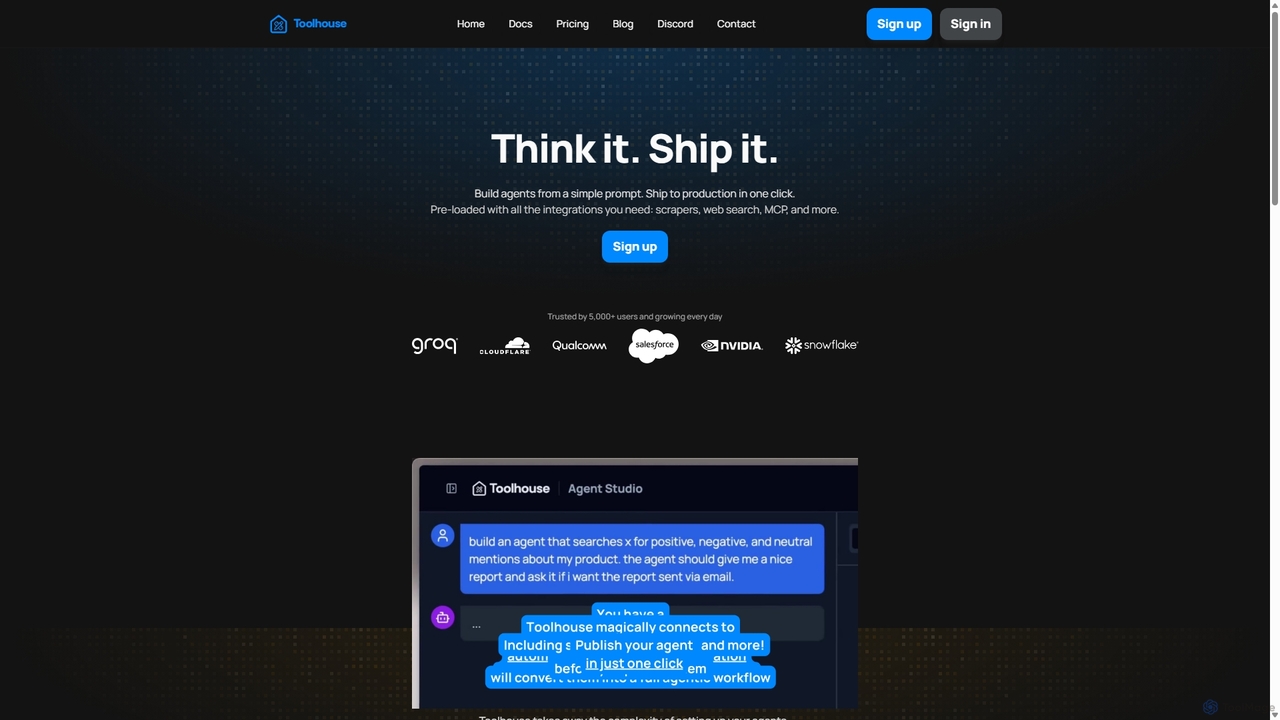
Toolhouse
Toolhouse is a no-code/low-code platform that democratizes AI agent creation. It allows developers to build, deploy, and manage production-grade AI agents from simple prompts. With pre-built integrations for web scraping, search, RAG, and databases, Toolhouse abstracts away the complexity of infrastructure, enabling one-click deployment of agents as scalable APIs. It's designed to empower developers of all skill levels to ship AI-powered applications quickly.
Agent Development
StackSpaces
StackSpaces is an integrated development platform designed to help developers build, deploy, and scale full-stack AI applications with ease. It provides a unified environment with backend, frontend, and infrastructure components, streamlining the entire development lifecycle from idea to production.
BackendBackengine Categories
Backengine Jobs
Backengine Embed Widget
Copy this embed code to place the badge on your blog, article, or product site and send readers directly to this ToolMage detail page.

Related AI tools
Xano
Xano is a scalable no-code backend platform that empowers developers and teams to build production-ready applications and AI agents at speed. It provides a unified solution for APIs, a managed Postgres database, visual logic, and auto-scaling infrastructure, eliminating the need for complex DevOps.
Agent BuildingArdor
Ardor is a full-stack, multi-agent platform that revolutionizes software development by enabling users to build, deploy, and monitor complete agentic AI applications from a single prompt. It automates the entire software development lifecycle (SDLC), drastically reducing development time from months to minutes and cutting costs by up to 90%. Ideal for developers, startups, and enterprises looking to accelerate innovation.
Agent BuilderToolhouse
Toolhouse is a no-code/low-code platform that democratizes AI agent creation. It allows developers to build, deploy, and manage production-grade AI agents from simple prompts. With pre-built integrations for web scraping, search, RAG, and databases, Toolhouse abstracts away the complexity of infrastructure, enabling one-click deployment of agents as scalable APIs. It's designed to empower developers of all skill levels to ship AI-powered applications quickly.
Agent Development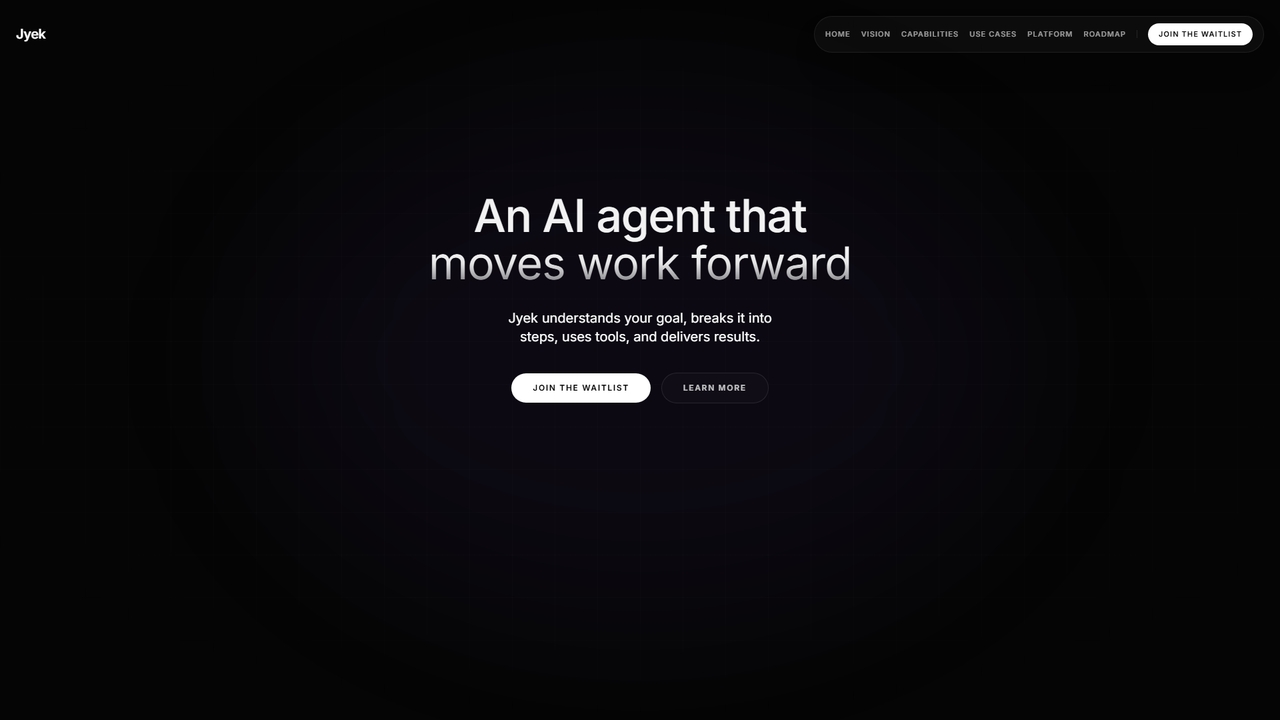
Jyek
Jyek is an AI agent platform that understands objectives, creates execution plans, uses tools, and delivers verifiable results for complex, multi-step tasks.
AutomationStackSpaces
StackSpaces is an integrated development platform designed to help developers build, deploy, and scale full-stack AI applications with ease. It provides a unified environment with backend, frontend, and infrastructure components, streamlining the entire development lifecycle from idea to production.
Backend
Xunfei Spark Agent Development Platform
A comprehensive, one-stop platform by iFlytek for building, debugging, and deploying AI agents. Powered by the Spark Large Language Model, it enables developers to create intelligent applications through a low-code interface, an extensive plugin marketplace, and robust management tools, covering the entire agent lifecycle.
Agent Builder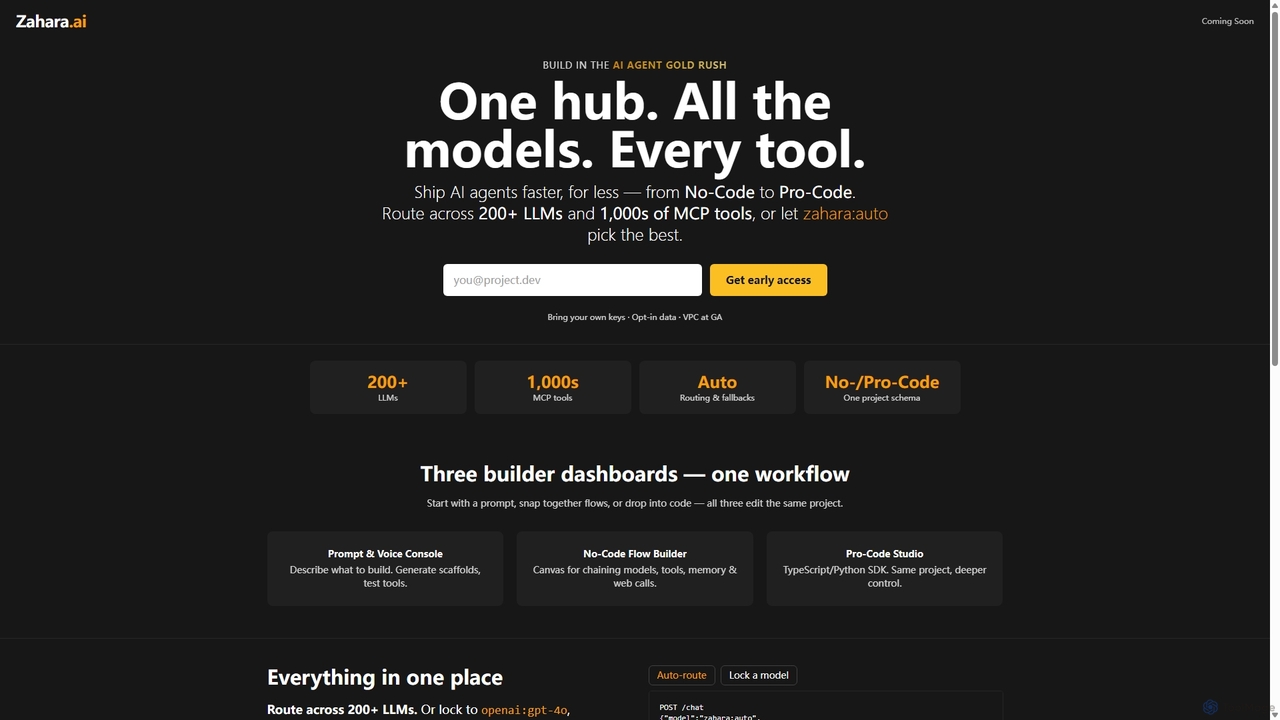
Zahara.ai
Zahara.ai is a unified development hub for building, deploying, and monetizing AI agents. It provides access to over 200 LLMs and thousands of tools, supporting a flexible workflow from No-Code to Pro-Code. Features like automatic model routing and integrated cost management streamline the entire agent creation lifecycle.
Agent Builder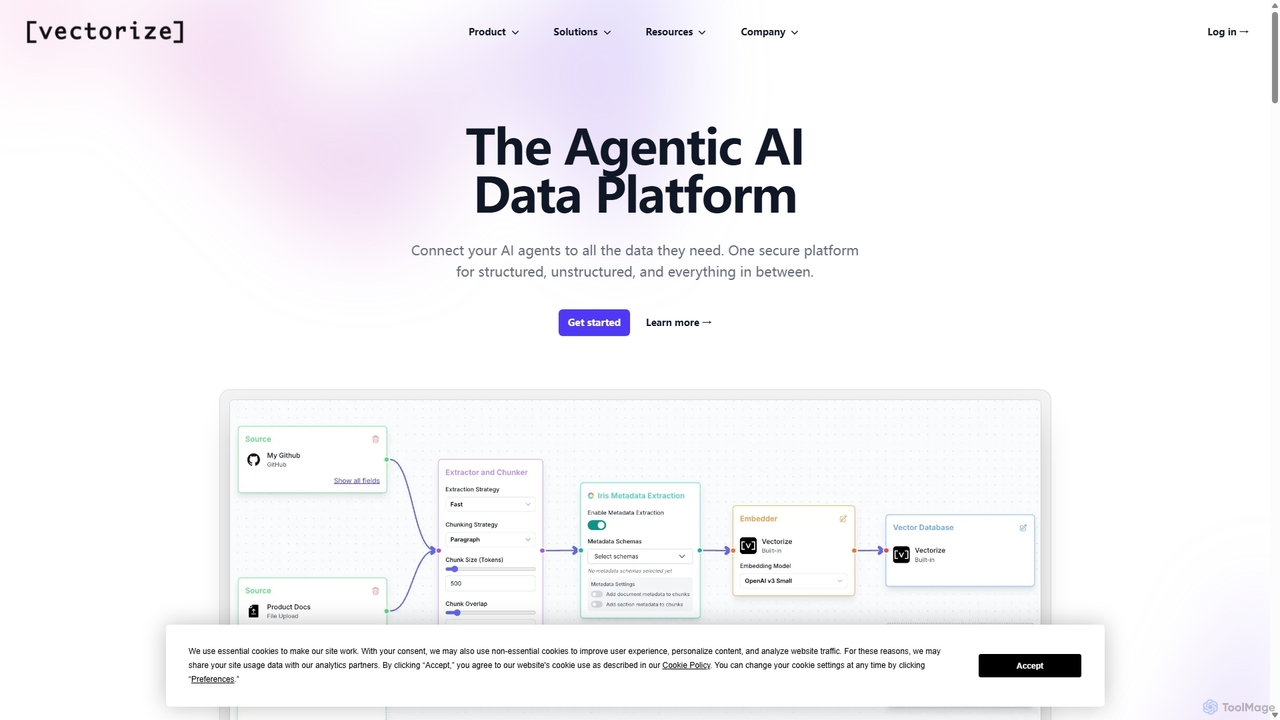
Vectorize
Vectorize is a RAG-as-a-Service platform that simplifies building AI applications on unstructured data. It offers managed RAG pipelines, extensive data source connectors, and the flexibility to use its managed vector database or connect your own, enabling developers to deploy production-ready AI solutions quickly.
Rag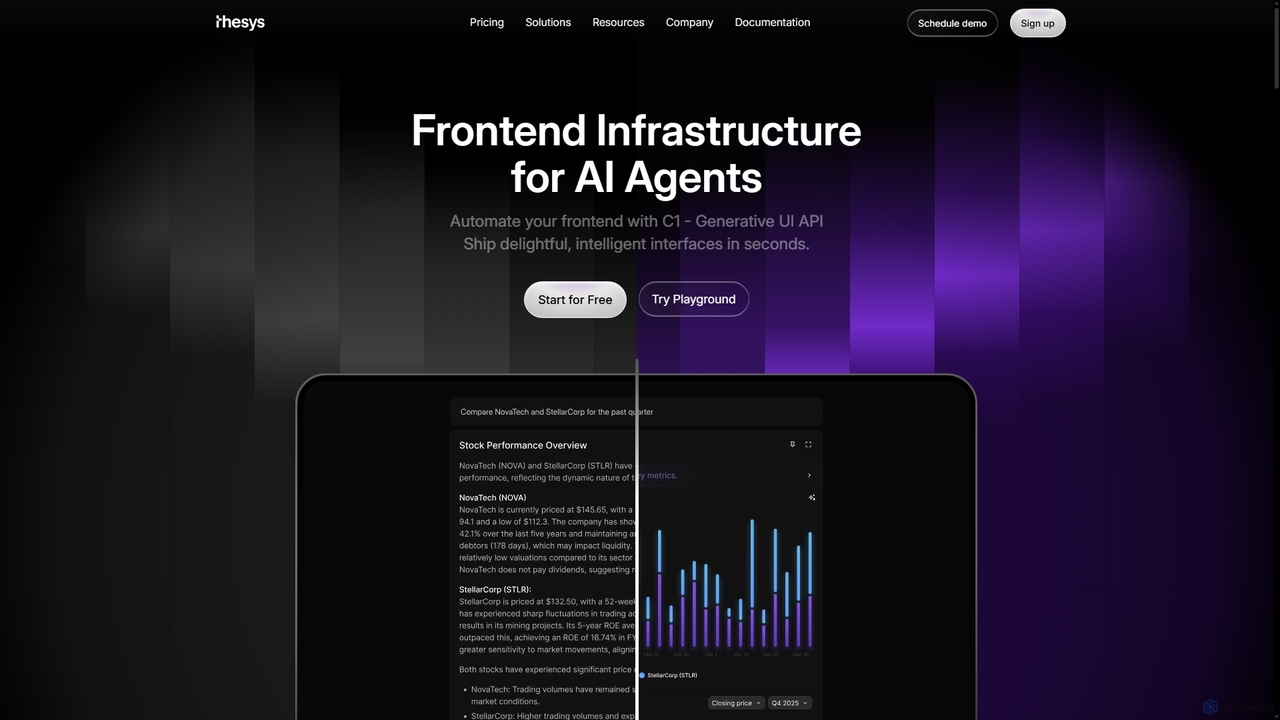
Thesys
Thesys provides C1, a Generative UI API that transforms LLM responses into dynamic, interactive user interfaces in real-time. Designed for developers building AI agents and applications, it automates frontend development by converting text outputs into live UI components like forms, charts, and tables. This allows for the creation of adaptive, engaging, and intelligent interfaces without the limitations of hardcoded UI, accelerating AI product development.
Api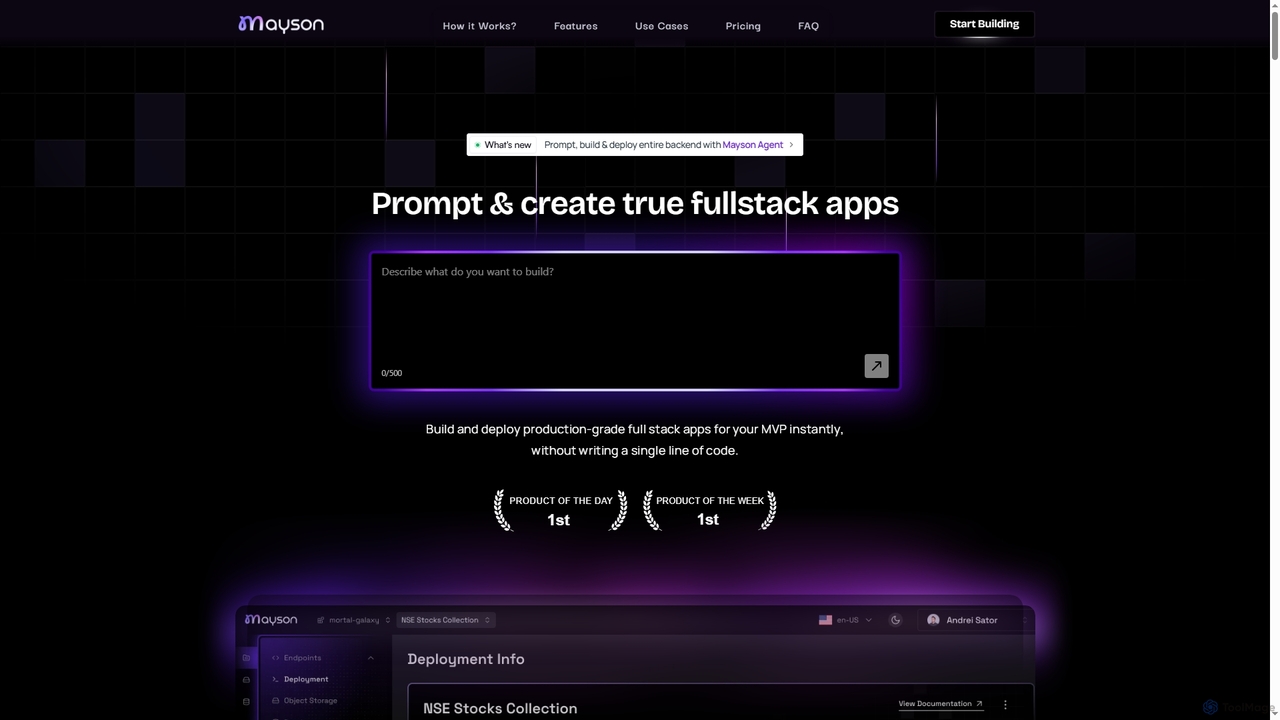
Mayson
Mayson is a no-code Backend-as-a-Service (BaaS) platform that empowers developers and teams to build, deploy, and scale production-grade full-stack applications instantly. It eliminates the need for manual API development, offering a streamlined process to create robust backends with enterprise-grade security and no vendor lock-in.
Baas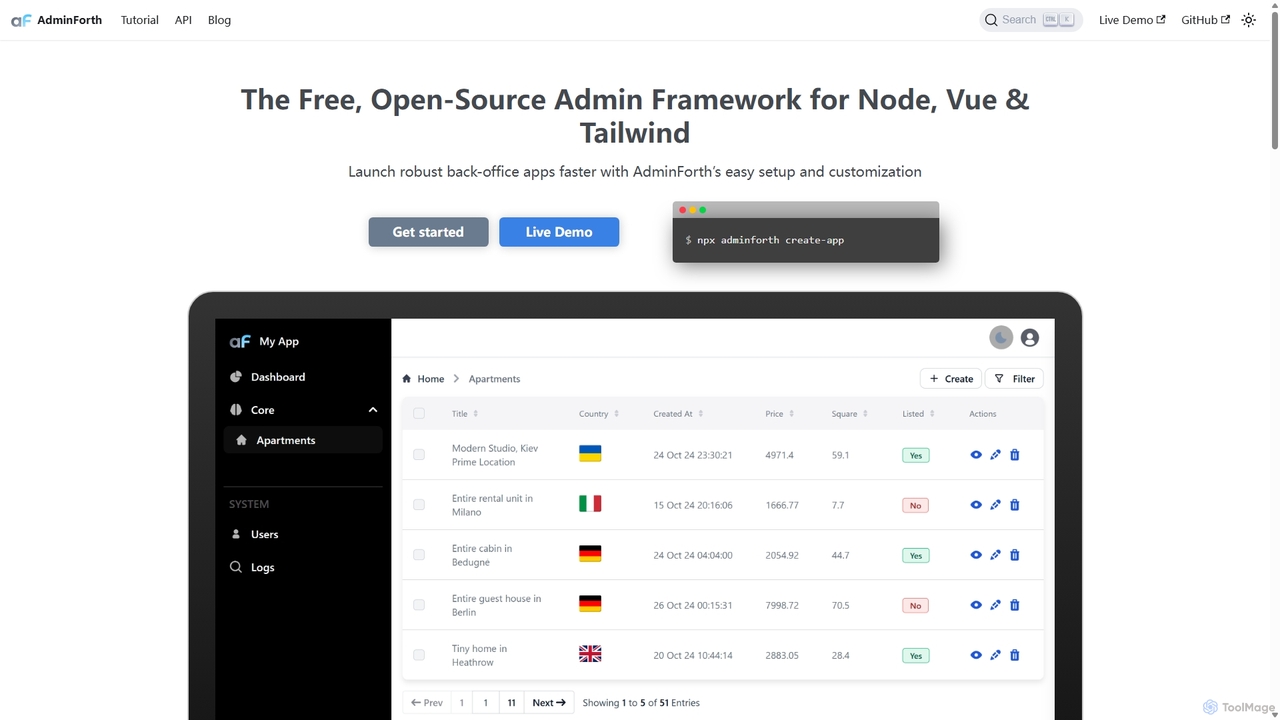
AdminForth
AdminForth is a powerful Vue & Node.js framework for rapidly building feature-rich admin panels. It accelerates development with out-of-the-box CRUD, authentication, and user management. Integrated AI plugins, powered by ChatGPT and other LLMs, provide intelligent content autocompletion and seamless multi-language translation, making it an essential tool for modern web developers.
Framework
Metatable
Metatable is an AI-first development platform that enables rapid creation and deployment of web and mobile applications. It streamlines the entire software development lifecycle, from idea to launch, by leveraging AI to generate code, manage infrastructure, and automate complex tasks, allowing users to build MVPs in minutes.
Api Development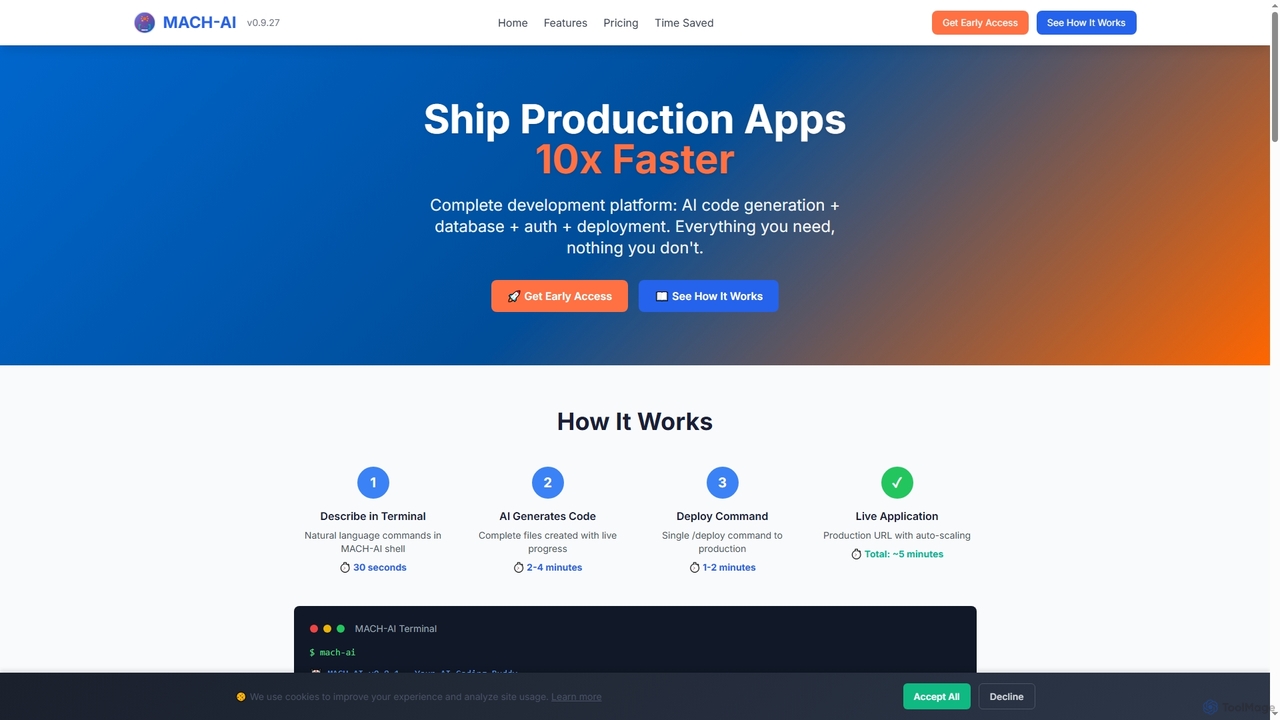
MACH-AI
MACH-AI is an AI coding assistant and complete development platform that transforms concepts into production-ready cloud applications in minutes. It integrates AI code generation, built-in database, authentication, and one-command deployment, enabling developers to build and launch scalable web applications 10x faster across Python, JavaScript, and TypeScript.
Application Deployment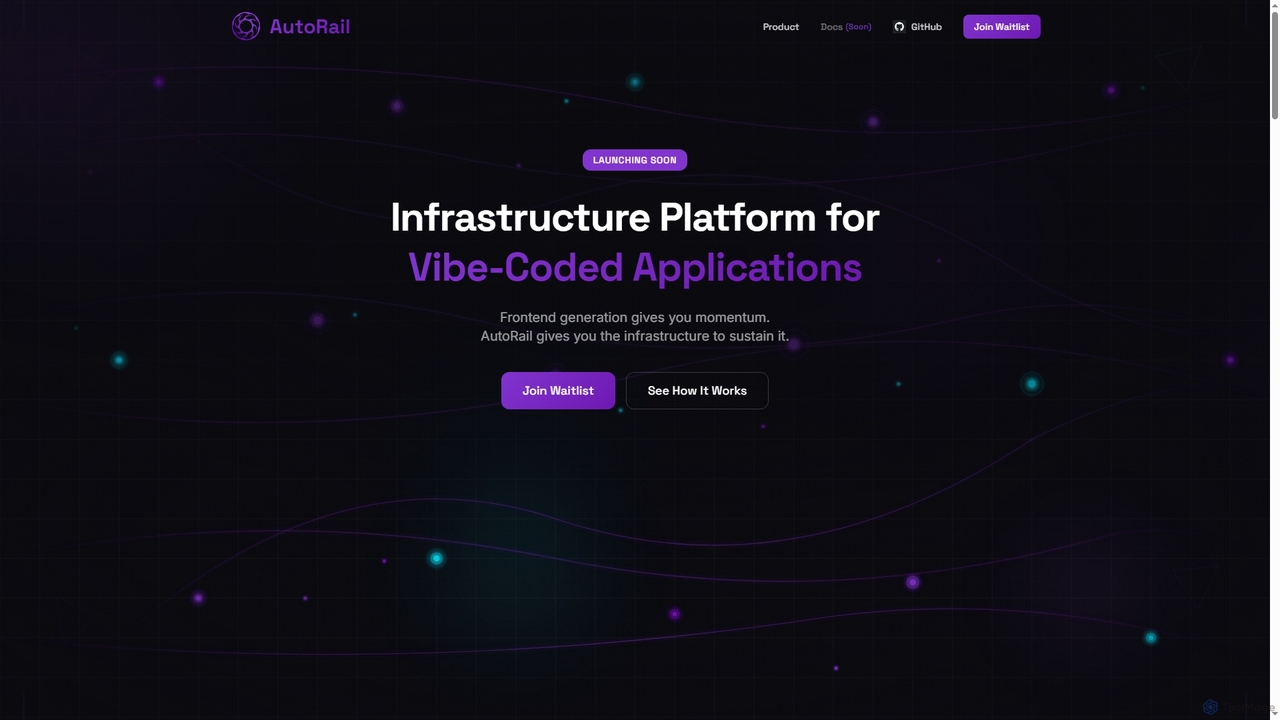
AutoRail
AutoRail is an infrastructure platform designed to transform "vibe-coded" prototypes into production-ready applications. It automatically provisions essential backend primitives like stateful memory, workflow orchestration, and auto-scaling, bridging the critical gap between rapid frontend development and robust, scalable production systems without manual configuration.
Ai Infrastructure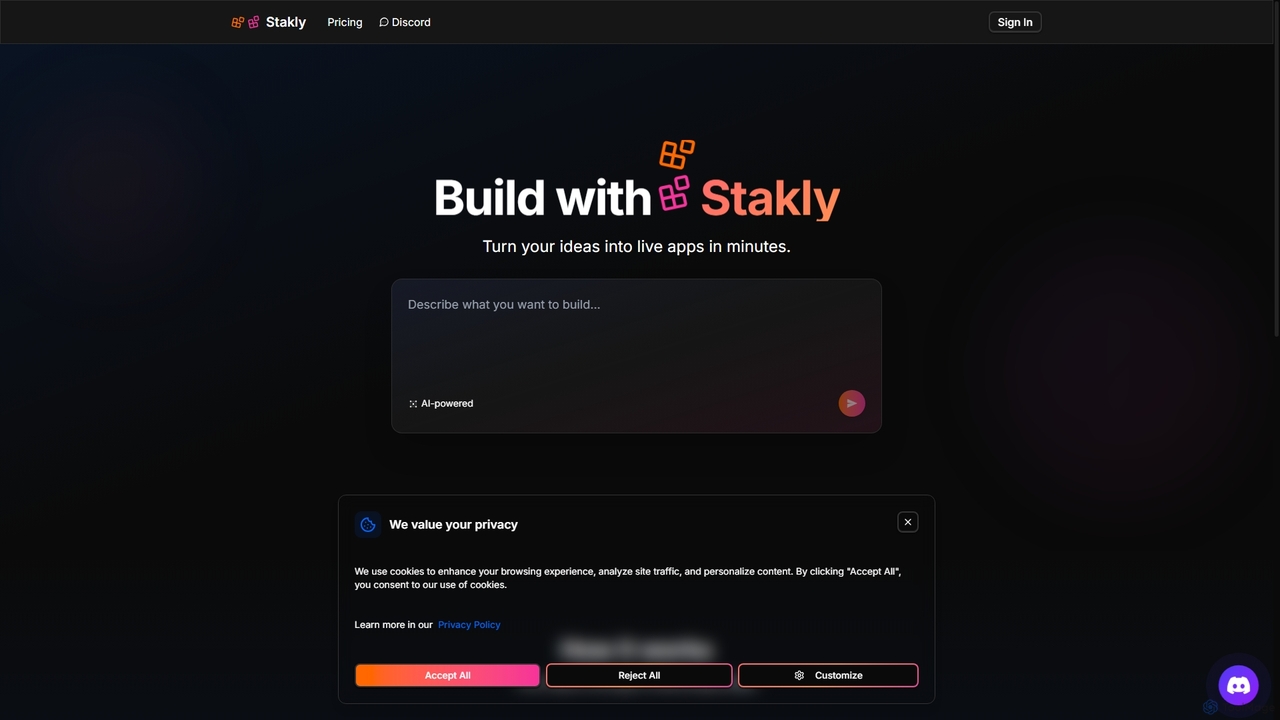
Stakly
Stakly is an AI-powered development platform that transforms natural language prompts into production-ready, full-stack web applications in minutes. Describe your idea, and the AI generates clean code, which you can deploy with one click or export to own completely. It supports modern frameworks like React, Next.js, and Python, making it ideal for rapid prototyping and development.
Code Assistant
Backengine Comments (0)
Sign in to comment.
Sign inNo comments yet.