

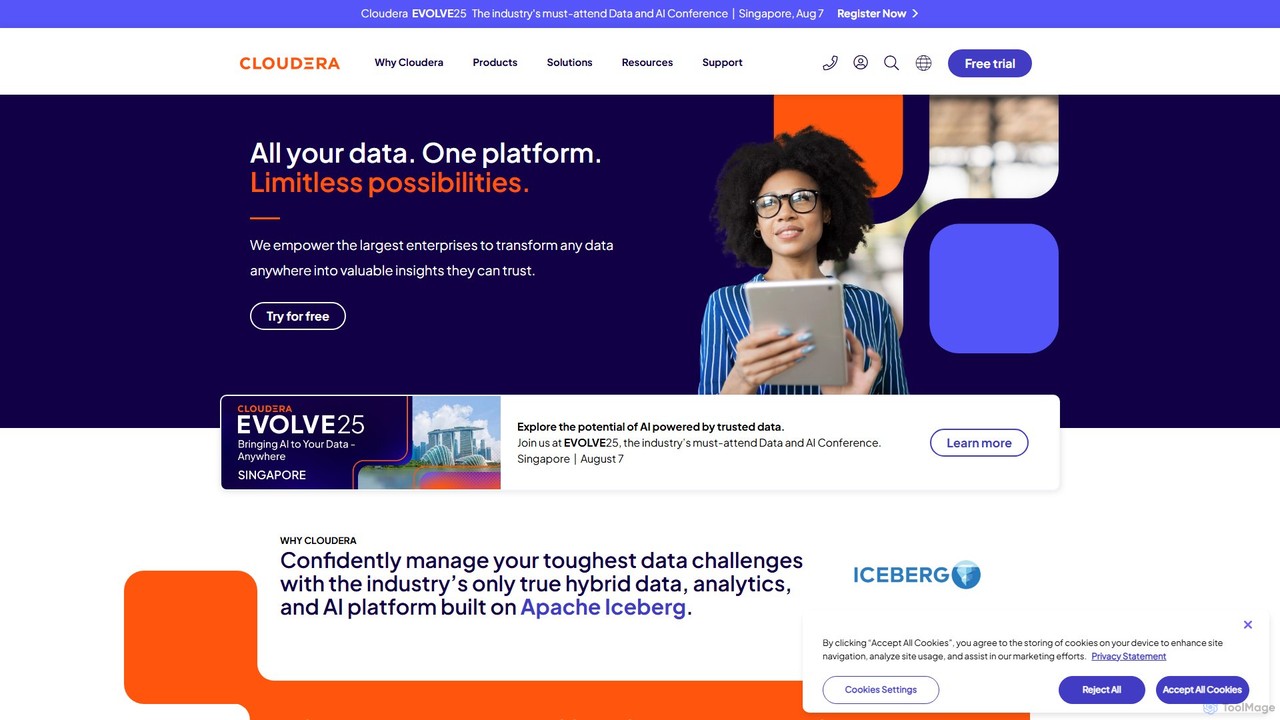
Cloudera Overview
Cloudera offers a comprehensive hybrid data platform designed to empower enterprises to harness the full potential of their data, regardless of where it resides. As the 'hybrid data company,' Cloudera provides a unified solution that spans from the edge to AI, enabling organizations to manage and analyze data across on-premises, private cloud, and multiple public cloud environments. The core of its offering is the Cloudera Data Platform (CDP), which integrates various data services into a single, secure, and governed platform.
CDP allows businesses to build a modern 'data lakehouse' architecture, combining the flexibility and scale of a data lake with the performance and management features of a data warehouse. This enables a complete data lifecycle management, from data ingestion and processing to advanced analytics and machine learning model deployment. By leveraging open-source technologies like Apache Spark, Apache NiFi, and Apache Kafka, Cloudera ensures flexibility and avoids vendor lock-in, while providing enterprise-grade security, governance, and management capabilities through its Shared Data Experience (SDX) layer.
How to use Cloudera
Using Cloudera typically involves a multi-stage process tailored to an organization's data strategy:
- Deployment: Choose your deployment model—on-premises (CDP Private Cloud), public cloud (CDP Public Cloud on AWS, Azure, GCP), or a hybrid combination.
- Data Ingestion: Use Cloudera DataFlow (powered by Apache NiFi) to collect and move data from various sources, including IoT devices, logs, transactional databases, and cloud storage.
- Data Engineering: Leverage Cloudera Data Engineering with Apache Spark to transform, enrich, and prepare large-scale datasets for analysis. This includes running ETL/ELT jobs in a scalable and automated fashion.
- Data Warehousing: Utilize Cloudera Data Warehouse to provide high-performance SQL analytics for BI and reporting. Users can query massive datasets using familiar tools and create interactive dashboards with Cloudera Data Visualization.
- Machine Learning & AI: Employ Cloudera Machine Learning (CML) to build, train, deploy, and monitor machine learning models at scale. CML provides a collaborative environment for data scientists with support for popular frameworks like TensorFlow, PyTorch, and scikit-learn, and can leverage GPUs for accelerated training.
- Operational Database: Use Cloudera Operational Database (powered by Apache HBase) for real-time, high-volume data serving applications.
Core Features of Cloudera
- Hybrid and Multi-Cloud Architecture: Run analytics and AI workloads consistently across on-premises data centers and major public clouds (AWS, Azure, Google Cloud).
- Shared Data Experience (SDX): A unified layer for security, governance, and metadata management that ensures consistent data context and control across all environments and data services.
- Integrated Data Lifecycle: A comprehensive suite of services for data engineering, data warehousing, operational databases, and machine learning, all on one platform.
- Open Source Foundation: Built on powerful open-source projects like Hadoop, Spark, Kafka, and NiFi, providing flexibility and preventing vendor lock-in.
- Scalable AI and Machine Learning: End-to-end machine learning capabilities, from data preparation to model deployment and monitoring, with support for GPU acceleration.
- Enterprise-Grade Security: Robust security features including authentication, authorization, encryption, and auditing to protect sensitive data.
- Self-Service Analytics: Empowers data analysts and business users to explore data and generate insights through SQL, BI tools, and data visualization.
Use Cases for Cloudera
Cloudera's platform is versatile and supports a wide range of industry use cases:
- Predictive Maintenance: Analyzing sensor data from industrial equipment (like jet engines) to predict failures and schedule maintenance proactively, reducing downtime and costs.
- Customer 360 & Personalization: Consolidating customer data from all touchpoints to create a unified view, enabling personalized marketing, product recommendations, and improved customer service.
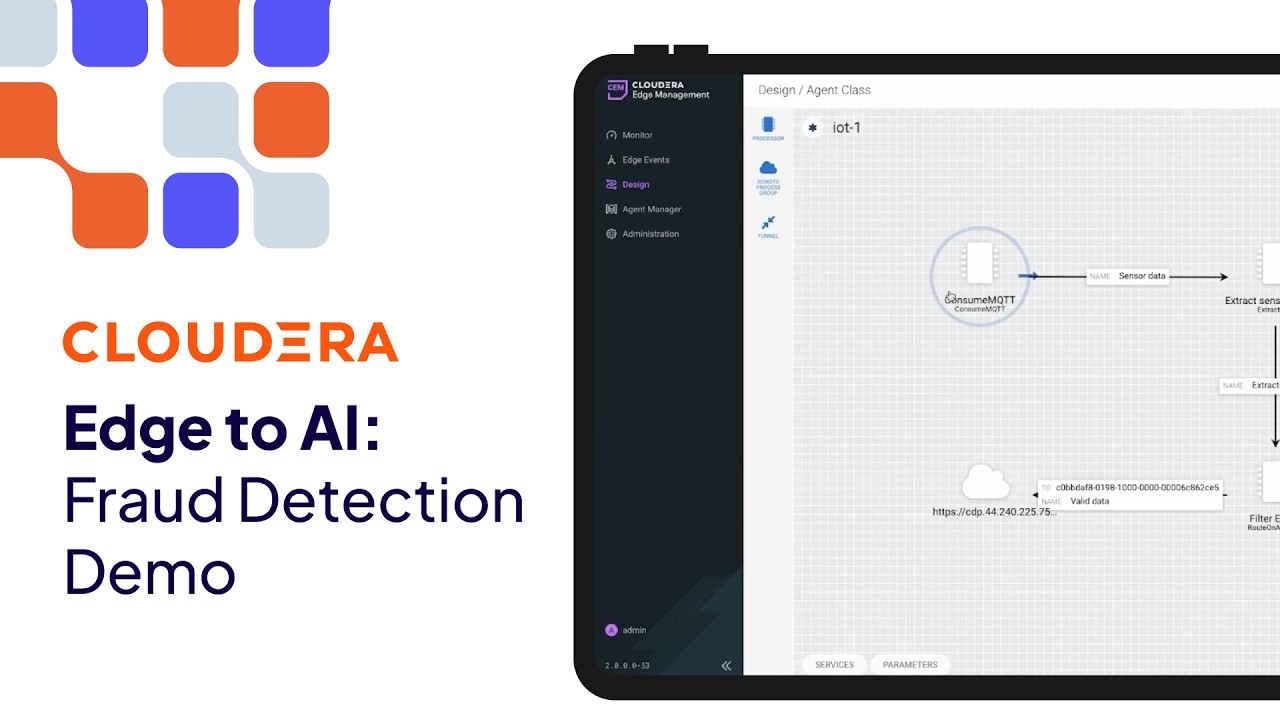
- Fraud Detection: Processing financial transactions in real-time to identify and prevent fraudulent activities.
- IoT and Streaming Analytics: Ingesting and analyzing high-velocity data from connected devices to gain real-time insights for smart cities, connected cars, and industrial automation.
- Genomics and Life Sciences: Managing and analyzing massive genomic datasets to accelerate research, drug discovery, and personalized medicine.
- Cybersecurity Analytics: Aggregating and analyzing security logs from across the enterprise to detect threats and respond to incidents faster.
Advantages of Cloudera
The primary advantage of Cloudera is its ability to deliver a unified, hybrid, and open data platform. This approach allows organizations to modernize their data architecture without being locked into a single cloud provider. The integrated SDX layer simplifies governance and security, which is critical for large enterprises with complex compliance requirements. Furthermore, by covering the entire data lifecycle, Cloudera reduces architectural complexity and helps data teams collaborate more effectively, accelerating the path from data to insight and AI-driven outcomes.
Pricing and Plans
Cloudera's pricing is tailored for enterprise customers and is not publicly listed in standard tiers. Pricing is typically based on a consumption model (e.g., Cloudera Compute Units - CCUs) for cloud services or a subscription-based license for private cloud deployments. Prospective customers need to contact the Cloudera sales team to get a custom quote based on their specific needs, including the services required, data volume, and deployment environment.
Traffic
Latest traffic
Status
Monthly traffic trend
- 2025-9: 444.6K
- 2026-1: 369.4K
- 2026-2: 285.1K
- 2026-3: 297.1K
- 2026-4: 318.1K
- 2026-5: 352.2K
Geography
Top 5 countries / regions
- 🇺🇸United States40.8%
- 🇸🇦Saudi Arabia26.5%
- 🇮🇳India17.4%
- 🇭🇺Hungary9.5%
- 🇧🇷Brazil5.7%
Traffic sources
| Source type | Percentage |
|---|---|
Direct | 87.5% |
Referral | 9.3% |
Email | 3.2% |
Top keywords
| Keyword | Cost per click |
|---|---|
| cloud ai | $0.92 |
| cloudera | $2.34 |
| cloudera careers | $0.26 |
| data bricks | $3.61 |
| databricks | $3.36 |
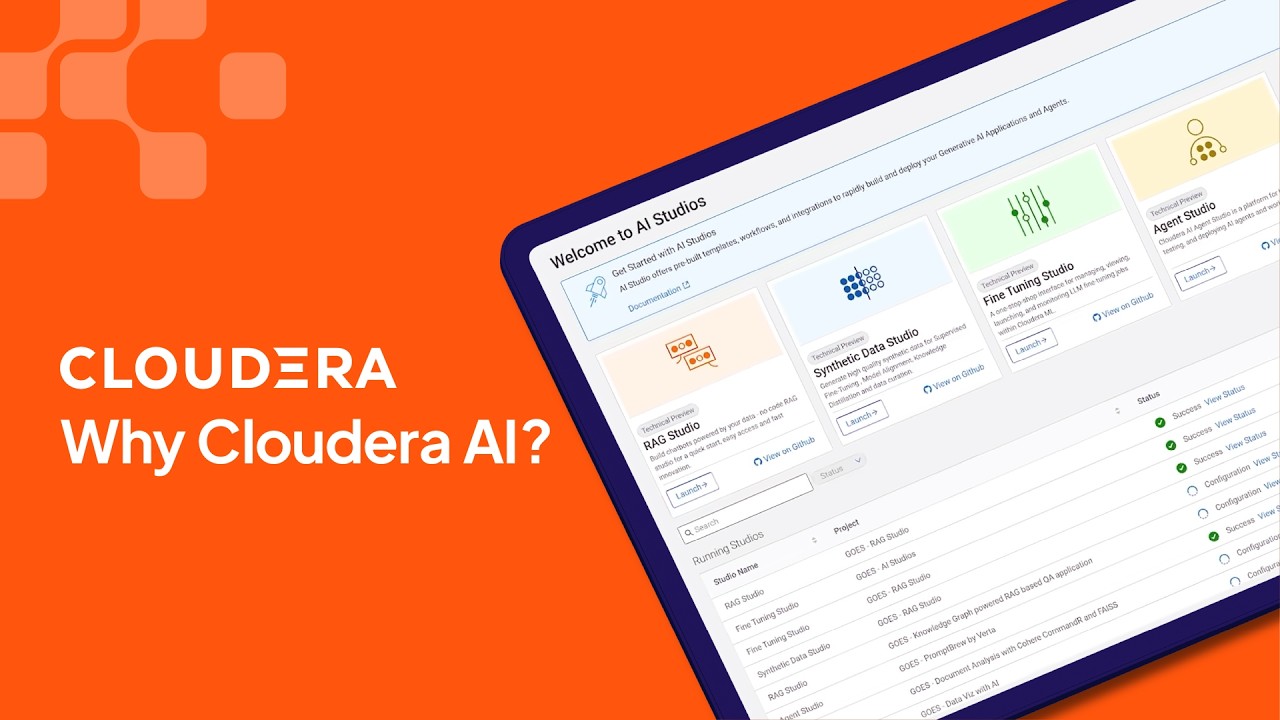
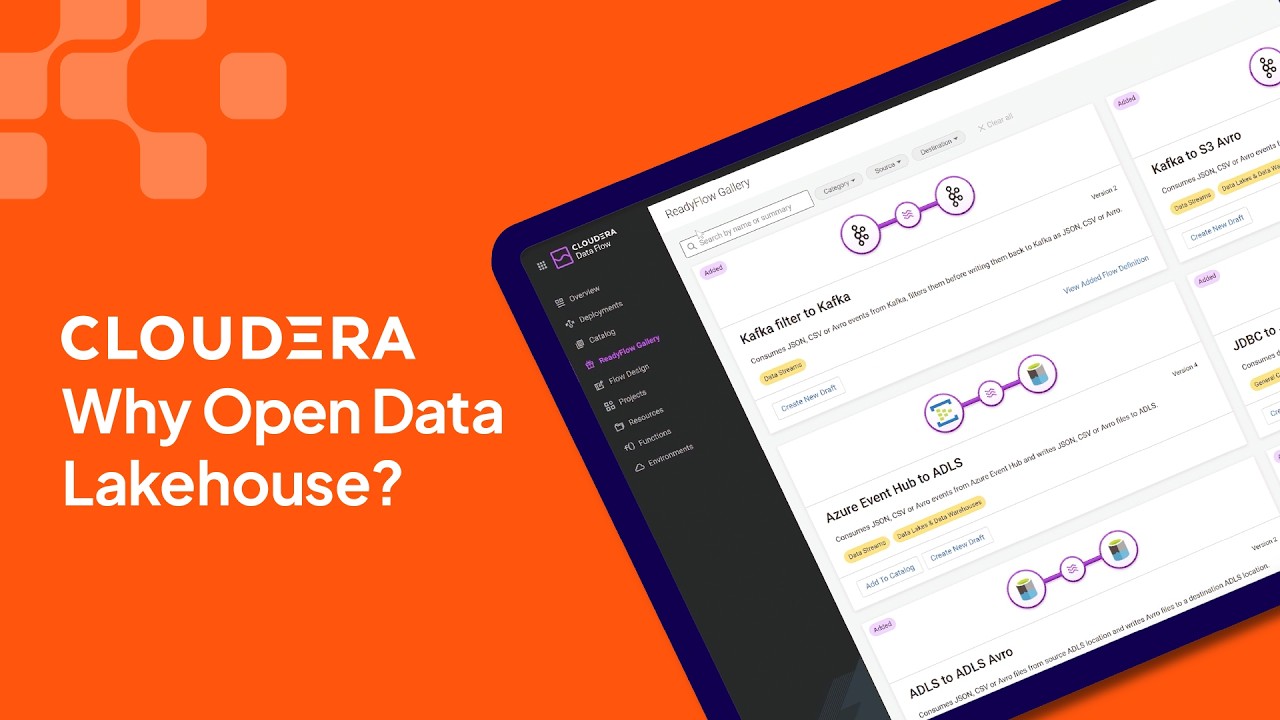
Cloudera Videos on YouTube

Cloudera, Inc.

Cloudera, Inc.

Cloudera Alternatives
iomete
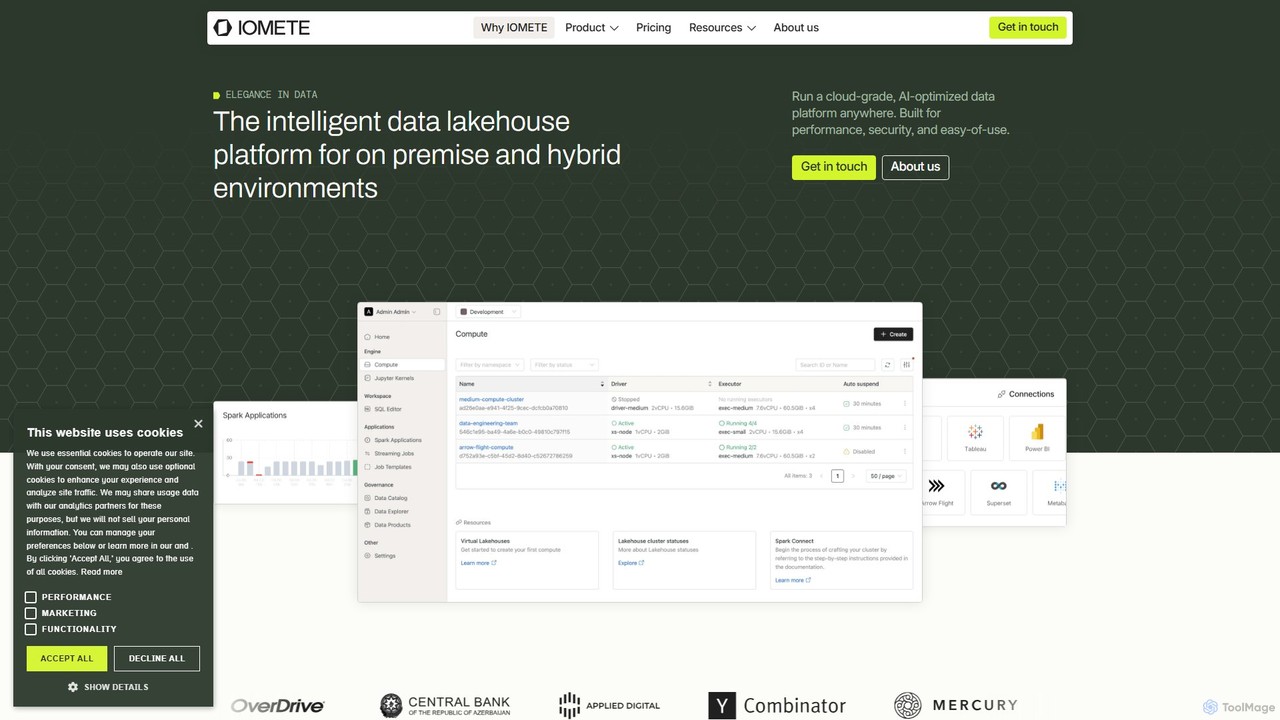
iomete is a self-hosted data lakehouse platform designed for enterprises. It combines the flexibility of data lakes with the performance of data warehouses, giving organizations full control over their data, security, and costs. By deploying on-premises or in your own cloud, iomete eliminates vendor lock-in and provides a cost-effective, scalable solution for managing petabyte-scale datasets, data engineering, and machine learning workflows.
Analytics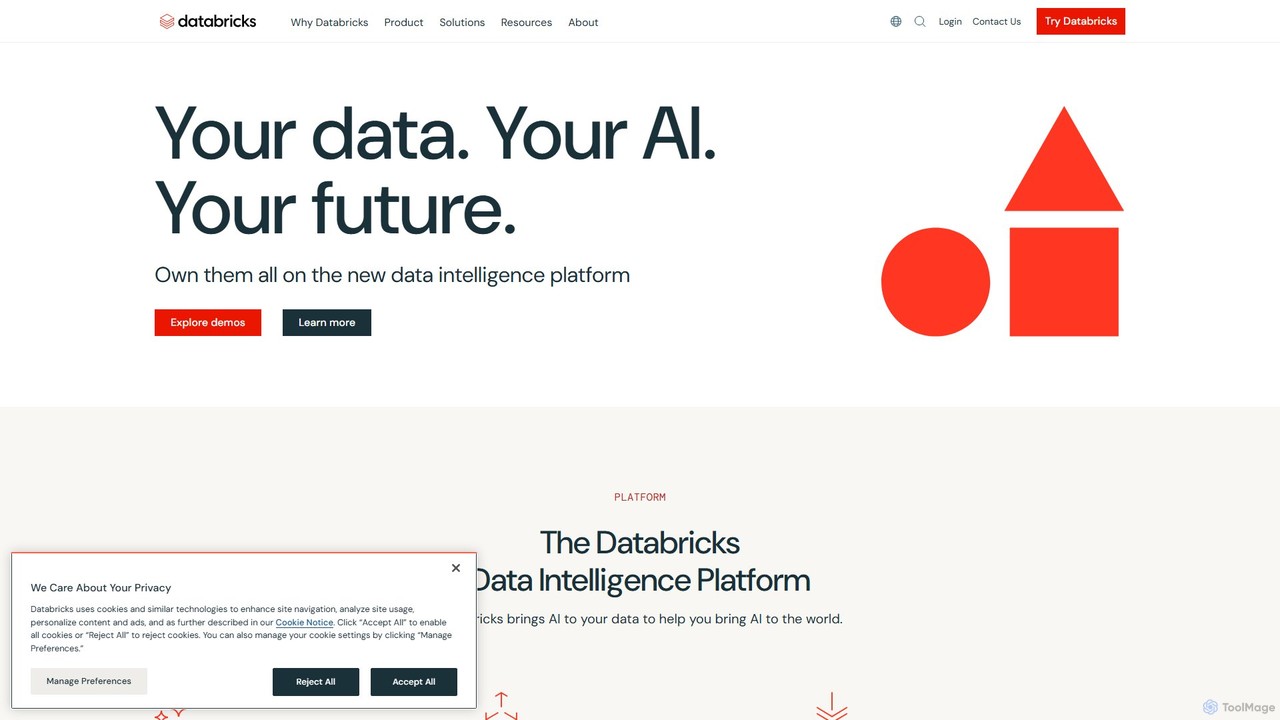
Databricks
Databricks is a unified Data Intelligence Platform that combines data warehousing and data lakes into a lakehouse architecture. It enables enterprises to manage the entire data lifecycle, from data engineering and ETL to business intelligence, data science, and large-scale generative AI applications, all on a single, collaborative platform.
Machine Learning Platform
inextlabs
inextlabs is an enterprise-grade Generative AI platform designed to enhance business efficiency and growth. It offers a suite of agentic AI solutions, including inFlow Assistant for omnichannel support, inFlow DocsAI for intelligent document processing, and inFlow Insights for data analytics. Focusing on security, scalability, and customization, inextlabs helps industries like healthcare, finance, and retail automate workflows, gain actionable insights, and deliver superior customer experiences through secure, AI-driven applications.
Enterprise Solutions
WPIntellichat
WPIntellichat offers advanced Agentic and Generative AI solutions designed to drive business growth. It transforms enterprise data and workflows into actionable intelligence, enabling faster decision-making, smarter execution, and confident scaling for businesses seeking measurable outcomes and a competitive edge.
Agentic Ai
IBM
IBM offers a comprehensive enterprise AI and hybrid cloud platform, watsonx, designed to help businesses build, scale, and govern AI with trust and transparency. It provides access to IBM's proprietary Granite foundation models, open-source models, a fit-for-purpose data store, and an AI governance toolkit, empowering organizations to accelerate innovation and automate processes securely.
Enterprise SolutionsCloudera Categories
Cloudera Embed Widget
Copy this embed code to place the badge on your blog, article, or product site and send readers directly to this ToolMage detail page.

Related AI tools
Databricks
Databricks is a unified Data Intelligence Platform that combines data warehousing and data lakes into a lakehouse architecture. It enables enterprises to manage the entire data lifecycle, from data engineering and ETL to business intelligence, data science, and large-scale generative AI applications, all on a single, collaborative platform.
Machine Learning Platformiomete
iomete is a self-hosted data lakehouse platform designed for enterprises. It combines the flexibility of data lakes with the performance of data warehouses, giving organizations full control over their data, security, and costs. By deploying on-premises or in your own cloud, iomete eliminates vendor lock-in and provides a cost-effective, scalable solution for managing petabyte-scale datasets, data engineering, and machine learning workflows.
Analytics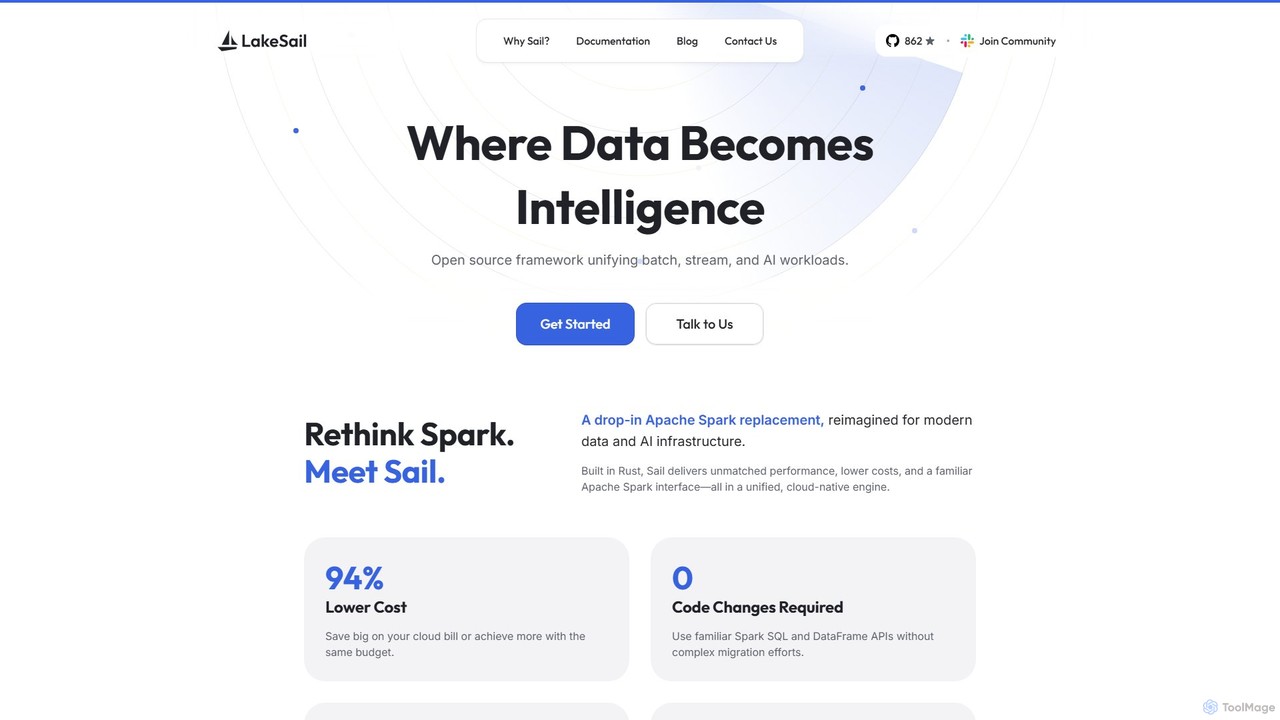
LakeSail
LakeSail offers a high-performance, open-source framework called Sail, designed as a drop-in replacement for Apache Spark. Built in Rust, it unifies batch, stream, and AI workloads, delivering up to 8x faster execution and 94% lower cloud costs without requiring any code changes. It eliminates JVM overhead for superior efficiency and scalability in modern data and AI infrastructures.
Big DataIBM
IBM offers a comprehensive enterprise AI and hybrid cloud platform, watsonx, designed to help businesses build, scale, and govern AI with trust and transparency. It provides access to IBM's proprietary Granite foundation models, open-source models, a fit-for-purpose data store, and an AI governance toolkit, empowering organizations to accelerate innovation and automate processes securely.
Enterprise Solutions
C3 AI
C3 AI is a leading enterprise AI application development platform and ecosystem. It provides a comprehensive suite of tools and services for organizations to design, build, deploy, and operate large-scale AI applications. It caters to various industries with pre-built solutions and a flexible development environment, accelerating digital transformation and delivering significant business value.
Enterprise Solutions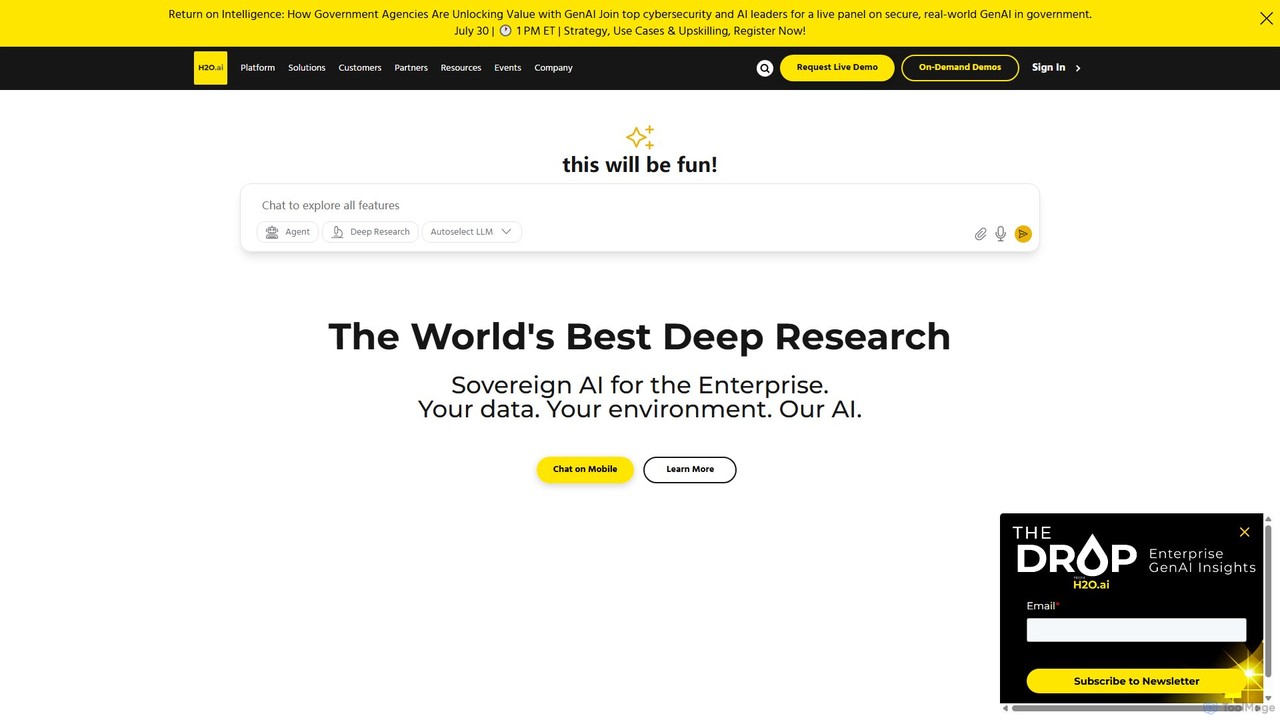
H2O.ai
H2O.ai is an end-to-end AI Cloud platform for enterprises, combining predictive and generative AI. It enables businesses to build, deploy, and manage secure, high-performance AI models and applications in any environment, from cloud to on-premise. The platform features AutoML, a Feature Store, Document AI, and robust Model Risk Management.
Enterprise Solutions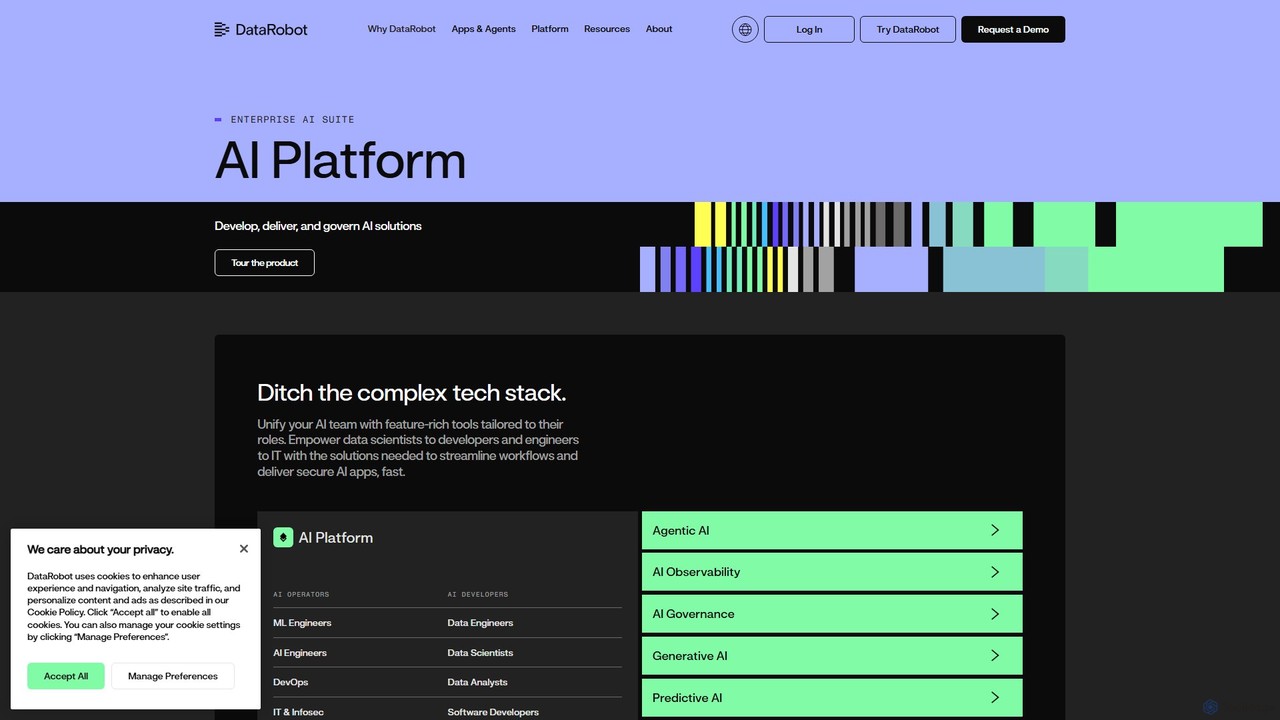
DataRobot AI Platform (formerly Algorithmia)
DataRobot AI Platform, which has integrated Algorithmia's powerful MLOps technology, is an end-to-end enterprise solution for the entire AI lifecycle. It enables organizations to rapidly build, deploy, manage, and govern machine learning models and generative AI applications at scale, accelerating the journey from data to value.
Enterprise Solutions
Jyek
Jyek is an AI agent platform that understands objectives, creates execution plans, uses tools, and delivers verifiable results for complex, multi-step tasks.
Automation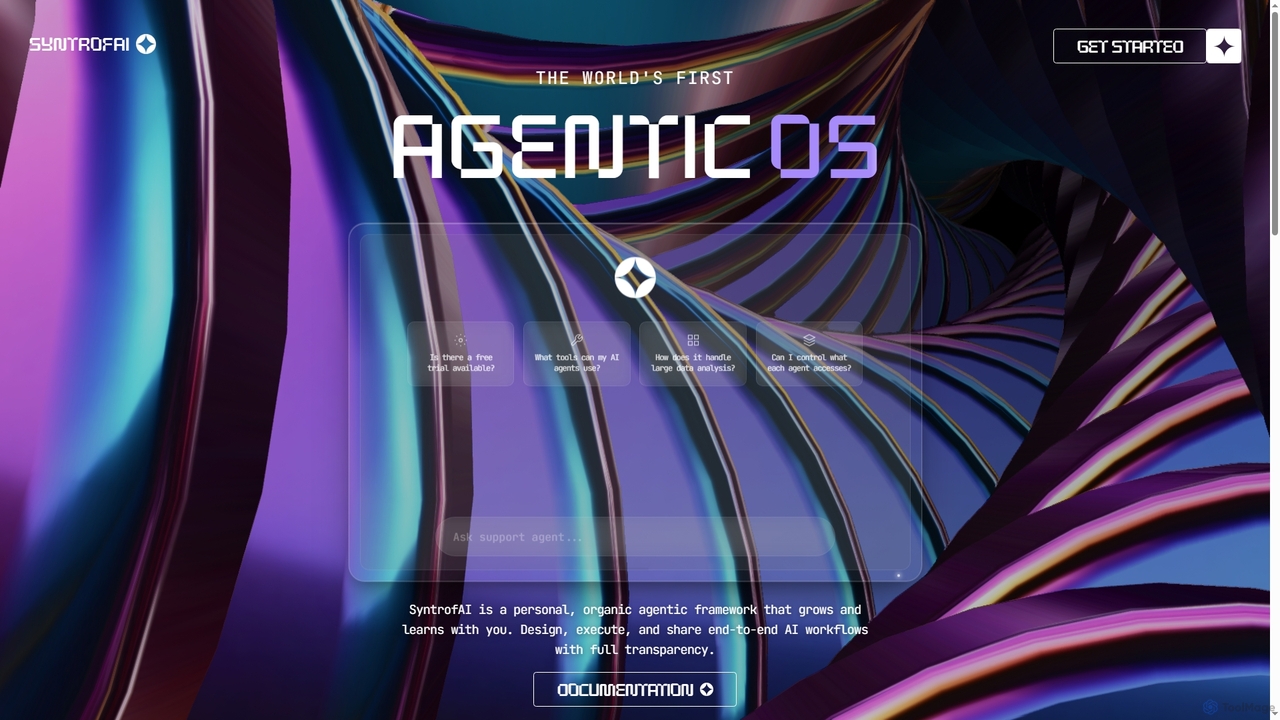
SyntrofAI
SyntrofAI is heralded as the world's first agentic OS AI system online, offering a personal, organic framework where autonomous AI agents design, execute, and share end-to-end workflows. It learns, evolves, and accumulates persistent memory with full transparency and control, empowering users to unleash intelligence.
Ai Operating System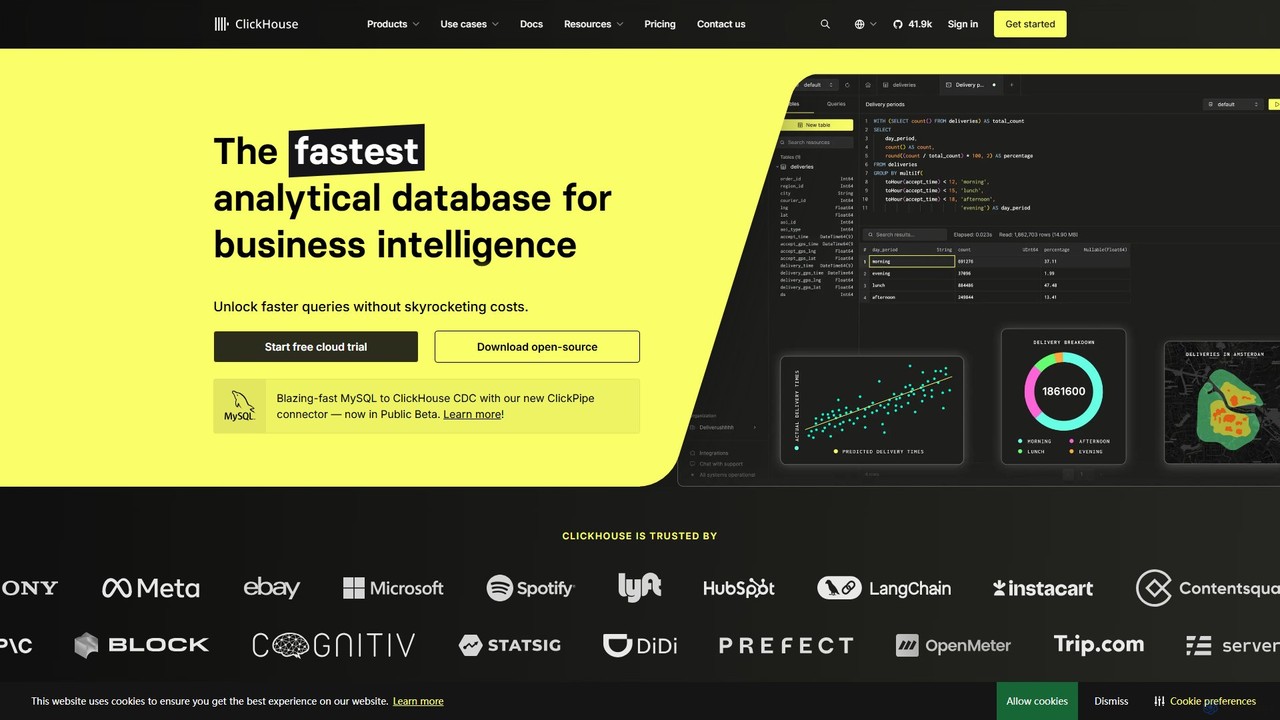
ClickHouse
ClickHouse is a high-performance, open-source, column-oriented OLAP database management system. It's designed for real-time analytics on large-scale data, enabling blazing-fast queries for observability, business intelligence, ML/GenAI, and more, while remaining resource-efficient and cost-effective.
Databases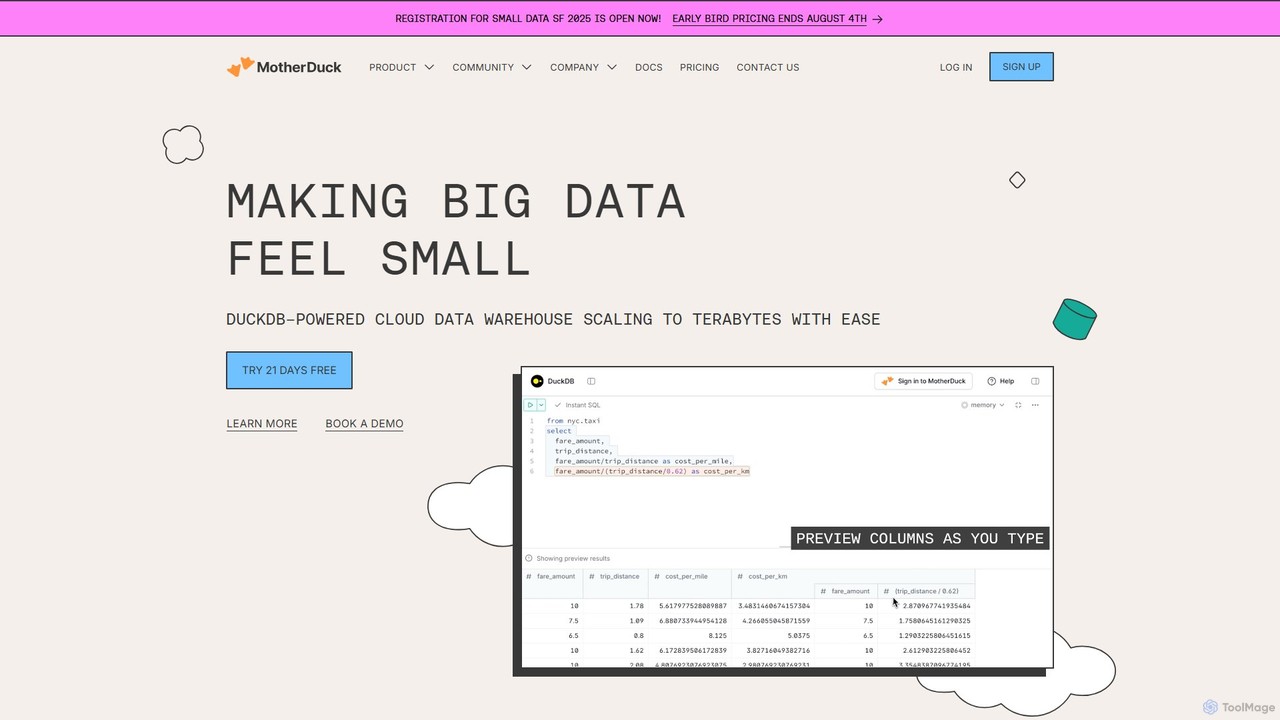
MotherDuck
MotherDuck is a serverless cloud data warehouse powered by the high-performance DuckDB engine. It simplifies data analytics by offering a hybrid execution model, allowing users to seamlessly query data both locally and in the cloud. It's designed for engineers and data scientists to easily manage and analyze growing datasets without the complexity of traditional data warehouses.
Database
ProjectPro
ProjectPro is a project-based learning platform designed to help data professionals accelerate their careers. It offers a vast library of over 250 end-to-end, industry-grade projects in Data Science, Big Data, AI, and MLOps. Each project includes verified solution code, detailed explainer videos, a cloud lab environment, and expert support, enabling users to gain practical, hands-on experience with real-world business problems and cutting-edge technologies.
Data Science
Tredence
Tredence is a leading data science and AI solutions company that helps enterprises navigate their journey from insights to action. They provide custom, full-stack AI/ML solutions, AI consulting, and data engineering services across various industries, including retail, CPG, healthcare, and finance. By leveraging advanced analytics, Tredence empowers businesses to optimize supply chains, enhance customer experiences, and drive significant growth and efficiency.
Data Analytics
Tryolabs
Tryolabs is a premier AI and Machine Learning consulting firm that partners with businesses to create custom, high-impact solutions. Since 2009, they have specialized in data engineering, video analytics, predictive modeling, and MLOps, transforming complex data into tangible business value and competitive advantages for leading enterprises.
Consulting
Eventual
Eventual is building the future of data infrastructure with Daft, a high-performance, open-source query engine for multimodal data. It enables engineers to process petabyte-scale images, video, audio, and text with the simplicity of SQL, drastically accelerating AI and ML workflows without the need for deep distributed systems expertise.
Machine Learning
Cloudera Comments (0)
Sign in to comment.
Sign inNo comments yet.