

LakeSail Overview
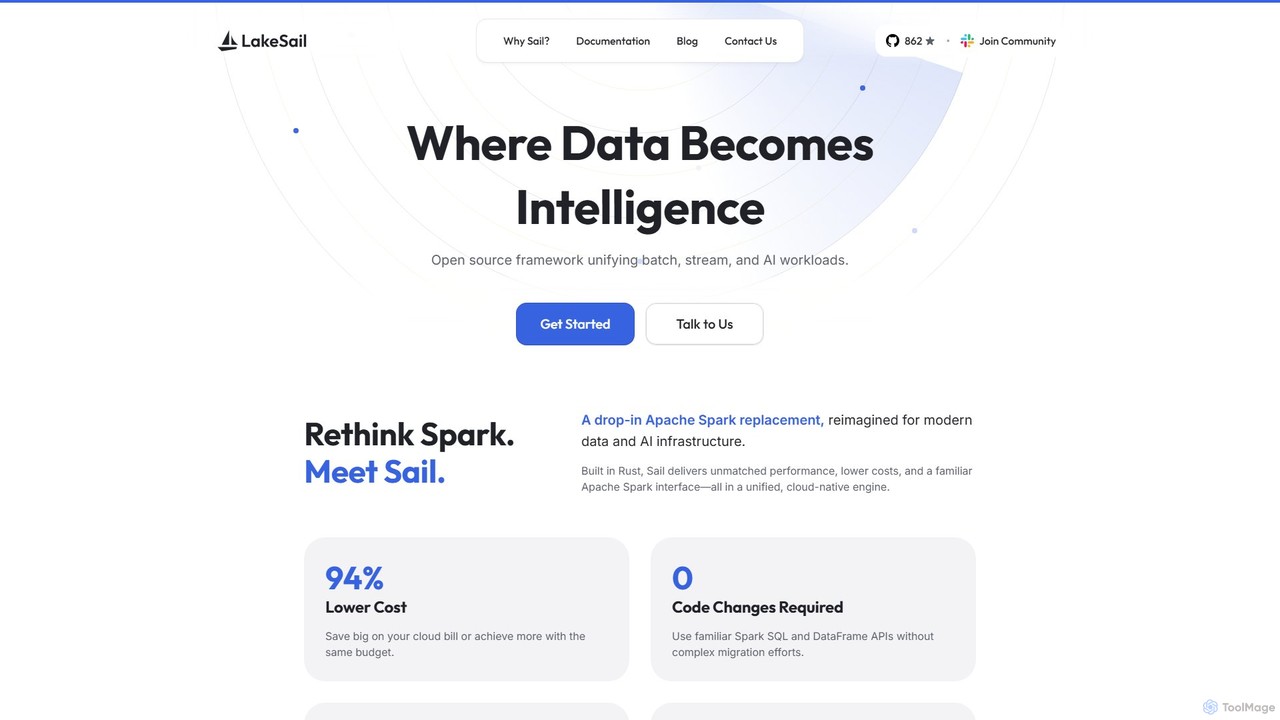
LakeSail introduces Sail, a revolutionary open-source framework engineered to be a direct, high-performance replacement for Apache Spark. In an era where data demands are escalating, cloud costs are soaring, and AI workloads are becoming more complex, Spark's 15-year-old JVM-based architecture shows its limitations. LakeSail addresses these challenges head-on with Sail, an engine built from the ground up in Rust. This modern approach provides a unified solution for batch processing, real-time streaming, and AI, transforming how organizations interact with their data.
Sail is designed for seamless integration, functioning as a drop-in replacement that requires zero code changes to your existing Spark applications. By leveraging the familiar Spark SQL and DataFrame APIs, it eliminates complex and costly migration efforts. The core promise of LakeSail is to deliver unparalleled performance, significant cost savings, and a simplified, robust infrastructure. Benchmarks show that Sail can execute workloads up to 8 times faster than Spark while reducing hardware costs by as much as 94%, turning data into intelligence more efficiently than ever before.
How to use LakeSail
Getting started with LakeSail is remarkably straightforward, designed to ensure a smooth transition for existing Spark users. The process involves no code rewriting or complex re-architecting of your data pipelines.
- Switch the Endpoint: The primary step is to redirect your Spark application to the Sail server. Your Spark session, acting as a gRPC client, communicates with the Sail server via the Spark Connect protocol. You simply change the connection endpoint from your existing Spark cluster to your new Sail instance.
- Use Existing Code: Continue using your current PySpark, Spark SQL, and DataFrame API code. Since Sail maintains parity with Apache Spark, all your existing logic, transformations, and actions will run without modification.
- Deploy Flexibly: You can deploy Sail in various environments, from your local laptop for development to a distributed Kubernetes cluster for production-scale workloads. Its lightweight nature allows for rapid scaling.
- Incremental Migration: For risk-averse organizations, Sail can be deployed in a 'shadow mode' to run alongside your production Spark pipelines. This allows you to compare performance and validate results before making a full switch, enabling an incremental and safe migration strategy.
Core Features of LakeSail
- Rust-Native Engine: Built entirely in Rust, Sail eliminates the JVM, its memory overhead, and unpredictable garbage collection pauses. This results in deterministic performance and higher resource efficiency.
- Complete Spark Compatibility: Functions as a drop-in replacement for Apache Spark. It supports Spark SQL and DataFrame APIs, ensuring that your existing applications work without any code changes.
- Unified Architecture: Provides a single, cohesive engine for batch, streaming, and AI workloads. This simplifies your data stack and reduces operational complexity.
- Lightning-Fast Python UDFs: Executes Python User-Defined Functions (UDFs) in-process by embedding a Python interpreter. This eliminates the slow Py4J bridge and data serialization, making Python code feel native.
- Cloud-Native by Design: Engineered for modern cloud environments with features like autoscaling, observability, and decoupled storage. Its lightweight workers start in seconds, enabling instant scalability.
- Zero-Copy Data Transfer: Leverages the Apache Arrow in-memory columnar format for efficient data processing and transfer between nodes, eliminating serialization overhead and maximizing throughput.
- Enhanced Safety and Reliability: Benefits from Rust's compile-time memory and concurrency safety guarantees, eliminating entire classes of bugs common in JVM-based systems and reducing production risk.
Use Cases for LakeSail
LakeSail is ideal for any organization looking to modernize its data infrastructure and overcome the limitations of traditional Spark deployments.
- ETL Pipeline Optimization: Drastically reduce the execution time and cost of large-scale ETL jobs, processing data from sources like Amazon S3 faster and more efficiently.
- Real-Time Streaming Analytics: Power time-sensitive applications with low-latency data processing, thanks to predictable execution times without garbage collection spikes.
- AI and Machine Learning: Accelerate ML model training and data preparation pipelines. The high performance of Python UDFs makes it perfect for feature engineering and data-intensive AI workloads.
- Cost Reduction on Cloud Platforms: For companies running Spark on AWS, GCP, or Azure, Sail offers a direct path to slashing cloud infrastructure bills by up to 94% without sacrificing capability.
- Interactive Data Analysis: Enable data scientists and analysts to get insights from data instantly with significantly faster query times, fostering a more interactive and productive data exploration experience.
Advantages of LakeSail
The primary advantage of LakeSail is its ability to deliver a modern, high-performance data processing experience without the pain of migration. It offers a compelling business case built on performance, cost, and simplicity.
- Massive Performance Gains: Achieve 2x to 8x faster query and job execution, leading to quicker insights and faster product cycles.
- Dramatic Cost Savings: Lower your cloud compute and memory costs by up to 94%, allowing you to reallocate budget or achieve more with the same resources.
- Effortless Modernization: Upgrade your data stack without rewriting code. The drop-in nature of Sail removes the biggest barrier to adopting modern technology.
- Operational Simplicity: A single, lightweight, unified engine reduces the complexity of managing separate systems for batch, streaming, and AI. Fast startup times and autoscaling simplify operations in containerized environments like Kubernetes.
- Future-Proof and Reliable: Built on Rust, Sail provides a foundation of memory safety and concurrency that is more robust and reliable for mission-critical data workloads.
Pricing and Plans
LakeSail's core engine, Sail, is an open-source project, making it free to use, contribute to, and deploy. For organizations requiring dedicated, enterprise-grade services, LakeSail offers commercial plans. Sail Enterprise Support provides dedicated, flexible, and customizable solutions, including expert assistance, custom integration development, and migration planning. For detailed pricing and to discuss enterprise needs, you are encouraged to contact the LakeSail solutions team directly through their website.
Traffic
Latest traffic
Status
Monthly traffic trend
- 2025-9: 5.4K
- 2026-1: 3.8K
- 2026-2: 2.7K
- 2026-3: 3.9K
- 2026-4: 4.8K
- 2026-5: 5.9K
Geography
Top 5 countries / regions
- 🇺🇸United States56.5%
- 🇮🇳India43.5%
Top keywords
| Keyword | Cost per click |
|---|---|
| 0.3/2 | $0.00 |
| lakehq/sail | $0.00 |
| lakesail | $0.00 |
| spark agent | $0.00 |
| using rust for big data | $0.00 |
LakeSail Alternatives
Eventual
Eventual is building the future of data infrastructure with Daft, a high-performance, open-source query engine for multimodal data. It enables engineers to process petabyte-scale images, video, audio, and text with the simplicity of SQL, drastically accelerating AI and ML workflows without the need for deep distributed systems expertise.
Machine Learning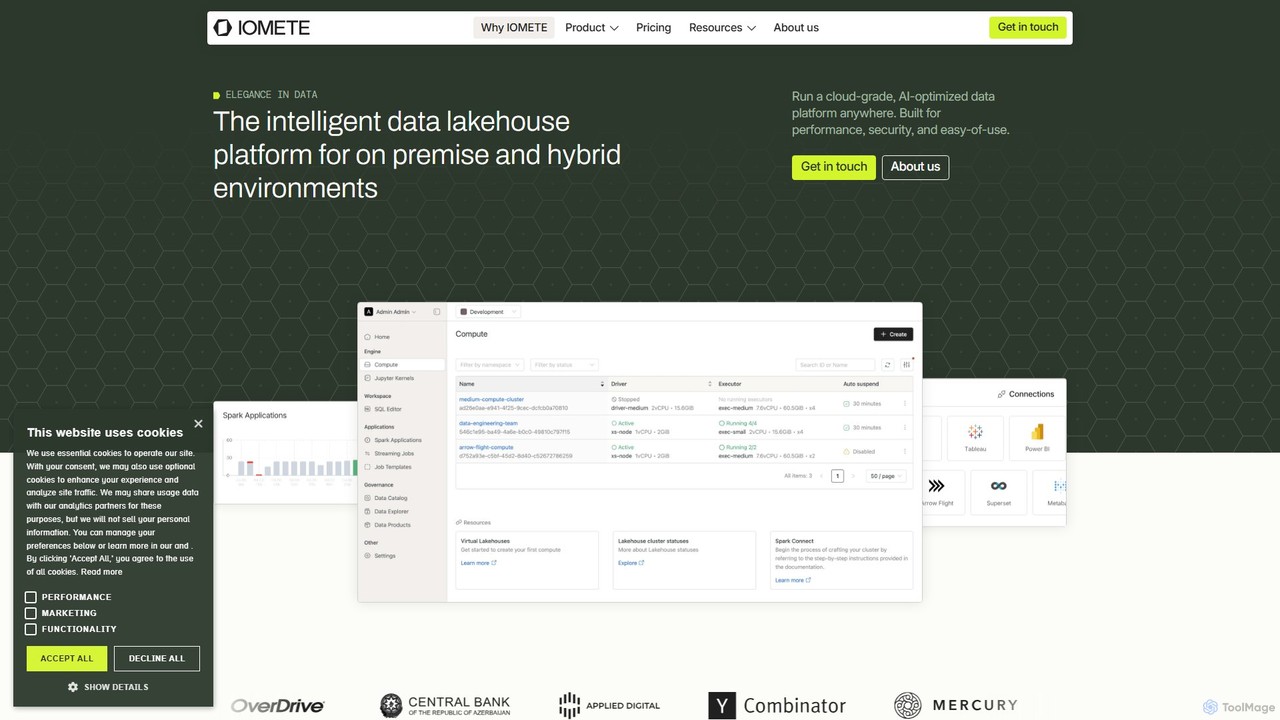
iomete
iomete is a self-hosted data lakehouse platform designed for enterprises. It combines the flexibility of data lakes with the performance of data warehouses, giving organizations full control over their data, security, and costs. By deploying on-premises or in your own cloud, iomete eliminates vendor lock-in and provides a cost-effective, scalable solution for managing petabyte-scale datasets, data engineering, and machine learning workflows.
Analytics
Databricks
Databricks is a unified Data Intelligence Platform that combines data warehousing and data lakes into a lakehouse architecture. It enables enterprises to manage the entire data lifecycle, from data engineering and ETL to business intelligence, data science, and large-scale generative AI applications, all on a single, collaborative platform.
Machine Learning Platform
Ragas
Ragas is an open-source Python framework for evaluating and testing Retrieval-Augmented Generation (RAG) pipelines. It provides a suite of metrics to measure the performance of your LLM applications, from context retrieval to answer generation. Trusted by industry leaders like LangChain and LlamaIndex, Ragas helps developers build more robust, reliable, and accurate AI systems by identifying and mitigating issues like hallucinations and irrelevant responses.
Mlops
massedcompute
Massed Compute is a cloud platform providing on-demand, high-performance NVIDIA GPUs and CPUs. It offers flexible, scalable, and affordable computing power for AI development, machine learning, and big data analysis without long-term contracts, targeting innovators and developers.
Machine LearningLakeSail Categories
LakeSail Embed Widget
Copy this embed code to place the badge on your blog, article, or product site and send readers directly to this ToolMage detail page.

Related AI tools
Eventual
Eventual is building the future of data infrastructure with Daft, a high-performance, open-source query engine for multimodal data. It enables engineers to process petabyte-scale images, video, audio, and text with the simplicity of SQL, drastically accelerating AI and ML workflows without the need for deep distributed systems expertise.
Machine Learningiomete
iomete is a self-hosted data lakehouse platform designed for enterprises. It combines the flexibility of data lakes with the performance of data warehouses, giving organizations full control over their data, security, and costs. By deploying on-premises or in your own cloud, iomete eliminates vendor lock-in and provides a cost-effective, scalable solution for managing petabyte-scale datasets, data engineering, and machine learning workflows.
Analytics
Jyek
Jyek is an AI agent platform that understands objectives, creates execution plans, uses tools, and delivers verifiable results for complex, multi-step tasks.
AutomationDatabricks
Databricks is a unified Data Intelligence Platform that combines data warehousing and data lakes into a lakehouse architecture. It enables enterprises to manage the entire data lifecycle, from data engineering and ETL to business intelligence, data science, and large-scale generative AI applications, all on a single, collaborative platform.
Machine Learning Platform
Cloudera
Cloudera is a hybrid data platform that enables enterprises to manage and analyze data across any environment, from on-premises to public clouds. It provides a unified suite of tools for data engineering, data warehousing, operational databases, and machine learning, empowering data-driven decisions and AI applications at scale.
Enterprise Solutions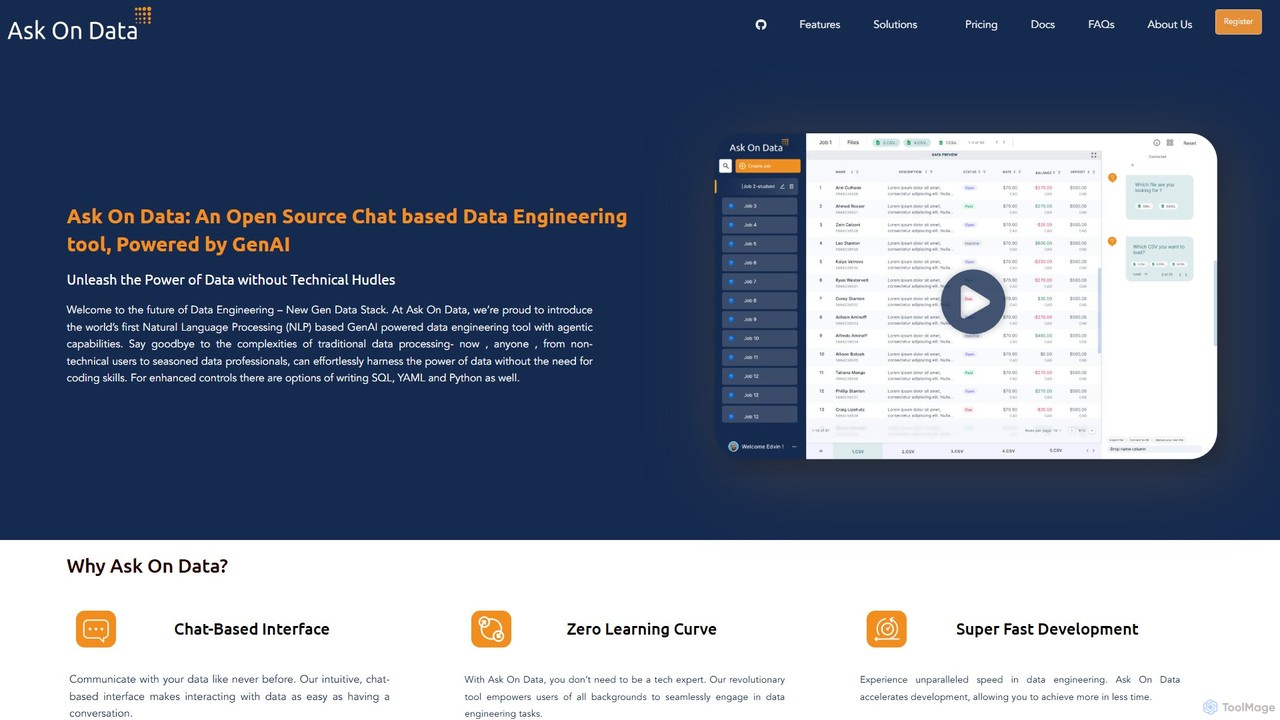
Ask On Data
Ask On Data is an open-source, GenAI-powered data engineering tool that lets you build and manage data pipelines using a simple chat interface. By translating natural language commands into complex data operations, it eliminates the need for coding, making data engineering accessible to everyone. It supports various data sources, offers real-time previews, and provides both cloud-hosted and self-hosted options.
Etl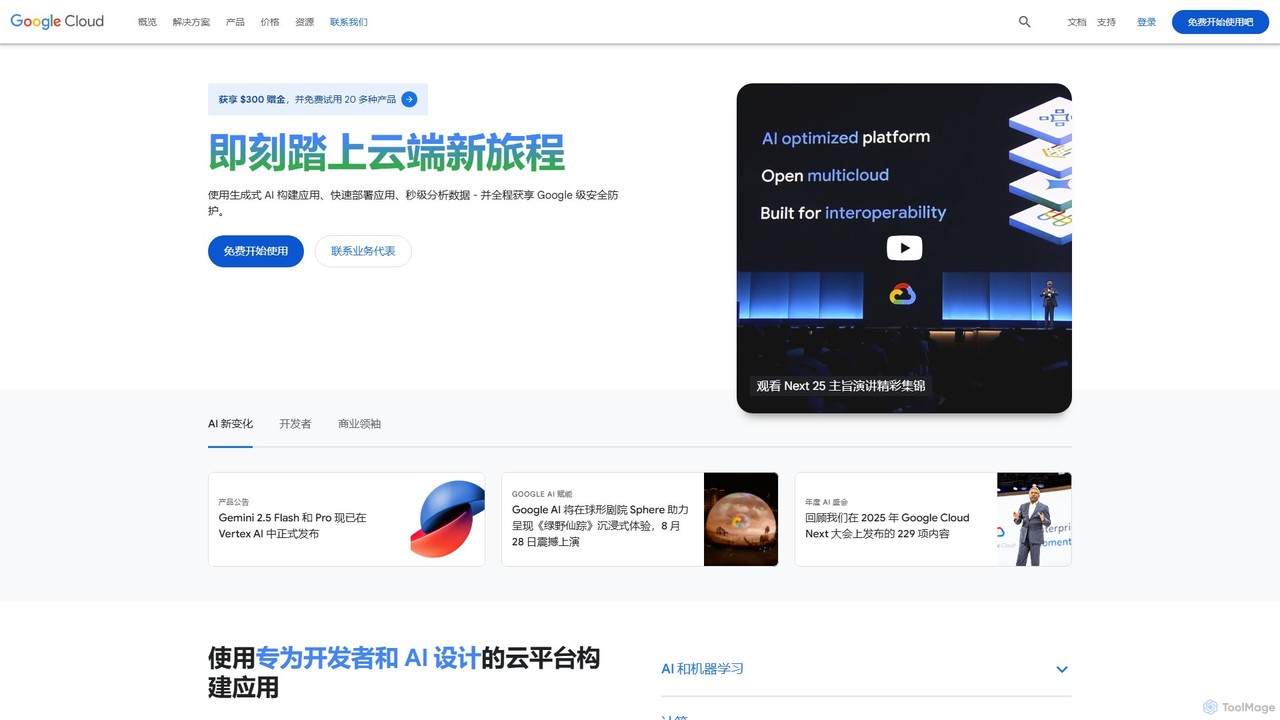
Google Cloud
Google Cloud is a comprehensive suite of cloud computing services that provides infrastructure, platform, and serverless environments. It excels in AI/ML with Vertex AI and Gemini, data analytics with BigQuery, and offers scalable, secure infrastructure for businesses of all sizes, from startups to global enterprises.
Machine Learning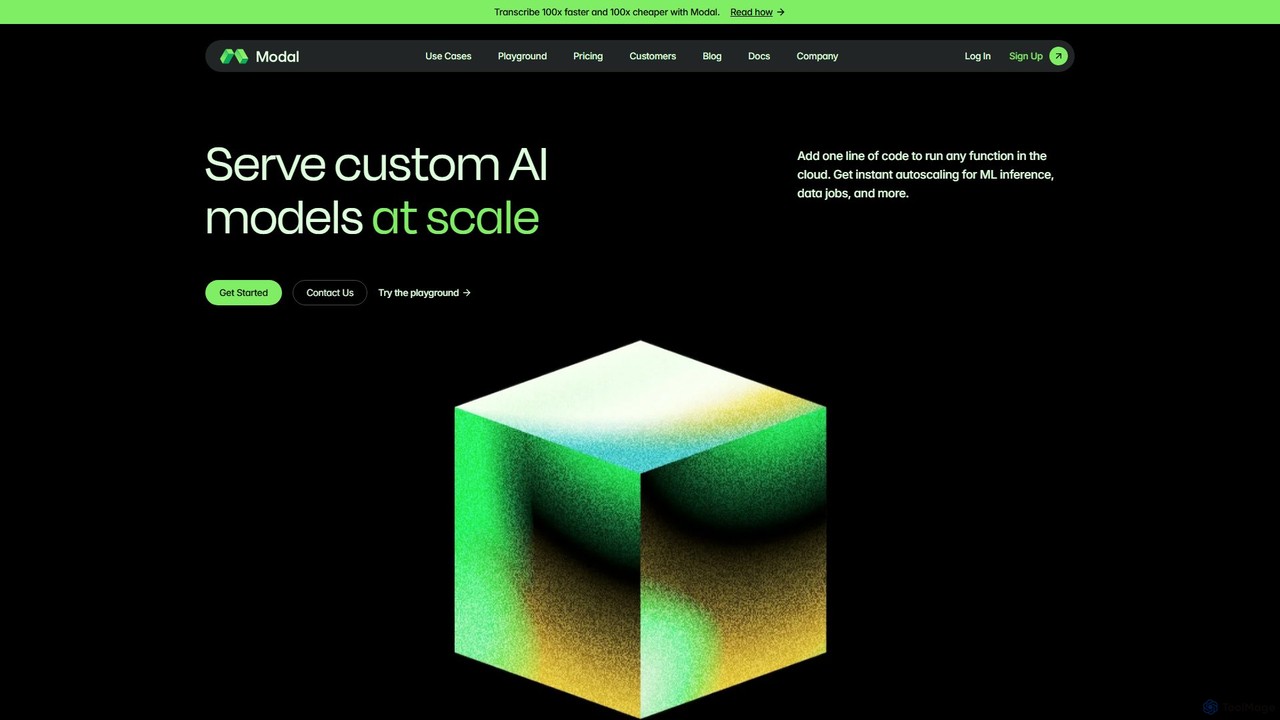
Modal
Modal is a high-performance, serverless infrastructure platform for AI and ML developers. It allows you to run Python functions in the cloud with a single line of code, providing instant access to GPUs, automatic scaling from zero to thousands of containers, and pay-per-second pricing. Eliminate infrastructure overhead and focus on building and deploying compute-intensive applications like generative AI, batch processing, and data analysis.
Model Deployment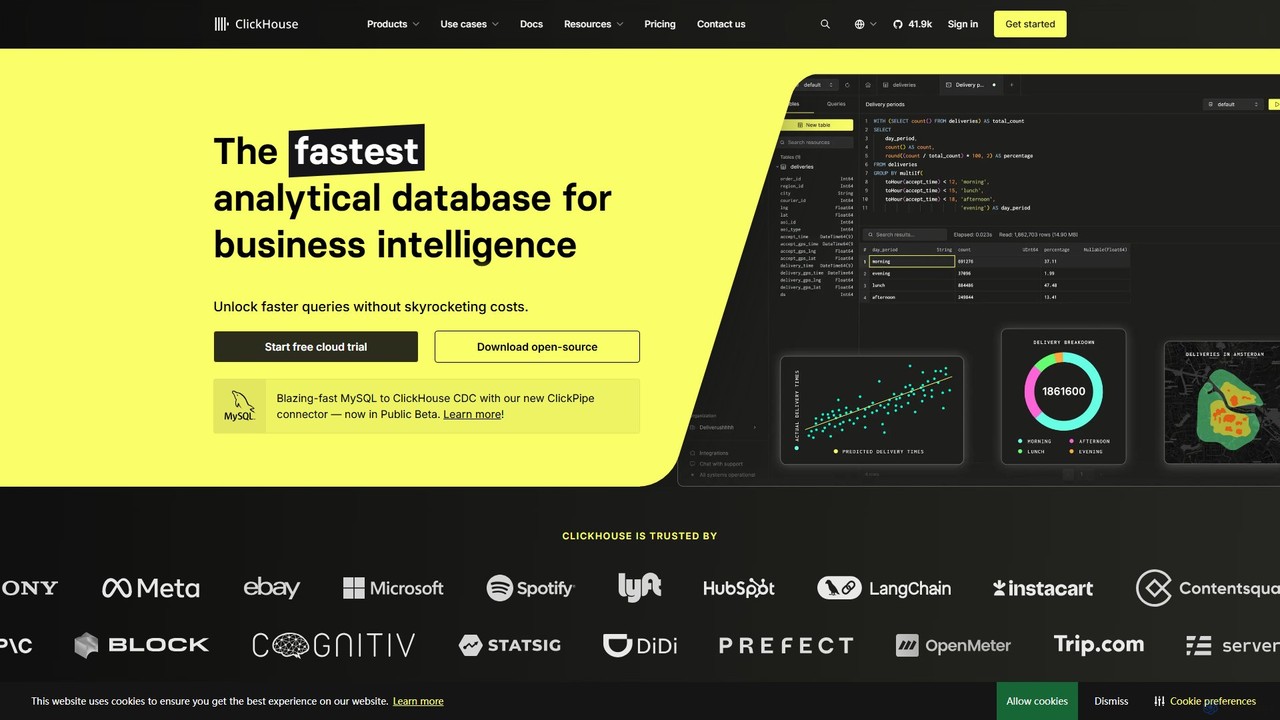
ClickHouse
ClickHouse is a high-performance, open-source, column-oriented OLAP database management system. It's designed for real-time analytics on large-scale data, enabling blazing-fast queries for observability, business intelligence, ML/GenAI, and more, while remaining resource-efficient and cost-effective.
Databases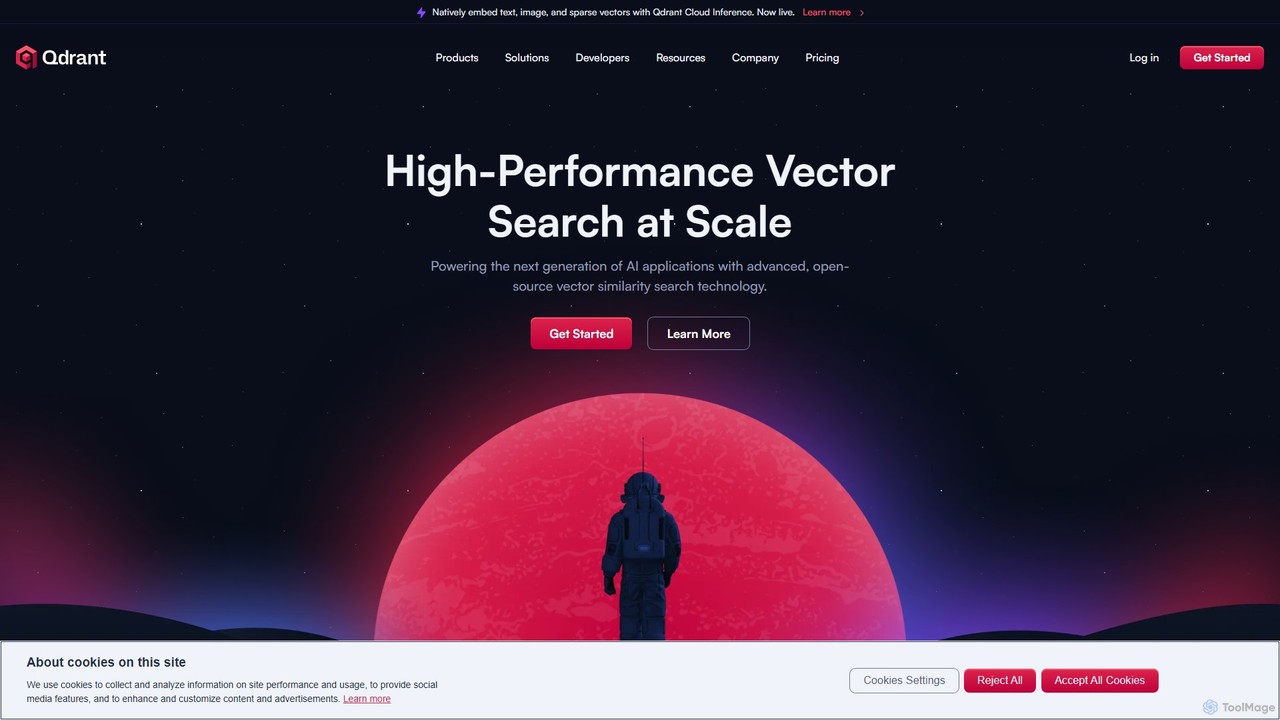
Qdrant
Qdrant is a high-performance, open-source vector database and similarity search engine built in Rust. It's designed to power next-generation AI applications by efficiently managing and searching billions of high-dimensional vectors. With advanced features like rich filtering, payload storage, and various quantization methods, Qdrant enables developers to build scalable and cost-effective solutions for semantic search, recommendation systems, and Retrieval Augmented Generation (RAG).
Vector Search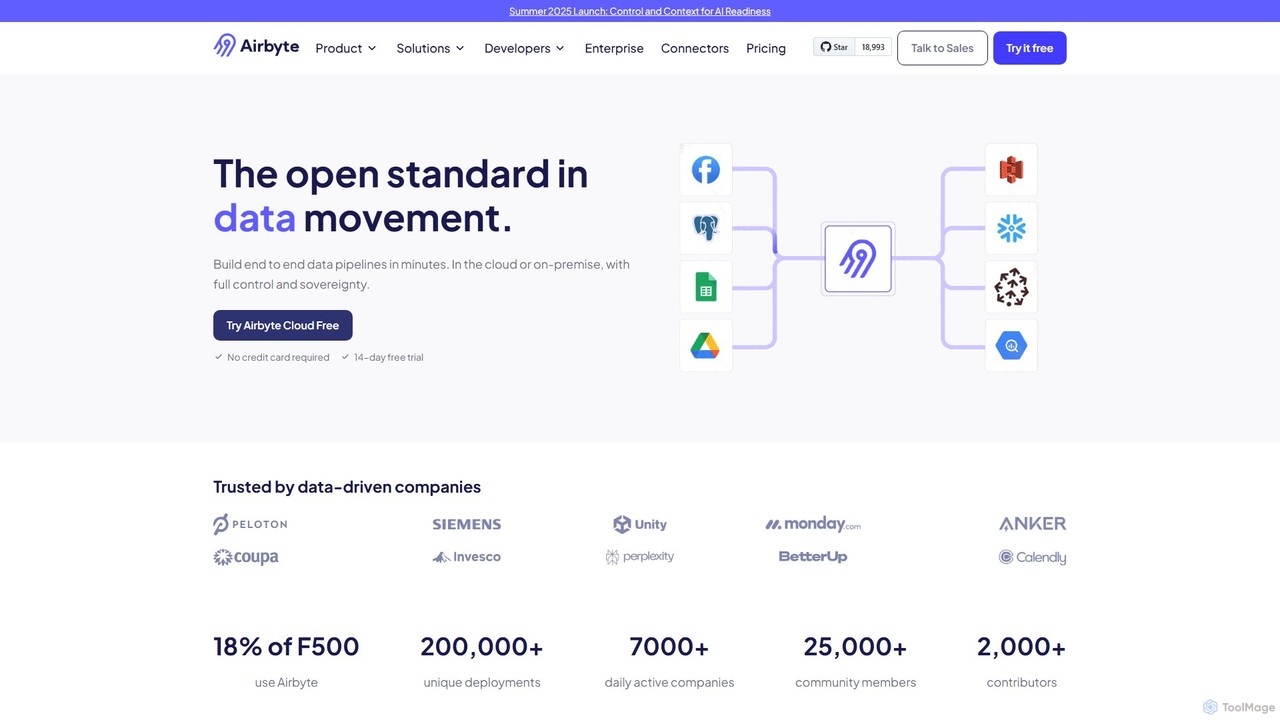
Airbyte
Airbyte is an open-source data integration platform that simplifies building and managing data pipelines. It enables you to move data from hundreds of sources to destinations like data warehouses, lakes, and vector databases in minutes, using a vast catalog of pre-built connectors or by creating your own with a low-code builder. It supports both cloud and self-hosted deployments, focusing on data security, governance, and scalability for modern data and AI applications.
Data Pipelines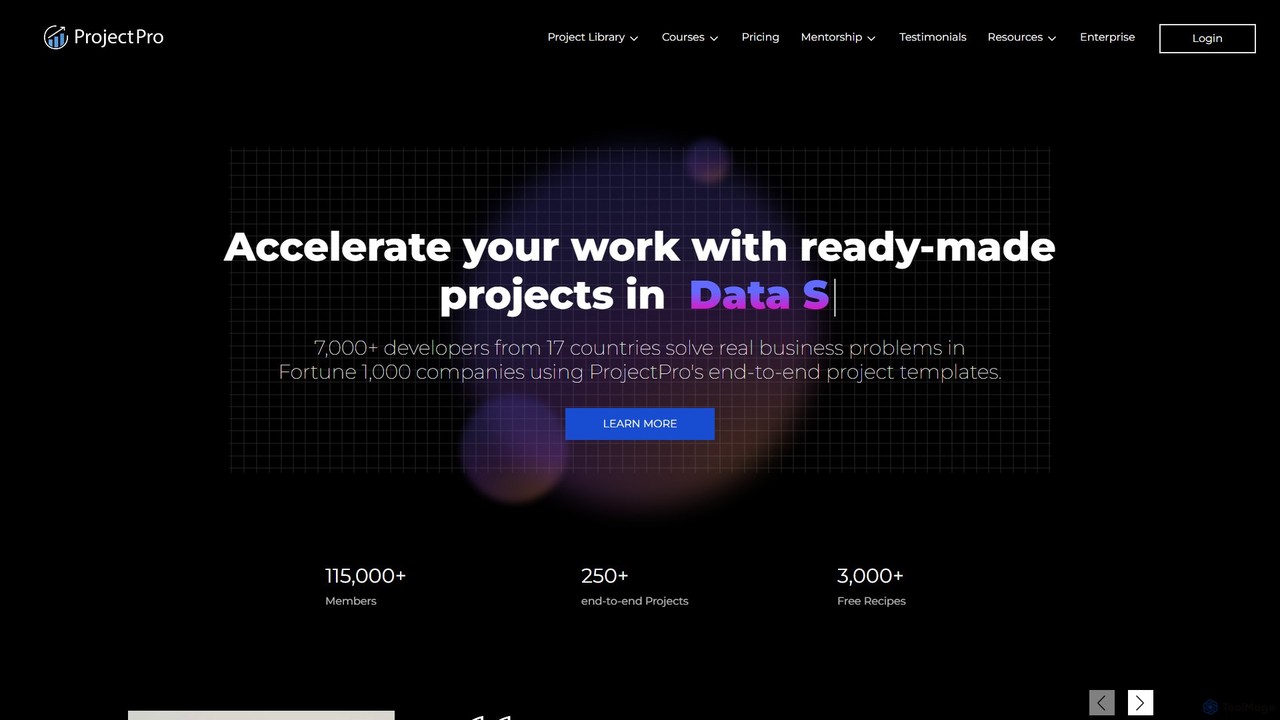
ProjectPro
ProjectPro is a project-based learning platform designed to help data professionals accelerate their careers. It offers a vast library of over 250 end-to-end, industry-grade projects in Data Science, Big Data, AI, and MLOps. Each project includes verified solution code, detailed explainer videos, a cloud lab environment, and expert support, enabling users to gain practical, hands-on experience with real-world business problems and cutting-edge technologies.
Data Science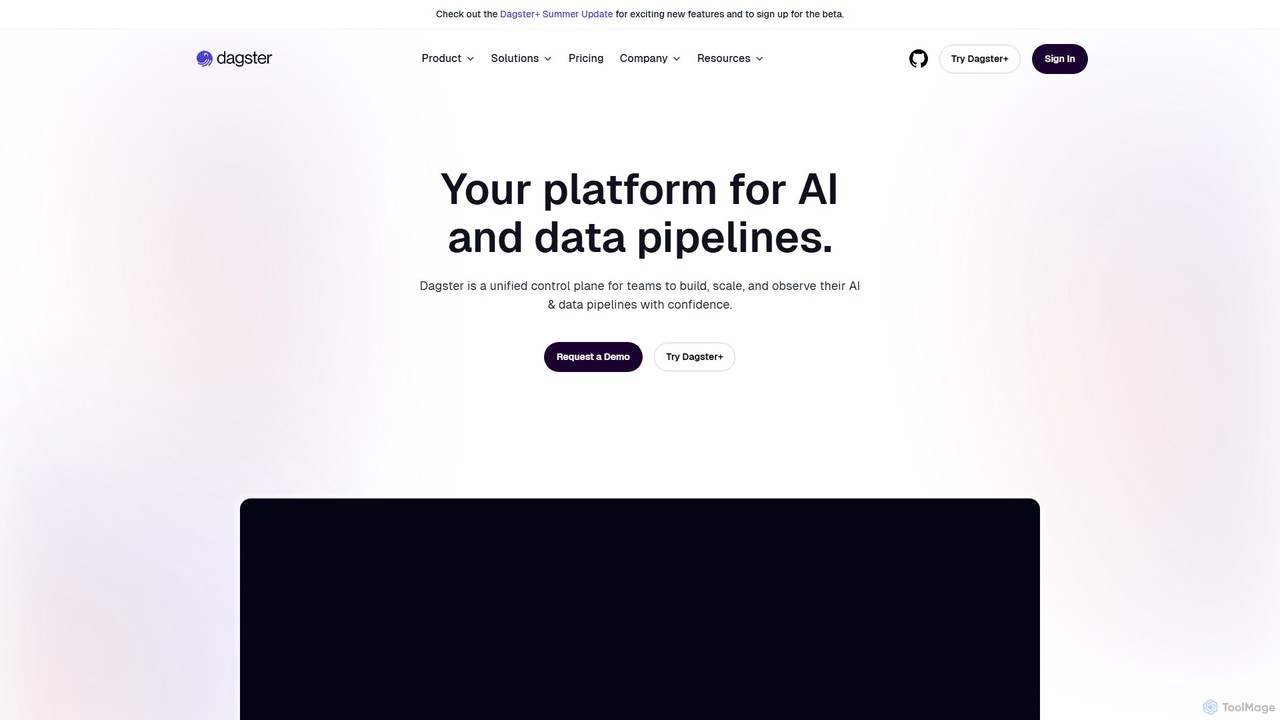
Dagster
Dagster is a modern, open-source data orchestrator designed for building, scaling, and observing AI and data pipelines. It acts as a unified control plane, allowing teams to model data assets, track lineage, and ensure data quality with confidence. By integrating software engineering best practices like local testing and reusable components, Dagster helps data engineers and ML teams ship products faster and more reliably.
Machine Learning Operations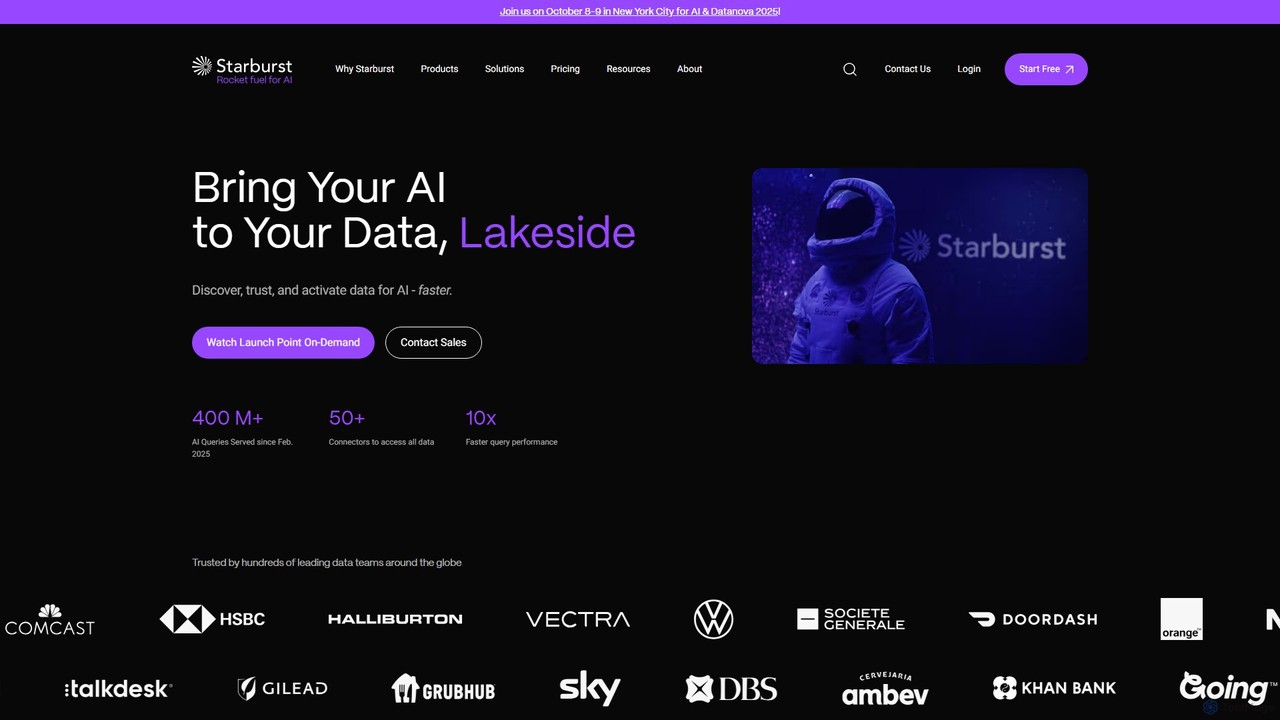
Starburst
Starburst is a high-performance data analytics platform built on Trino. It enables you to query data anywhere, across clouds, on-premises, or hybrid environments, without moving it. It acts as a single point of access to all your data, accelerating analytics and AI/ML workloads.
Analytics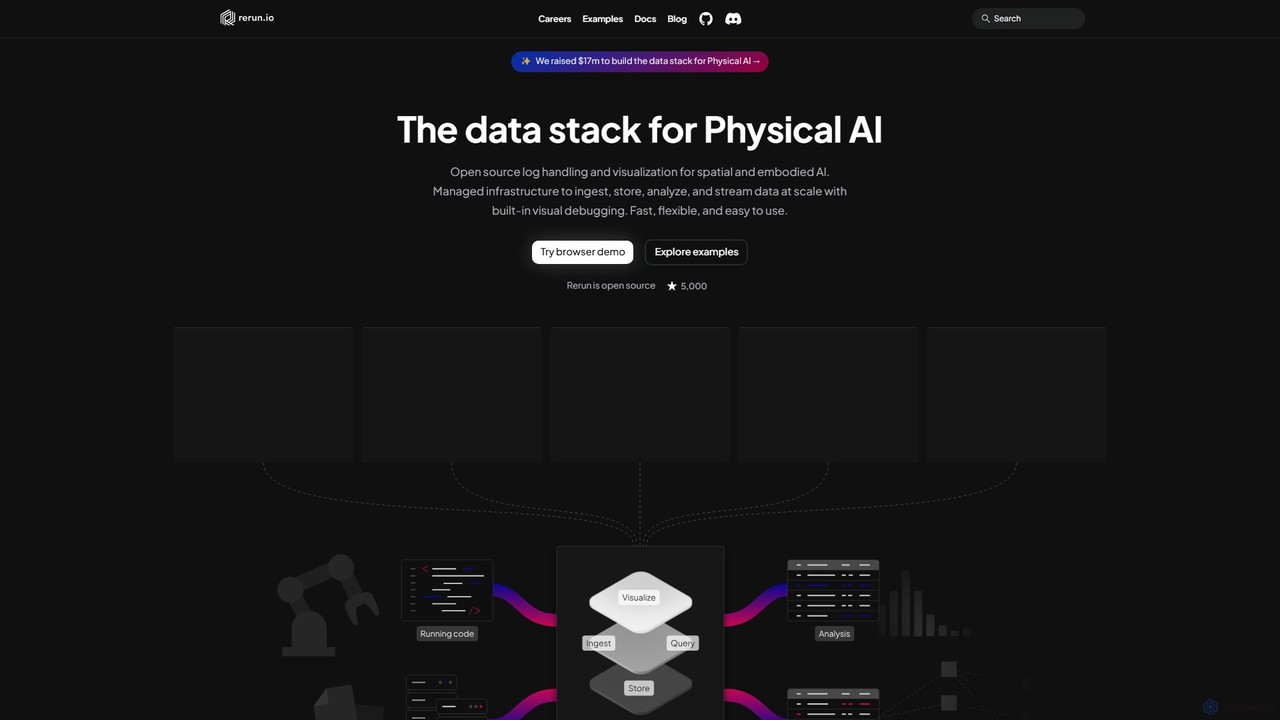
Rerun
Rerun is an open-source data stack for Physical AI, providing powerful logging and visualization tools for multimodal, time-series data. Designed for robotics, computer vision, and spatial computing, it helps developers understand and debug complex systems with SDKs for Python, Rust, and C++.
Machine Learning
LakeSail Comments (0)
Sign in to comment.
Sign inNo comments yet.