Developer Tools Best in category 4 results Data Processing AI Tool

Popular AI tools in the Data Processing field of Developer Tools include Tensorlake、Chonkie、Eventual、LakeSail, etc., helping you quickly improve efficiency.

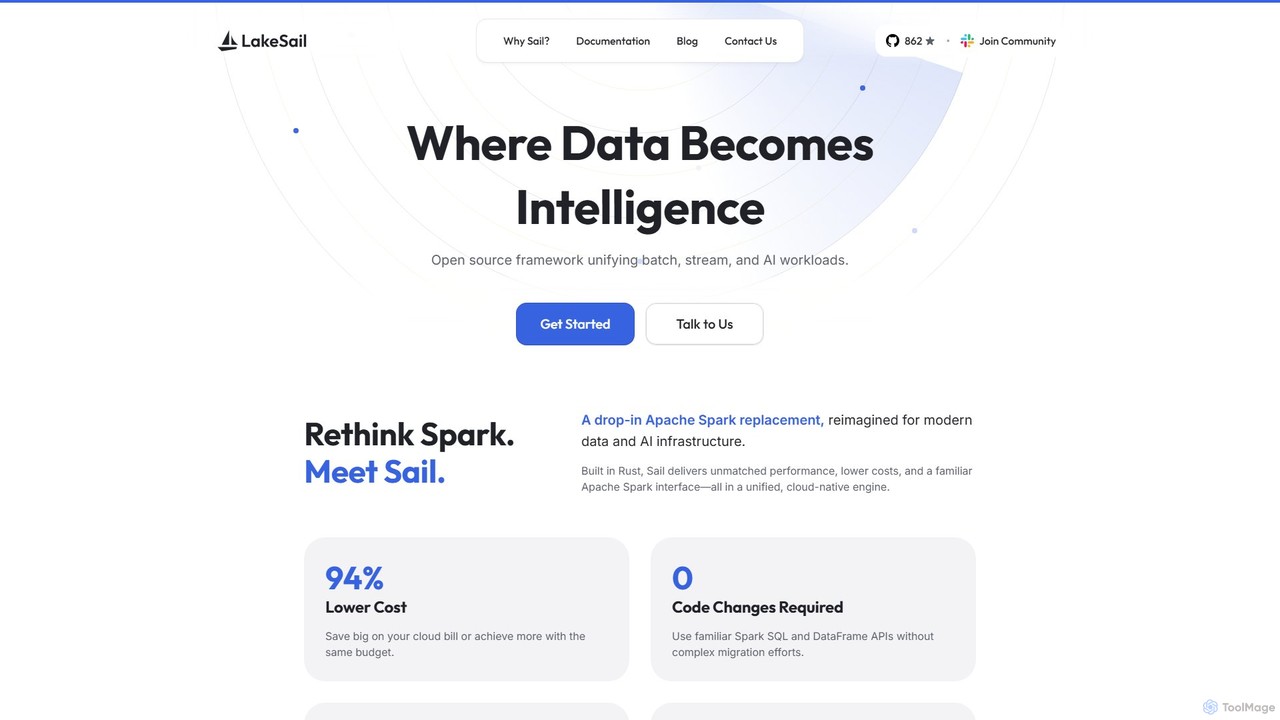
LakeSail

LakeSail

LakeSail offers a high-performance, open-source framework called Sail, designed as a drop-in replacement for Apache Spark. Built in …

7.1K
Eventual

Eventual

Eventual is building the future of data infrastructure with Daft, a high-performance, open-source query engine for multimodal data. …

8.1K
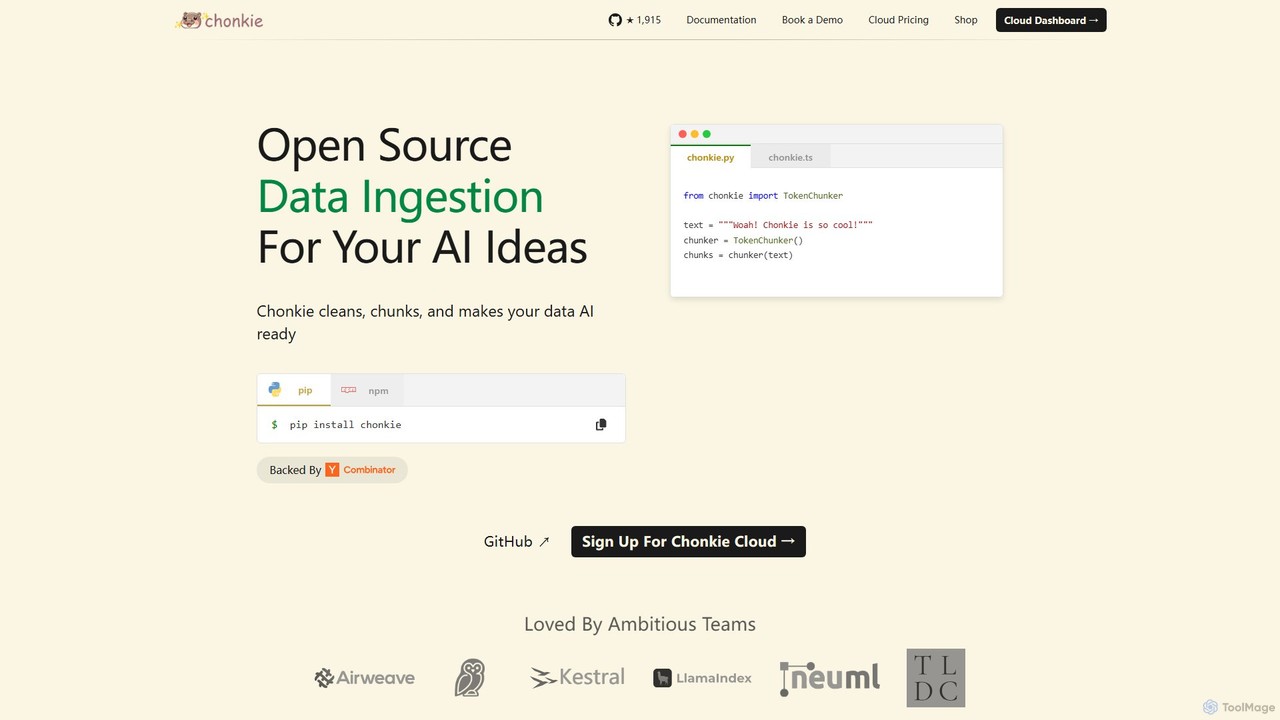
Chonkie

Chonkie

Chonkie is an open-source data ingestion framework designed for AI applications. It efficiently cleans, chunks, and enriches various …

9.2K
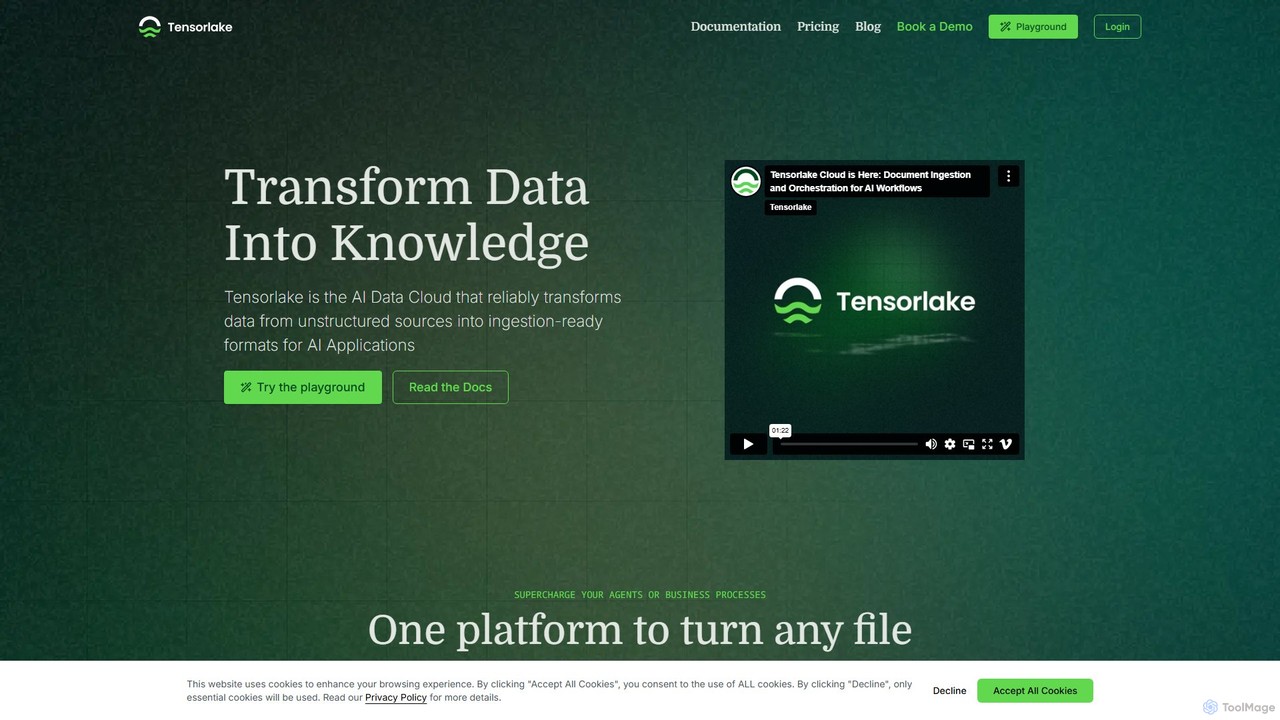
Tensorlake

Tensorlake

Tensorlake is an AI Data Cloud platform that transforms unstructured data from any source into structured, LLM-ready formats. …

48.8K

About Data Processing

Data Processing AI tools are specialized solutions that leverage artificial intelligence to automate and optimize the preparation of raw data. These tools efficiently clean, transform, validate, and enrich datasets, making them suitable for machine learning model training, advanced analytics, and various AI applications. They significantly reduce manual effort and improve data quality, accelerating the development lifecycle for AI projects within the broader developer tools ecosystem.

Core Features

  • Automated Data Cleaning: Intelligently identifies and corrects errors, handles missing values, and removes duplicates across large datasets.
  • Data Transformation & Normalization: Converts raw data into standardized formats, scales features, and aggregates information for optimal model input.
  • AI-driven Feature Engineering: Automatically generates new, predictive features from existing data, enhancing the performance of machine learning models.
  • Data Validation & Quality Assurance: Ensures data consistency, integrity, and adherence to predefined rules, flagging anomalies for review.
  • Intelligent Data Labeling: Assists in annotating and categorizing data for supervised learning tasks, speeding up dataset preparation.

Applicable Scenarios

Data scientists and machine learning engineers frequently use these tools to prepare complex datasets for model training and evaluation. Developers integrate processed data into AI-powered applications, ensuring high-quality inputs. Businesses leverage them for maintaining clean, consistent data pipelines for real-time analytics and operational insights.

How to Choose

When selecting a Data Processing AI tool, consider its compatibility with your data types and volumes, its integration capabilities with existing ML platforms and data sources, and the level of automation it provides for tasks like feature engineering. Evaluate its flexibility for custom transformations and its ability to scale with your project's growth, alongside cost-effectiveness and community support.

Data ProcessingUse Cases

1

Automated Feature Engineering for ML Models

Data scientists can leverage Data Processing AI tools to automatically generate and select optimal features from raw, complex datasets. Instead of manual trial-and-error, the AI identifies patterns and creates new variables that significantly improve the predictive power and accuracy of machine learning models. This accelerates the model development cycle by reducing the time spent on feature engineering from weeks to days, allowing for faster iteration and deployment of high-performing AI solutions.

2

Real-time Data Cleaning for Streaming Analytics

Developers building real-time analytics dashboards or anomaly detection systems can use Data Processing AI tools to continuously clean and validate incoming data streams. As data flows from IoT devices, web logs, or financial transactions, the AI automatically detects and corrects inconsistencies, filters out noise, and normalizes values before the data is fed into analytical engines. This ensures that real-time insights are based on high-quality, reliable data, preventing erroneous alerts or misleading visualizations, crucial for critical operational decisions.

3

Batch Data Transformation for Data Warehousing

Data engineers responsible for maintaining enterprise data warehouses can utilize Data Processing AI tools for efficient batch transformation of large historical datasets. The AI automates complex ETL (Extract, Transform, Load) processes, handling schema mapping, data type conversions, and aggregation logic across petabytes of data. This ensures that data is consistently structured and ready for business intelligence reporting, historical trend analysis, and compliance audits, significantly reducing the manual scripting and debugging efforts typically associated with such large-scale data operations.

4

AI-assisted Data Labeling for Computer Vision

Machine learning engineers working on computer vision projects, such as autonomous driving or medical image analysis, can utilize Data Processing AI tools for AI-assisted data labeling and annotation. The AI can pre-label objects, segment images, or track moving elements, significantly reducing the manual effort required for creating large, high-quality training datasets. Human annotators then review and refine these AI-generated labels, improving efficiency by up to 70% and ensuring accuracy for critical applications where precise object detection and classification are paramount.

5

Customer Data Unification & Enrichment

Marketing analysts and CRM managers can employ Data Processing AI tools to unify disparate customer data from various sources (e.g., website, social media, purchase history) and enrich profiles with external demographic or behavioral data. The AI intelligently matches records, resolves conflicts, and appends relevant information, creating a comprehensive 360-degree view of each customer. This enables highly personalized marketing campaigns, improved customer segmentation, and more accurate predictive analytics for churn or upsell opportunities, leading to increased customer lifetime value and engagement.

6

Automated Text Preprocessing for NLP

NLP (Natural Language Processing) developers and researchers can utilize Data Processing AI tools to automate the preprocessing of large text corpora for training language models or sentiment analysis systems. The AI performs tasks like tokenization, stemming, lemmatization, stop-word removal, and entity recognition, transforming raw text into a structured format suitable for NLP algorithms. This significantly reduces the manual effort and time required for text preparation, ensuring consistent and high-quality input for advanced language understanding and generation tasks, accelerating the development of conversational AI and text analytics solutions.

Data ProcessingFrequently Asked Questions