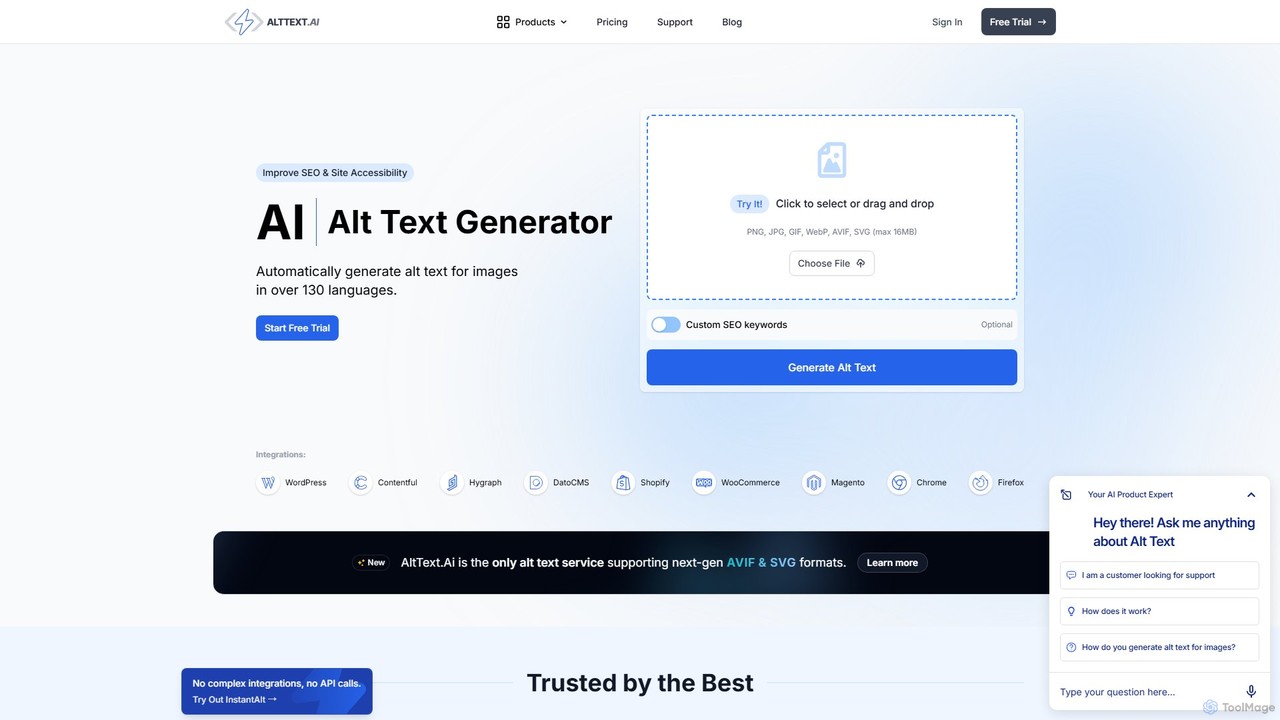
AI Web Tools for accessibility are specialized applications that use artificial intelligence to automatically audit, analyze, and improve the usability of websites for people with disabilities. These tools leverage machine learning and computer vision to detect violations of standards like the Web Content Accessibility Guidelines (WCAG), such as insufficient color contrast, missing image alt text, or improper ARIA roles. Their primary value lies in rapidly scanning entire websites to identify and report accessibility barriers, enabling developers and designers to build more inclusive digital products efficiently. This automated approach significantly accelerates the compliance process compared to purely manual testing.
Core Features
- Automated Accessibility Auditing: Scans web pages or entire sites to detect WCAG compliance issues and generates detailed reports.
- AI-Powered Remediation Suggestions: Provides specific code snippets or recommendations to fix identified accessibility problems.
- Real-time Feedback Plugins: Integrates with design tools (e.g., Figma) and code editors to offer instant accessibility checks during the creation process.
- Visual Analysis: Uses computer vision to analyze color contrast, element visibility, and layout issues that affect users with visual impairments.
- Screen Reader Simulation: Emulates how a screen reader would interpret a webpage, helping developers identify navigation and content structure issues.
Use Cases
These tools are primarily used by web developers, UI/UX designers, QA testers, and digital compliance officers. They are integrated into the development lifecycle, from initial design mockups to automated testing in CI/CD pipelines. Organizations in regulated industries like government, finance, and education use these tools to maintain legal compliance and ensure their digital services are accessible to all users.
How to Choose
When selecting an AI Web Tool for accessibility, consider its integration capabilities with your existing toolchain (e.g., Jira, GitHub, CI/CD). Evaluate the depth and clarity of its audit reports—do they provide actionable insights and code examples? Also, assess the scope of its testing, including which WCAG versions and levels (A, AA, AAA) it covers. Finally, consider the balance between automated detection and the need for manual verification, as no tool can guarantee 100% compliance alone.