Ai Best in category 1 results Ai Development AI Tool

Popular AI tools in the Ai Development field of Ai include Liveblocks, etc., helping you quickly improve efficiency.

Liveblocks

Liveblocks

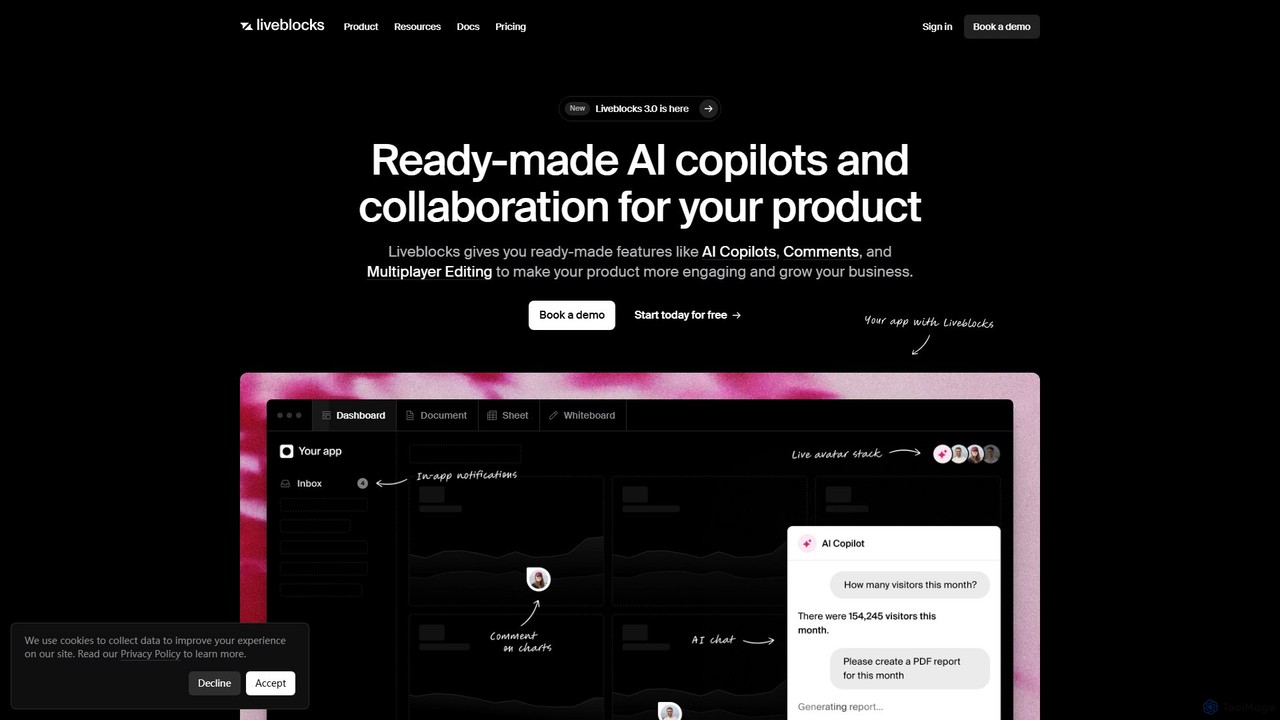
Liveblocks is a developer platform providing ready-made APIs and components to quickly build real-time collaborative experiences and AI …

156.3K

About Ai Development

AI Development tools are specialized platforms, frameworks, and software designed to assist developers, data scientists, and engineers in building, training, deploying, and managing artificial intelligence models and applications. These tools streamline the complex lifecycle of AI projects, from data preparation and model experimentation to scalable deployment and ongoing monitoring. They empower users to accelerate innovation, enhance model performance, and integrate intelligent capabilities into various systems and products, moving beyond simply consuming pre-built AI solutions.

Core Features

  • Model Training & Optimization: Provides environments and algorithms for efficient model training, hyperparameter tuning, and performance enhancement.
  • Data Management & Annotation: Offers functionalities for preparing, cleaning, labeling, and versioning datasets crucial for AI model development.
  • MLOps & Deployment: Facilitates the automation of machine learning operations, including model versioning, continuous integration/delivery, and scalable deployment.
  • API/SDK Integration: Supplies robust interfaces and software development kits for embedding AI models into existing applications and workflows.
  • Framework Compatibility: Ensures broad support for popular machine learning frameworks like TensorFlow, PyTorch, and scikit-learn.

Applicable Scenarios

AI Development tools are indispensable for data scientists creating custom predictive analytics models, machine learning engineers building and deploying scalable AI services, and software developers integrating intelligent features into their applications. They are also vital for AI researchers experimenting with novel algorithms and enterprises seeking to develop proprietary AI solutions tailored to specific business needs.

How to Choose

When selecting an AI Development platform, consider its compatibility with your preferred machine learning frameworks and programming languages. Evaluate its MLOps capabilities for model lifecycle management, including versioning, monitoring, and deployment automation. Assess its scalability to handle growing data volumes and model complexity, along with its integration ecosystem with other development tools. Finally, factor in the cost, community support, and ease of use for your team's technical proficiency.

Ai DevelopmentUse Cases

1

Building Custom Recommendation Systems

E-commerce platforms leverage AI development tools to train sophisticated models that analyze user behavior, purchase history, and browsing patterns. Data scientists use these platforms to develop and fine-tune recommendation algorithms, which then provide personalized product suggestions to individual customers. This leads to increased engagement, higher conversion rates, and an improved shopping experience, directly impacting revenue growth by presenting relevant items.

2

Automating Image Recognition and Classification

In manufacturing or security sectors, developers utilize AI development tools to train deep learning models for automated image recognition and classification. For instance, a quality control engineer can train a model to automatically identify defects in products on an assembly line, or a security analyst can develop a system to detect anomalies in surveillance footage. This automation significantly reduces manual inspection time, improves accuracy, and enhances operational efficiency.

3

Deploying Intelligent Customer Service Bots

Enterprises leverage AI development platforms to build and deploy natural language processing (NLP) models for intelligent customer service chatbots. Machine learning engineers configure these tools to train models on vast amounts of customer interaction data, enabling bots to understand user intent, answer complex queries, and provide personalized support 24/7. This reduces the workload on human agents, improves response times, and enhances overall customer satisfaction.

4

Developing Predictive Maintenance Solutions

In industrial sectors, engineers use AI development tools to analyze sensor data from machinery and predict potential equipment failures before they occur. By training machine learning models on historical operational data and failure logs, developers can create predictive maintenance solutions that alert maintenance teams to impending issues. This proactive approach minimizes costly downtime, extends equipment lifespan, and optimizes maintenance schedules, leading to significant operational savings.

5

Optimizing Medical Image Diagnosis Models

Medical researchers and developers in healthcare utilize AI development environments to train and refine deep learning models for enhanced medical image diagnosis. For example, radiologists can collaborate with ML engineers to develop models that accurately detect early signs of diseases like cancer from X-rays, MRIs, or CT scans. These tools provide the computational power and specialized libraries needed to process vast medical datasets, leading to more precise and faster diagnostic support for clinicians.

6

Accelerating Financial Fraud Detection Model Iteration

Financial institutions' AI teams leverage MLOps tools within AI development platforms to rapidly iterate and deploy fraud detection models. As new fraud patterns emerge, data scientists can quickly update models, retrain them with fresh data, and deploy the improved versions into production with minimal downtime. This agility is crucial for maintaining robust security against evolving threats, ensuring financial transactions remain secure and customer assets are protected effectively.

Ai DevelopmentFrequently Asked Questions