FormX.ai
FormX.ai is an AI-powered platform that automates data extraction from any document. It uses advanced AI, including LLMs …
FormX.ai is an AI-powered platform that automates data extraction from any document. It uses advanced AI, including LLMs and vision models, to process invoices, receipts, ID cards, and more, streamlining business workflows and improving operational efficiency.
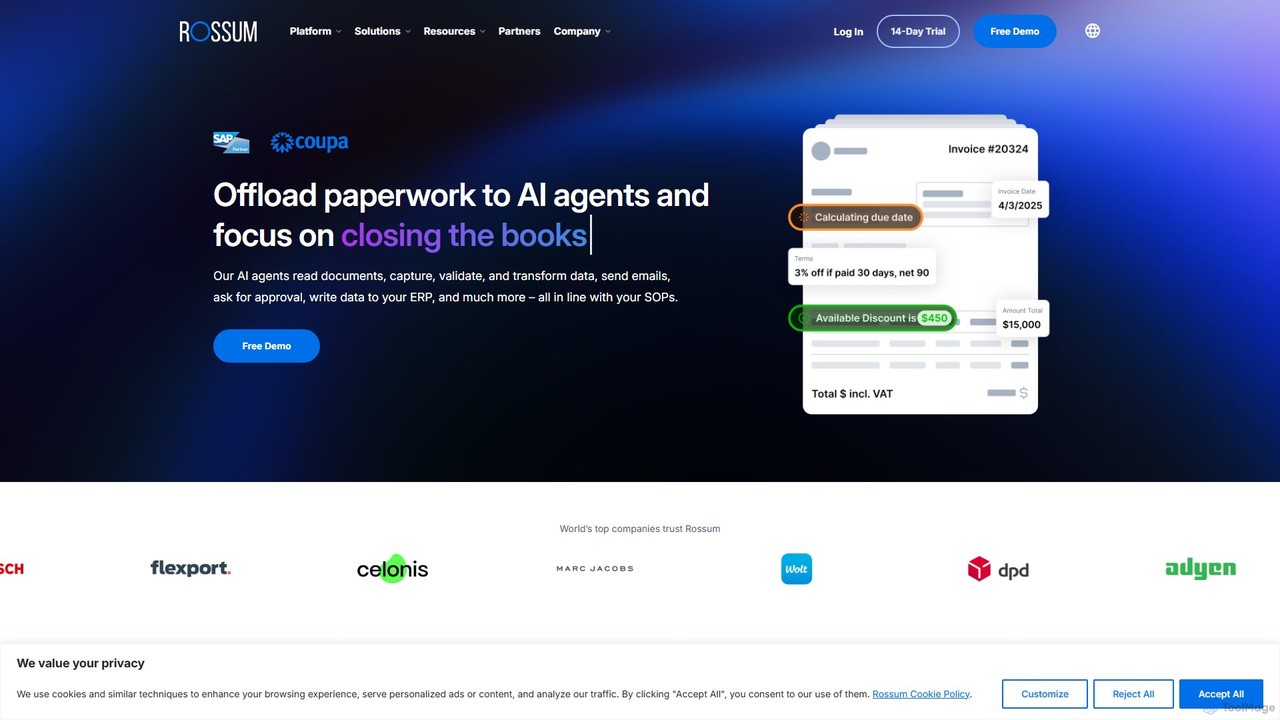
Rossum
Rossum is an AI-powered Intelligent Document Processing (IDP) platform that automates transactional document workflows. Using a proprietary LLM, …
Rossum is an AI-powered Intelligent Document Processing (IDP) platform that automates transactional document workflows. Using a proprietary LLM, it reads, understands, and extracts data from invoices, purchase orders, and other documents without templates. It streamlines processes from data capture and validation to approvals and ERP integration, saving time, reducing errors, and increasing operational efficiency for businesses.
About Data Extraction
Data Extraction tools are AI-powered solutions designed to automatically identify, locate, and extract specific information from various data sources. Leveraging advanced machine learning, natural language processing (NLP), and computer vision, these tools transform unstructured or semi-structured data into structured, usable formats. They significantly reduce manual effort and accelerate data processing, making vast amounts of information accessible for analysis and decision-making.
Core Features
- Intelligent Document Processing (IDP): Automatically extracts data from invoices, receipts, contracts, and forms, regardless of layout.
- Web Scraping & Content Parsing: Systematically collects specific data points from websites, such as product details, prices, or news articles.
- Named Entity Recognition (NER): Identifies and categorizes key entities like names, organizations, locations, and dates within text.
- Optical Character Recognition (OCR) with AI: Converts scanned documents and images into editable and searchable text, with enhanced accuracy for complex layouts.
- Schema-Agnostic Extraction: Adapts to varying data structures and formats without requiring rigid pre-defined rules.
Use Cases
Businesses across sectors utilize AI data extraction for automating back-office operations, enriching customer databases, and monitoring market trends. For example, financial institutions extract key figures from annual reports, and e-commerce platforms gather competitor pricing data.
How to Choose
When selecting an AI data extraction tool, consider its accuracy rates for your specific data types, integration capabilities with existing systems, scalability to handle varying data volumes, and the level of customization offered for extraction rules. Evaluate its ability to handle different data formats (e.g., PDFs, images, web pages) and its compliance with data privacy regulations.

Data ExtractionUse Cases
Automating Invoice and Receipt Processing
Finance departments use AI data extraction to automatically pull vendor names, amounts, dates, and line items from incoming invoices and receipts. This eliminates manual data entry, speeds up reconciliation, and reduces errors, allowing for faster payment processing and financial reporting.
Extracting Customer Feedback from Reviews
Marketing and product teams deploy these tools to analyze customer reviews and social media comments. They extract sentiment, common complaints, feature requests, and product mentions, providing actionable insights for product development and marketing strategy.
Gathering Market Intelligence from Web
E-commerce businesses and market researchers utilize AI data extraction to monitor competitor pricing, product specifications, and promotional offers from various online sources. This enables dynamic pricing strategies and informed market positioning.
Digitizing and Structuring Legal Documents
Law firms and legal departments apply AI data extraction to contracts, legal briefs, and case files. The tools identify and extract clauses, parties involved, dates, and key terms, significantly accelerating due diligence, contract review, and compliance checks.
Processing Healthcare Records for Research
Medical researchers and healthcare providers use AI to extract relevant patient data, diagnoses, treatments, and outcomes from unstructured clinical notes and medical reports. This facilitates large-scale data analysis for epidemiological studies, drug discovery, and personalized medicine.
Enriching CRM Data from Email Signatures
Sales and customer service teams employ AI data extraction to automatically update CRM records by pulling contact information (names, titles, phone numbers, emails) from email signatures. This ensures customer data is always current and reduces the administrative burden on sales representatives.