Ai Best in category 2 results Image Recognition AI Tool

Popular AI tools in the Image Recognition field of Ai include GPT-4 Vision Chatbot、Ximilar, etc., helping you quickly improve efficiency.

Ximilar

Ximilar

Ximilar is a comprehensive visual AI platform offering advanced image recognition, visual search, and object detection solutions through …

28.6K
GPT-4 Vision Chatbot

GPT-4 Vision Chatbot

A no-code platform by EmbedAI for building advanced AI chatbots powered by GPT-4 with Vision. It allows users …

33.7K

About Image Recognition

Image Recognition tools are a specialized category of AI technology designed to identify and interpret visual content within images and videos. These tools leverage advanced deep learning models, such as convolutional neural networks (CNNs), to automatically detect, classify, and understand objects, faces, text, and patterns. By transforming raw pixel data into meaningful insights, image recognition solutions empower businesses and individuals to automate visual data processing, enhance security, and improve user experiences across various applications.

Core Features

  • Object Detection: Identifies and localizes specific objects within an image, often drawing bounding boxes around them.
  • Facial Recognition: Detects and verifies human faces, enabling identity verification and access control.
  • Image Classification: Assigns predefined labels or categories to an entire image based on its content.
  • Optical Character Recognition (OCR): Extracts text from images, converting it into machine-readable format.
  • Scene Understanding: Analyzes the overall context and elements within an image to interpret the scene.

Use Cases

Image recognition is crucial in sectors like retail for inventory management, healthcare for disease diagnosis, and security for surveillance. It helps automate quality control in manufacturing by detecting defects and personalizes user experiences in social media by tagging friends in photos.

How to Choose

When selecting an image recognition tool, consider its accuracy and robustness in diverse conditions, the types of objects or features it can detect, and its integration capabilities with existing systems. Evaluate its scalability for processing large volumes of data and the level of customization offered for specific recognition tasks.

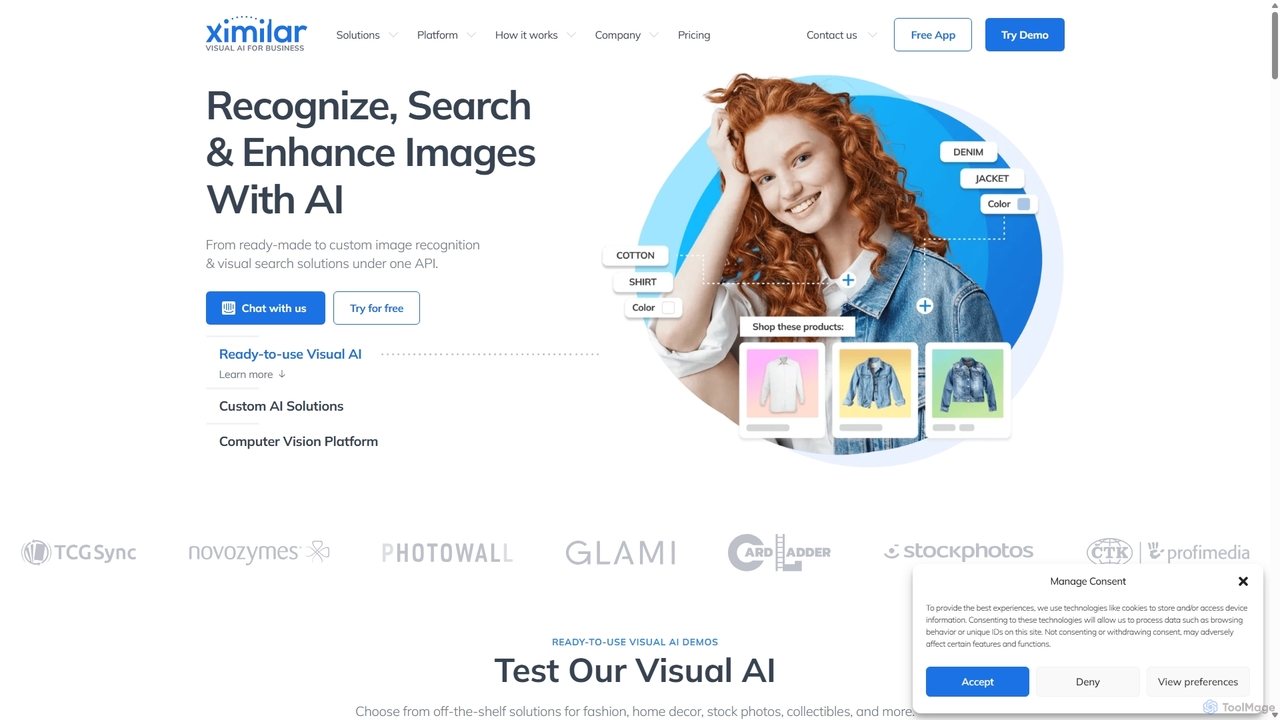
Image RecognitionUse Cases

1

Automated Quality Control in Manufacturing

Manufacturing companies utilize image recognition to automatically inspect products on assembly lines. By analyzing images of manufactured goods, the AI can detect defects, anomalies, or deviations from quality standards in real-time, significantly reducing manual inspection time and improving product consistency. This helps identify faulty items before they reach consumers, saving costs and enhancing brand reputation.

2

Retail Inventory Management and Shelf Monitoring

Retailers deploy image recognition systems to monitor product shelves and manage inventory. Cameras capture images of store aisles, and the AI identifies stock levels, misplaced items, or empty shelves. This enables automated alerts for restocking, ensures planogram compliance, and provides valuable data on product visibility and customer behavior, optimizing store operations and sales.

3

Medical Image Analysis for Diagnosis Support

Healthcare professionals use image recognition to assist in analyzing medical images such as X-rays, MRIs, and CT scans. The AI can highlight suspicious areas, detect early signs of diseases (e.g., tumors, lesions), or quantify disease progression, acting as a powerful second opinion. This aids radiologists and doctors in making faster, more accurate diagnoses and improving patient outcomes.

4

Security Surveillance and Anomaly Detection

In security and public safety, image recognition enhances surveillance systems. It can automatically detect unauthorized access, identify suspicious objects, or recognize unusual behaviors in real-time video feeds. This capability allows security personnel to respond proactively to potential threats, monitor large areas efficiently, and improve overall safety and incident response times.

5

Content Moderation and Brand Safety

Online platforms and social media companies employ image recognition for automated content moderation. The AI scans user-generated images and videos to identify inappropriate content, hate speech, or brand-unsafe material. This helps maintain a safe online environment, protects users from harmful content, and ensures compliance with platform guidelines and legal regulations.

6

Personalized Shopping and Recommendation Systems

E-commerce platforms and fashion retailers leverage image recognition to understand user preferences and offer personalized recommendations. By analyzing images of products users browse or upload, the AI can identify styles, colors, and patterns. This allows the system to suggest similar items, create personalized shopping experiences, and improve conversion rates by matching products to individual tastes.

Image RecognitionFrequently Asked Questions