Ai Infrastructure Best in category 1 results Sdk & Api AI Tool

Popular AI tools in the Sdk & Api field of Ai Infrastructure include Visage Technologies, etc., helping you quickly improve efficiency.

Visage Technologies

Visage Technologies

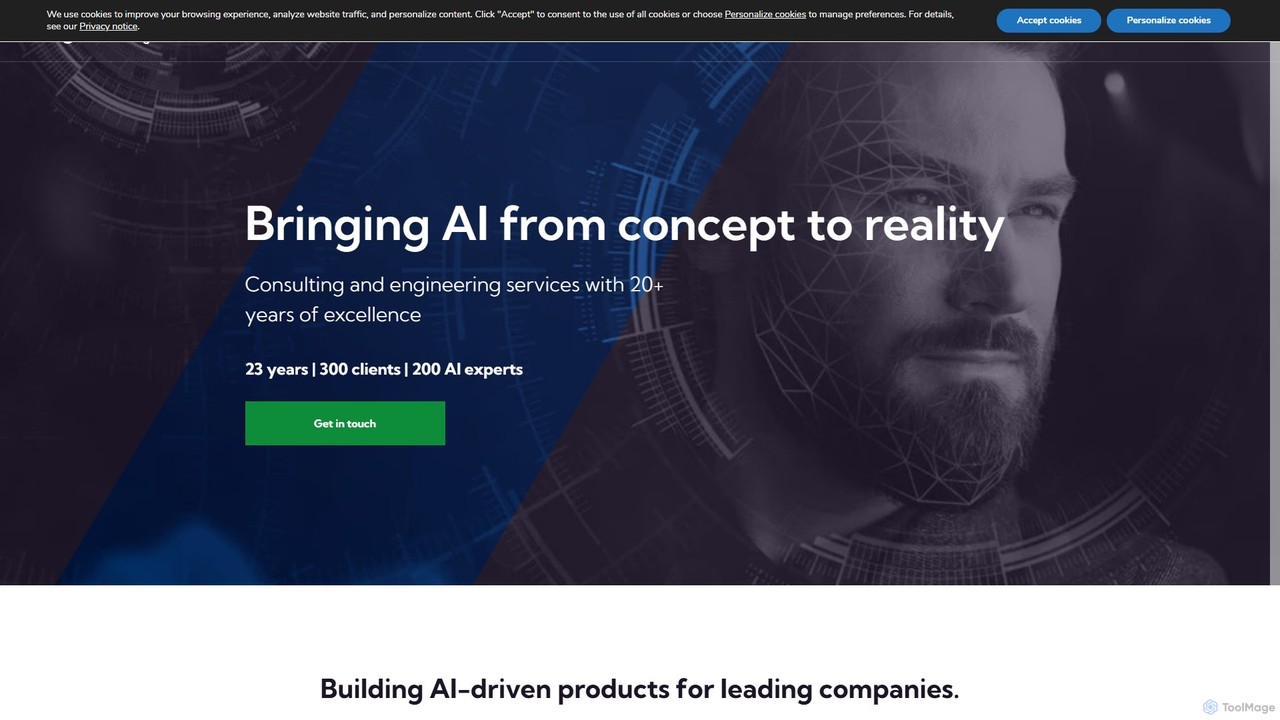
Visage Technologies provides advanced, high-performance computer vision solutions, specializing in face tracking, analysis, and recognition SDKs. With over …

70.7K

About Sdk & Api

AI SDKs & APIs are toolkits and interfaces that enable developers to integrate powerful AI functionalities into their own applications without building models from scratch. They provide access to complex, pre-trained models for tasks like natural language processing or computer vision through simple function calls. This approach significantly accelerates the development cycle, reduces infrastructure costs, and lowers the technical barrier for creating sophisticated AI-powered services. By leveraging these tools, developers can focus on user experience and core application logic rather than complex machine learning operations.

Core Features

  • Pre-trained Model Access: Provides direct API endpoints to state-of-the-art AI models for various tasks.
  • Software Development Kits (SDKs): Offers language-specific libraries, code samples, and wrappers to simplify API integration.
  • Comprehensive Documentation: Includes detailed guides, tutorials, and API references to facilitate quick implementation.
  • Scalable Infrastructure: The provider manages the underlying hardware, model updates, and scaling to handle variable loads.
  • Usage Analytics: Dashboards for monitoring API calls, tracking costs, and analyzing performance metrics.

Use Cases

These tools are primarily used by software developers, data scientists, and tech companies to build or enhance applications. Common scenarios include adding a chatbot to a website, implementing image recognition for content moderation, integrating voice-to-text transcription in a meeting app, or creating personalized recommendation engines for e-commerce platforms.

How to Choose

When selecting an AI SDK or API, consider the specific function you need (e.g., sentiment analysis, object detection). Evaluate the quality and clarity of the documentation and developer support. Analyze the pricing model—whether it's pay-per-use, subscription-based, or tiered—to ensure it aligns with your expected usage. Finally, assess performance factors like latency, uptime guarantees, and rate limits to meet your application's requirements.

Sdk & ApiUse Cases

1

Integrating a Chatbot into a Customer Service App

A mobile app developer is tasked with adding a 24/7 support feature. Instead of building a Natural Language Processing (NLP) model from the ground up, they use a conversational AI API. The developer integrates the API into the app's chat interface. User messages are sent to the API endpoint, which processes the query and returns a relevant response. This allows the company to provide instant answers to common questions, reducing support ticket volume and freeing up human agents for more complex issues.

2

Automating Content Tagging for a Media Library

A digital asset manager for a large corporation needs to categorize thousands of images. Manually tagging each image is time-consuming and inconsistent. They use a script that calls an image recognition API for each new image uploaded to their system. The API analyzes the image content and returns a set of relevant keywords (e.g., 'skyscraper', 'sunset', 'business meeting'). These tags are automatically added to the image's metadata, making the entire library searchable and well-organized without manual effort.

3

Implementing Real-time Language Translation

A product manager for a global collaboration SaaS platform wants to break down language barriers between users. The development team integrates a machine translation API into their chat and document features. When a user from Japan posts a comment in Japanese, the application sends the text to the translation API. The API instantly returns an English translation, which is then displayed to an English-speaking user. This feature is implemented in weeks instead of years, dramatically expanding the product's addressable market.

4

Performing Sentiment Analysis on Customer Feedback

A marketing analyst needs to understand public perception of a new product launch. They collect thousands of social media mentions and reviews. Instead of reading them manually, they use a data pipeline that sends each piece of text to a Natural Language Processing (NLP) API. The API's sentiment analysis function returns a score (e.g., positive, negative, neutral) for each comment. The analyst can then visualize this data on a dashboard to track sentiment trends in real-time and quickly identify areas for improvement.

5

Developing a Personalized Product Recommendation Engine

An e-commerce developer wants to increase sales by showing relevant products to users. They integrate a recommendation API into their online store. The developer sends user data, such as browsing history and past purchases, to the API. In return, the API provides a list of product IDs that the user is likely to be interested in. These products are then displayed in a 'Recommended for You' section on the website, leading to higher engagement and an increased average order value without the need to build and maintain a complex recommendation algorithm in-house.

6

Implementing Voice Commands in an IoT Device

An embedded systems engineer is creating a smart home device. To add a modern, hands-free interface, they decide to implement voice control. They use a Speech-to-Text SDK on the device to capture audio. This audio data is then streamed to a cloud API for processing. The API transcribes the speech into a text command (e.g., 'turn on the lights'), which is sent back to the device. The device's firmware then executes the corresponding action. This allows for rapid prototyping of voice features without deep expertise in speech recognition technology.

Sdk & ApiFrequently Asked Questions