DeepOpinion
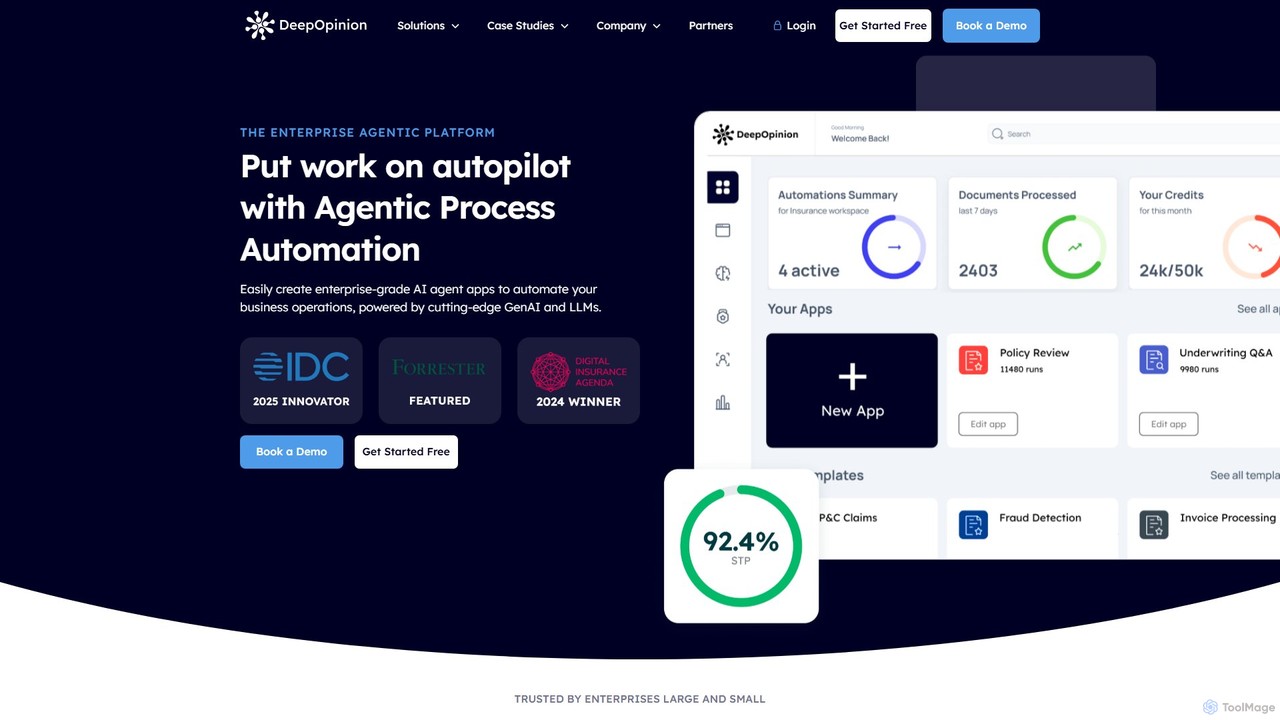
DeepOpinion is an enterprise-grade Agentic Process Automation (APA) platform that uses Generative AI and LLMs to automate complex …
DeepOpinion is an enterprise-grade Agentic Process Automation (APA) platform that uses Generative AI and LLMs to automate complex business operations. It provides a no-code environment for building AI agent apps to handle text and document-heavy workflows, achieving over 90% end-to-end automation with high accuracy and security.
Pipefy
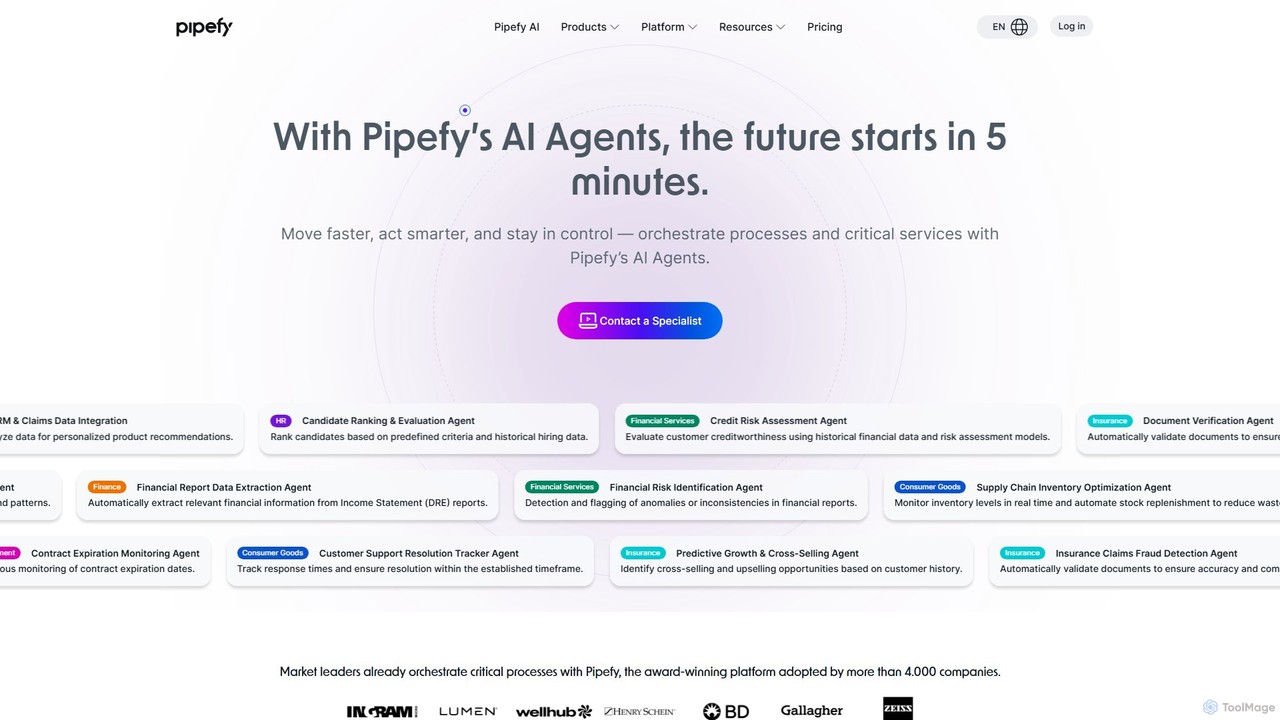
Pipefy is an AI-driven, low-code process automation platform that empowers teams to build, manage, and scale workflows without …
Pipefy is an AI-driven, low-code process automation platform that empowers teams to build, manage, and scale workflows without technical expertise. Using autonomous AI Agents, it automates tasks, centralizes operations, and integrates with existing systems to enhance efficiency, reduce errors, and accelerate business growth across departments like HR, Finance, and Procurement.
About No Code Platform
No Code Platforms are visual development environments that enable users to create applications, websites, and automated workflows without writing a single line of code. These tools utilize intuitive drag-and-drop interfaces, pre-built components, and visual logic builders to abstract away programming complexities. This empowers non-technical individuals, such as business owners and marketers, to build and deploy functional digital solutions rapidly. Many modern No Code Platforms also integrate AI capabilities, allowing for the creation of intelligent applications for data analysis, customer support, and process automation.
Core Features
- Visual Interface Builder: Design user interfaces for web and mobile apps by dragging and dropping elements.
- Workflow Automation: Create complex business logic and automate processes using visual flowcharts.
- Database Management: Visually create and manage data structures and content without needing to write SQL queries.
- API Integration: Connect to third-party services and data sources through pre-built connectors and visual API managers.
- One-Click Deployment: Publish and host applications on the web with a single click, handling server management automatically.
Use Cases
No Code Platforms are widely used by entrepreneurs to build Minimum Viable Products (MVPs), small businesses to create internal tools like custom CRMs or project managers, and marketing teams to launch landing pages and automate campaigns. They are ideal for situations where development speed and cost-effectiveness are prioritized over highly complex, custom-coded functionalities.
How to Choose
When selecting a No Code Platform, consider the type of application you want to build (e.g., web app, mobile app, automation). Evaluate its scalability to ensure it can handle future growth in users and data. Check its integration ecosystem to confirm it connects with your existing tools. Finally, assess the platform's learning curve and pricing model to ensure it aligns with your team's skills and budget.

No Code PlatformUse Cases
Build a Custom Internal CRM
A sales manager in a small business finds managing leads and customer data in spreadsheets inefficient and prone to errors. Using a no-code platform, they can design and build a simple CRM application tailored to their specific sales process. This involves creating a database for contacts and deals, designing forms for data entry, and setting up a dashboard to visualize the sales pipeline. They can also automate tasks like sending follow-up email reminders when a deal stage changes. The result is a centralized, streamlined system that improves team collaboration and data accuracy without the cost of a developer.
Launch a Minimum Viable Product (MVP)
A startup founder needs to validate a new business idea quickly without a large upfront investment in custom development. They use a no-code platform to build the core features of a web application, such as user registration and login, a form for users to submit data, and a dashboard to display results. This allows them to launch a functional prototype in a matter of weeks instead of months. By gathering real user feedback on this MVP, they can iterate on the product, test market demand, and secure investor interest before committing to a full-scale, coded solution.
Automate Marketing & Lead Nurturing Workflows
A marketing specialist spends hours each week manually handling new leads from website forms, sending welcome emails, and adding them to a mailing list. Using a no-code automation platform, they create a workflow that triggers whenever a new form is submitted. The workflow automatically sends a personalized welcome email, waits a day, then sends a follow-up resource. It also adds the lead's information to the company's CRM and notifies the sales team in Slack. This automation saves significant time, ensures immediate and consistent lead follow-up, and improves overall lead conversion rates.
Create a Client Portal for a Service Business
A freelance consultant manages multiple client projects simultaneously, and communication via email becomes disorganized. To provide a better experience, they build a secure, password-protected client portal using a no-code platform. Each client gets a unique login to a personalized dashboard where they can view project progress, access shared files, review and pay invoices, and communicate through a dedicated messaging system. This portal centralizes all project-related information, reduces administrative overhead for the consultant, and offers clients a professional, transparent, and organized way to interact with the business.
Develop a Community or Membership Website
A content creator wants to build a dedicated online space for their audience, offering exclusive content and fostering interaction. Using a no-code platform with built-in membership features, they create a website with user registration, different subscription tiers, and content gating (restricting access to paying members). They also integrate a forum or discussion board feature to allow members to connect with each other. This approach allows them to monetize their content and build a loyal community without the complexity and cost of custom web development, managing everything from a single, user-friendly interface.
Build an AI-Powered Data Entry Tool
An operations analyst is tasked with reducing the time spent on manually extracting information from hundreds of invoices each month. They use a no-code platform to build a simple application. The workflow is as follows: a user uploads an invoice PDF, the platform sends the file to an external AI service (via API) for optical character recognition (OCR) and data extraction. The AI identifies and returns key fields like invoice number, date, and total amount. The no-code application then automatically populates these fields into a central database. This AI-integrated tool drastically reduces manual data entry, minimizes human error, and frees up the team for more valuable analytical work.