ToolMage
Sign in

Best 3 Ai Tutor AI tools for Ai Tools

Popular Ai Tutor AI tools in Ai Tools include Talkface, Lingostar, and Jarggin, helping you work more efficiently.

Lingostar
Freemium

Lingostar

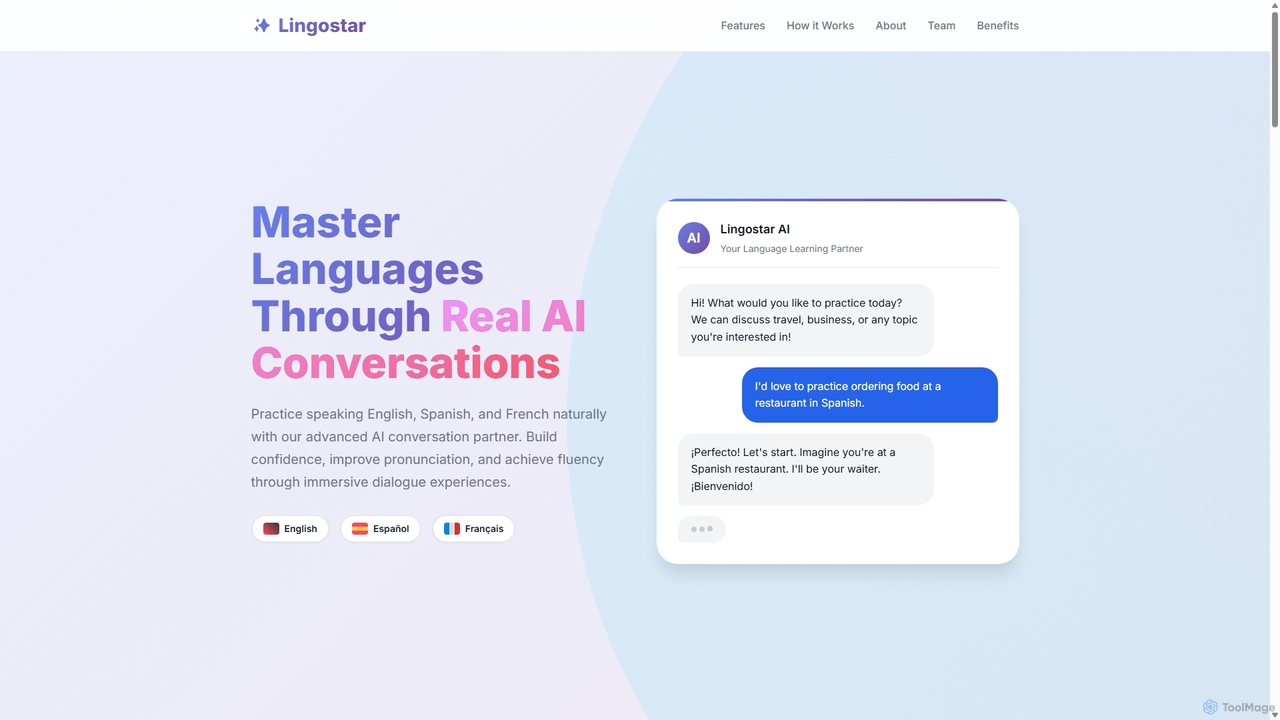
Lingostar is an AI-powered language learning platform designed to help users achieve fluency through realistic conversation practice. It offers personalized, real-time feedback on pronunciation, grammar, and vocabulary. With features like role-playing scenarios, adaptive learning paths, and intelligent vocabulary building, Lingostar provides an immersive and effective way to master a new language for travel, work, or personal growth.

Ai Tutor
Visits 7KFavorites 125Likes 131
Jarggin
Freemium

Jarggin

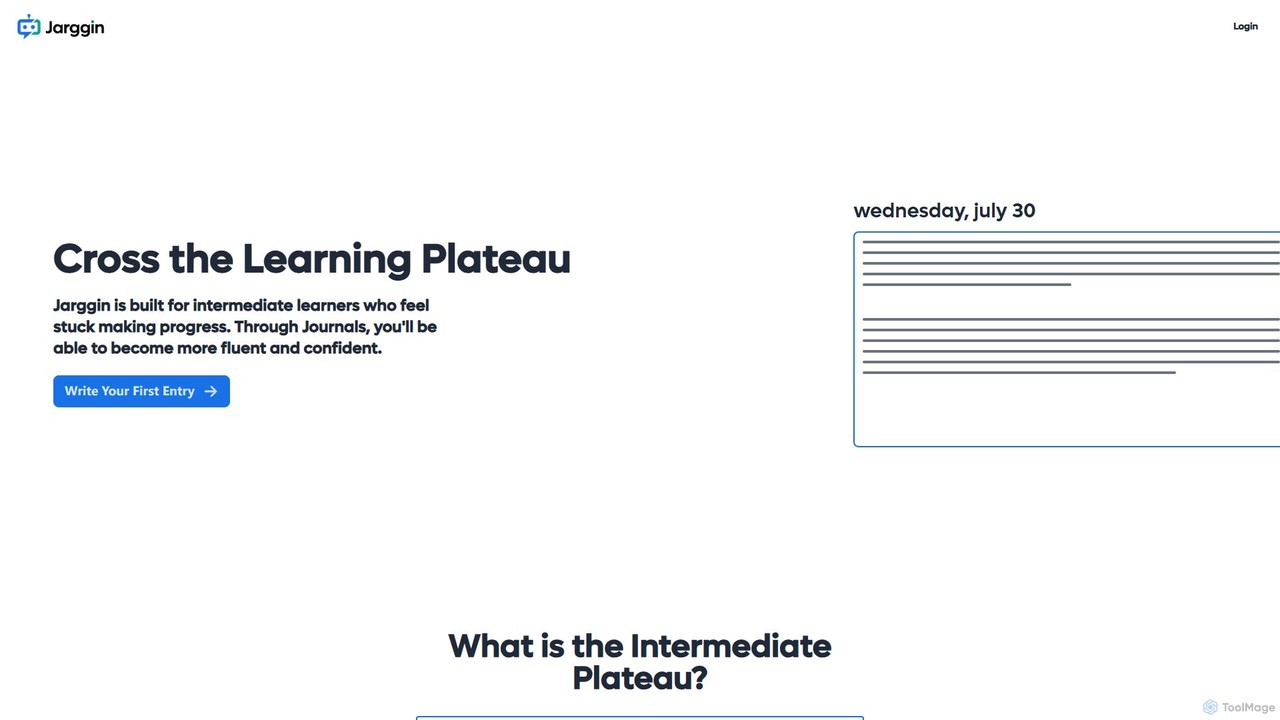
Jarggin is an AI-powered language learning platform designed for intermediate learners. It helps users break through the 'intermediate plateau' by providing personalized feedback on daily journal entries. The tool focuses on improving fluency, confidence, and vocabulary through practical writing exercises, smart vocabulary tracking, and gamified learning elements.

Ai Tutor
Visits 5.5KFavorites 96Likes 110
Talkface
Freemium

Talkface

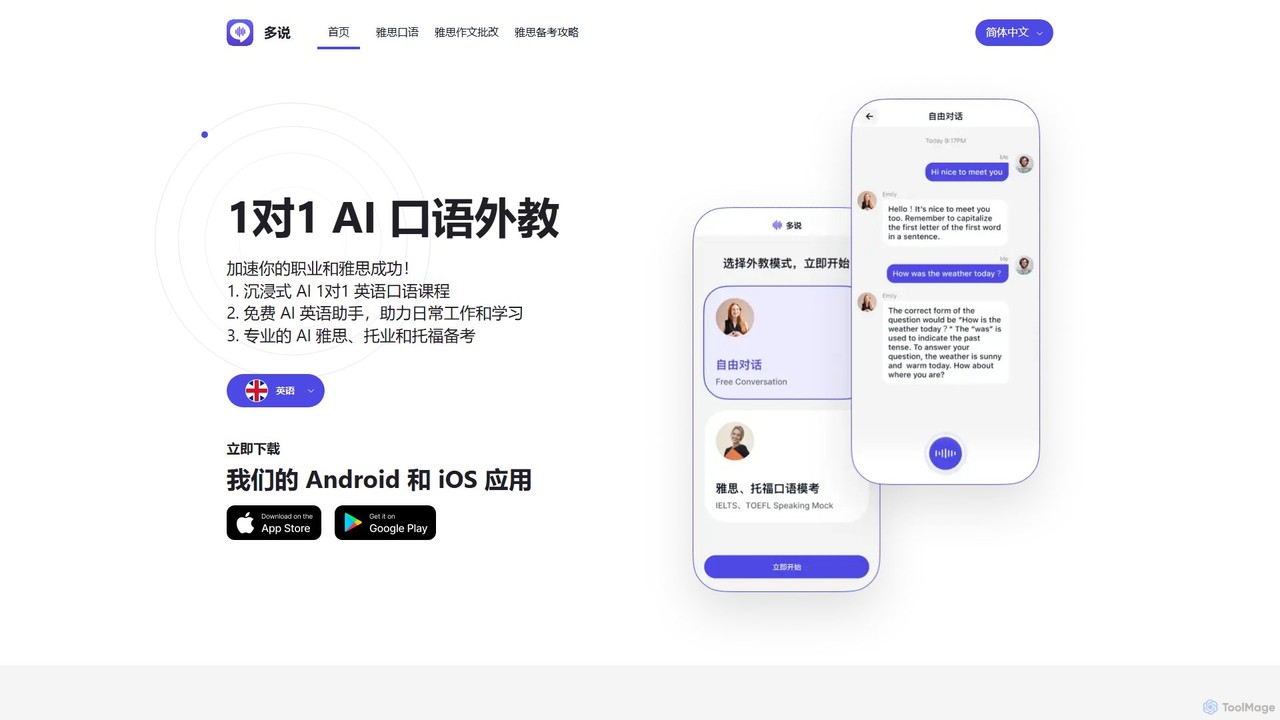
Talkface is a 1-on-1 AI English speaking tutor designed to accelerate your language proficiency for career and exam success. It offers immersive conversational practice, specialized preparation for IELTS, TOEFL, and TOEIC, and a free AI assistant for daily tasks.

Ai Tutor
Visits 24.1KFavorites 163Likes 168

About Ai Tutor

An AI Tutor is a type of artificial intelligence tool designed to provide personalized, interactive, and adaptive learning experiences. These tools leverage large language models and machine learning algorithms to understand a user's knowledge level, learning pace, and specific questions. They deliver customized explanations, practice problems, and real-time feedback, acting as a 24/7 personal academic assistant. Unlike static educational resources, AI Tutors can simulate a one-on-one tutoring session, guiding users through complex topics step-by-step.

Core Features

  • Personalized Learning Paths: Creates customized study plans and content recommendations based on individual performance and goals.
  • Interactive Q&A: Engages in natural language conversations to answer specific questions and explain complex concepts in depth.
  • Instant Feedback & Assessment: Analyzes user responses to exercises or code and provides immediate, constructive corrections and suggestions.
  • Adaptive Difficulty: Automatically adjusts the complexity of questions and materials to match the user's current skill level.
  • Content Simplification: Breaks down dense academic texts, research papers, or articles into easy-to-understand summaries and key points.

Use Cases

AI Tutors are widely used across various educational levels and professional fields. Students from K-12 to university use them for homework help, exam preparation (like SAT or GRE), and mastering difficult subjects such as mathematics, physics, and computer science. Professionals leverage them for upskilling, learning new programming languages, or preparing for industry certifications. Language learners also use them for conversational practice and grammar correction.

How to Choose

When selecting an AI Tutor, consider the subject matter specialization; some are general-purpose while others excel in specific domains like coding or science. Evaluate the level of interactivity and the quality of feedback it provides. Assess its adaptability—does it effectively track your progress and adjust its approach? Finally, consider the user interface, integration with other platforms, and the pricing model to ensure it aligns with your learning needs and budget.

Ai Tutor use cases

1

Personalized Coding Practice for Beginners

A computer science student new to programming uses an AI Tutor to learn Python. When they get stuck on a coding exercise, instead of just searching for the answer, they ask the AI Tutor to explain the concept of 'for loops' in a simpler way. The tutor provides an analogy, a step-by-step code breakdown, and then generates a new, slightly different practice problem. This interactive process helps the student truly understand the logic, not just copy a solution, accelerating their learning curve and building foundational confidence.

2

Mastering Complex Scientific Concepts

A biology undergraduate is struggling to understand cellular respiration for an upcoming exam. They use an AI Tutor to break down the Krebs cycle. The student asks specific questions like, 'Why is ATP considered the energy currency?' and receives detailed, easy-to-digest answers with analogies. The AI Tutor then creates a short, adaptive quiz. When the student answers a question incorrectly, the tutor doesn't just show the right answer but explains the underlying principle they misunderstood, ensuring deep and lasting comprehension.

3

Accelerated Language Learning through Conversation

An employee preparing for an international assignment needs to improve their business Spanish. They use an AI Tutor for daily 15-minute conversation practice. The AI presents a business scenario, such as 'negotiating a contract'. The user speaks their responses, and the AI provides instant feedback on pronunciation, grammar, and word choice. It suggests more natural phrasing, helping the user sound more like a native speaker. This consistent, low-pressure practice builds fluency and confidence much faster than traditional methods alone.

4

Targeted Standardized Test Preparation

A high school student is preparing for the SAT math section. Using an AI Tutor, they first take a diagnostic test that identifies their weak areas, such as 'quadratic equations' and 'geometry'. The tutor then generates a personalized study plan focusing specifically on these topics. It provides an endless supply of practice questions that adapt in difficulty based on the student's performance. For each question, a detailed, step-by-step solution is available, explaining the logic behind the correct answer. This targeted approach saves time and maximizes score improvement.

5

Efficient Corporate Skill Upskilling

A marketing team needs to learn how to use a new analytics software. Instead of a one-size-fits-all training seminar, each team member uses an AI Tutor. The tutor guides them through the software's features within the context of their specific roles. A content creator learns about traffic source analysis, while a campaign manager focuses on conversion tracking. When an employee has a question specific to their company's data, the AI Tutor can provide a relevant, contextual answer, making the training highly efficient and immediately applicable to their daily work.

6

Guided Homework and Assignment Assistance

A middle school student is struggling with a word problem in their math homework. Instead of giving them the final answer, their parent encourages them to use an AI Tutor. The student types in the problem, and the AI Tutor responds by asking guiding questions, such as 'What is the first piece of information the problem gives you?' or 'What operation do you think we should use here?'. This Socratic method helps the student develop critical thinking and problem-solving skills, empowering them to solve similar problems independently in the future.

Ai Tutor FAQ

What is an AI Tutor?

An AI Tutor is a software application that uses artificial intelligence to provide personalized and interactive learning support. Unlike a simple search engine, it doesn't just provide information; it guides a user through a subject with adaptive questioning, customized explanations, and instant feedback. Key features include creating personalized study plans, answering complex questions conversationally, and assessing a user's understanding in real-time to adjust the difficulty level. They act as a virtual, on-demand tutor available 24/7.

How to choose the right AI Tutor?

Choosing the right AI Tutor depends on your specific learning goals. Consider these factors:

  • Subject Specialization: Does the tool excel in the subject you need, such as coding, math, or language learning? General-purpose tutors may not have the depth required for specialized topics.
  • Learning Style Support: Does it offer various methods like interactive exercises, Socratic dialogue, visual aids, or just text-based answers?
  • Adaptability and Feedback Quality: How well does it assess your progress and adjust its teaching? The feedback should be constructive and clear, not just a right/wrong judgment.
  • Cost and Accessibility: Evaluate the pricing model (subscription, freemium, etc.) and ensure it works on your preferred devices.
What's the difference between an AI Tutor and a search engine?

The primary difference lies in guidance and personalization. A search engine (like Google) provides a list of resources and raw information in response to a query, leaving the user to synthesize and structure their learning. An AI Tutor, in contrast, acts as a guide. It structures the learning process, provides step-by-step explanations, asks questions to check for understanding, and adapts its approach based on the user's responses. It's the difference between being given a library of books versus having a librarian who recommends the right book and explains its difficult chapters to you.

What subjects can AI Tutors help with?

AI Tutors can assist with a vast range of subjects, and their capabilities are constantly expanding. Common areas include:

  • STEM: Mathematics (from algebra to calculus), Physics, Chemistry, Biology, and Computer Science (including coding in various languages).
  • Languages: Vocabulary building, grammar correction, and conversational practice for dozens of languages.
  • Humanities: History, Literature (analyzing texts), and Philosophy (explaining complex theories).
  • Test Preparation: Standardized tests like the SAT, GRE, GMAT, and professional certifications.

While many are broad, some of the most effective AI Tutors specialize in one or two specific domains, offering greater depth and accuracy.

Are AI Tutors effective for learning?

Yes, AI Tutors can be highly effective as a supplement to traditional learning methods. Their primary strengths are providing instant, 24/7 access to help, personalized practice at a user's own pace, and a non-judgmental environment to ask questions. Studies have shown they can improve test scores and increase student engagement. However, their effectiveness depends on the quality of the tool and how it's used. They are most powerful when used to reinforce concepts learned in a structured environment (like a classroom or online course), rather than as a complete replacement for a human teacher or curriculum.