Lex
Lex is an intelligent, collaborative word processor designed to enhance the writing process. It combines a minimalist, distraction-free …
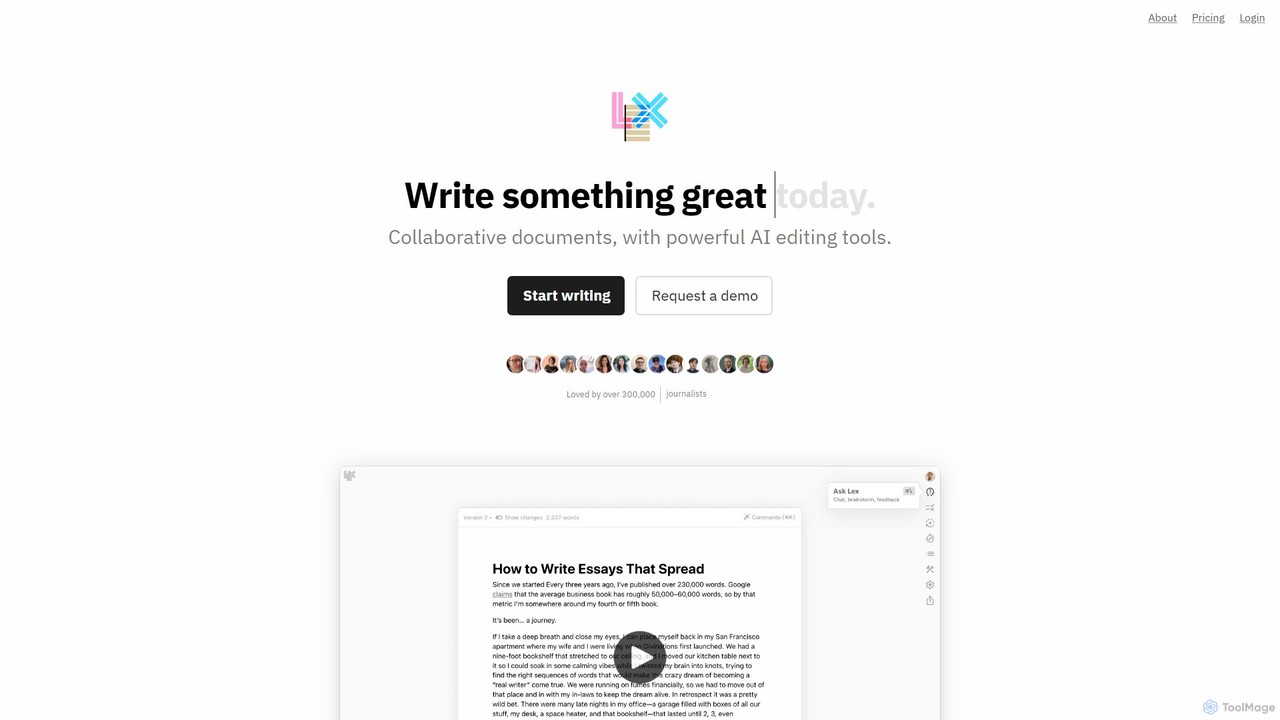
Lex is an intelligent, collaborative word processor designed to enhance the writing process. It combines a minimalist, distraction-free interface with powerful AI tools, serving as a superior alternative to Google Docs. Users can get instant feedback, brainstorm ideas, rewrite text, and collaborate in real-time, all while leveraging the best AI models like GPT-4 and Claude.
About Copywriting
AI Copywriting tools are a specialized class of AI applications designed to generate persuasive and engaging written content for marketing and sales purposes. These tools leverage large language models (LLMs) trained on vast datasets of successful copy to produce text for advertisements, websites, emails, and social media. Their primary value lies in accelerating content creation, overcoming writer's block, and generating multiple variations for A/B testing to optimize conversion rates. They provide structured frameworks and templates tailored specifically for marketing objectives.
Core Features
- Template-Based Generation: Offers pre-built templates for specific formats like Google Ads, Facebook posts, product descriptions, and email subject lines.
- Tone and Voice Adjustment: Allows users to define and switch between different tones, such as professional, witty, empathetic, or formal, to match brand identity.
- Marketing Frameworks: Incorporates classic copywriting formulas like AIDA (Attention, Interest, Desire, Action) and PAS (Problem, Agitate, Solution) to structure the output for maximum impact.
- Content Rewriting and Expansion: Paraphrases existing text to avoid duplication or expands on short ideas to create more comprehensive content.
- Multi-Variant Creation: Quickly generates numerous versions of headlines, calls-to-action (CTAs), or ad copy for performance testing.
Use Cases
AI Copywriting tools are widely used by digital marketers, e-commerce managers, social media coordinators, and entrepreneurs. For instance, a marketing team can generate a dozen variations of ad copy for a new campaign in minutes. An e-commerce store can automatically create unique, SEO-friendly product descriptions for hundreds of items. A startup founder can quickly draft compelling landing page copy without hiring a professional copywriter.
How to Choose
When selecting an AI Copywriting tool, consider the quality and relevance of the generated content. Evaluate the range and specificity of available templates and marketing frameworks. Check for language support if you operate in multiple markets. Also, assess integration capabilities with your existing workflow tools (e.g., CMS, social media schedulers) and consider the pricing model—whether it's subscription-based or uses a credit system.

CopywritingUse Cases
Generate High-Converting Ad Copy for Campaigns
A digital marketer is tasked with launching a new Google Ads campaign for a client's product. Instead of spending hours brainstorming headlines and descriptions, they use an AI Copywriting tool. They input the product name, target audience, and key benefits. The tool instantly generates dozens of ad variations based on the AIDA framework, including different headlines, descriptions, and calls-to-action. The marketer can then select the most promising options to run A/B tests, significantly reducing campaign setup time and improving the chances of achieving a higher click-through rate (CTR) from the start.
Create SEO-Optimized E-commerce Product Descriptions
An e-commerce manager needs to write unique descriptions for 200 new products. Writing each one manually is time-consuming and risks duplicate content issues. Using an AI Copywriting tool, they create a template that includes product features, target keywords, and desired tone. The tool then generates a unique, persuasive, and SEO-friendly description for each product by processing a CSV file of product data. This automates a repetitive task, ensures content originality, and helps improve the store's search engine rankings, all while maintaining a consistent brand voice across all listings.
Draft Engaging Social Media Content Calendars
A social media manager for a lifestyle brand needs to plan a month's worth of content for Instagram and Facebook. To overcome creative fatigue, they use an AI Copywriting tool. They provide topics like 'summer wellness tips' or 'new product launch'. The tool generates a variety of post captions, questions to engage the audience, and even ideas for relevant hashtags. This allows the manager to quickly fill their content calendar with diverse and engaging posts, saving significant brainstorming time and ensuring a consistent stream of high-quality content for their followers.
Develop Persuasive Email Marketing Sequences
A marketing team is creating an automated email sequence to nurture new subscribers. They need to write a welcome email, a product feature email, and a special offer email. Using an AI Copywriting tool, they select templates for each email type. They input their product details and offer, and the tool generates compelling subject lines and body copy for the entire sequence, structured to build trust and drive conversions. The team can then refine the AI-generated drafts to perfectly match their brand voice, cutting the time to develop the entire campaign from days to just a few hours.
Craft Compelling Landing Page Headlines and Copy
A startup is launching a new SaaS product and needs a high-impact landing page. The founder, who is not a professional copywriter, uses an AI tool to generate ideas. They input their value proposition and target audience. The tool provides multiple options for the main headline, sub-headlines, feature descriptions, and a final call-to-action (CTA). This process helps them quickly test different angles and messaging frameworks (like PAS - Problem, Agitate, Solution) to find the most compelling copy that clearly communicates the product's value and encourages visitors to sign up for a trial.
Overcome Writer's Block for Blog Post Intros
A content creator needs to write a blog post on a complex topic but is struggling with the introduction. Staring at a blank page, they turn to an AI Copywriting tool for inspiration. They input the blog post title and a few key points. The tool generates five different opening paragraphs, each with a unique hook—a surprising statistic, a relatable question, or a bold statement. The creator can then choose the best intro, or combine elements from different options, to kickstart their writing process and overcome the initial hurdle of writer's block, saving time and frustration.