ToolMage
Sign in

Best 1 Document Generation AI tools for Ai Tools

Popular Document Generation AI tools in Ai Tools include Meshworks, helping you work more efficiently.

Meshworks
Freemium

Meshworks

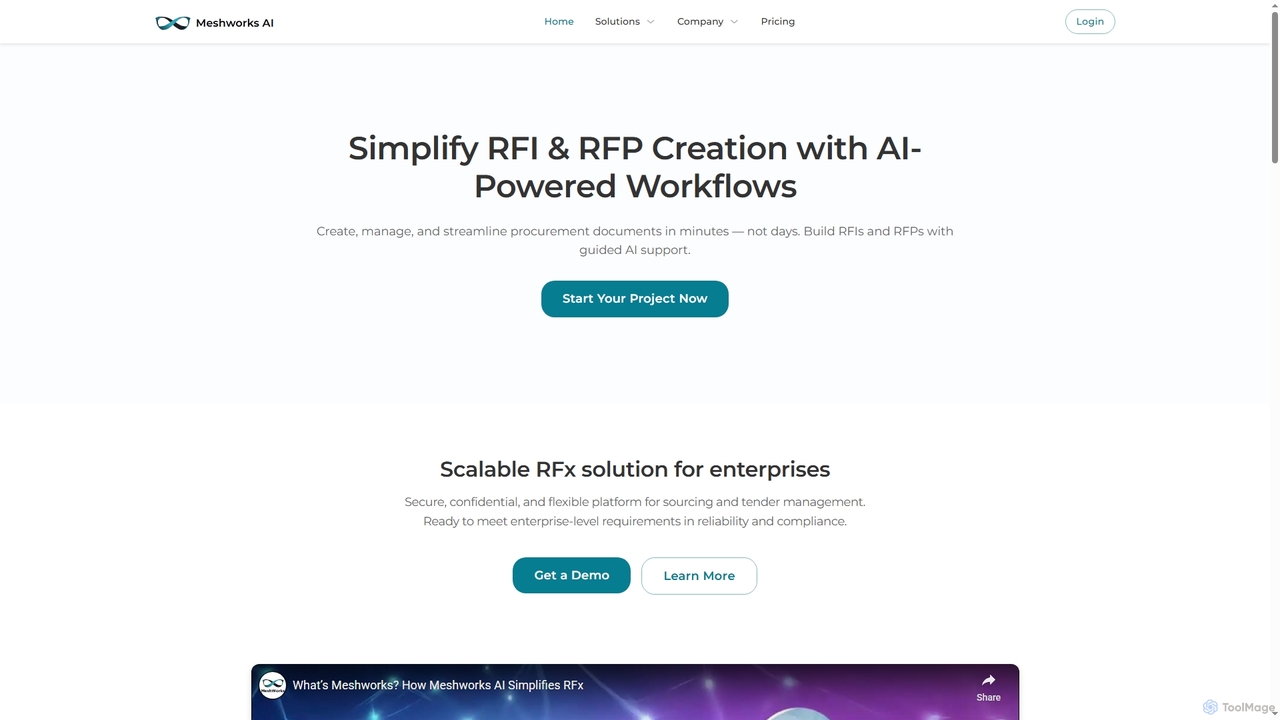
Meshworks is an AI-powered RFx orchestration platform designed to simplify and accelerate the procurement process. It enables businesses of all sizes to create, manage, and analyze RFI and RFP documents in minutes, leveraging AI for question generation, vendor discovery, and response analysis.

Document Generation
Visits 8.9KFavorites 121Likes 121

About Document Generation

Document Generation tools are AI-powered platforms that automate the creation of various documents. Leveraging advanced natural language processing and machine learning, these tools transform raw data, structured inputs, or prompts into coherent, contextually relevant, and formatted content. They significantly streamline workflows for businesses and individuals by drastically reducing manual effort in content creation and ensuring consistency across outputs.

Core Features

  • Automated Content Drafting: Generates text for reports, contracts, marketing materials, or technical documentation from minimal input.
  • Template Customization: Allows users to define and apply specific templates, branding, and formatting rules for consistent output.
  • Data Integration: Connects with databases, spreadsheets, or APIs to pull dynamic data directly into documents.
  • Multi-format Output: Supports generation in various formats such as PDF, Word, HTML, or plain text, suitable for different platforms.
  • Version Control & Collaboration: Manages document iterations and facilitates team collaboration on generated content.

Use Cases

These tools are invaluable for professionals across various sectors, including legal, marketing, finance, and technical writing. They are used to quickly produce high-volume, standardized documents or personalized content that would otherwise require extensive manual effort and time.

How to Choose

When selecting a Document Generation tool, consider its customization capabilities for templates and branding, integration options with your existing data sources and CRM, the range of document types it supports, and its data security protocols. Evaluate the ease of use, scalability, and pricing model to ensure it aligns with your operational needs and budget.

Document Generation use cases

1

Automating Legal Contract Drafting

Legal professionals can use AI document generation tools to quickly draft various legal contracts, agreements, and policies. By inputting key parameters, clauses, and party details, the AI can generate a compliant and customized document, significantly reducing the time spent on repetitive drafting and minimizing human error, allowing legal teams to focus on complex negotiations.

2

Generating Personalized Marketing Reports

Marketing teams can leverage document generation tools to create personalized performance reports for clients or internal stakeholders. By integrating with analytics platforms, the AI can automatically pull campaign data, visualize trends, and generate narrative summaries tailored to specific KPIs, saving hours of manual data compilation and report writing for each client.

3

Automating Technical Documentation from Specifications

Engineers and technical writers can use these tools to automatically generate user manuals, API documentation, or product specifications from structured data inputs. By feeding design documents, code comments, or database schemas into the AI, it can produce comprehensive and consistent technical documents, drastically accelerating the documentation process and ensuring accuracy across product versions.

4

Creating Dynamic Sales Proposals

Sales teams can generate highly customized sales proposals and quotes in minutes. By integrating with CRM systems, the AI can pull client-specific data, product configurations, and pricing, then assemble a professional proposal that addresses the client's unique needs and preferences. This accelerates the sales cycle and improves conversion rates by delivering relevant and timely documentation.

5

Automating Financial Report Generation

Financial analysts and accountants can use AI document generation tools to automate the creation of quarterly reports, annual statements, and audit summaries. By connecting to financial databases, the AI can compile relevant data, perform calculations, and generate detailed, compliant financial documents, ensuring accuracy and freeing up valuable time for strategic analysis rather than manual report assembly.

6

Streamlining HR Document Creation

HR departments can significantly streamline the creation of employee handbooks, offer letters, performance reviews, and onboarding documents. By integrating with HRIS, AI tools can automatically populate templates with employee data, ensuring consistency, compliance, and personalization for each individual. This reduces administrative burden and allows HR professionals to focus more on strategic talent management.

Document Generation FAQ

What are AI Document Generation tools?

AI Document Generation tools are software applications that use artificial intelligence, primarily natural language processing (NLP) and machine learning (ML), to automatically create various types of documents. They take structured data or text prompts as input and generate coherent, formatted, and contextually relevant documents, such as reports, contracts, marketing copy, or technical manuals, significantly speeding up content creation processes.

How do AI Document Generation tools work?

These tools typically work by combining large language models (LLMs) with user-defined templates and data sources. Users provide inputs such as text prompts, structured data (from spreadsheets or databases), or specific parameters. The AI then processes this information, applies predefined rules and formatting from templates, and generates the desired document. Many tools also integrate with other software (CRMs, ERPs) to pull dynamic data, ensuring accuracy and personalization.

What types of documents can AI tools generate?

AI document generation tools are highly versatile and can create a wide array of documents across various industries. Common examples include business reports (financial, marketing, sales), legal documents (contracts, agreements, policies), human resources documents (offer letters, employee handbooks, performance reviews), technical documentation (user manuals, API docs), personalized marketing content (emails, ad copy), and educational materials. Their ability to integrate data allows for highly customized outputs.

How to choose the right AI Document Generation tool?

Choosing the right AI document generation tool involves evaluating several factors. Prioritize tools that offer robust template customization, seamless integration with your existing data sources (CRM, ERP, databases), and support for the specific document types and output formats you need. Consider data security and compliance features, scalability to handle your volume, and the overall ease of use for your team. A clear pricing model and good customer support are also crucial.

What is the difference between AI Document Generation and traditional document creation?

The primary difference lies in automation and intelligence. Traditional document creation relies heavily on manual input, copy-pasting, and static templates, which is time-consuming and prone to human error. AI Document Generation, conversely, automates the entire process by intelligently pulling dynamic data, applying complex logic, and generating content based on prompts or data, leading to significantly faster creation, higher accuracy, greater personalization, and improved consistency across documents.

Who benefits most from AI Document Generation tools?

A wide range of professionals and organizations benefit significantly. This includes legal firms needing to draft contracts, marketing teams creating personalized campaigns, HR departments generating employee documents, financial analysts producing reports, and technical writers developing manuals. Any role or business that deals with high volumes of repetitive document creation, requires data-driven personalization, or seeks to ensure consistency and compliance across documents will find these tools invaluable for boosting efficiency and accuracy.