ToolMage
Sign in

Best 1 Generative Music AI tools for Ai Tools

Popular Generative Music AI tools in Ai Tools include Amped Studio, helping you work more efficiently.

Amped Studio
Freemium

Amped Studio

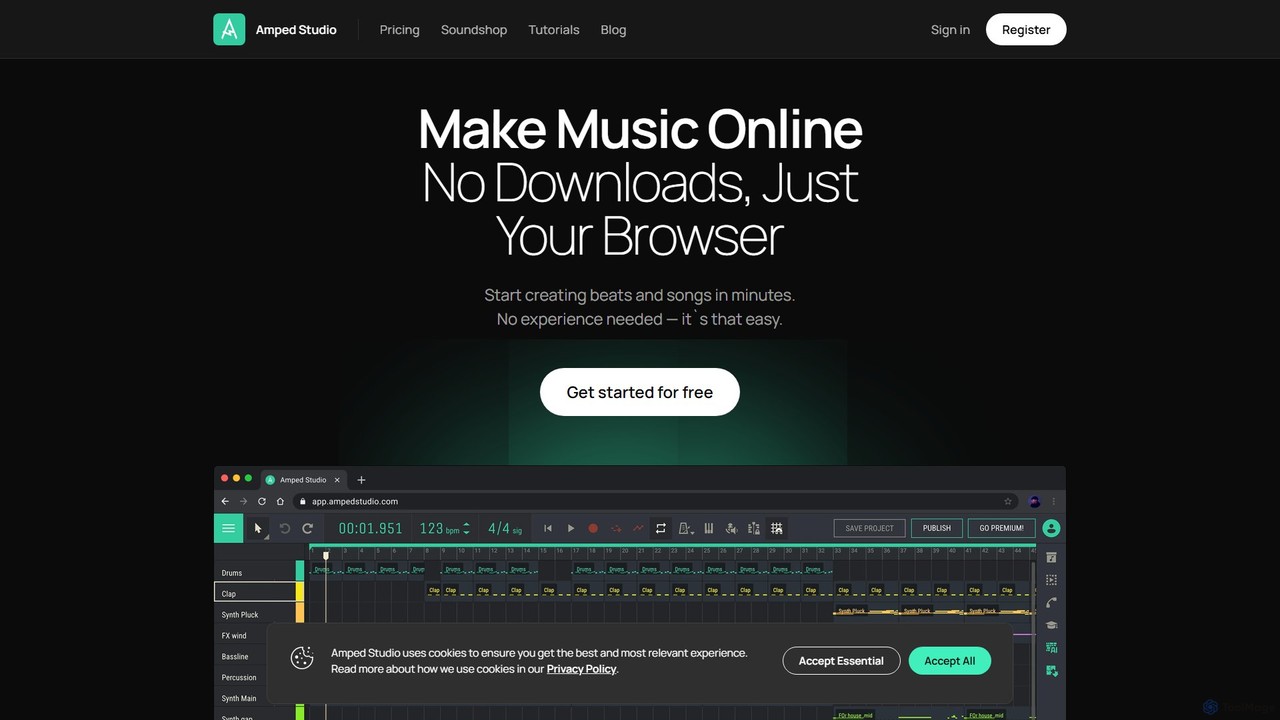
Amped Studio is an innovative, browser-based online music studio and DAW that empowers users of all skill levels to create music. It integrates powerful AI tools, including a composition generator, song splitter, and voice changer, alongside traditional features like VST support, virtual instruments, and real-time collaboration. No downloads are required, making music production accessible to everyone, anywhere.

Generative Music
Visits 85KFavorites 113Likes 97

About Generative Music

Generative Music tools are AI-powered applications that automatically create original musical compositions, melodies, harmonies, and rhythms. These tools leverage advanced machine learning models, trained on vast datasets of existing music, to understand and replicate musical patterns and structures. They enable musicians, content creators, and game developers to rapidly prototype ideas, overcome creative blocks, and produce unique, royalty-free soundtracks. This technology offers unprecedented speed and diversity in music creation, opening new avenues for sonic exploration.

Core Features

  • Melody Generation: Automatically creates new melodic lines based on user-defined parameters like key, tempo, and mood.
  • Harmony & Chord Progression: Generates suitable chord progressions and harmonies to complement melodies or stand alone.
  • Rhythm & Beat Creation: Produces diverse rhythmic patterns and drum beats tailored to various musical genres.
  • Style Transfer: Applies the stylistic characteristics of one musical piece to a newly generated composition.
  • Parameter Control: Allows users to guide the generation process with inputs such as genre, instrumentation, mood, and structural elements.

Applicable Scenarios

Generative Music tools are invaluable for content creators needing unique background music for videos or podcasts, game developers requiring dynamic and adaptive soundtracks, and musicians seeking inspiration or new compositional ideas. They streamline the creation of custom audio for various media projects.

How to Choose

When selecting a Generative Music tool, consider its support for specific musical genres and styles, the level of customization and control it offers over generation parameters, and its integration capabilities with Digital Audio Workstations (DAWs). Also, evaluate the available export formats (e.g., MIDI, WAV, MP3) and the overall ease of use for your workflow.

Generative Music use cases

1

Creating Background Music for Videos

Content creators, YouTubers, and podcasters can utilize generative music tools to quickly produce unique, royalty-free background tracks. By inputting desired mood, tempo, and genre, they can generate custom audio that perfectly matches their video or audio content, avoiding licensing fees and saving significant time compared to searching stock music libraries.

2

Developing Dynamic Game Soundtracks

Game developers can leverage generative music to create adaptive and dynamic soundtracks that respond to in-game events, player actions, or changing environments. Instead of pre-composed loops, AI can generate subtle variations or entirely new musical segments on the fly, enhancing player immersion and providing a unique auditory experience without extensive manual composition.

3

Overcoming Musician's Block

Musicians and composers facing creative hurdles can use generative music tools as a powerful brainstorming partner. By feeding the AI initial ideas or constraints, they can generate fresh melodic ideas, chord progressions, or rhythmic patterns, serving as a springboard for new compositions or helping to break through writer's block.

4

Rapid Prototyping of Musical Ideas

Music producers and sound designers can use generative music to quickly prototype multiple musical sketches or variations of a theme. This allows for rapid exploration of different arrangements, instrumentation, and moods, significantly accelerating the initial stages of production and helping to refine concepts before committing to full-scale development.

5

Personalized Music for Wellness Apps

Developers of meditation, sleep, or wellness applications can integrate generative music to offer users endless, non-repetitive ambient soundscapes. By tailoring the generated music to individual preferences or biometric data, these apps can provide highly personalized audio experiences that promote relaxation, focus, or better sleep, enhancing user engagement and therapeutic benefits.

6

Educational Tools for Music Theory

Music educators and students can utilize generative music tools to create practical examples of music theory concepts. For instance, an AI can generate various chord progressions in a specific key, demonstrate different scales, or illustrate counterpoint techniques, providing an interactive and dynamic learning environment that reinforces theoretical knowledge with practical application.

Generative Music FAQ

What is Generative Music?

Generative Music refers to AI-powered tools that automatically create original musical compositions. They use machine learning models trained on vast music datasets to generate melodies, harmonies, rhythms, and entire tracks based on user inputs or predefined parameters. This technology helps composers, content creators, and developers produce unique audio content efficiently.

How does Generative Music differ from traditional music composition?

Traditional music composition relies solely on human creativity, skill, and intent, with the composer having full control over every note. Generative Music, while often guided by human input, uses AI algorithms to create music based on learned patterns and parameters. The key difference lies in the speed, scale, and ability to explore novel, sometimes unexpected, musical patterns that AI offers, often serving as a collaborative tool rather than a full replacement for human artistic expression.

What are the main applications of Generative Music tools?

Generative Music tools have diverse applications. They are widely used for creating background music for videos, podcasts, and social media content, developing dynamic and adaptive soundtracks for video games, and assisting musicians in overcoming creative blocks by generating new ideas. Additionally, they can be used for personalized audio experiences in wellness apps and as educational tools for music theory.

Can Generative Music tools create music in specific genres?

Yes, many Generative Music tools are designed to create music in specific genres. They are often trained on diverse datasets encompassing various musical styles like classical, electronic, jazz, ambient, and more. Users can typically specify their desired genre, mood, or instrumentation as input, allowing the AI to generate music that aligns with those stylistic preferences. The accuracy and quality of genre-specific output depend on the tool's training data and model sophistication.

How do I choose a Generative Music tool for my needs?

To choose the right Generative Music tool, consider several factors. First, evaluate the range of supported genres and styles to ensure it aligns with your musical preferences. Second, assess the level of customization and control it offers over parameters like instrumentation, tempo, and mood. Third, check its integration capabilities with your existing Digital Audio Workstation (DAW) and the available export formats (e.g., MIDI, WAV). Finally, consider the pricing model and the tool's overall ease of use for your workflow and technical proficiency.