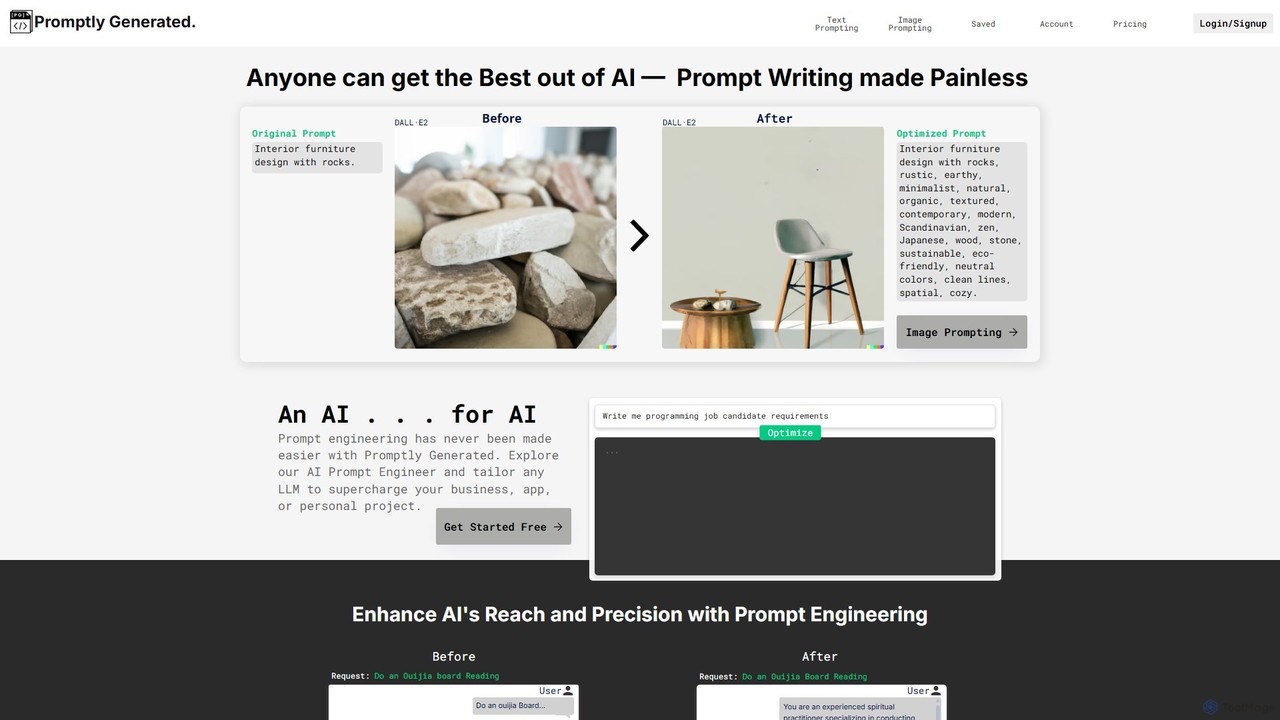
Image Generators are AI-powered tools that automatically create visual content from textual descriptions, existing images, or other data inputs. Leveraging advanced deep learning models like diffusion networks, these tools transform abstract concepts or specific instructions into unique and diverse images, ranging from photorealistic scenes to artistic illustrations. They empower creators, marketers, and designers to rapidly prototype visuals, overcome creative blocks, and produce high volumes of tailored imagery without traditional artistic skills.
Core Features
- Text-to-Image Generation: Converts descriptive text prompts into corresponding visual outputs, enabling users to "describe" their desired image.
- Image-to-Image Transformation: Modifies existing images based on new prompts or style transfers, allowing for creative variations and enhancements.
- Inpainting & Outpainting: Intelligently fills in missing parts of an image or extends its boundaries, seamlessly expanding visual narratives.
- Style Transfer: Applies the artistic style of one image to the content of another, facilitating unique aesthetic combinations.
- Variations & Iterations: Generates multiple distinct versions of an image from a single input, aiding in creative exploration and refinement.
Use Cases
Image Generators are invaluable for professionals across various sectors. Marketing teams use them to quickly produce diverse ad creatives and social media visuals. Game developers leverage them for rapid concept art generation and asset prototyping. Content creators utilize these tools to illustrate blog posts, presentations, and digital publications, significantly speeding up visual content production.
How to Choose
When selecting an AI Image Generator, consider the quality and diversity of its output models, ensuring they match your aesthetic needs. Evaluate the customization options, such as prompt engineering capabilities and control over image composition. Assess the speed of generation and the cost per image or subscription model. Finally, check for integration with existing workflows and the ease of use for your team's technical proficiency.