Compare AI Models
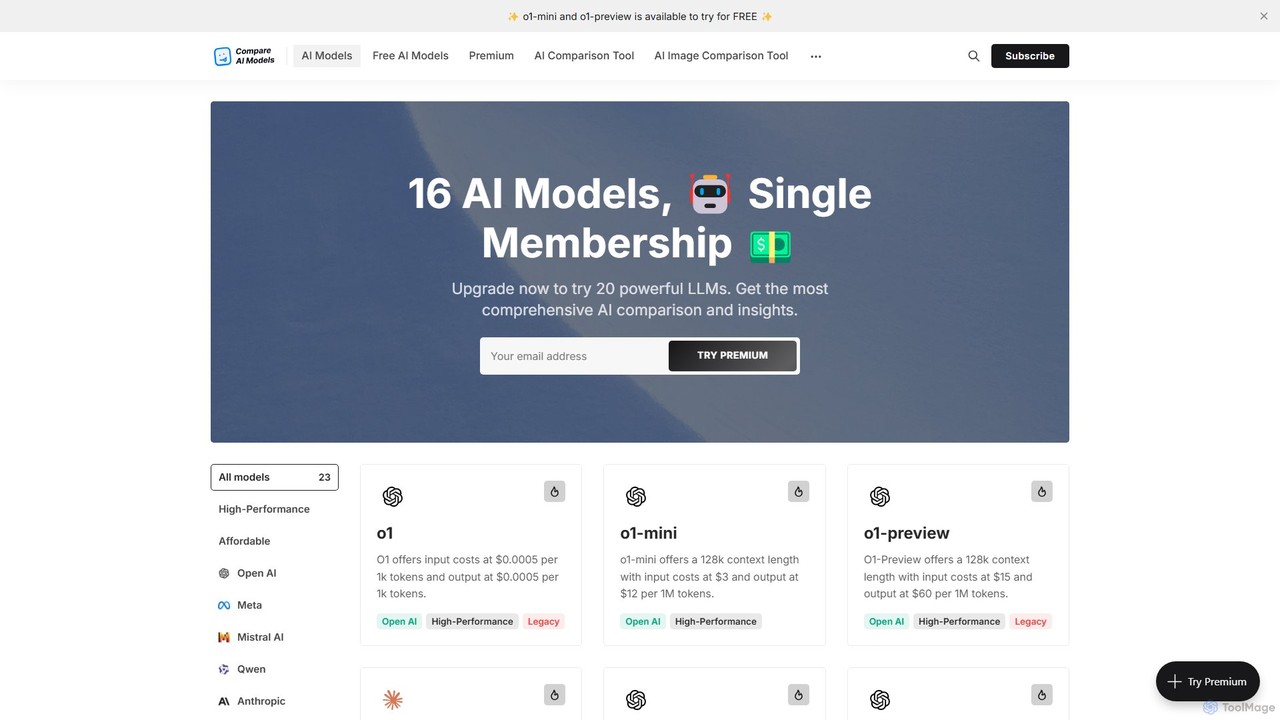
A comprehensive platform for comparing over 20 leading Large Language Models (LLMs). It offers detailed metrics on performance, …
A comprehensive platform for comparing over 20 leading Large Language Models (LLMs). It offers detailed metrics on performance, API pricing, context windows, and features, along with a free chat to test models directly. An essential tool for developers, researchers, and businesses to find the perfect AI for their needs.
About Llm Directory
An LLM Directory is a specialized catalog that meticulously lists and categorizes various Large Language Models (LLMs) and their associated tools, serving as a critical resource within the broader AI Tools ecosystem. These directories provide comprehensive, up-to-date information on diverse AI language models, detailing their unique capabilities, optimal applications, and intricate technical specifications. They are indispensable for developers, researchers, and businesses aiming to efficiently discover, rigorously compare, and seamlessly integrate the most suitable LLMs for their specific projects, thereby significantly streamlining the complex process of AI model selection, evaluation, and deployment.
Core Features
- Advanced Model Discovery: Enables users to efficiently browse and search for LLMs using granular criteria such as model size, underlying architecture, performance benchmarks across various tasks, and specific licensing terms. This ensures precise matching to project requirements.
- In-depth Model Profiles: Offers extensive, detailed information for each listed LLM, encompassing API access methods, transparent pricing models, supported human languages, available fine-tuning options, and diverse deployment methodologies.
- Interactive Comparison Tools: Provides robust features to compare multiple LLMs side-by-side, clearly highlighting critical differences in their generative capabilities, operational costs, integration complexities, and ethical considerations.
- Practical Use Case Showcases: Presents a curated collection of practical applications and documented success stories for various LLMs, helping users to concretely understand their potential impact in real-world business and research scenarios.
- Community & Support Insights: Often integrates user reviews, performance ratings, and access to community forums, fostering knowledge sharing and best practices among users regarding the deployment and optimization of different LLMs.
Applicable Scenarios
Developers and AI engineers frequently consult LLM directories to pinpoint the ideal models for specialized tasks like advanced natural language generation, precise text summarization, or sophisticated code completion. Data scientists leverage these platforms to conduct rigorous comparative analyses of model performance for cutting-edge research. Product managers utilize them to identify and evaluate suitable LLMs for seamless integration into innovative AI-powered applications, ensuring both optimal functionality and cost-efficiency in their product development cycles.
How to Choose
When selecting an LLM from a directory, it is crucial to consider the model's specific capabilities and limitations in relation to your project's exact needs, such as its proficiency in particular languages or its specialization in certain tasks. Thoroughly evaluate the licensing terms, including commercial use restrictions, and the overall pricing structure, which covers API usage costs and potential expenses for fine-tuning. Additionally, assess the ease of integration with your existing technological infrastructure and the availability of comprehensive documentation, robust community support, or professional services for smooth deployment and ongoing maintenance.

Llm DirectoryUse Cases
Discovering Niche LLMs for Specialized Applications
An AI startup founder needs to find an LLM capable of generating highly technical content for a specific industry, like legal or medical. They use an LLM directory to filter models by domain expertise, language support, and fine-tuning availability. This allows them to quickly identify and evaluate models that meet their niche requirements, saving weeks of research time and ensuring the chosen LLM performs accurately within their specialized field.
Comparing LLM Performance Benchmarks for Research
A data scientist is conducting research on the latest advancements in natural language understanding. They utilize an LLM directory to access and compare performance benchmarks (e.g., GLUE, SuperGLUE scores) of various foundation models. This enables them to quickly identify leading models for specific tasks, understand their strengths and weaknesses, and inform their experimental design, accelerating their research process by providing a centralized data source.
Identifying Cost-Effective LLMs for Enterprise Integration
An enterprise architect is tasked with integrating a large language model into a new customer service chatbot, with a strict budget. They use an LLM directory to compare models based on their API pricing, token costs, and self-hosting options. This allows them to identify LLMs that offer the best balance of performance and cost-efficiency for high-volume enterprise use, ensuring budget adherence without compromising service quality.
Evaluating LLMs for Multilingual Content Generation
A global marketing agency needs an LLM to generate marketing copy in multiple languages for international campaigns. They consult an LLM directory to filter models by their multilingual capabilities, supported languages, and translation quality benchmarks. This helps them select an LLM that can effectively produce high-quality, culturally relevant content across various target markets, significantly reducing manual translation efforts and ensuring brand consistency.
Finding Open-Source LLMs for Custom Fine-Tuning
A machine learning engineer wants to fine-tune an LLM with proprietary company data to create a highly specialized internal tool. They use an LLM directory to specifically search for open-source or commercially permissive licensed LLMs that allow for extensive customization and local deployment. This enables them to quickly find suitable base models, accelerating the development of their custom AI solution while maintaining data privacy and control.
Staying Updated on New LLM Releases and Trends
An AI enthusiast or industry professional wants to keep abreast of the rapidly evolving LLM landscape. They regularly check an LLM directory for new model releases, updates to existing models, and emerging trends in AI language technology. This helps them stay informed about the latest innovations, understand market shifts, and identify potential new tools or research directions, ensuring they remain competitive and knowledgeable in the field.