ToolMage
Sign in

Best 1 Monitoring AI tools for Ai Tools

Popular Monitoring AI tools in Ai Tools include OctoEverywhere, helping you work more efficiently.

OctoEverywhere
Freemium

OctoEverywhere

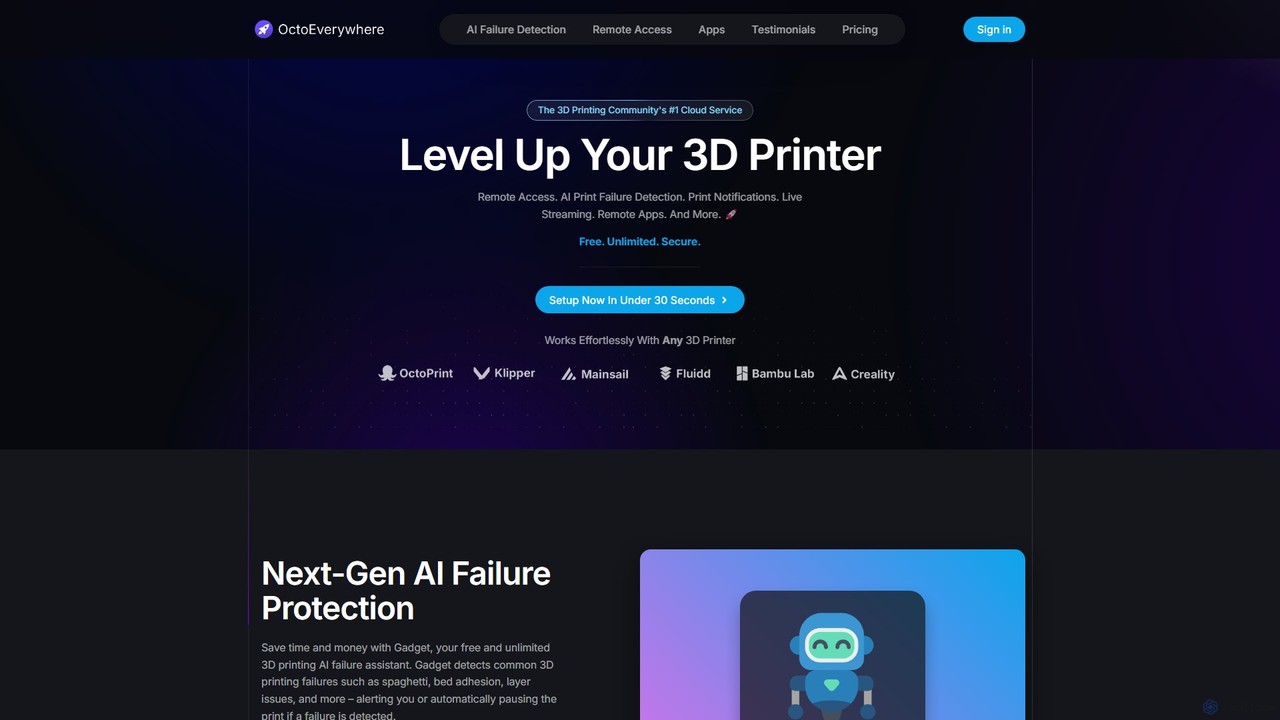
A premier cloud service for 3D printers, offering free, secure remote access to OctoPrint, Klipper, and Bambu Lab printers. Features include AI-powered print failure detection, live webcam streaming, and real-time notifications, all designed to enhance your 3D printing experience from anywhere in the world.

Monitoring
Visits 165.8KFavorites 127Likes 129

About Monitoring

AI Monitoring tools are advanced solutions that leverage artificial intelligence to observe, analyze, and report on the performance, health, and security of various systems and processes. These tools utilize machine learning and predictive analytics to identify anomalies, anticipate potential issues, and provide actionable insights, moving beyond reactive problem-solving to proactive management. They help organizations maintain optimal operational efficiency and security across their digital infrastructure.

Core Features

  • Anomaly Detection: Automatically identifies unusual patterns or deviations from normal behavior in data streams, alerting users to potential issues before they escalate.
  • Predictive Analytics: Uses historical data and machine learning models to forecast future performance trends, resource needs, or potential failures, enabling proactive intervention.
  • Root Cause Analysis: Employs AI to quickly pinpoint the underlying causes of performance degradation or system failures, significantly reducing diagnostic time.
  • Automated Alerting & Remediation: Configurable alerts based on AI-driven insights, with some tools offering automated scripts or workflows to address common issues.
  • Performance Optimization Insights: Provides recommendations for improving system efficiency, resource allocation, and overall operational performance based on continuous data analysis.

Use Cases

AI monitoring is crucial for IT operations, DevOps teams, cybersecurity professionals, and business intelligence analysts. It's used to ensure application uptime, detect security threats, optimize cloud resource usage, and gain real-time insights into business process performance.

How to Choose

When selecting an AI monitoring tool, consider its integration capabilities with existing infrastructure, the breadth of data sources it can analyze, its anomaly detection accuracy, the clarity of its predictive insights, and its scalability to meet future demands. Evaluate the level of automation offered for alerting and remediation, and ensure it aligns with your team's technical expertise.

Monitoring use cases

1

Proactive Server Health Management

For IT operations teams managing large server infrastructures, AI monitoring continuously analyzes server metrics like CPU usage, memory, disk I/O, and network traffic. It detects subtle anomalies that might indicate impending hardware failure or resource exhaustion, alerting administrators hours or days in advance. This allows for scheduled maintenance or resource scaling before any service disruption occurs, ensuring high availability and preventing costly downtime.

2

Real-time Application Performance Optimization

DevOps engineers use AI monitoring to gain deep insights into application performance across microservices and distributed systems. The AI identifies performance bottlenecks, slow database queries, or inefficient code segments by correlating metrics, logs, and traces. This enables developers to quickly pinpoint and resolve issues affecting user experience, ensuring applications run smoothly and efficiently, especially during peak loads.

3

Advanced Cybersecurity Threat Detection

Security operations centers (SOCs) leverage AI monitoring to detect sophisticated cyber threats that traditional rule-based systems might miss. The AI analyzes network traffic, user behavior, and system logs for unusual patterns indicative of malware, insider threats, or zero-day attacks. By identifying deviations from baseline behavior, it provides early warnings of potential breaches, allowing security teams to respond rapidly and mitigate risks.

4

Optimizing Cloud Resource Utilization

Cloud architects and finance teams utilize AI monitoring to optimize spending on cloud services. The AI analyzes resource consumption patterns across various cloud instances, identifying underutilized resources or inefficient configurations. It provides recommendations for rightsizing virtual machines, optimizing storage, or scaling services dynamically, leading to significant cost savings while maintaining performance levels.

5

Predictive Maintenance for Industrial IoT

In manufacturing or industrial settings, AI monitoring is applied to IoT sensors on machinery. It continuously analyzes vibration, temperature, pressure, and other operational data. By learning normal operating parameters, the AI can predict equipment failures before they happen, scheduling maintenance proactively. This minimizes unexpected downtime, extends asset lifespan, and reduces maintenance costs.

6

Business Process Anomaly Detection

Business analysts and operations managers use AI monitoring to track key performance indicators (KPIs) across critical business processes, such as order fulfillment or customer onboarding. The AI identifies unusual spikes or drops in process metrics, like sudden increases in failed transactions or delays in processing times. This helps quickly identify operational inefficiencies or emerging problems that impact customer satisfaction or revenue.

Monitoring FAQ

What are AI Monitoring tools?

AI Monitoring tools are software solutions that use artificial intelligence, primarily machine learning, to observe, analyze, and manage the performance, health, and security of IT systems, applications, and business processes. Unlike traditional monitoring, they excel at automatically detecting anomalies, predicting future issues, and providing intelligent insights based on vast amounts of data, enabling proactive rather than reactive management.

How do AI Monitoring tools differ from traditional monitoring?

Traditional monitoring relies heavily on predefined rules, thresholds, and manual configuration, often leading to alert fatigue and reactive problem-solving. AI Monitoring, conversely, uses machine learning to dynamically learn normal system behavior, automatically detect subtle anomalies, and predict potential issues before they occur. This shift from rule-based to intelligence-driven analysis provides deeper insights, reduces false positives, and enables proactive operational management.

What are the key benefits of using AI Monitoring?

The primary benefits of AI Monitoring include enhanced operational efficiency through automated anomaly detection and predictive insights, reduced downtime by anticipating and preventing failures, and improved security posture by identifying sophisticated threats. It also leads to faster root cause analysis, optimized resource utilization, and a significant reduction in alert fatigue for IT and security teams, allowing them to focus on strategic initiatives.

Who typically uses AI Monitoring tools?

AI Monitoring tools are primarily used by IT operations teams, DevOps engineers, site reliability engineers (SREs), and cybersecurity professionals to ensure the stability, performance, and security of their digital infrastructure. Additionally, business analysts and operations managers may use them to monitor the health and efficiency of critical business processes, gaining real-time insights into operational KPIs.

How can I choose the best AI Monitoring tool for my organization?

To choose the best AI Monitoring tool, evaluate its ability to integrate with your existing technology stack and data sources. Consider the accuracy and sophistication of its anomaly detection and predictive analytics capabilities. Assess its scalability, ease of use, and the clarity of its insights and recommendations. Finally, compare pricing models, vendor support, and ensure it aligns with your specific operational needs and compliance requirements.