JoPilot
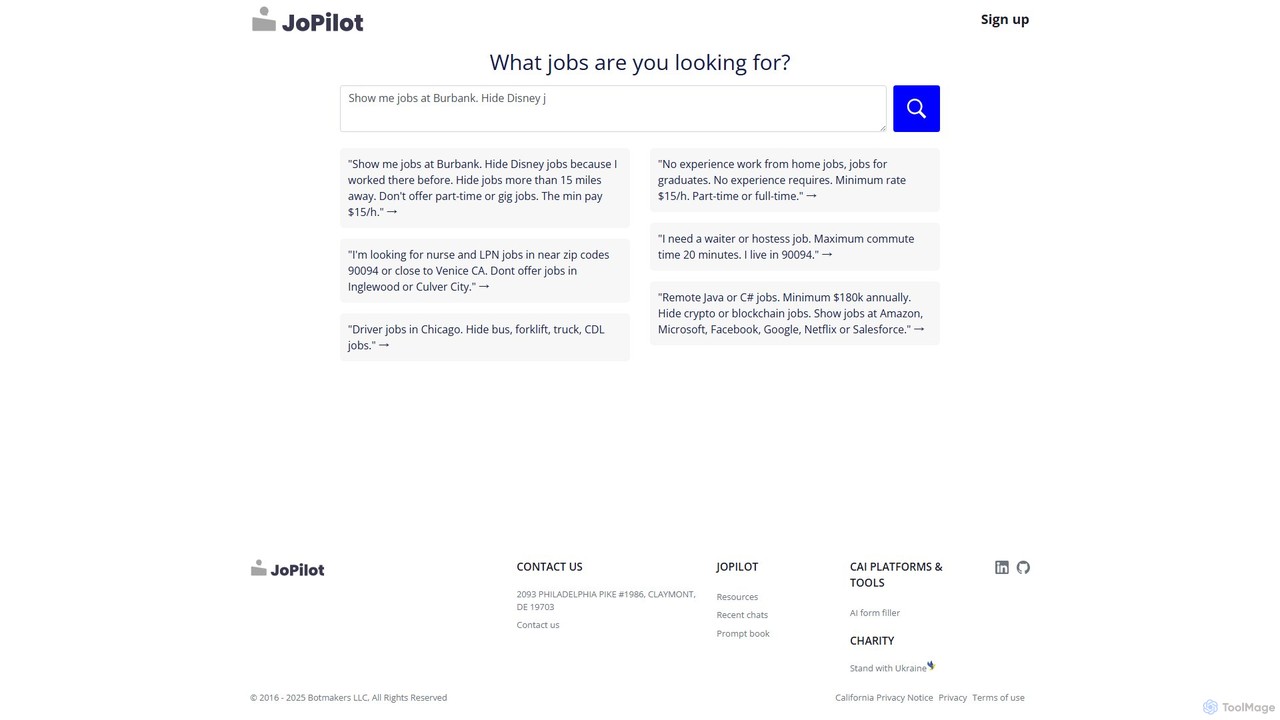
JoPilot is an AI-powered job search engine that uses natural language to understand complex queries. Simply describe your …
JoPilot is an AI-powered job search engine that uses natural language to understand complex queries. Simply describe your ideal job, including location, salary, experience, and specific companies to include or exclude, and JoPilot will find the most relevant listings. It streamlines the job hunt by replacing confusing filters with an intuitive, conversational interface, making it faster and easier to discover the perfect career opportunity.
About Natural Language Processing
Natural Language Processing (NLP) tools are AI-powered applications designed to enable computers to understand, interpret, and generate human language. Leveraging advanced machine learning models, these tools process vast amounts of text and speech data to extract meaning, identify patterns, and facilitate human-computer interaction. They are invaluable for automating language-centric tasks, enhancing data analysis, and building intelligent communication systems across various industries. NLP capabilities empower businesses to gain deeper insights from unstructured text and deliver more personalized user experiences.
Core Features
- Text Classification: Automatically categorizes text into predefined labels, useful for spam detection or content moderation.
- Sentiment Analysis: Determines the emotional tone (positive, negative, neutral) of text, crucial for customer feedback analysis.
- Named Entity Recognition (NER): Identifies and extracts key information like names, organizations, and locations from unstructured text.
- Machine Translation: Converts text or speech from one natural language to another, breaking down communication barriers.
- Text Summarization: Condenses long documents into shorter, coherent summaries, saving time for information retrieval.
Use Cases
NLP tools are widely adopted in customer service for automating chatbot responses and analyzing support tickets, in marketing for sentiment analysis of social media mentions, and in legal tech for document review and contract analysis. Content creators utilize them for generating article drafts and optimizing SEO keywords, while researchers employ them for extracting insights from large datasets of academic papers.
How to Choose
When selecting an NLP tool, consider its accuracy and robustness across different languages and dialects, as well as its specific feature set (e.g., sentiment analysis, NER, translation) to match your project needs. Evaluate its integration capabilities with existing systems, scalability for processing large data volumes, and the level of customization offered for domain-specific tasks. Finally, assess the pricing model and the availability of pre-trained models versus the need for custom training.

Natural Language ProcessingUse Cases
Automating Customer Support with AI Chatbots
Customer service departments deploy NLP-powered chatbots to handle routine inquiries, provide instant answers to FAQs, and guide users through troubleshooting steps. By understanding natural language input, these chatbots reduce agent workload, improve response times, and offer 24/7 support, enhancing overall customer satisfaction. They can seamlessly escalate complex issues to human agents, providing context from the conversation history.
Analyzing Customer Feedback for Product Improvement
Product managers and marketing teams use NLP tools to analyze vast amounts of customer feedback from reviews, surveys, and social media. Sentiment analysis identifies common pain points and positive aspects, while topic modeling uncovers emerging trends and feature requests. This data-driven approach helps prioritize product development, refine marketing messages, and make informed strategic decisions.
Generating Marketing Copy and Content Drafts
Content creators and marketers leverage NLP tools to generate initial drafts for articles, social media posts, ad copy, and product descriptions. By providing keywords or brief prompts, these tools can produce coherent and contextually relevant text, significantly speeding up the content creation process. This allows teams to focus on refining and personalizing the output, rather than starting from scratch.
Enhancing Document Search and Information Retrieval
Legal professionals, researchers, and corporate users utilize NLP to improve the efficiency of searching through large document repositories. Tools can extract key entities, classify documents by topic, and identify semantic relationships, enabling more precise and contextual search results than keyword-based methods. This drastically reduces the time spent on manual review and information discovery.
Real-time Language Translation for Global Communication
Businesses operating internationally use NLP-driven machine translation to facilitate real-time communication across language barriers. This includes translating emails, chat messages, and even live speech during virtual meetings. Such tools ensure that teams can collaborate effectively and serve a diverse global customer base without needing extensive human translation resources for every interaction.
Summarizing Long Reports and Academic Papers
Researchers, analysts, and students employ NLP summarization tools to quickly grasp the main points of lengthy documents, such as financial reports, scientific articles, or legal briefs. These tools can generate extractive or abstractive summaries, saving significant time in information gathering and review, allowing users to focus on critical analysis rather than extensive reading.