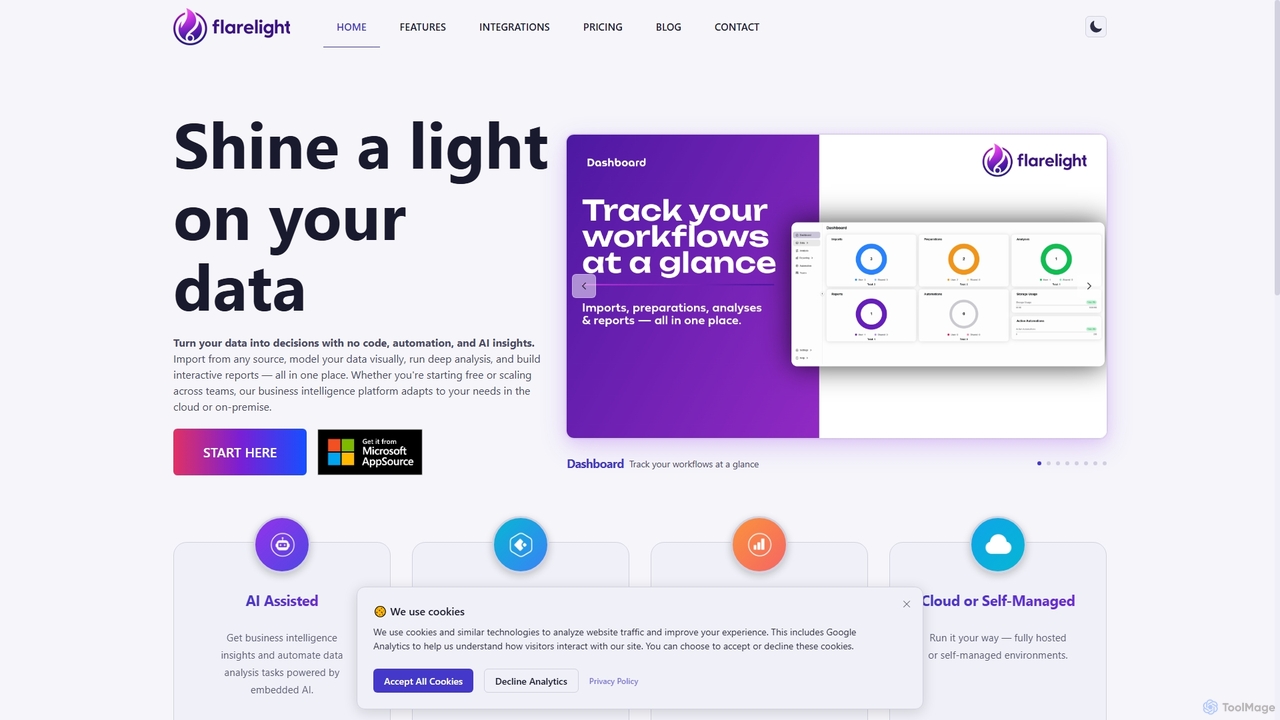
No Code tools are a category of AI-powered platforms that enable users to build applications, websites, and automated workflows without writing a single line of code. Leveraging visual interfaces, drag-and-drop functionalities, and pre-built templates, these tools democratize software development. They empower business users, entrepreneurs, and creators to rapidly prototype and deploy digital solutions, significantly reducing development time and technical barriers. Within the broader AI tools landscape, No Code platforms often integrate AI capabilities for enhanced automation, data analysis, and intelligent decision-making, making complex technology accessible to a wider audience.
Core Features
- Visual Development Interface: Provides intuitive drag-and-drop editors for designing user interfaces and defining logic.
- Pre-built Templates & Components: Offers ready-to-use modules and templates for common application types, accelerating development.
- Workflow Automation: Enables users to create automated sequences for tasks, data processing, and system integrations without coding.
- Database & Data Management: Simplifies the creation and management of databases, allowing non-technical users to handle data structures.
- Integration Capabilities: Supports seamless connections with various third-party services, APIs, and AI models to extend functionality.
Use Cases
No Code tools are widely adopted across various sectors for rapid application development, process automation, and digital transformation. They are particularly valuable for small and medium-sized businesses, marketing teams, and individual entrepreneurs looking to quickly launch MVPs, automate internal operations, or create custom customer-facing solutions without relying on extensive IT resources.
How to Choose
When selecting a No Code platform, consider the specific type of application you intend to build (web, mobile, automation), the complexity of your data models, and the required integrations. Evaluate the platform's scalability, community support, pricing structure, and the learning curve for your team. Prioritize tools that offer robust security features and clear data ownership policies to ensure compliance and protect sensitive information.