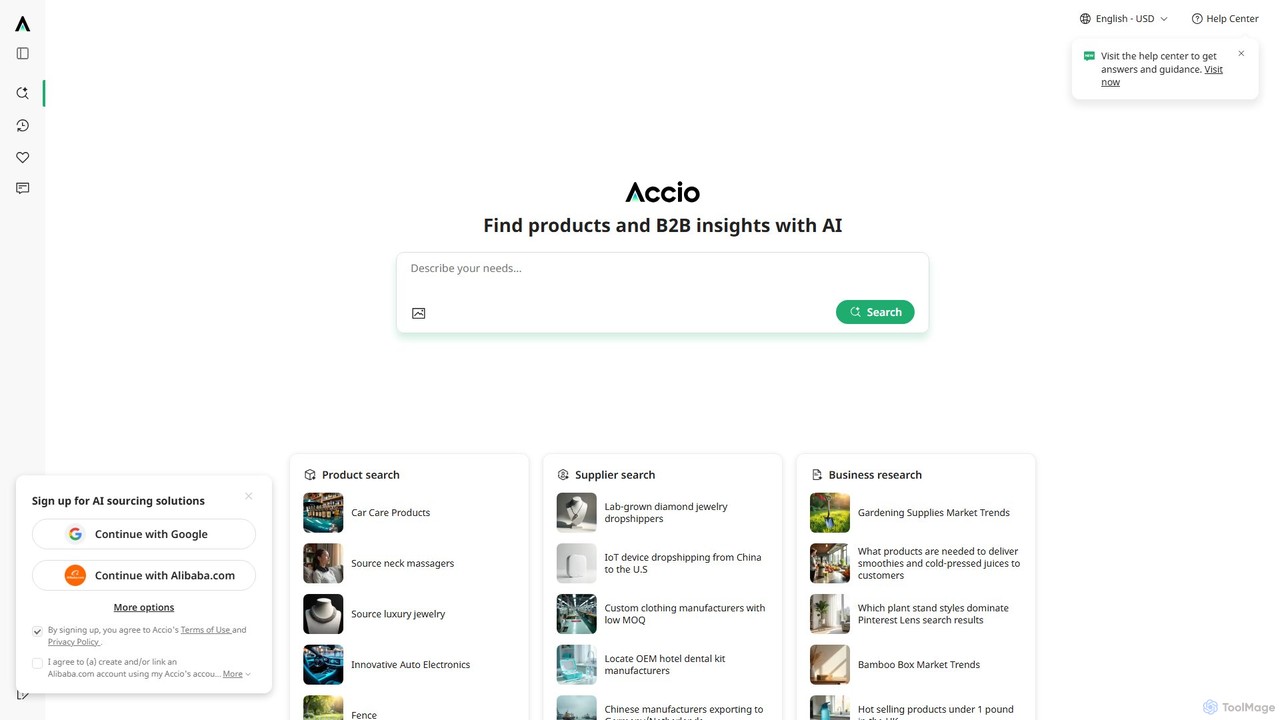
AI Search Engines are a new generation of information discovery tools that provide direct, synthesized answers to complex questions. Unlike traditional search engines that return a list of links, these tools leverage large language models (LLMs) to understand user intent, process information from multiple sources, and generate a coherent, easy-to-understand summary. They transform the search experience from simple keyword matching to a conversational dialogue, allowing users to ask follow-up questions and delve deeper into topics. This approach significantly accelerates research, learning, and problem-solving by delivering consolidated knowledge instead of just data pointers.
Core Features
- Answer Synthesis: Combines information from various web pages into a single, comprehensive answer.
- Conversational Queries: Allows users to ask questions in natural language and engage in follow-up dialogue.
- Source Citation: Provides links to the original sources used to generate the answer, ensuring transparency and verifiability.
- Multi-modal Understanding: Can process queries that include text, and sometimes images, to provide more relevant results.
- Contextual Awareness: Remembers previous questions in a session to provide more relevant follow-up answers.
Use Cases
AI Search Engines are widely used by researchers, students, and professionals for in-depth topic exploration and literature reviews. Developers use them to find code snippets and debug complex problems, while content creators leverage them for fact-checking and brainstorming. In business, they assist in market analysis and competitive intelligence by quickly summarizing industry trends and reports.
How to Choose
When selecting an AI Search Engine, evaluate the accuracy and reliability of its answers by checking the cited sources. Consider its data privacy policy and how your query history is used. Assess the scope of its knowledge base—whether it focuses on real-time web data, academic papers, or specific domains like programming. Finally, consider the user interface and features like conversation history and sharing capabilities.