ToolMage
Sign in

Best 1 Speech Analysis AI tools for Ai Tools

Popular Speech Analysis AI tools in Ai Tools include My Speaking Score, helping you work more efficiently.

My Speaking Score
Freemium

My Speaking Score

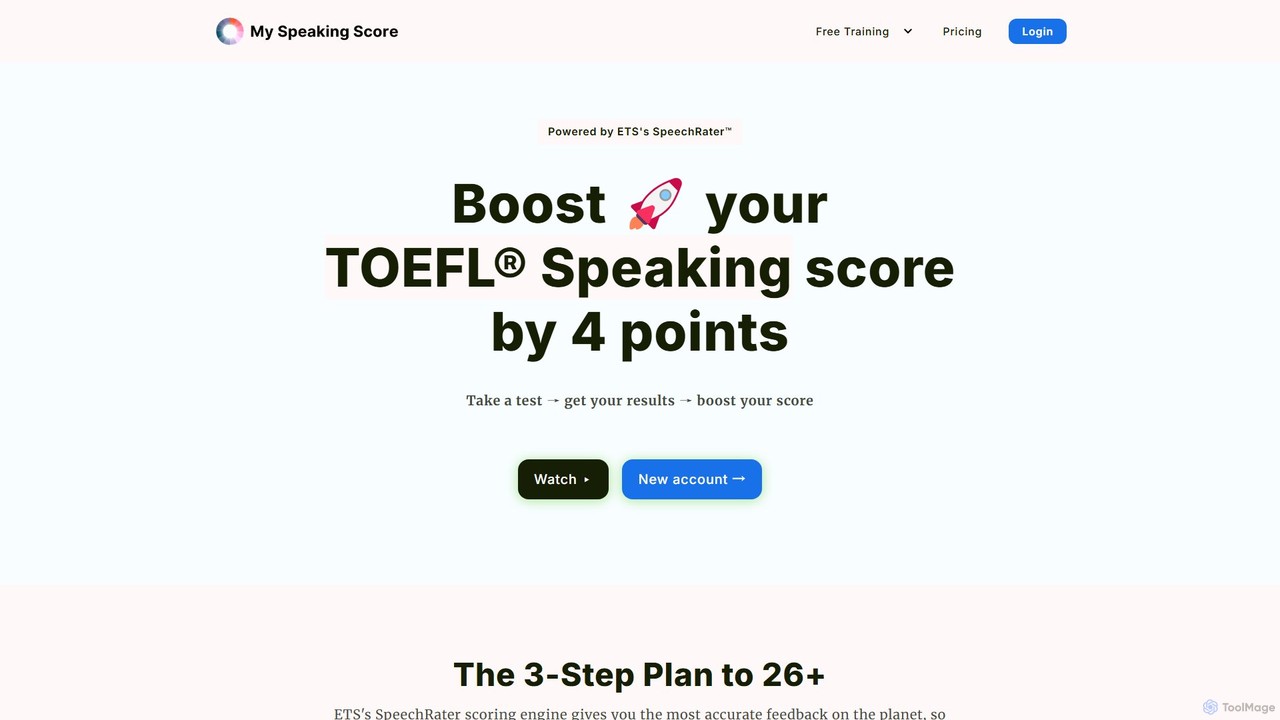
My Speaking Score is an AI-powered platform designed to help users improve their TOEFL Speaking score. It utilizes ETS's official SpeechRater™ engine, the same technology used for the actual TOEFL iBT, to provide instant, accurate score predictions and detailed feedback. Users can take mock tests, receive analysis across 12 speaking dimensions, and track their progress to effectively target and fix their weaknesses.

Speech Analysis
Visits 39.1KFavorites 156Likes 149

About Speech Analysis

Speech Analysis tools are a class of AI-powered software that interpret and extract deep insights from spoken language, going beyond simple transcription. They utilize acoustic analysis and Natural Language Processing (NLP) to identify elements like emotion, sentiment, speaker identity, and speech patterns. This enables businesses to objectively assess customer interactions, enhance agent performance in call centers, and unlock qualitative data from audio archives. Unlike basic speech-to-text services, these tools focus on *how* something is said, not just *what* is said, providing a richer layer of understanding.

Core Features

  • Emotion Detection: Analyzes vocal tones, pitch, and cadence to identify emotions such as joy, anger, sadness, or neutrality.
  • Sentiment Analysis: Determines the overall positive, negative, or neutral sentiment of the speaker's message and intent.
  • Speaker Diarization: Automatically distinguishes and labels different speakers in a single audio file, answering "who spoke when."
  • Pace and Filler Word Analysis: Measures the speaker's talking speed (words per minute) and identifies the frequency of filler words like "um" or "ah."
  • Topic & Keyword Spotting: Scans conversations to detect predefined keywords or automatically identify emerging topics and themes.

Use Cases

Speech Analysis is widely used in customer service, sales, and market research. For instance, call centers use it to automate quality assurance for 100% of calls, sales teams analyze recordings to refine their pitches, and researchers gauge genuine customer reactions during interviews by analyzing vocal cues.

How to Choose

When selecting a Speech Analysis tool, consider its accuracy for emotion and sentiment detection in your specific languages and dialects. Evaluate its integration capabilities (API) with your existing CRM or call center software. Also, determine whether you need real-time analysis for live interactions or batch processing for recorded audio files.

Speech Analysis use cases

1

Automating Call Center Quality Assurance

A Quality Assurance Manager in a call center is tasked with monitoring agent performance but can only manually review less than 5% of calls. By implementing a Speech Analysis tool, they can automatically process 100% of call recordings. The system flags calls with high negative sentiment, identifies instances of non-compliance with scripts, and scores agents on vocal tone and empathy. This allows the manager to focus their time on coaching agents who need it most, leading to a measurable improvement in customer satisfaction scores and operational efficiency.

2

Enhancing Sales Call Coaching

A sales manager wants to provide more effective coaching to their team. Instead of relying on anecdotal feedback, they use a Speech Analysis tool to analyze recorded sales calls. The tool provides data on the talk-to-listen ratio, detects when a customer's sentiment shifts from neutral to positive, and identifies which phrases used by top-performing reps correlate with successful outcomes. The manager can then use these concrete data points to create targeted training modules and provide personalized, evidence-based feedback to each team member, accelerating their development.

3

Extracting Insights from Market Research Interviews

A market researcher conducts dozens of hour-long customer interviews for a new product concept. Manually analyzing these recordings for emotional cues is time-consuming and subjective. By using a Speech Analysis tool, the researcher can upload all audio files and receive a dashboard that visualizes emotional arcs throughout the interviews. The tool identifies moments of excitement (higher pitch, faster pace) when discussing certain features and moments of confusion or frustration (hesitations, negative sentiment). This provides objective, quantifiable data to support qualitative findings, leading to more robust product recommendations.

4

Analyzing Public Speaking Performance

A public speaking coach works with executives to improve their presentation skills. They record practice sessions and use a Speech Analysis tool for objective feedback. The software analyzes the speaker's pace, highlighting sections that were rushed or too slow. It also quantifies the use of filler words like 'um' and 'ah', providing a clear metric for improvement. Furthermore, sentiment analysis can gauge how confident and engaging the speaker's tone was throughout the presentation. This data-driven approach allows the coach to pinpoint specific areas for improvement beyond just the content of the speech.

5

Identifying Key Moments in Audio Archives

A media company has thousands of hours of archived interviews and podcasts. A content producer needs to find clips where guests expressed strong positive emotions about a specific topic. Manually listening through the archive is impractical. Using a Speech Analysis tool with topic and emotion spotting, the producer can search for the topic 'AI innovation' and filter for segments with a 'high joy' emotional score. The tool instantly provides timestamps for relevant clips, reducing a task that would take weeks to just a few minutes and enabling the rapid creation of compelling highlight reels.

6

Improving Accessibility with Speaker Diarization

An organization that provides content for individuals with hearing impairments needs to create accurate transcripts for panel discussions with multiple speakers. A standard transcription service often fails to distinguish who is speaking, creating a confusing block of text. By using a Speech Analysis tool with speaker diarization, the audio is processed to not only transcribe the words but also label each part of the conversation with 'Speaker 1', 'Speaker 2', etc. This creates a clear, easy-to-read script that accurately reflects the flow of conversation, significantly improving the accessibility and usability of the content.

Speech Analysis FAQ

What is Speech Analysis?

Speech Analysis is a technology that uses AI to analyze not just what is said in audio, but how it is said. It goes beyond simple transcription by interpreting vocal characteristics to extract deeper meaning. Key features include detecting emotions from tone of voice, determining positive or negative sentiment, and identifying different speakers in a conversation. It is primarily used to gain qualitative insights from spoken interactions in fields like customer service, sales, and market research.

How is Speech Analysis different from Speech-to-Text?

The primary difference lies in their purpose. Speech-to-Text (or transcription) focuses on converting spoken words into written text—its output is a transcript. Speech Analysis, on the other hand, uses the audio (and often the transcript) as input to generate insights and metadata. While Speech-to-Text answers 'what was said?', Speech Analysis answers questions like 'how was it said?', 'who said it?', and 'what was the emotional tone?'. Many speech analysis tools include a speech-to-text component, but their main value is the analytical layer on top.

How to choose the right Speech Analysis tool?

Choosing the right tool depends on your specific needs. Consider the following factors:

  • Accuracy: How accurate is the tool in detecting emotions, sentiment, and keywords for your language and industry? Look for independent benchmarks or test with your own data.
  • Features: Do you need real-time analysis for live calls, or is batch processing of recordings sufficient? Do you require speaker diarization or filler word analysis?
  • Integration: Does it offer a robust API to connect with your existing systems like CRMs, BI tools, or call center platforms?
  • Scalability and Pricing: Can the tool handle your volume of audio data? Understand the pricing model—is it per minute, per user, or a flat fee?
What are the main applications of Speech Analysis?

Speech Analysis has a wide range of applications across various industries. The most common use cases include:

  • Call Centers: For automated quality assurance, agent coaching, compliance monitoring, and real-time customer sentiment tracking.
  • Sales: To analyze sales calls, identify successful patterns, coach representatives, and understand customer objections.
  • Market Research: To gain deeper insights from customer interviews and focus groups by analyzing emotional responses to products or concepts.
  • Media & Entertainment: For content moderation, identifying key moments in audio archives, and creating accessible transcripts with speaker labels.
Is Speech Analysis accurate?

The accuracy of Speech Analysis tools can be high but varies depending on several factors. Leading platforms often report accuracy rates above 80-90% for tasks like sentiment analysis and keyword spotting under ideal conditions. However, performance can be affected by:

  • Audio Quality: Clear audio with minimal background noise yields the best results.
  • Language and Dialects: Accuracy may differ between languages and even regional accents.
  • Complexity: Detecting nuanced emotions or sarcasm is more challenging than basic positive/negative sentiment.

It is always recommended to test a tool with your own specific audio data to evaluate its real-world performance for your use case.