LoomLetter
LoomLetter is an intelligent newsletter reader designed for busy professionals. It organizes all your newsletters in one place, …
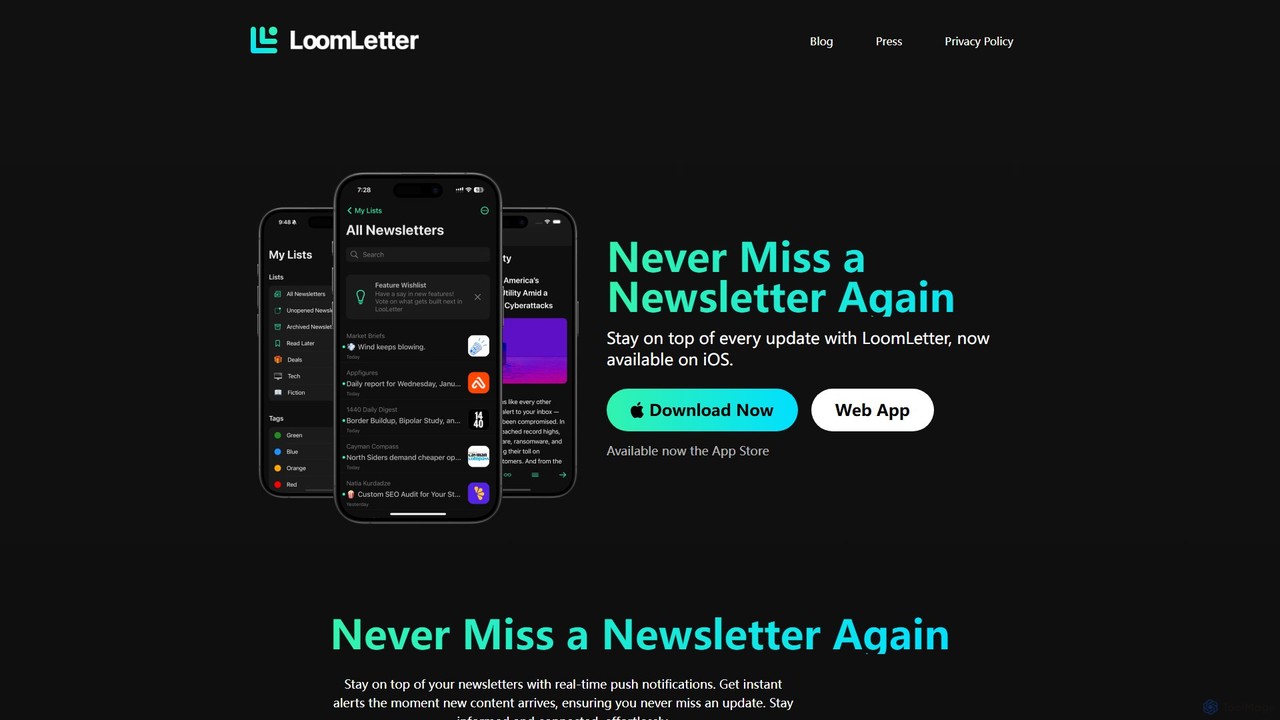
LoomLetter is an intelligent newsletter reader designed for busy professionals. It organizes all your newsletters in one place, away from your main inbox, and features AI-powered narration for listening on the go. With custom lists, real-time notifications, and home screen widgets, it helps you stay informed effortlessly.
About Text To Speech
Text To Speech (TTS) tools are AI-powered applications that convert written text into natural-sounding spoken audio. These tools leverage advanced artificial intelligence, including deep learning and natural language processing, to generate highly realistic and expressive human-like voices. They provide immense value by enhancing accessibility, automating content creation, and enabling new forms of interaction across various digital platforms. Modern TTS technology offers customizable voices, emotional nuances, and multi-language support, making digital content more engaging and inclusive.
Core Features
- Realistic Voice Generation: Produces human-like speech with natural intonation and rhythm.
- Multi-language & Accent Support: Offers a wide range of languages and regional accents for global reach.
- Voice Customization: Allows adjustment of pitch, speed, volume, and even emotional tone.
- SSML (Speech Synthesis Markup Language) Integration: Provides granular control over pronunciation, pauses, and emphasis.
- API & SDK Availability: Enables seamless integration into existing applications and workflows.
Use Cases
Text To Speech tools are widely adopted across various sectors. Content creators utilize them for generating voiceovers for videos, podcasts, and audiobooks, significantly reducing production time and costs. Educational institutions employ TTS to convert learning materials into audio, supporting visually impaired students and offering flexible learning options. Businesses integrate TTS into customer service systems like IVR and chatbots to deliver consistent, automated spoken responses, improving user experience and operational efficiency.
How to Choose
Selecting the right Text To Speech tool involves evaluating several key factors. Prioritize tools that offer high-quality, natural-sounding voices with a broad selection of languages and accents relevant to your audience. Consider the level of voice customization available, such as pitch, speed, and emotional expression, to match your brand's tone. Assess the pricing model based on your usage volume and look for robust API integration options if you plan to embed TTS into your applications. Finally, review user feedback and available support resources for reliability and ease of use.

Text To SpeechUse Cases
Generate Voiceovers for Multimedia Content
Content creators, YouTubers, and podcasters use Text To Speech tools to produce high-quality, natural-sounding voiceovers for their videos, audio articles, and podcasts. This eliminates the need for hiring voice actors or recording studios, significantly reducing production time and costs while maintaining a consistent brand voice across various platforms.
Enhance E-learning Accessibility
Educational institutions and e-learning platforms convert textbooks, course materials, and online lectures into audio formats using TTS. This provides crucial accessibility for students with visual impairments or reading difficulties, and offers flexible learning options for all, allowing them to consume content on the go.
Automate Customer Service Interactions
Businesses integrate Text To Speech technology into their Interactive Voice Response (IVR) systems, virtual assistants, and AI chatbots. This enables automated, clear, and consistent spoken responses to customer inquiries, improving service efficiency, reducing call center load, and ensuring a uniform brand voice in all automated interactions.
Create Dynamic Marketing & Advertising Audio
Marketing professionals leverage TTS to quickly generate diverse audio content for advertisements, product demonstrations, and promotional campaigns. They can experiment with different voices, languages, and emotional tones to tailor messages for specific target demographics and platforms, accelerating content iteration and deployment.
Aid Language Learning & Pronunciation
Language learners utilize Text To Speech tools to hear the correct pronunciation of words, phrases, and sentences in their target language. This helps in developing accurate listening comprehension and speaking skills, providing an invaluable resource for self-study and reinforcing classroom learning.
Boost Personal Productivity with Audio Reading
Individuals convert long articles, reports, emails, and documents into audio using TTS for hands-free consumption. This allows them to absorb information while commuting, exercising, or performing other tasks, significantly boosting personal productivity and making information consumption more flexible and efficient.