
Luvvoice
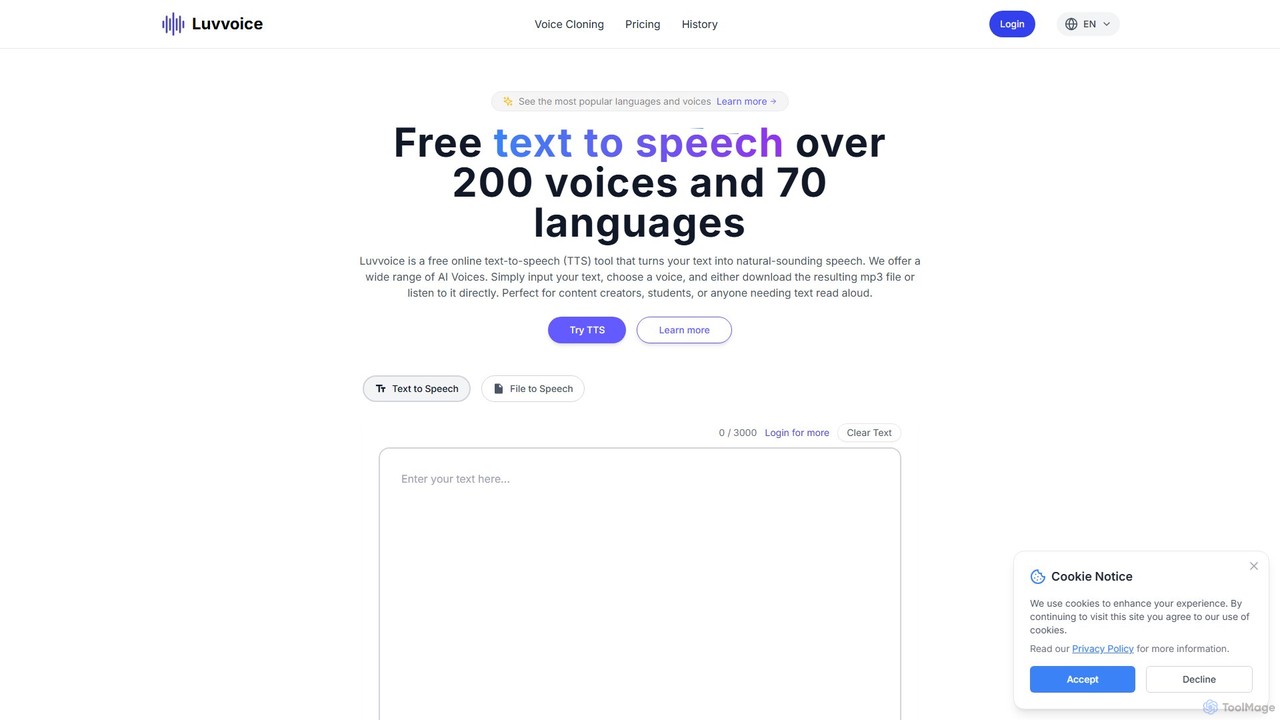
Luvvoice is an advanced AI voice generator offering free text-to-speech (TTS) and voice cloning services. It converts text …
Luvvoice is an advanced AI voice generator offering free text-to-speech (TTS) and voice cloning services. It converts text into natural-sounding speech with over 300 voices in 70+ languages. Key features include document-to-speech conversion (PDF, TXT), adjustable speech settings, and high-quality voice cloning from a short audio sample. It's ideal for content creators, educators, and businesses.
About Voice Cloning
Voice Cloning tools are AI-powered applications that synthesize new speech in a specific person's voice. These tools analyze existing audio samples to capture unique vocal characteristics, enabling the creation of realistic, custom voiceovers for various media. They offer unprecedented flexibility for content creators, businesses, and individuals to personalize audio experiences, extending the reach and consistency of a unique vocal identity.
Core Features
- Voice Replication: Accurately reproduce the timbre, pitch, and speaking style from a small audio sample.
- Emotion & Style Transfer: Generate speech with various emotional tones or speaking styles while maintaining the cloned voice.
- Multi-language Support: Enable a cloned voice to speak in different languages, often with native-like pronunciation.
- Real-time Synthesis: Some advanced tools can generate cloned speech almost instantly, suitable for live applications.
- Voice Customization: Adjust parameters like speed, pause, and emphasis to fine-tune the generated audio.
Use Cases
Voice cloning technology is widely adopted across various sectors. Content creators use it for consistent narration across multiple projects, while marketing teams leverage unique brand voices for advertisements. It's also crucial for accessibility solutions, allowing individuals to retain their voice even if they lose the ability to speak, and for entertainment, creating new dialogues for characters.
How to Choose
When selecting a voice cloning tool, consider the quality of the cloned voice, especially its naturalness and emotional range. Evaluate the required input audio length for cloning and the supported output formats. Look for features like multi-language support and real-time synthesis if needed. Also, assess the ethical guidelines and security measures provided by the platform to ensure responsible use of cloned voices.
Voice CloningUse Cases
Creating Personalized Audiobooks and Narrations
Content creators and publishers can use voice cloning to produce audiobooks, podcasts, or documentary narrations in a consistent, unique voice. This allows for scalability, as new content can be generated without requiring the original voice actor to re-record, maintaining brand identity and listener familiarity across extensive libraries.
Developing Unique Brand Voices for Marketing
Businesses can create a distinctive brand voice for their marketing campaigns, advertisements, and customer service interactions. By cloning a specific voice, companies ensure a consistent auditory brand identity across all touchpoints, enhancing recognition and building trust with their audience, making their messaging more memorable and impactful.
Preserving Voices for Accessibility and Legacy
Individuals facing conditions that may lead to voice loss (e.g., ALS, throat cancer) can use voice cloning to preserve their unique speaking voice. This allows them to continue communicating in their own voice through text-to-speech systems, maintaining personal identity and connection with loved ones. It also serves as a digital legacy for future generations.
Localizing Content with Original Voice Actor's Voice
Media companies can localize video games, films, or e-learning courses into multiple languages while retaining the original voice actor's unique vocal characteristics. This provides a more immersive and consistent experience for international audiences, as characters or narrators sound familiar regardless of the language spoken, enhancing global reach without losing authenticity.
Creating Dynamic Voice Assistants and Chatbots
Developers can integrate cloned voices into AI assistants, chatbots, or interactive voice response (IVR) systems. This allows for a more personalized and engaging user experience, where the AI speaks with a familiar or custom voice, enhancing user comfort and trust. It's particularly useful for creating unique brand personas for virtual assistants.
Enhancing Entertainment and Gaming Experiences
Game developers and entertainment studios can use voice cloning to generate new dialogue for characters, create custom voice packs, or even allow players to use their own cloned voice in-game. This adds a layer of personalization and immersion, enabling more dynamic storytelling and interactive experiences, especially for non-player characters or modding communities.