ToolMage
Sign in

Best 43 Business Intelligence AI tools for Analytics

Popular Business Intelligence AI tools in Analytics include recos.studio, Survicate, Peec AI, DevRev, Visible, MagicBrief, Velaris, Boostly, Segwise, and LinearB, helping you work more efficiently.

MyDataNinja
Freemium

MyDataNinja

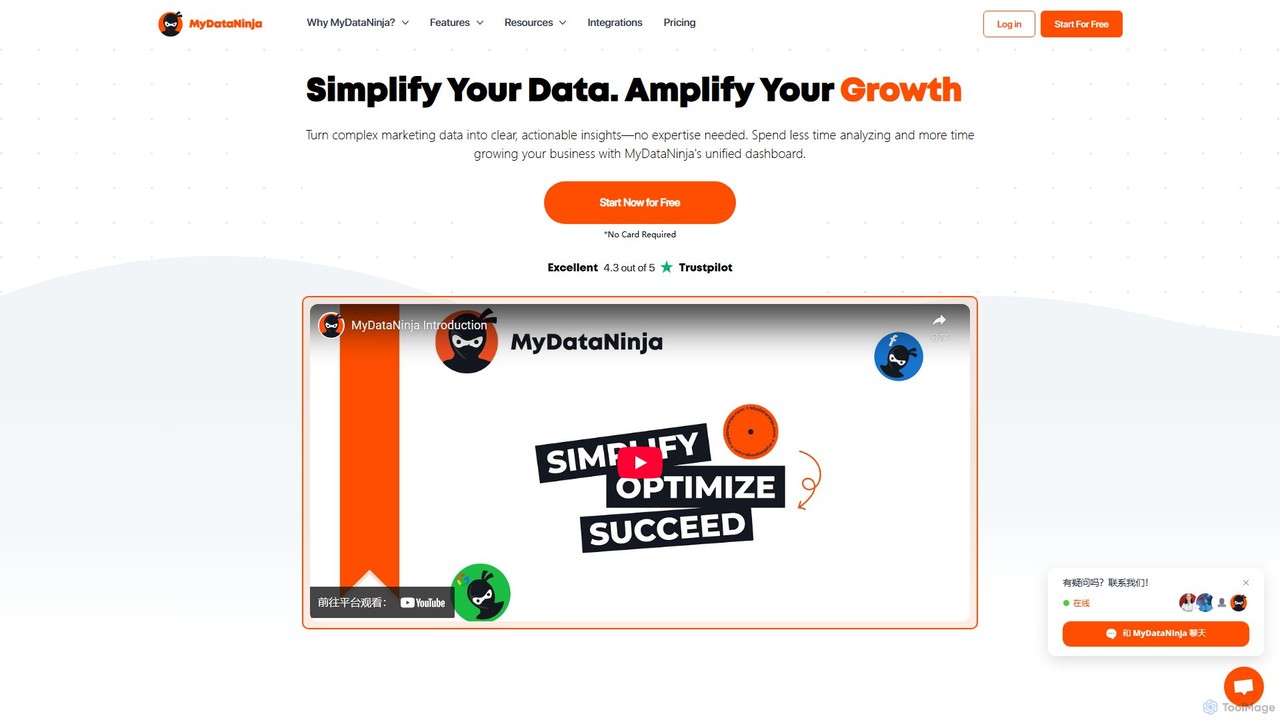
MyDataNinja is a marketing automation platform that unifies all e-commerce metrics and advertising data into a single, intuitive dashboard. It helps businesses track, manage, and optimize campaigns across platforms like Google, Meta, and TikTok, providing advanced attribution, real-time analytics, and a built-in CRM to maximize ROI and scale growth.

Business Intelligence
Visits 8.6KFavorites 150Likes 152
LinearB
Freemium

LinearB

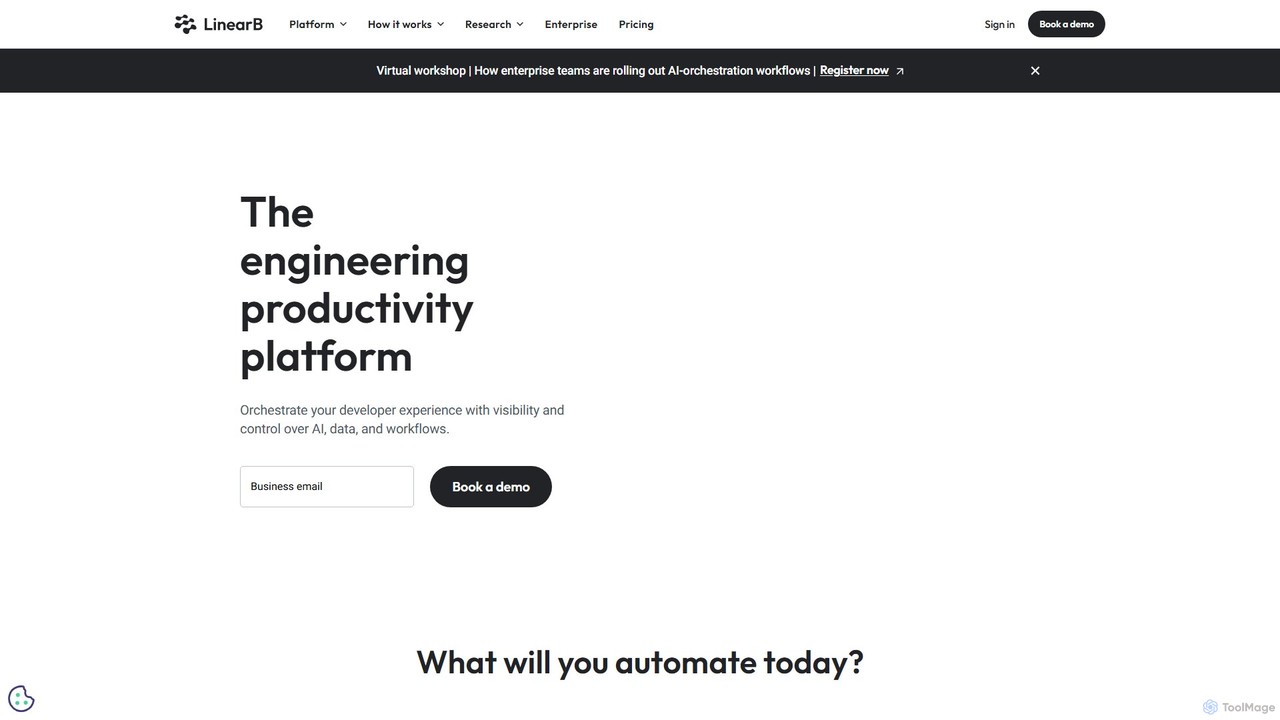
LinearB is an AI-powered engineering productivity platform that provides visibility and control over the entire software development lifecycle. It helps teams measure performance with DORA & SPACE metrics, automate workflows like AI code reviews, and align engineering efforts with business outcomes, ultimately enhancing developer experience (DevEx).

Business Intelligence
Visits 80.9KFavorites 134Likes 138
Boostly
Paid

Boostly

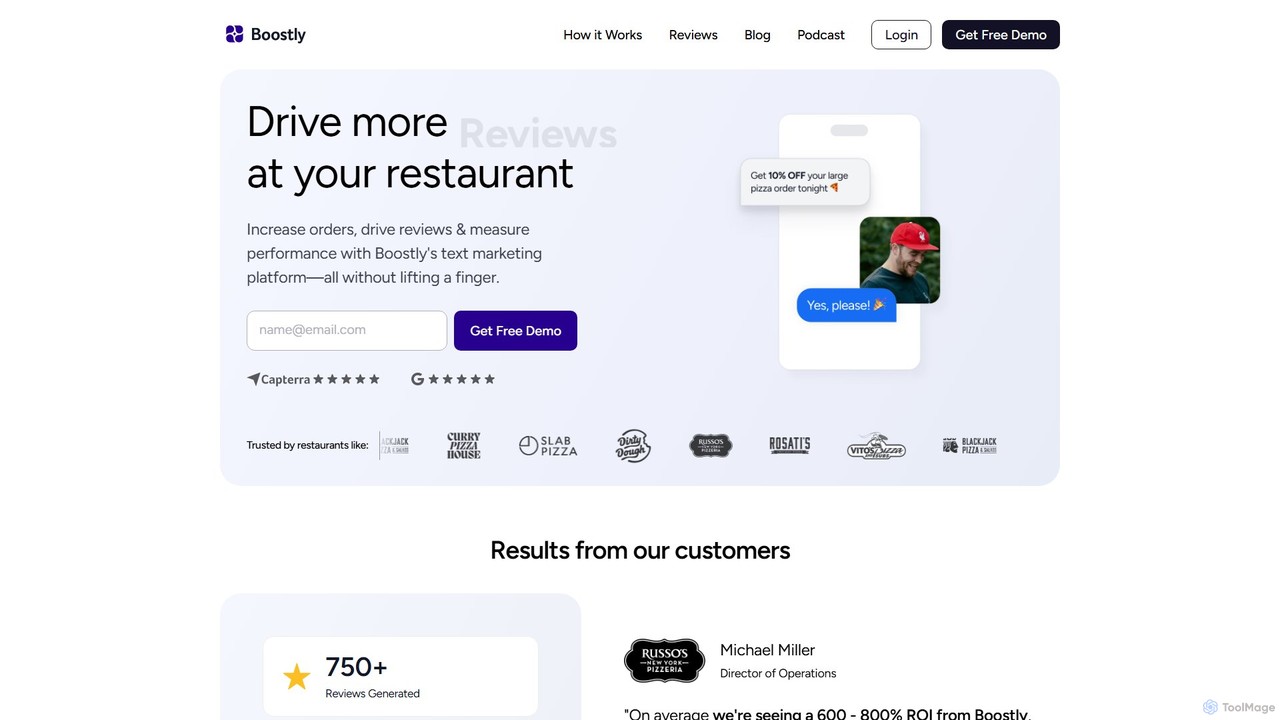
Boostly is an automated SMS marketing platform designed specifically for restaurants. It helps increase orders, generate positive reviews, and measure performance by building a customer database and sending targeted text message campaigns.

Business Intelligence
Visits 103.4KFavorites 126Likes 109
scandilytics
Freemium

scandilytics

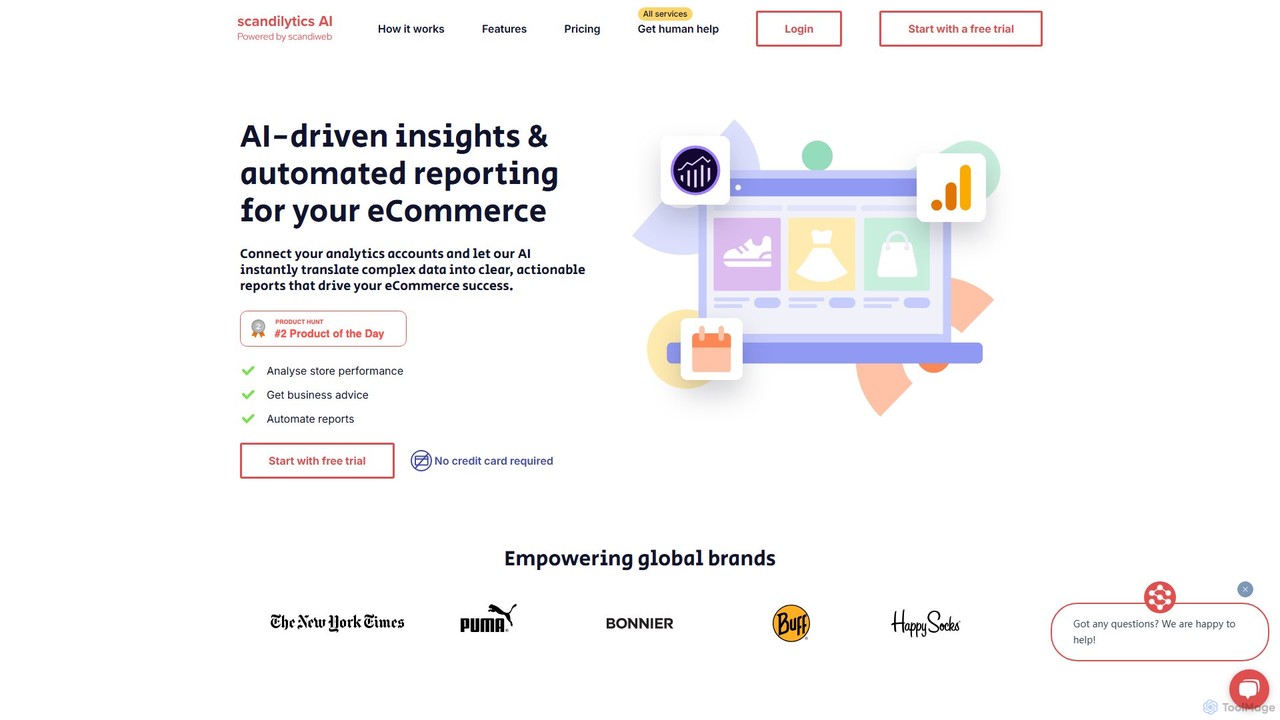
scandilytics is an AI-powered data analyst for eCommerce businesses. It connects to your analytics accounts like GA4 and Adobe Analytics to automatically translate complex data into clear, actionable reports. The platform offers insights on store performance, customer behavior, and provides strategic business advice to drive growth and optimize marketing efforts.

Business Intelligence
Visits 5.6KFavorites 139Likes 152
Luigi's Box
Freemium

Luigi's Box

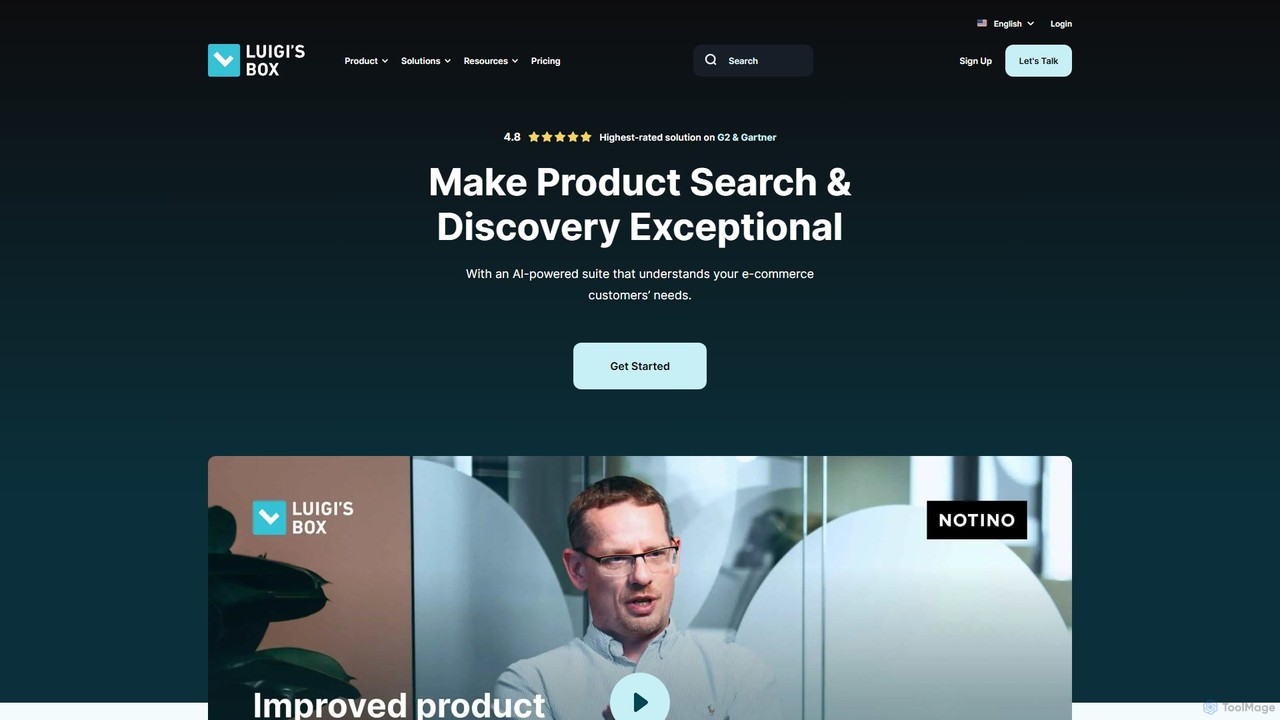
Luigi's Box is an AI-powered suite of tools for e-commerce, designed to enhance product search and discovery. It helps online businesses increase conversions, average order value, and customer satisfaction through features like intelligent search, personalized recommendations, and in-depth analytics. It integrates seamlessly with any tech stack.

Business Intelligence
Visits 43.1KFavorites 145Likes 146
Velaris
Paid

Velaris

Velaris is an AI-powered Customer Success platform designed for post-sales teams. It provides complete customer visibility, predicts churn and expansion opportunities using AI intelligence, and orchestrates personalized customer journeys. By centralizing data and automating workflows, Velaris helps teams increase efficiency, reduce risk, and drive revenue growth.

Business Intelligence
Visits 107.6KFavorites 139Likes 146
MagicBrief
Paid

MagicBrief

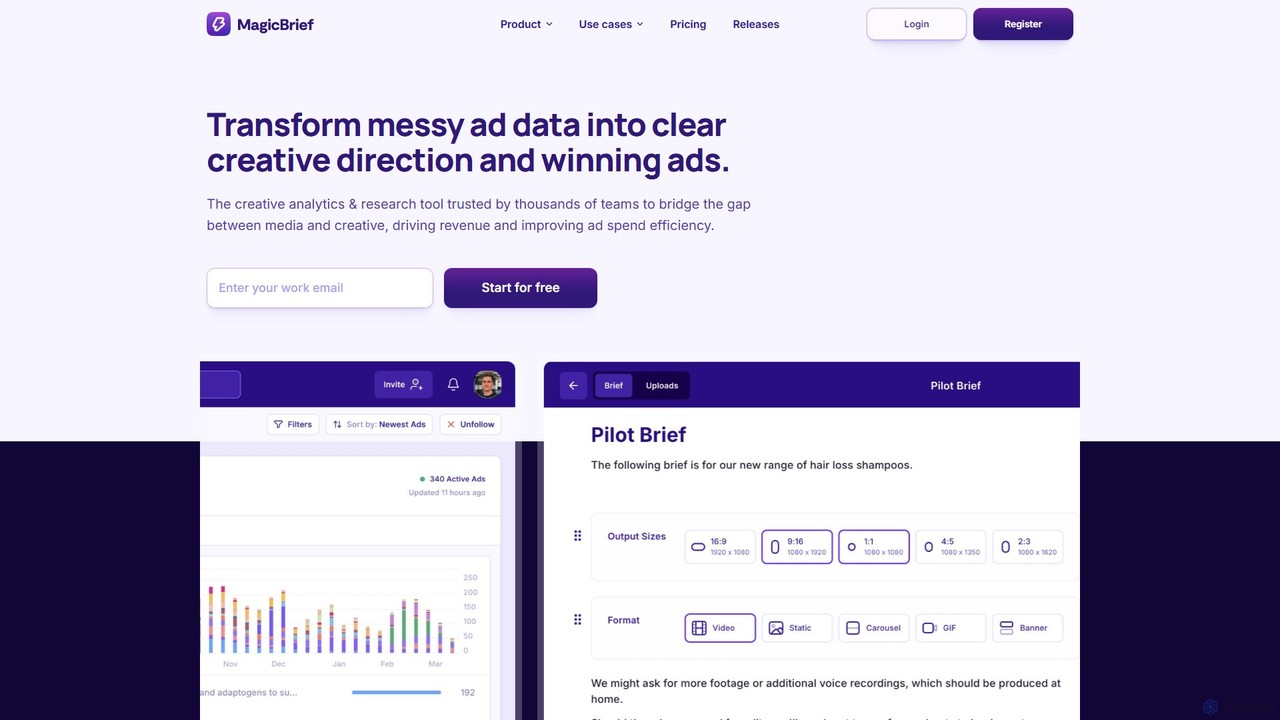
MagicBrief is an AI-powered creative intelligence platform for advertising. It transforms ad data into clear insights, enabling teams to analyze creative performance, research competitor strategies, and build data-driven briefs to launch winning ad campaigns consistently.

Business Intelligence
Visits 113.4KFavorites 154Likes 148
Zefi
Paid

Zefi

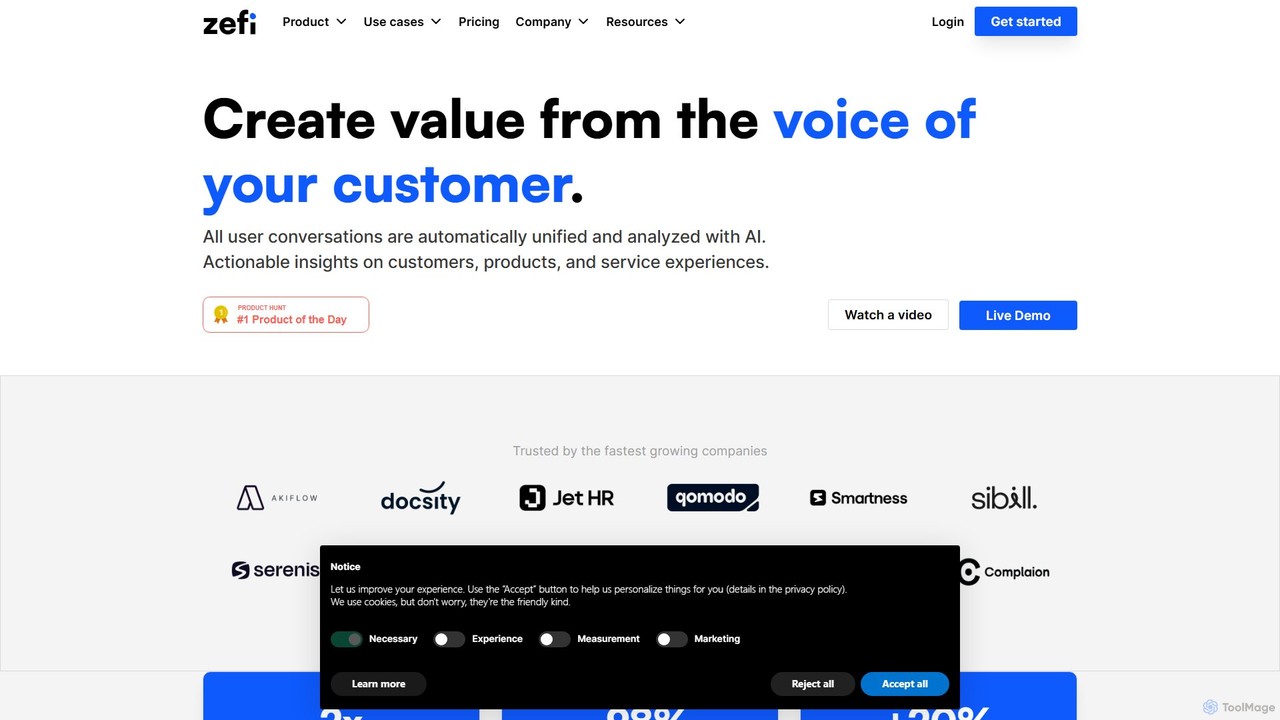
Zefi is an AI-powered platform that centralizes and analyzes customer feedback from multiple sources. It transforms user conversations into actionable insights, helping businesses improve products, enhance customer experience, and make data-driven decisions.

Business Intelligence
Visits 45.7KFavorites 125Likes 122
recos.studio
Freemium

recos.studio

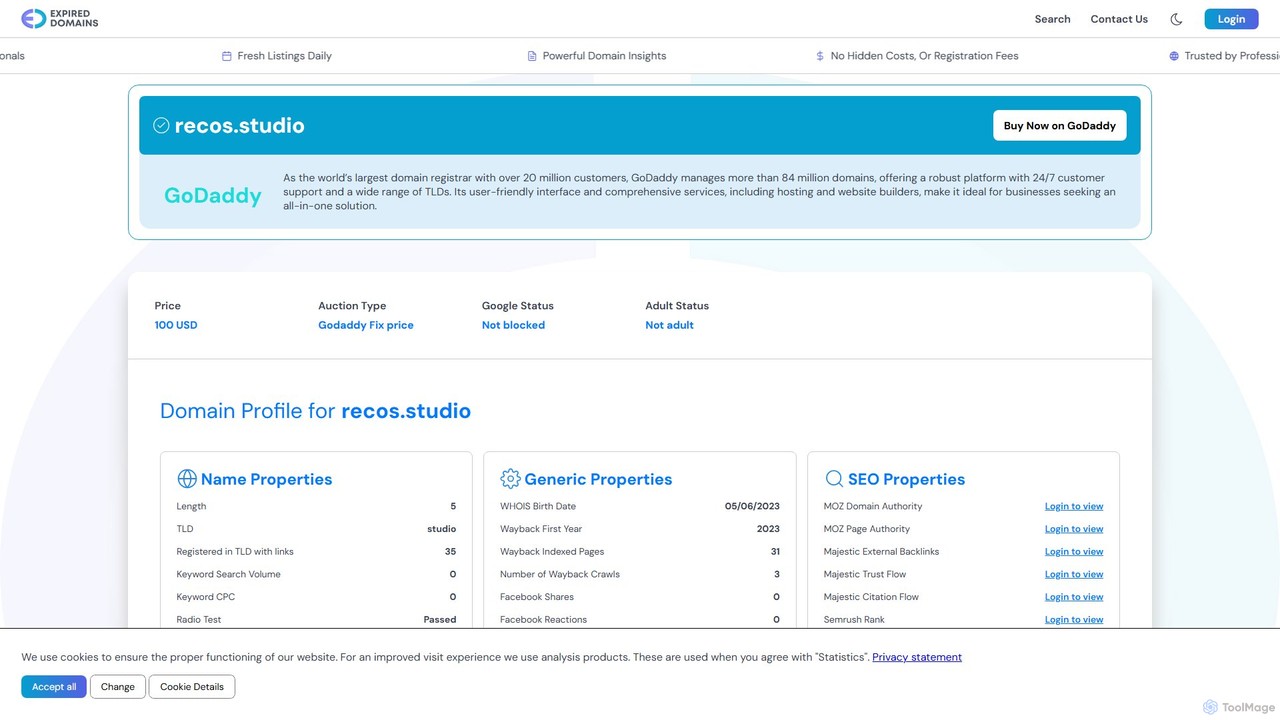
recos.studio is an AI-powered platform that enables e-commerce and content websites to create and deploy personalized recommendation engines. Boost user engagement, increase conversion rates, and enhance customer experience with smart, data-driven suggestions.

Business Intelligence
Visits 1.8MFavorites 146Likes 141
workweave
Freemium

workweave

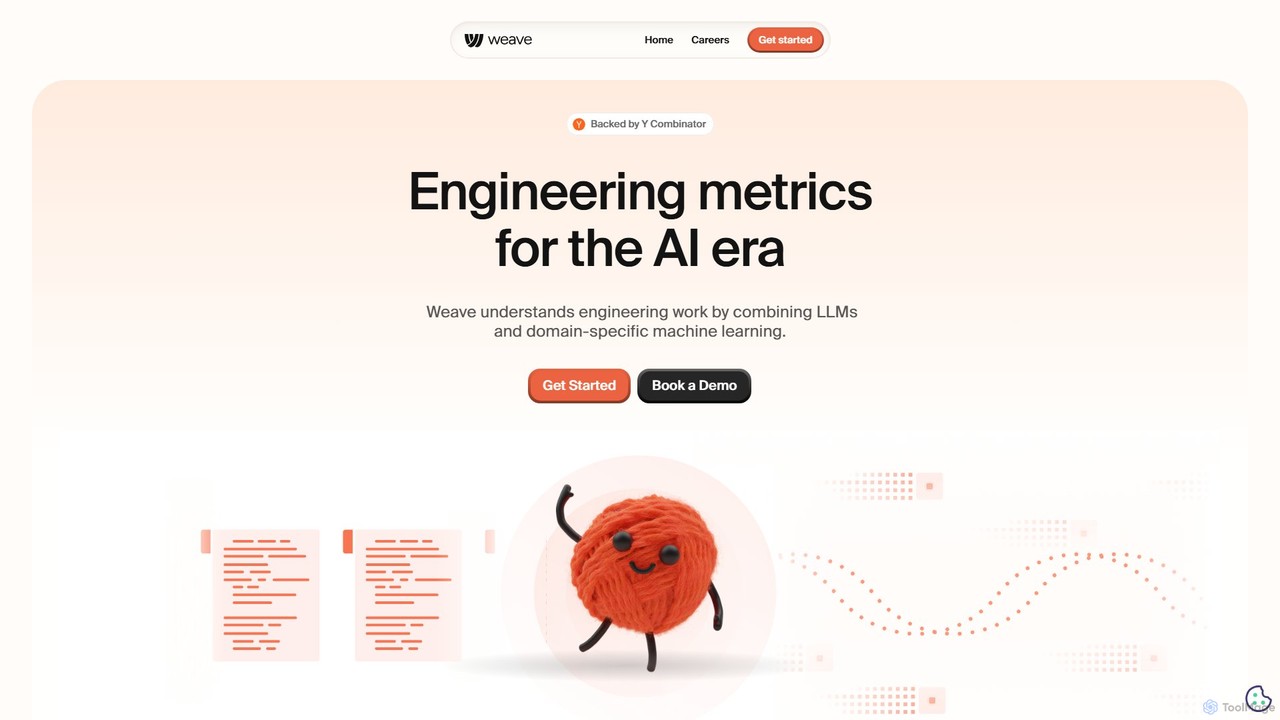
Workweave is an AI-powered engineering intelligence platform that provides 'X-ray vision' for software teams. It leverages LLMs and machine learning to analyze code repositories, quantify developer output, and measure the impact of AI coding tools. Designed for individuals, teams, and enterprises, it offers deep insights into productivity, process efficiency, and AI-generated code contribution, all within a secure, SOC 2 compliant environment.

Business Intelligence
Visits 34.8KFavorites 133Likes 148
superlines
Paid

superlines

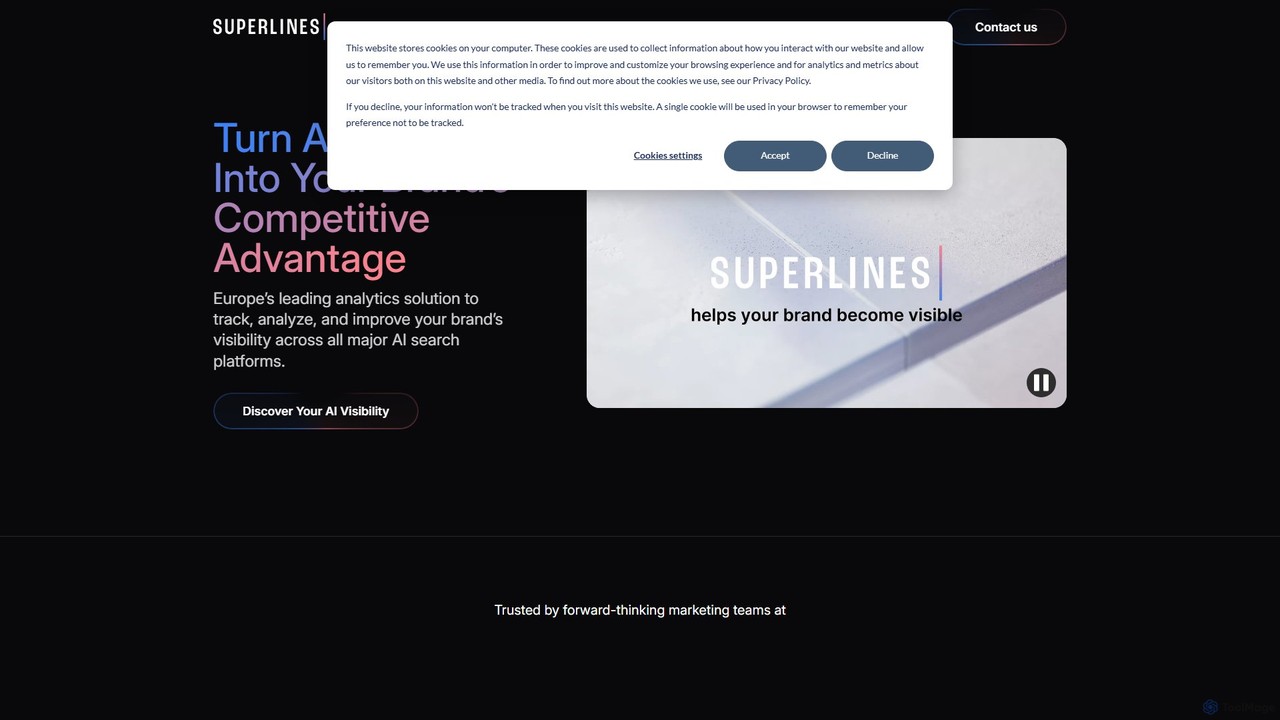
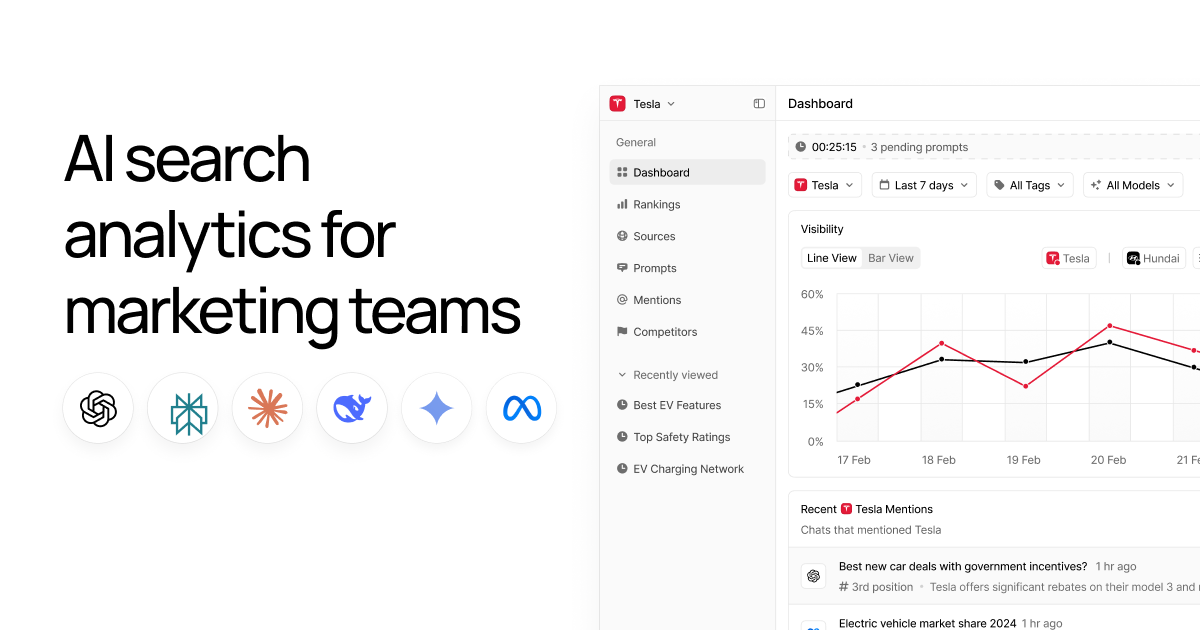
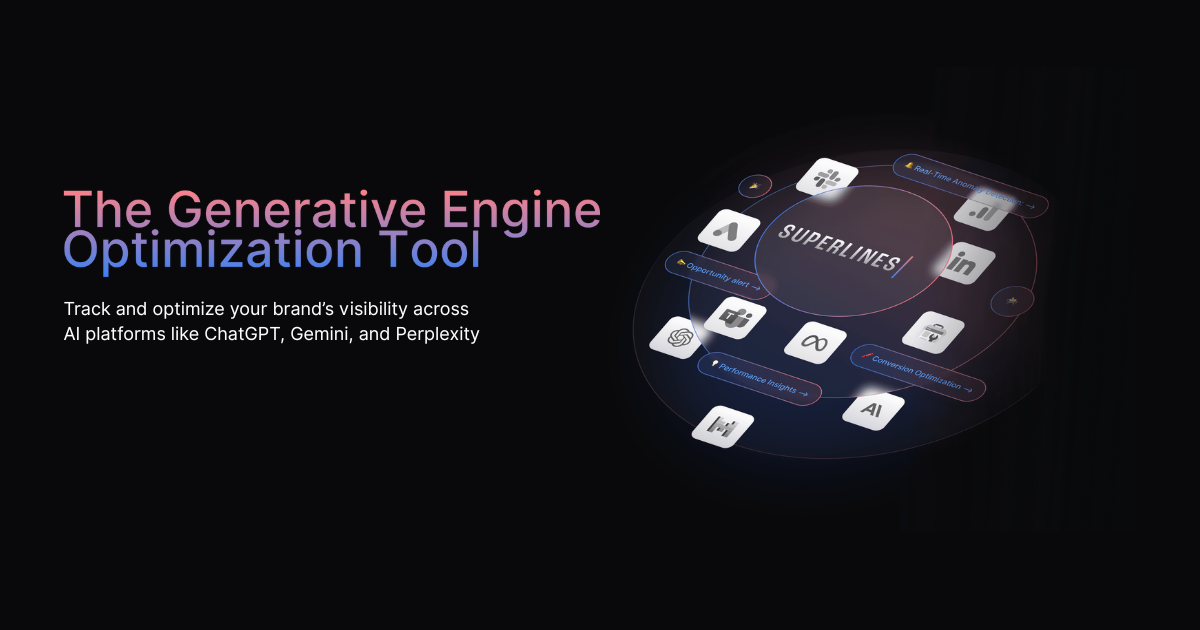
superlines is a leading Generative Engine Optimization (GEO) and LLM SEO platform. It helps brands and agencies track, analyze, and improve their visibility across major AI search engines like ChatGPT, Gemini, and Perplexity. By monitoring brand mentions, competitor performance, and sentiment, superlines provides actionable insights to dominate the new era of AI-driven search.

Business Intelligence
Visits 13KFavorites 177Likes 178
atomicinputs
Freemium

atomicinputs

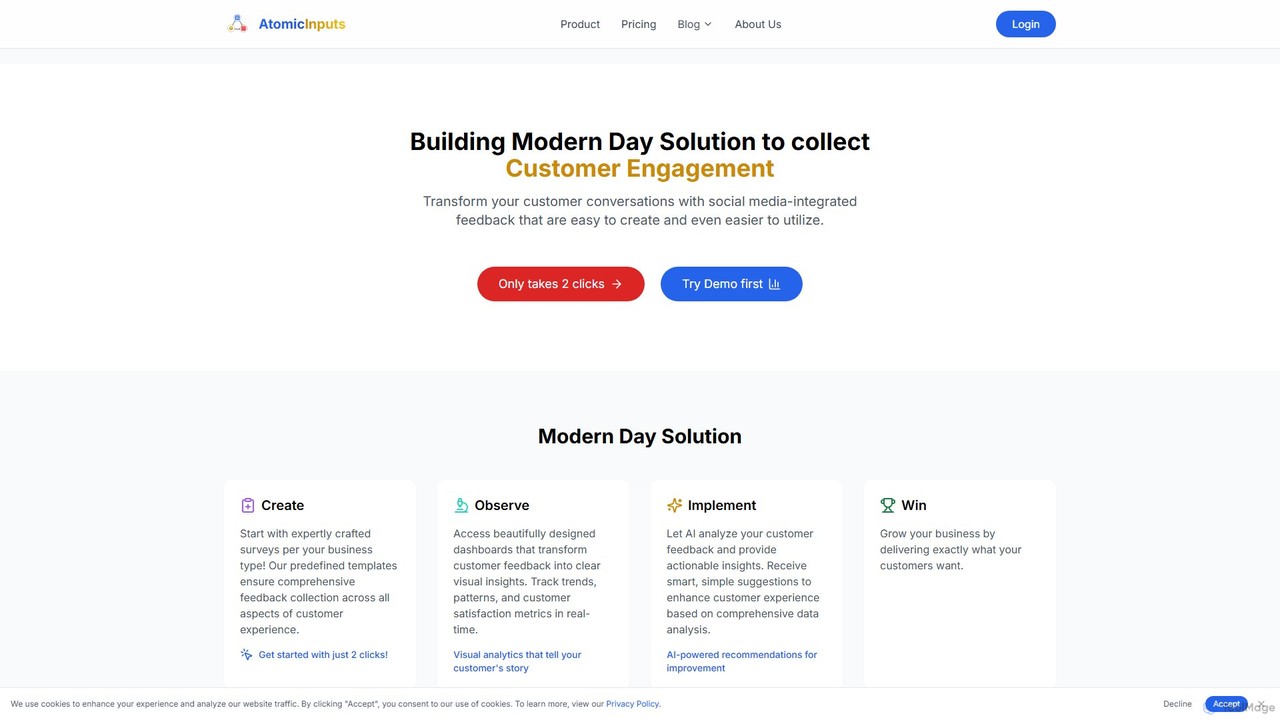
atomicinputs is an AI-powered customer engagement platform that collects feedback through conversational surveys on social media like Instagram and WhatsApp. It transforms customer conversations into actionable insights with visual dashboards, AI-generated recommendations, and smart analytics to help businesses grow.

Business Intelligence
Visits 5.6KFavorites 134Likes 130
formsflow.ai
Freemium

formsflow.ai

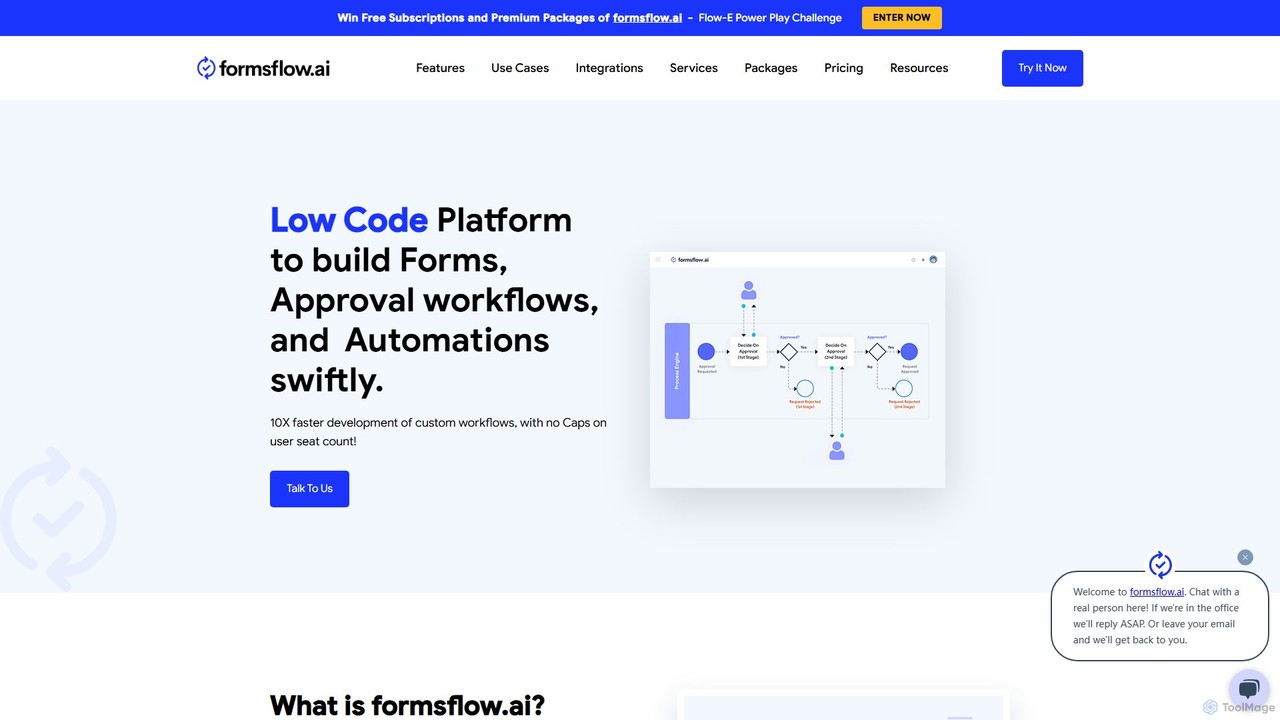
formsflow.ai is a low-code, open-source platform designed for building complex forms and automating workflows. It integrates a drag-and-drop form builder, a powerful BPMN/DMN workflow engine, and AI-driven analytics, including sentiment analysis. Ideal for enterprises, governments, and developers, it offers scalable, multi-tenant solutions for streamlined business process management and data-driven decision-making.

Business Intelligence
Visits 13KFavorites 114Likes 127
KowboyKit
Paid

KowboyKit

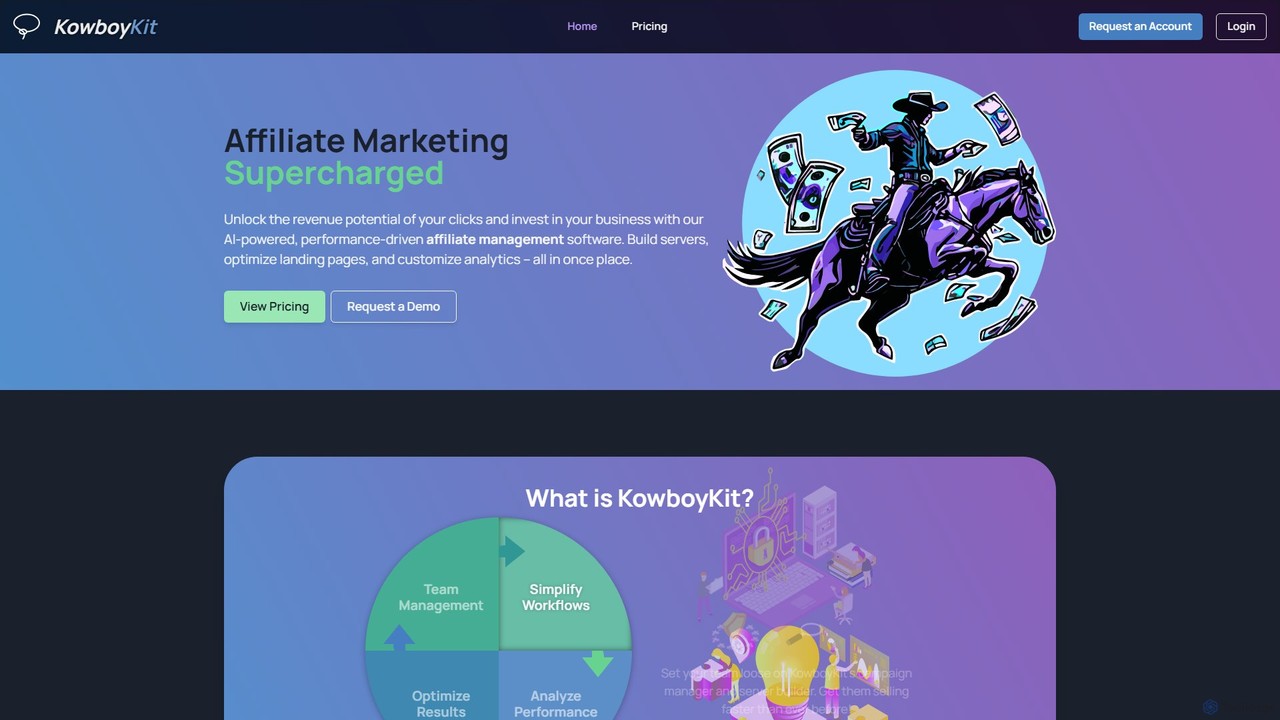
KowboyKit is an AI-powered, performance-driven affiliate management software designed to supercharge your marketing efforts. It provides an all-in-one platform for building servers, optimizing landing pages, managing campaigns, and analyzing performance. Ideal for media buying teams and affiliate marketers looking to scale their operations and maximize revenue.

Business Intelligence
Visits 8.6KFavorites 110Likes 126
Visible
Freemium

Visible

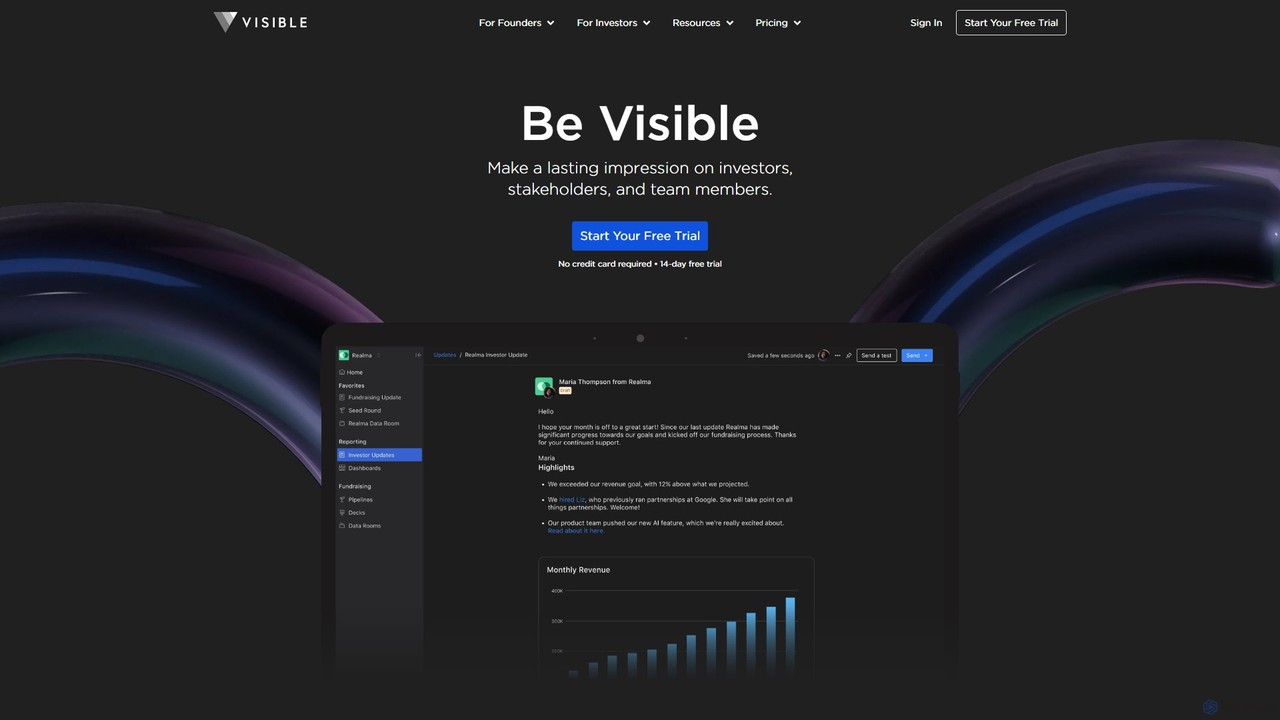
Visible is an investor relationship management platform for startups and VCs. It helps founders streamline fundraising, share updates, and track metrics. For investors, it centralizes portfolio data, provides analytics, and simplifies LP reporting, featuring an AI-powered inbox to automate data extraction.

Business Intelligence
Visits 156.1KFavorites 135Likes 118
Segwise
Freemium

Segwise

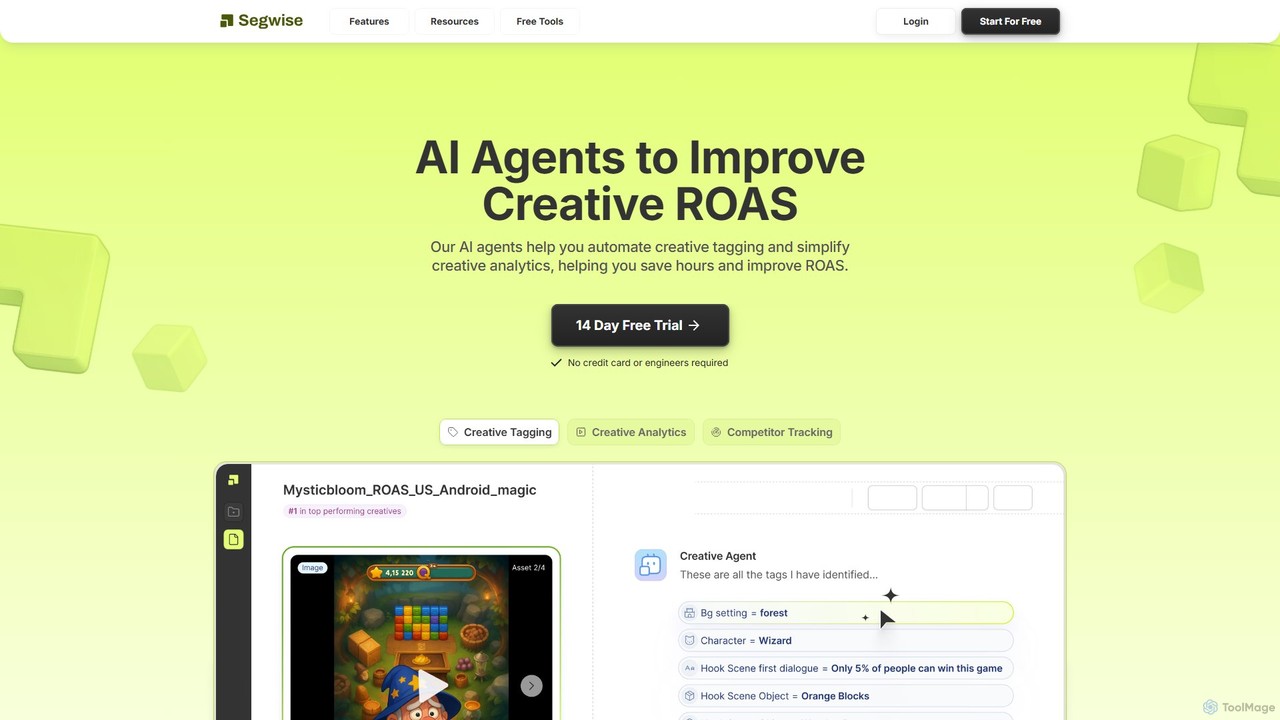
Segwise uses AI agents to automate creative tagging and simplify analytics for marketing teams. It helps identify winning ad patterns, streamline workflows, and ultimately improve creative Return on Ad Spend (ROAS). Ideal for user acquisition managers and creative strategists in mobile gaming, e-commerce, and more.

Business Intelligence
Visits 89.2KFavorites 166Likes 154
Superintelligent
Paid

Superintelligent

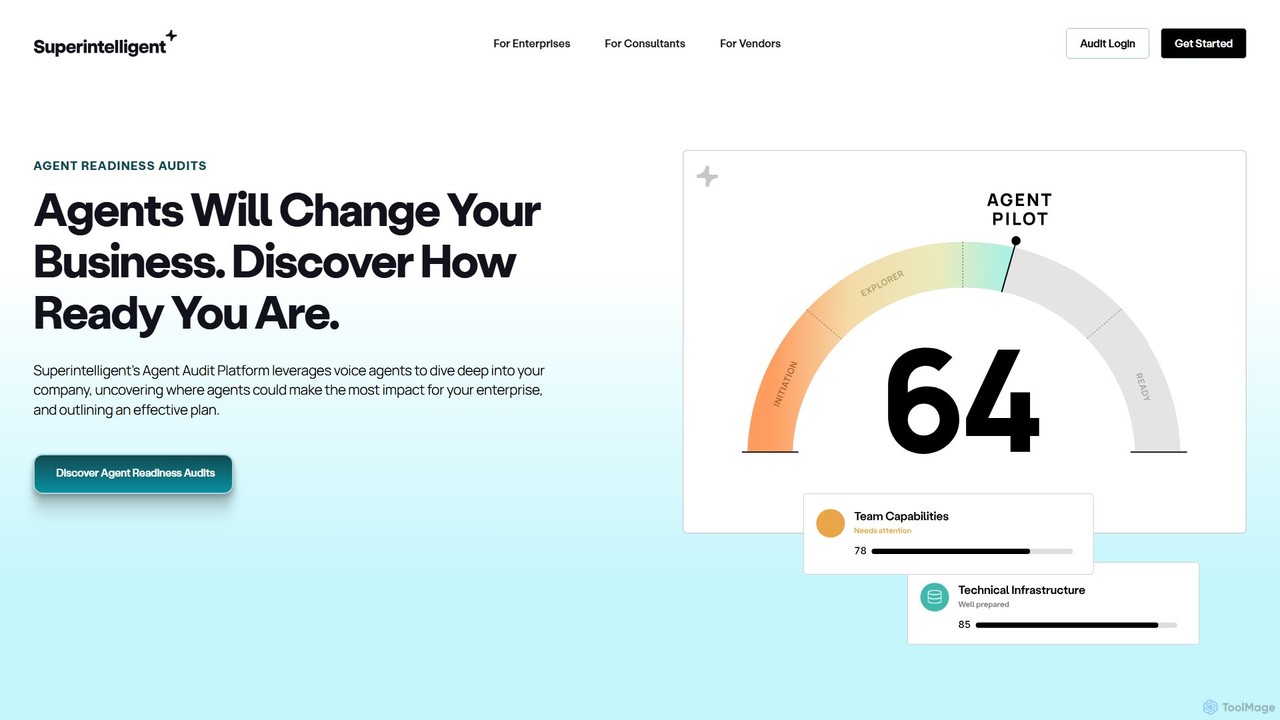
Superintelligent is an AI-powered platform for enterprises and consultants, offering Agent Readiness Audits and an AI Agent Marketplace. It uses voice-enabled AI agents to rapidly identify high-impact automation opportunities within an organization, providing actionable blueprints for AI transformation and connecting businesses with vetted AI solution providers.

Business Intelligence
Visits 14.9KFavorites 124Likes 128
ASO.dev
Freemium

ASO.dev

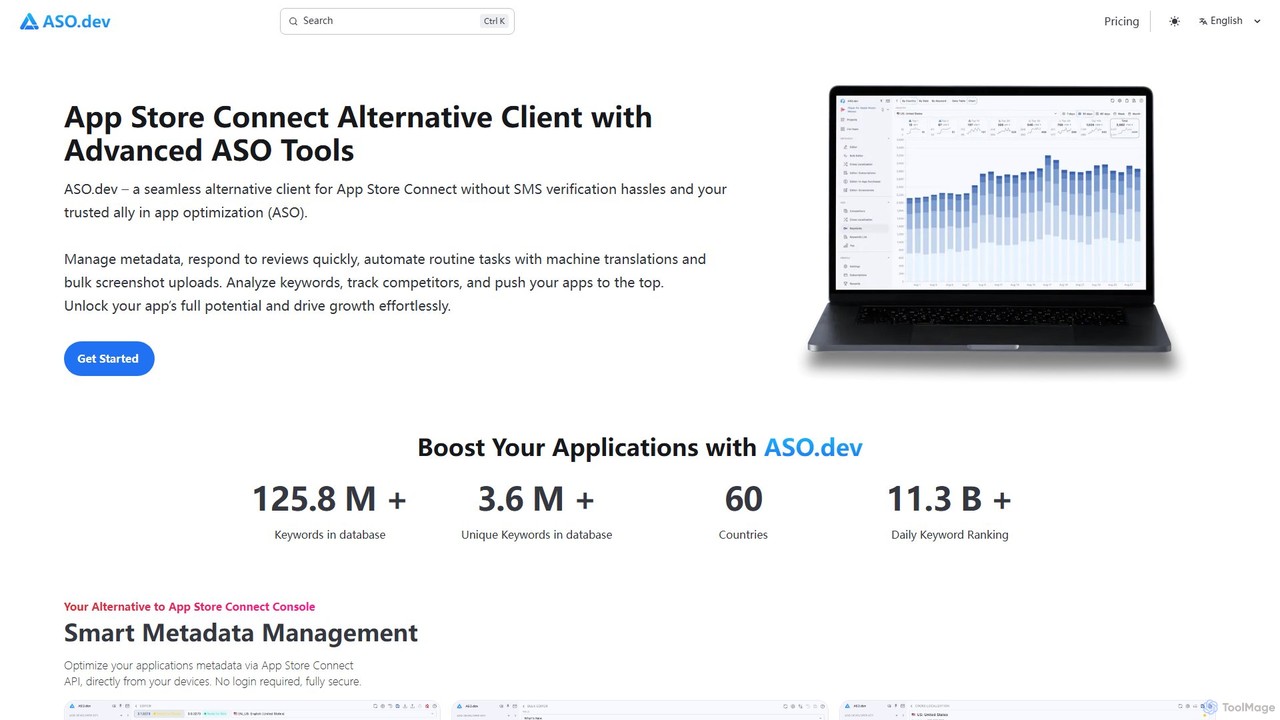
ASO.dev is an all-in-one App Store Optimization (ASO) and developer platform for iOS. It serves as a powerful alternative to App Store Connect, offering advanced tools for metadata management, keyword research, competitor analysis, and Apple Search Ads intelligence. Automate routine tasks, manage app releases, and gain deep market insights to drive app growth effortlessly.

Business Intelligence
Visits 71.6KFavorites 159Likes 160
Vestate

Vestate

Vestate is an AI-powered real estate marketing platform that redefines the property sales journey. It leverages interactive 3D solutions, digital twins, and virtual tours to create immersive experiences for potential buyers. The tool provides AI-driven insights into customer behavior, helping developers shorten sales cycles, increase conversions, and reduce reliance on physical show flats.

Business Intelligence
Visits 6.6KFavorites 168Likes 160

About Business Intelligence

Business Intelligence (BI) tools are a class of AI-powered applications designed to transform raw business data into actionable insights for strategic decision-making. They leverage AI algorithms to automate data collection, analysis, visualization, and reporting from various sources. The primary value of these tools is to provide a clear, consolidated view of business performance, enabling organizations to identify trends, track key performance indicators (KPIs), and uncover opportunities. As a specialized area within Analytics, BI focuses specifically on historical and current data to improve business operations.

Core Features

  • Interactive Dashboards: Create dynamic and customizable visualizations like charts and maps for intuitive data exploration.
  • Automated Reporting: Schedule and automatically generate regular reports on key business metrics, saving significant manual effort.
  • Natural Language Query (NLQ): Ask questions about your data in plain language (e.g., "show me last quarter's sales by region") and get instant answers.
  • Data Integration: Connect and consolidate data from multiple sources such as databases, CRM systems, and cloud applications into a single source of truth.
  • Predictive Forecasting: Utilize machine learning models to analyze historical data and forecast future trends, sales, or demand.

Use Cases

Business Intelligence tools are widely used across departments like sales, marketing, finance, and operations. For instance, a sales manager can use a BI dashboard to monitor team performance in real-time, while a marketing team can analyze campaign ROI. They are essential for executives seeking a high-level overview of company health and for business analysts performing deep-dive analyses to support strategic initiatives.

How to Choose

When selecting a BI tool, first consider its data source connectivity to ensure it integrates with your existing systems (e.g., Salesforce, SQL databases, Google Analytics). Evaluate the balance between ease of use for non-technical users and the advanced analytical power required by data professionals. Assess the sophistication of its AI features, such as the accuracy of predictive forecasts and the flexibility of its Natural Language Query capabilities. Finally, consider scalability to handle growing data volumes and the total cost of ownership.

Featured tool rankings

Business Intelligence use cases

1

Real-Time Sales Performance Monitoring

A sales director for a national retail chain uses a Business Intelligence tool to track daily sales performance across all stores. By connecting the tool to their point-of-sale (POS) and inventory systems, they can view a live dashboard showing key metrics like revenue, units sold, and average transaction value. The director can filter data by region, store, or product category to identify top-performing areas and underperforming products instantly. This allows for quick strategic adjustments, such as reallocating stock to high-demand stores or launching targeted promotions for slow-moving items, directly improving sales outcomes.

2

Marketing Campaign ROI Analysis

A digital marketing manager needs to justify their budget by demonstrating the return on investment (ROI) of various campaigns. They use a BI tool to integrate data from Google Ads, Facebook Ads, and their company's CRM. The tool creates a unified dashboard that visualizes ad spend, clicks, conversions, and customer lifetime value (LTV) for each campaign. By using the tool's analytical features, the manager can identify which channels and ad creatives generate the highest quality leads at the lowest cost. This data-driven approach allows them to optimize ad spend by reallocating budget to the most effective campaigns, thereby maximizing marketing ROI.

3

Financial Health and Forecasting

The Chief Financial Officer (CFO) of a mid-sized tech company uses a BI platform to get a consolidated view of the company's financial health. The tool connects to their accounting software, payroll system, and sales CRM. The CFO can analyze revenue trends, monitor operating expenses, and track cash flow in near real-time. More importantly, they use the tool's AI-powered forecasting feature to project future revenue and expenses based on historical data and sales pipeline information. This enables more accurate financial planning, helps in securing investor confidence, and allows the company to proactively manage its budget and resources.

4

Optimizing Supply Chain and Inventory

An operations manager for an e-commerce company is responsible for maintaining optimal inventory levels. They use a BI tool to analyze historical sales data, website traffic, and seasonality. The tool's predictive analytics models forecast demand for different products, allowing the manager to make informed purchasing decisions. They can also create dashboards to monitor key supply chain metrics like order fulfillment times and shipping costs. By identifying bottlenecks and predicting demand, the company can reduce storage costs, avoid stockouts of popular items, and ensure a smoother delivery process for customers.

5

Analyzing Customer Behavior and Segmentation

A product manager at a SaaS company wants to understand how users interact with their software to reduce churn and improve features. They use a BI tool to combine product usage data with customer subscription information from their billing system. Through interactive dashboards, they can segment users based on activity levels, feature adoption, and subscription plans. The tool helps identify patterns, such as which features are most used by high-value customers or at what point inactive users tend to cancel their subscriptions. These insights directly inform the product roadmap and guide targeted customer engagement campaigns to increase retention.

6

Executive-Level Business Overview

The CEO of a growing startup needs a quick, high-level overview of the entire business without digging through multiple reports. A BI tool provides a consolidated executive dashboard that pulls key metrics from sales, marketing, finance, and product departments. With a single glance, the CEO can see monthly recurring revenue (MRR), customer acquisition cost (CAC), churn rate, and product engagement scores. The tool can also be configured to send automated alerts for significant anomalies, such as a sudden drop in user sign-ups. This enables the leadership team to stay informed, make faster, data-backed decisions, and effectively communicate the company's performance to the board and investors.

Business Intelligence FAQ

What are AI-powered Business Intelligence (BI) tools?

AI-powered Business Intelligence (BI) tools are software applications that help organizations analyze business data and present it in an understandable format. Unlike traditional BI, they use artificial intelligence to automate complex tasks. Key AI features include Natural Language Query (NLQ), which lets you ask questions in plain English, predictive analytics to forecast future trends, and automated insights that highlight important patterns or anomalies in your data without manual searching. Their main purpose is to make data-driven decision-making faster, more accurate, and accessible to more people within a company, not just data experts.

How do I choose the right BI tool for my business?

Choosing the right BI tool depends on your specific needs. Consider these factors:

  • Data Sources: Ensure the tool can easily connect to all your data sources (e.g., databases, cloud apps like Salesforce, spreadsheets).
  • User Skill Level: Who will use it? Choose a tool with a simple drag-and-drop interface for business users, or one with advanced coding capabilities for data analysts.
  • Key Features: Do you need powerful predictive forecasting, real-time dashboards, or strong natural language query capabilities? Prioritize tools that excel in the features you need most.
  • Scalability and Cost: Select a tool that can grow with your data volume and user base. Evaluate the pricing model (per-user, per-usage) to ensure it fits your budget long-term.
What's the difference between Business Intelligence and Data Analytics?

Business Intelligence (BI) is best understood as a specific type of Data Analytics. BI primarily focuses on descriptive analytics—what happened in the past and what is happening now—using historical and current data to inform business decisions. It often presents findings in dashboards and reports. Data Analytics is a broader field that includes BI but also extends to predictive analytics (what is likely to happen) and prescriptive analytics (what action to take). While BI answers questions about business performance, Data Analytics can tackle a wider range of questions across various domains, not just business operations.

Who typically uses Business Intelligence tools?

BI tools are used by a wide range of professionals across an organization. Executives and managers use high-level dashboards to monitor company health and track KPIs. Sales and marketing teams use them to analyze performance and customer behavior. Financial analysts rely on them for budgeting, forecasting, and reporting. Operations teams use BI to optimize supply chains and internal processes. With modern, user-friendly interfaces, even non-technical staff can use BI tools to explore data relevant to their roles, promoting a data-driven culture throughout the company.

What are the key benefits of using a BI tool?

The primary benefit of a BI tool is enabling faster, more informed decision-making. Other key advantages include:

  • A Single Source of Truth: Consolidates data from various systems, ensuring everyone works with the same, consistent information.
  • Improved Operational Efficiency: Helps identify bottlenecks, inefficiencies, and areas for improvement in business processes.
  • Enhanced Customer Understanding: Provides insights into customer behavior, preferences, and trends, allowing for better service and targeted marketing.
  • Accurate Performance Tracking: Allows teams and individuals to track their performance against goals and KPIs in real-time.