ToolMage
Sign in

Best 24 Music AI tools for Audio

Popular Music AI tools in Audio include Moises, Klangio, freebeat, Jammable, PopPop AI, aivoicelab, Vocalize, Youka, Audio AI Dynamics, and Sonoteller, helping you work more efficiently.

ScoreCloud
Freemium

ScoreCloud

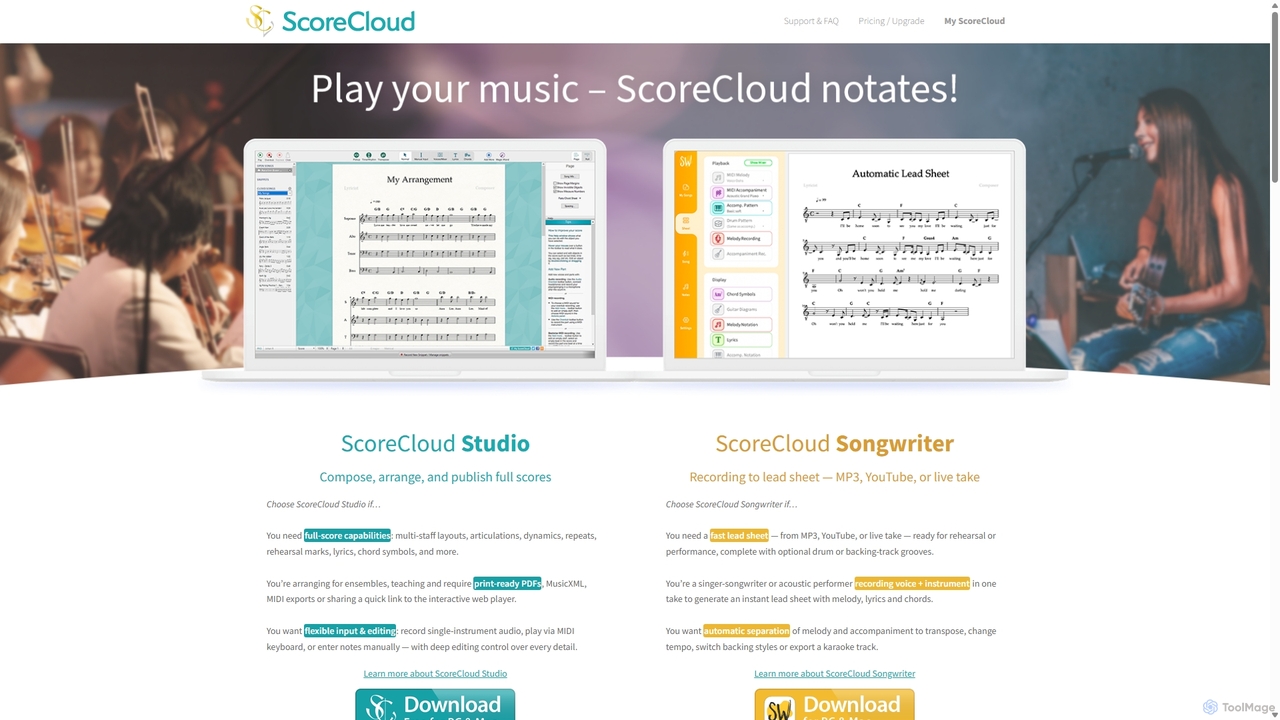
ScoreCloud is an AI-powered music notation software that instantly transcribes your songs into sheet music. Sing, play an instrument, or use a MIDI keyboard, and ScoreCloud will write it down for you. Ideal for musicians, composers, teachers, and students, it's like 'Google Translate for Music,' making composition and arrangement accessible to everyone.

Music
Visits 76.8KFavorites 156Likes 162
karaok_ai
Free

karaok_ai

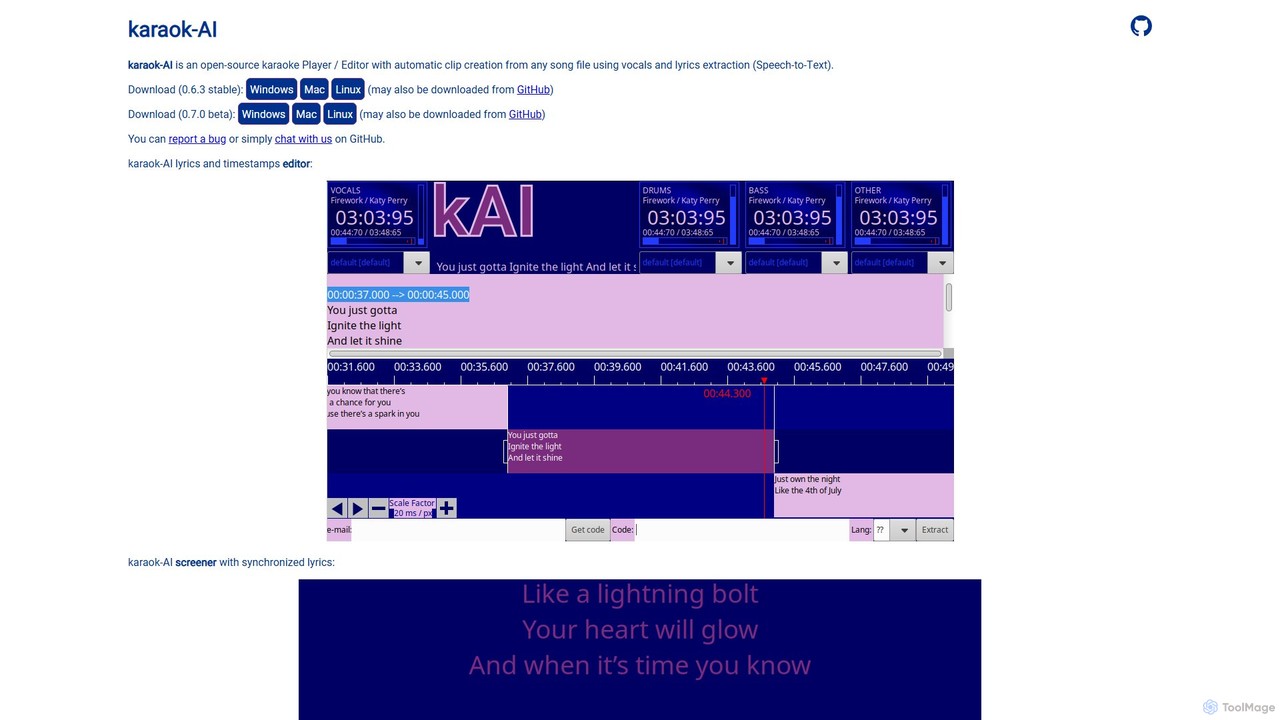
karaok_ai is a free, open-source AI-powered application that automatically creates karaoke tracks from any song. It separates vocals, generates synchronized lyrics using speech-to-text, and includes a full-featured editor. It also comes bundled with kaiDJ, a versatile DJ party player.

Music
Visits 5.7KFavorites 146Likes 143

About Music

AI Music tools are a category of artificial intelligence applications designed to create, enhance, and analyze musical compositions. These tools leverage advanced machine learning models, including generative adversarial networks (GANs) and transformers, to understand musical patterns, generate original melodies, harmonies, and rhythms, or process existing audio. They empower musicians, content creators, and developers to innovate in sound design, automate production tasks, and explore new creative possibilities within the broader audio landscape.

Core Features

  • AI Music Generation: Composing original melodies, harmonies, and full tracks across various genres.
  • Style Transfer & Remixing: Applying the style of one musical piece to another or intelligently remixing existing tracks.
  • Audio Separation: Isolating vocals, drums, bass, and other instruments from a mixed audio file.
  • Mastering & Enhancement: Automating the final polish of a track, adjusting dynamics, EQ, and stereo imaging.
  • Music Analysis & Tagging: Automatically identifying genre, mood, tempo, and key from audio files.

Applicable Scenarios

Music producers use these tools for creative inspiration and automating repetitive tasks. Content creators generate unique background scores for videos and podcasts. Game developers design dynamic soundtracks and sound effects that adapt to gameplay. These tools streamline workflows and open new avenues for sonic exploration.

How to Choose

When selecting an AI Music tool, consider its generation capabilities (genres, control over parameters), integration with your existing digital audio workstation (DAW), the quality of its output, and its licensing terms for generated content. Evaluate the ease of use and the level of customization offered to match your creative needs and technical proficiency.

Featured tool rankings

Music use cases

1

Generating Unique Background Music for Content

Content creators, YouTubers, and podcasters can utilize AI Music tools to quickly generate royalty-free background scores tailored to the mood and length of their videos or episodes. By inputting keywords like "upbeat," "cinematic," or "lo-fi," and specifying duration, they can obtain unique tracks without extensive manual composition or licensing hurdles, significantly speeding up production workflows.

2

Assisting Music Producers with Creative Blocks

Music producers and composers facing creative blocks can use AI tools to generate melody ideas, chord progressions, or rhythmic patterns as starting points. The AI can suggest variations in different styles or keys, providing fresh perspectives and accelerating the initial stages of song creation, allowing human artists to refine and personalize the output.

3

Creating Dynamic Soundtracks for Video Games

Game developers can employ AI Music generators to create adaptive and dynamic soundtracks that respond to in-game events, player actions, or environmental changes. This allows for a more immersive audio experience, where music seamlessly transitions between moods (e.g., calm exploration to intense combat) without requiring extensive manual scoring for every possible scenario.

4

Separating Vocals and Instruments for Remixes or Karaoke

DJs, remix artists, and karaoke enthusiasts can use AI audio separation tools to extract individual stems (vocals, drums, bass, etc.) from existing songs. This enables them to create acapellas, instrumentals, or custom remixes, offering unprecedented flexibility for creative manipulation and performance without needing original multi-track recordings.

5

Automating Music Mastering for Independent Artists

Independent musicians and bands often lack access to professional mastering engineers. AI Music mastering tools provide an affordable and efficient solution to automatically optimize the loudness, dynamics, and tonal balance of their tracks. This ensures their music sounds polished and ready for distribution across various platforms, competing with professionally mastered recordings.

6

Exploring New Musical Genres and Soundscapes

Experimental artists and sound designers can leverage AI Music tools to explore unconventional soundscapes and genre fusions that might be difficult to achieve through traditional methods. By manipulating AI parameters or feeding it diverse musical inputs, they can discover novel sonic textures, harmonies, and rhythms, pushing the boundaries of musical expression.

Music FAQ

What are AI Music tools?

AI Music tools are software applications that use artificial intelligence, primarily machine learning and deep learning, to assist in or automate various aspects of music creation, production, and analysis. They can generate original compositions, remix existing tracks, separate audio components, and even master songs, offering innovative solutions for musicians and content creators.

How do I choose the best AI Music generator for my needs?

To choose the best AI Music generator, consider your primary use case (e.g., background music, creative assistance, sound design). Evaluate the range of genres and styles it supports, the level of control it offers over musical parameters, its integration capabilities with your existing workflow (e.g., DAW compatibility), and the licensing terms for generated content. Also, assess the quality of its output and its ease of use.

What specific tasks can AI Music tools perform?

AI Music tools can perform a wide array of tasks, including generating full musical pieces from text prompts or parameters, creating variations of existing melodies, separating vocals and instruments from mixed tracks, automatically mastering audio, and analyzing music for genre, mood, and key. They can also assist with songwriting by suggesting chord progressions or rhythmic ideas.

How do AI Music tools differ from traditional music production software?

Traditional music production software (DAWs) provides a comprehensive environment for manual composition, recording, editing, and mixing. AI Music tools, however, introduce generative and assistive capabilities, automating complex creative processes or suggesting new ideas based on learned patterns. While DAWs are about human control, AI tools offer intelligent automation and creative augmentation, often integrating with DAWs to enhance the workflow rather than replace it.

Is music generated by AI copyrightable?

The copyrightability of AI-generated music is a complex and evolving legal area. In many jurisdictions, including the U.S., copyright typically requires human authorship. If the AI acts purely as a tool under significant human direction and creative input, the human user might claim copyright. However, if the AI generates music autonomously with minimal human intervention, its copyright status is often unclear or may not be eligible for protection. It's crucial to check the specific terms of service and licensing agreements of the AI tool and consult legal advice for specific cases.