Audio Best in category 2 results Vocal Synthesis AI Tool

Popular AI tools in the Vocal Synthesis field of Audio include Music Made Pro、Emvoice, etc., helping you quickly improve efficiency.

Emvoice

Emvoice

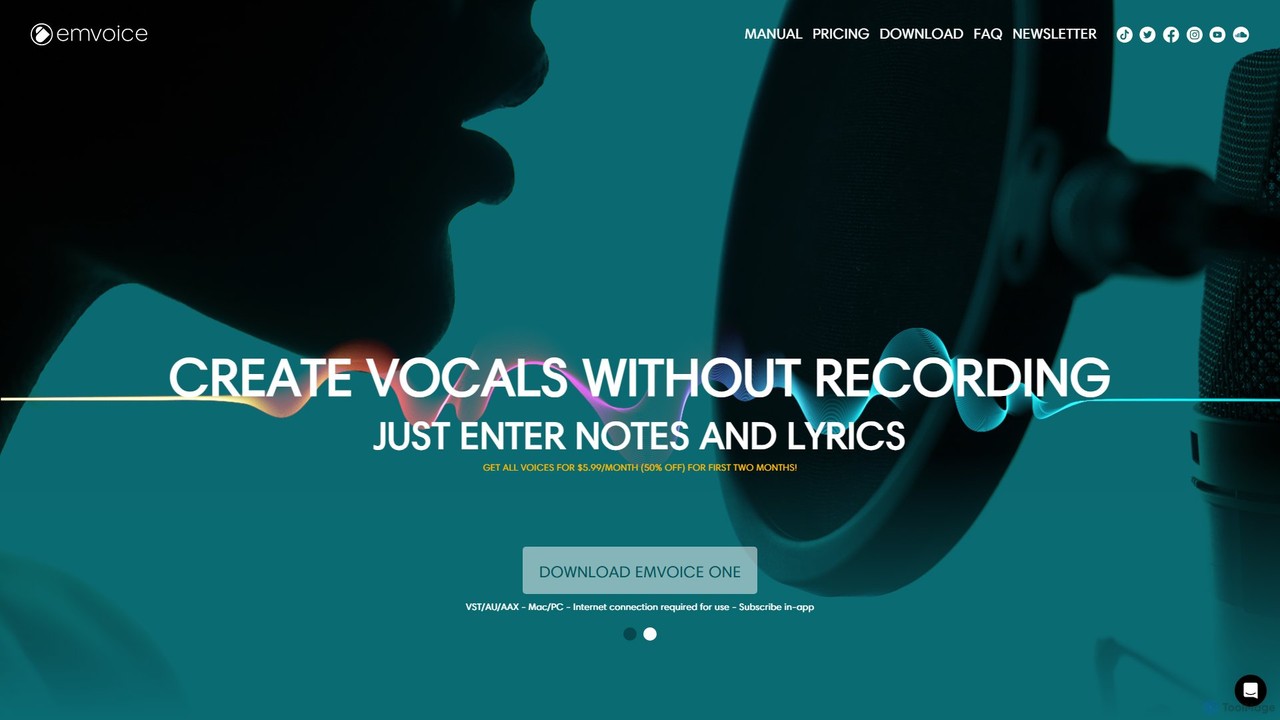
Emvoice is a next-generation AI vocal synthesizer plugin (VST/AU/AAX) that allows music producers and songwriters to create realistic …

3.7K
Music Made Pro

Music Made Pro

Music Made Pro is a unique service that combines AI technology with professional music producers to create personalized …

4.3K

About Vocal Synthesis

Vocal Synthesis tools are AI-powered applications that generate human-like speech or singing from text. These tools leverage advanced deep learning models, such as Text-to-Speech (TTS) and Singing Voice Synthesis (SVS), to convert written input into natural-sounding audio. They enable creators, businesses, and developers to produce high-quality voiceovers, audiobooks, virtual assistants, and musical compositions without needing human voice talent. With capabilities like emotion control, multi-language support, and custom voice cloning, vocal synthesis offers unprecedented flexibility and efficiency in audio production.

Core Features

  • Text-to-Speech (TTS): Converts written text into natural-sounding spoken audio in various voices and languages.
  • Singing Voice Synthesis (SVS): Generates melodic singing voices from lyrics and musical notation, complete with pitch and rhythm.
  • Voice Cloning & Customization: Replicates specific vocal characteristics from a sample or creates unique, branded AI voices.
  • Emotion & Style Control: Allows users to adjust the tone, pitch, speed, and emotional expression of the generated voice.
  • Multi-language & Accent Support: Provides the ability to generate speech in a wide array of languages, dialects, and regional accents.

Use Cases

Vocal Synthesis tools are widely adopted across various sectors. Content creators utilize them for generating narration for audiobooks and podcasts, while e-learning platforms produce engaging voiceovers for educational modules. Businesses integrate these tools to power realistic virtual assistants and interactive voice response (IVR) systems, enhancing customer experience. Additionally, media production houses employ vocal synthesis for localizing video content and creating unique character voices for games and animations.

How to Choose

When selecting a Vocal Synthesis tool, prioritize voice quality and naturalness, ensuring the output sounds genuinely human and expressive. Evaluate the range of features, such as Text-to-Speech, Singing Voice Synthesis, voice cloning, and emotion control, based on your specific project needs. Consider the breadth of language and accent support if your audience is global. Assess integration capabilities with your existing workflows and platforms, and compare pricing models to find a solution that aligns with your budget and usage volume.

Vocal SynthesisUse Cases

1

Producing Professional Audiobooks & Podcasts

Content creators and publishers can generate high-quality, consistent narration for audiobooks, podcasts, and long-form articles. By inputting scripts, users receive polished audio tracks, significantly reducing production time and costs associated with hiring voice actors, while maintaining a unified brand voice across multiple series.

2

Developing Realistic AI Virtual Assistants

Technology companies and customer service departments utilize vocal synthesis to create natural-sounding voices for virtual assistants, chatbots, and interactive voice response (IVR) systems. This enhances user engagement and provides a more human-like interaction experience, improving customer satisfaction and operational efficiency.

3

Creating Engaging E-learning & Training Modules

Educators and corporate trainers can produce clear, engaging voiceovers for online courses, tutorials, and corporate training videos. Vocal synthesis allows for rapid iteration of content, easy updates, and consistent voice quality across all learning materials, making educational content more accessible and dynamic.

4

Localizing Video Content for Global Audiences

Marketing agencies and media companies employ vocal synthesis to generate multi-language voiceovers for advertisements, promotional videos, and documentaries. This enables efficient localization of content into various languages and accents, expanding reach to international markets without the need for multiple voice artists.

5

Designing Unique Game Character Voices

Game developers leverage vocal synthesis to create distinct and expressive voices for non-player characters (NPCs), dialogue, and in-game narration. This provides flexibility in character design, allows for rapid prototyping of voice lines, and ensures consistency in voice acting across extensive game narratives, enriching the player experience.

6

Generating Vocal Tracks for Music Production

Musicians and producers use Singing Voice Synthesis (SVS) to create vocal tracks for songs, demos, or experimental compositions. By inputting lyrics and musical notation, they can generate expressive singing voices, offering a creative alternative or complement to human singers, and enabling rapid song development and arrangement.

Vocal SynthesisFrequently Asked Questions