Collaboration Best in category 2 results Task Management AI Tool

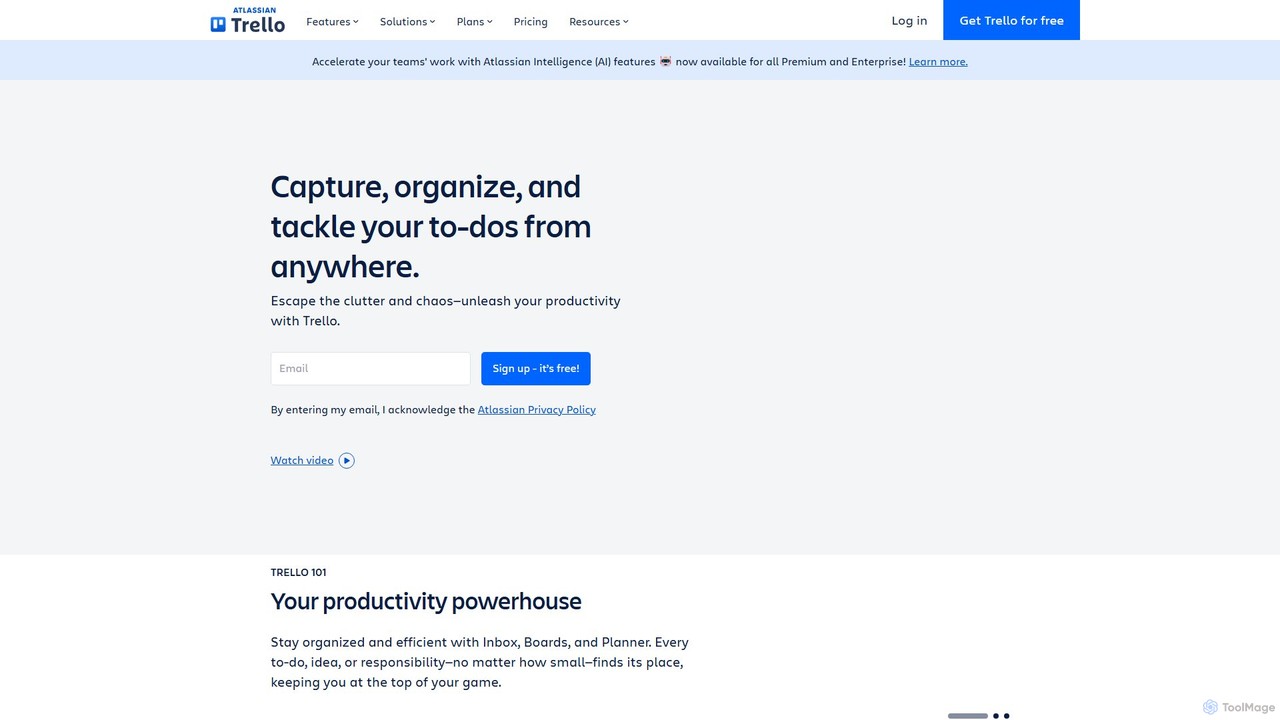
Popular AI tools in the Task Management field of Collaboration include Trello、Prismatic Forge, etc., helping you quickly improve efficiency.

Prismatic Forge

Prismatic Forge

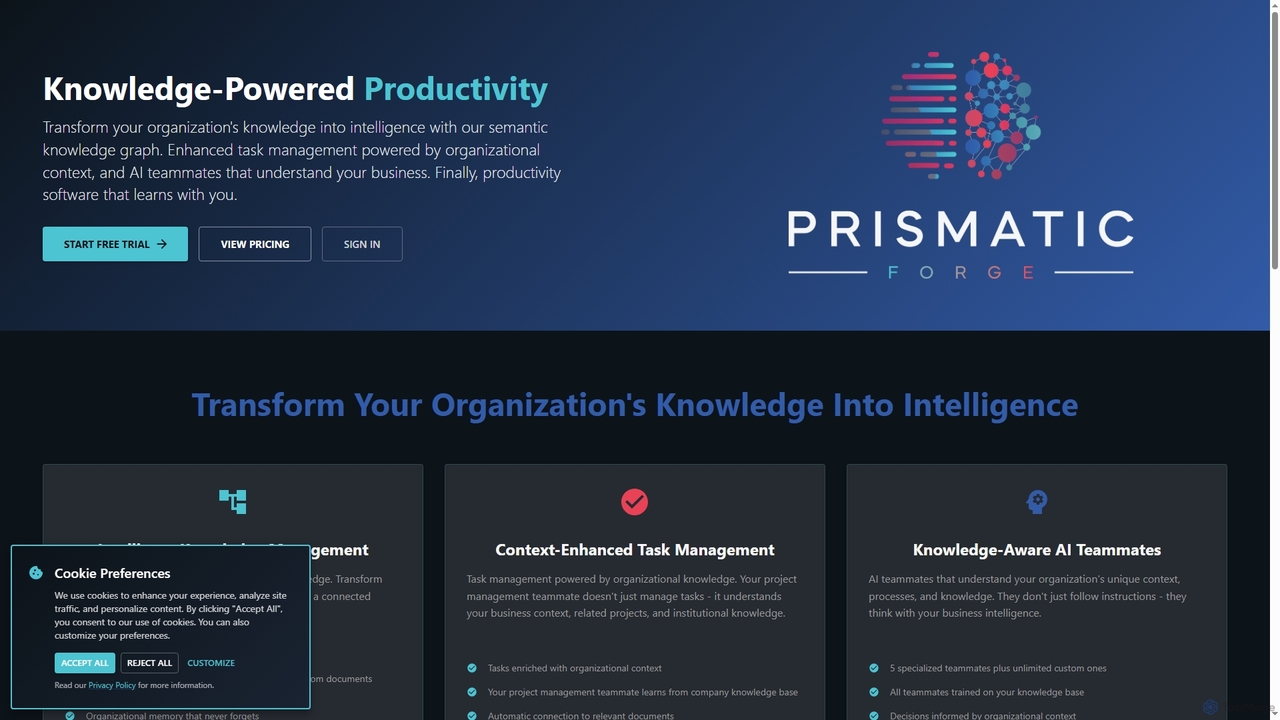
Prismatic Forge is a knowledge-powered productivity platform that transforms an organization's scattered information into connected intelligence. It leverages …

2.3K
Trello

Trello

Trello is a visual collaboration and project management tool that helps teams organize tasks, collaborate on projects, and …

79.1M

About Task Management

AI Task Management tools are applications designed to intelligently organize, track, and optimize individual and team workflows. These tools utilize artificial intelligence to automate task creation from communications, prioritize assignments based on urgency and dependencies, and predict project timelines. This helps teams enhance productivity, maintain clarity on responsibilities, and meet deadlines more effectively within collaborative environments. Their core advantage lies in transforming static to-do lists into dynamic, predictive systems that proactively manage workloads.

Core Features

  • Intelligent Prioritization: AI algorithms analyze deadlines, dependencies, and workloads to automatically suggest or set task priorities.
  • Automated Task Creation: Converts text from emails, messages, or meeting notes into structured, actionable tasks.
  • Predictive Analytics: Forecasts project completion dates, identifies potential bottlenecks, and suggests resource adjustments.
  • Smart Scheduling & Assignment: Automatically assigns tasks to the most suitable team member based on their availability, skills, and current workload.
  • Automated Progress Reporting: Generates real-time summaries and insights on project status and team performance without manual input.

Use Cases

These tools are widely used by project managers, software development teams, marketing agencies, and remote teams. They are particularly effective for managing complex projects with multiple dependencies, such as agile software sprints, multi-channel marketing campaigns, or client deliverable tracking, where dynamic adjustments are crucial.

How to Choose

When selecting an AI Task Management tool, consider its integration capabilities with your existing software stack (e.g., Slack, Google Workspace). Evaluate the depth of its AI features—whether you need simple automation or advanced predictive analytics. Assess its scalability to support your team's growth and ensure its user interface is intuitive for quick adoption by all members.

Task ManagementUse Cases

1

Agile Sprint Planning Automation

A product manager leading a software development team uses an AI task management tool to streamline sprint planning. After a planning meeting, the tool analyzes the meeting transcript, automatically identifies action items, and converts them into sub-tasks under a larger user story. The AI then estimates the effort for each task based on historical data and suggests assigning them to specific developers according to their current workload and expertise, reducing manual planning time by hours.

2

Coordinating a Multi-Channel Marketing Campaign

A marketing team lead maps out a campaign involving blog posts, social media updates, and email newsletters. The AI task management tool automatically creates dependencies, ensuring that social media posts are only scheduled after the corresponding blog content is approved. If the content writer's task is delayed, the AI automatically adjusts the deadlines for all dependent tasks and notifies the team lead of the potential impact on the campaign launch date.

3

Managing Multiple Freelance Projects

A freelance designer juggles projects for three different clients. Their AI task management tool aggregates tasks from emails and project briefs into a unified dashboard. Each morning, the AI generates a prioritized 'Today' list, balancing urgent client revisions with long-term project milestones. It also flags potential scheduling conflicts, such as two major deadlines falling on the same day, allowing the freelancer to proactively manage client expectations.

4

Automating Client Progress Reports

An account manager at a digital agency is responsible for sending weekly updates to clients. Instead of manually compiling reports, they use an AI task management tool. The tool automatically tracks completed tasks, time logged by the team, and upcoming milestones for each client's project. At the end of the week, it generates a draft progress report with key metrics and summaries, which the manager can quickly review, edit, and send, saving significant administrative time.

5

Breaking Down Large Goals into Actionable Steps

An entrepreneur wants to launch a new e-commerce website. They input this high-level goal into their AI task management tool. The AI, using a model trained on project management data, breaks the goal down into a logical sequence of tasks, such as 'Research E-commerce Platforms,' 'Design Website Mockups,' 'Set Up Payment Gateway,' and 'Develop Marketing Plan.' This provides an instant, structured roadmap, helping the entrepreneur move from idea to execution without missing critical steps.

6

Optimizing Team Workload and Resource Allocation

A project director at a consulting firm needs to assign consultants to a new project. The AI task management system analyzes the project's requirements against the skills, availability, and current workload of all consultants. It then recommends an optimal team composition, highlighting who is best suited for each role and flagging any consultants who might become overloaded. This data-driven approach ensures balanced workloads and maximizes the chances of project success.

Task ManagementFrequently Asked Questions