Dawiso
Dawiso is an AI-powered knowledge management and data governance platform. It helps organizations achieve data transparency, streamline compliance, …
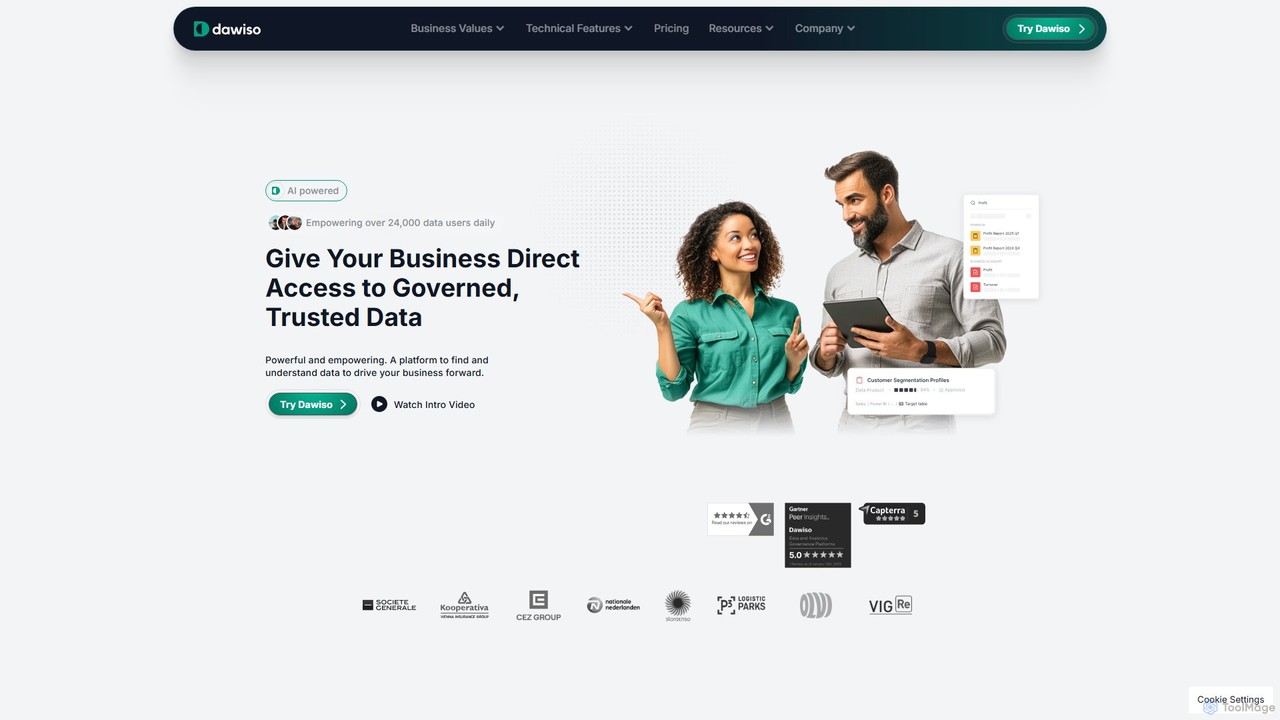
Dawiso is an AI-powered knowledge management and data governance platform. It helps organizations achieve data transparency, streamline compliance, and automate documentation. Using natural language search and AI-assisted writing, Dawiso makes complex data landscapes accessible and manageable for all users, from data engineers to business analysts.
About Data Governance
Data Governance tools are AI-powered solutions designed to establish, monitor, and enforce policies, processes, and standards for managing an organization's data assets. These tools leverage AI to automate compliance checks, identify data quality issues, and ensure adherence to regulatory requirements like GDPR or CCPA. They are essential for organizations seeking to build trust in their data, mitigate risks, and unlock the full value of their information.
Core Features
- Automated Policy Enforcement: Automatically applies data policies across various data sources, ensuring consistent compliance.
- Data Quality Management: Identifies, monitors, and remediates data quality issues using AI-driven anomaly detection and pattern recognition.
- Metadata Management: Centralizes and automates the collection, classification, and lineage tracking of metadata for better data understanding.
- Access Control & Security: Manages and audits data access permissions, enhancing security and preventing unauthorized data use.
- Regulatory Compliance: Provides frameworks and automated checks to help organizations meet complex data privacy and security regulations.
Applicable Scenarios
Organizations across finance, healthcare, and retail leverage Data Governance tools to manage sensitive customer information, ensure regulatory adherence, and maintain data integrity. For instance, a bank uses these tools to comply with financial regulations like Basel III, while a healthcare provider ensures patient data privacy under HIPAA.
How to Choose
When selecting Data Governance tools, consider the scope of data sources it can integrate with, its automation capabilities for policy enforcement and quality checks, and its ability to adapt to evolving regulatory landscapes. Evaluate its reporting features for audit trails and compliance, and ensure it offers robust metadata management and data lineage tracking.

Data GovernanceUse Cases
Ensuring Regulatory Compliance for Financial Data
Financial institutions utilize Data Governance tools to automatically monitor and audit transactions, customer data, and reporting for compliance with regulations like SOX, GDPR, and local financial laws. This minimizes legal risks and avoids hefty fines by maintaining a clear audit trail and enforcing data handling policies.
Managing Patient Data Privacy in Healthcare
Healthcare providers deploy Data Governance solutions to enforce strict access controls and anonymization policies for sensitive patient health information (PHI). This ensures compliance with regulations like HIPAA, protects patient privacy, and allows for secure data sharing for research while preventing breaches.
Improving Data Quality for Business Intelligence
E-commerce companies use Data Governance tools to identify and correct inconsistencies, duplicates, and errors in customer and product data. By ensuring high-quality data, they can generate more accurate sales forecasts, personalize marketing campaigns effectively, and make reliable business decisions.
Establishing Data Lineage for Auditability
Manufacturing firms implement Data Governance to track the origin, transformations, and usage of data across their supply chain and production systems. This provides a clear data lineage, crucial for auditing product quality, troubleshooting issues, and demonstrating accountability for data-driven decisions.
Automating Data Retention Policies for Legal Holds
Legal departments in large enterprises use Data Governance platforms to automate the application of data retention and deletion policies, especially during litigation or investigations. This ensures that relevant data is preserved as required by law, while irrelevant data is disposed of securely, reducing storage costs and legal exposure.
Centralizing Metadata for Data Cataloging
Data stewards in any large organization leverage Data Governance tools to create a comprehensive data catalog by centralizing metadata from various systems. This allows data analysts and business users to easily discover, understand, and trust available data assets, fostering a data-driven culture and improving self-service analytics.