ToolMage
Sign in

Best 1 Enterprise Search AI tools for Data

Popular Enterprise Search AI tools in Data include FlowGen, helping you work more efficiently.

FlowGen
Paid

FlowGen

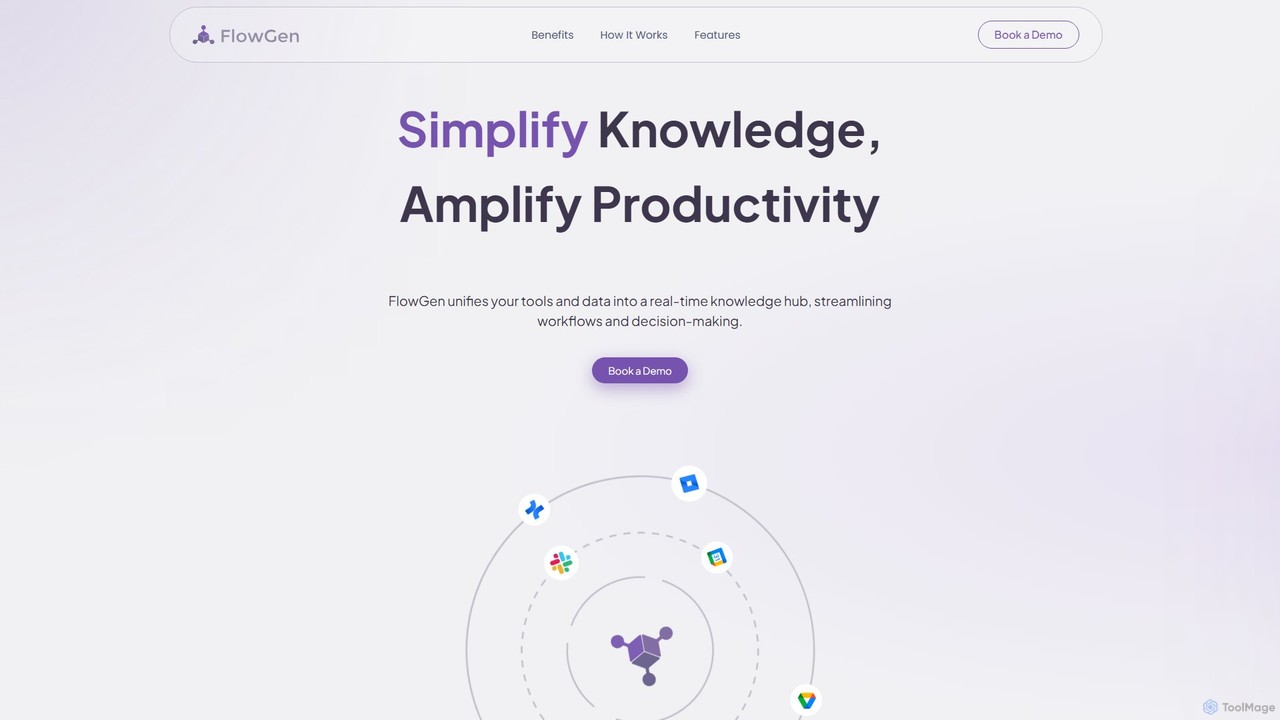
FlowGen is an AI-powered knowledge hub that unifies your company's tools and data into a single, real-time platform. It breaks down information silos by integrating with various apps, allowing teams to find information instantly, streamline workflows, and make faster, data-driven decisions. By providing a centralized, searchable source of truth, FlowGen amplifies productivity and enhances collaboration across your entire organization.

Workflow Automation
Visits 7.7KFavorites 161Likes 165

About Enterprise Search

Enterprise Search tools are AI-powered solutions designed to help organizations efficiently find, retrieve, and analyze information across their vast internal data repositories. Leveraging advanced natural language processing and machine learning, these tools go beyond simple keyword matching to understand context and user intent, delivering highly relevant results from documents, emails, databases, and more. They empower employees to quickly access critical knowledge, fostering better decision-making and boosting overall productivity.

Core Features

  • Semantic Search: Understands the meaning and context of queries, providing more relevant results than keyword matching.
  • Federated Search: Unifies search capabilities across disparate internal data sources, including cloud and on-premise systems.
  • Intelligent Document Understanding: Extracts entities, topics, and relationships from unstructured text within documents.
  • Personalized Results: Delivers tailored search outcomes based on individual user roles, permissions, and past interactions.
  • Knowledge Graph Integration: Connects related pieces of information to provide deeper insights and comprehensive answers.

Use Cases

Enterprise Search is crucial for large organizations managing vast amounts of internal data. It supports legal teams needing to quickly find specific clauses in contracts, R&D departments searching for relevant research papers across internal databases, and customer support agents needing instant access to product manuals or past issue resolutions. These tools streamline information retrieval, reducing time spent searching and improving operational efficiency.

How to Choose

When selecting an Enterprise Search solution, consider its integration capabilities with existing data sources, the accuracy and relevance of its search results, scalability to handle growing data volumes, and robust security features to protect sensitive information. Evaluate its natural language processing capabilities and ease of use for end-users, along with vendor support and pricing models.

Enterprise Search use cases

1

Accelerating Legal Discovery

Legal teams use Enterprise Search to rapidly locate specific documents, contracts, and communications relevant to a case, drastically reducing manual review time and ensuring comprehensive compliance. By leveraging semantic understanding, the tool can identify key clauses and related evidence across vast archives, allowing legal professionals to build stronger cases more efficiently.

2

Enhancing Customer Support Efficiency

Customer service agents leverage Enterprise Search to instantly find answers in knowledge bases, product manuals, and past support tickets, enabling faster and more accurate resolution of customer inquiries. This reduces average handling time (AHT) and improves customer satisfaction by providing agents with immediate access to the most relevant information, even across disparate systems.

3

Streamlining R&D and Innovation

Research and development teams utilize Enterprise Search to discover internal research reports, patents, and technical specifications, fostering innovation by connecting disparate knowledge and avoiding redundant efforts. Engineers can quickly find relevant design documents or test results from previous projects, accelerating product development cycles and reducing time-to-market for new solutions.

4

Improving Employee Onboarding

New hires can quickly find company policies, training materials, and team-specific documentation using Enterprise Search, accelerating their integration and productivity within the organization. Instead of relying solely on colleagues or lengthy manuals, new employees can self-serve information, reducing the burden on existing staff and ensuring a smoother onboarding experience.

5

Optimizing Sales and Marketing Intelligence

Sales and marketing teams employ Enterprise Search to access competitor analysis, market research, and customer feedback from internal reports, informing strategic decisions and campaign development. This enables them to quickly identify market trends, understand customer pain points, and tailor their strategies for maximum impact, leading to improved conversion rates and revenue growth.

6

Facilitating Compliance and Governance

Compliance officers use Enterprise Search to monitor and audit internal communications and documents for regulatory adherence, ensuring data governance and mitigating risks across the enterprise. The ability to quickly retrieve specific data points or communication threads is vital for responding to audits, legal holds, and internal investigations, significantly reducing compliance-related overhead.

Enterprise Search FAQ

What are Enterprise Search tools?

Enterprise Search tools are AI-powered platforms that enable organizations to efficiently search, retrieve, and analyze information across their internal data sources like documents, emails, and databases. They use natural language processing (NLP) and machine learning to understand context and deliver highly relevant results, unlike traditional keyword-based search. Their primary goal is to improve employee productivity and decision-making by making internal knowledge easily accessible.

How do Enterprise Search tools differ from general web search engines?

Enterprise Search tools are specifically designed for an organization's private, internal data, which is often unstructured, diverse, and sensitive. In contrast, general web search engines index public internet content. Enterprise solutions handle specific access permissions, integrate with proprietary internal systems, and focus on deep semantic understanding of internal knowledge, ensuring security and relevance within a corporate context.

What are the key benefits of implementing Enterprise Search?

Implementing Enterprise Search significantly improves employee productivity by reducing time spent searching for information, enhances decision-making through faster access to critical insights, and fosters innovation by connecting previously siloed knowledge. It also aids in compliance and governance by making internal data auditable and easily retrievable for legal or regulatory purposes, ultimately leading to operational efficiency and competitive advantage.

What features should I look for in an Enterprise Search solution?

When evaluating an Enterprise Search solution, prioritize robust semantic search capabilities for contextual understanding, federated search for unifying disparate data sources, and intelligent document understanding for extracting insights from unstructured text. Also crucial are personalized results based on user roles, strong security features for data protection, and seamless integration with your existing enterprise systems. Consider scalability, an intuitive user interface, and comprehensive vendor support.

Who typically uses Enterprise Search within an organization?

Enterprise Search is used by virtually all departments within an organization. Legal teams use it for discovery, R&D for research, customer support for quick answers, HR for policies, and sales/marketing for intelligence. Essentially, any employee needing to quickly access internal information, regardless of their role or department, benefits from these tools to enhance their daily workflows and decision-making processes.