DataGalaxy
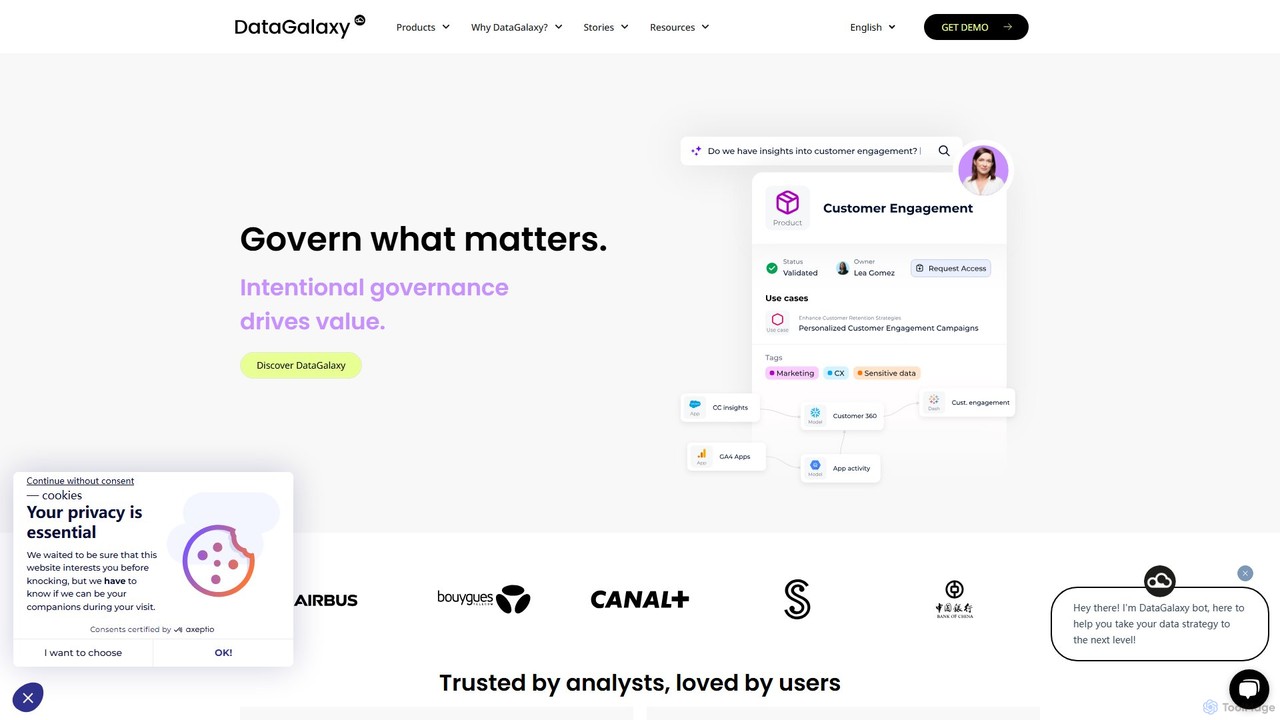
DataGalaxy is a comprehensive Value Governance Platform designed to bridge the gap between data assets and business outcomes. …
DataGalaxy is a comprehensive Value Governance Platform designed to bridge the gap between data assets and business outcomes. It empowers all data users, from executives to analysts, with an automated data catalog, AI-driven governance, and a data product marketplace. By centralizing data strategy, tracking value, and ensuring quality, DataGalaxy helps organizations transform their data into governed, reusable, and scalable products, driving informed decisions and maximizing data ROI.
Secoda
Secoda is an AI-powered data platform that unifies data discovery, lineage, cataloging, and governance. It helps teams find, …
Secoda is an AI-powered data platform that unifies data discovery, lineage, cataloging, and governance. It helps teams find, understand, and trust their data through an intelligent, centralized hub, enabling self-service analytics and scalable AI infrastructure.
About Governance
AI Governance tools are specialized platforms designed to manage the risks, compliance, and ethical considerations of artificial intelligence systems. These tools provide a framework for monitoring model performance, auditing for bias, and ensuring adherence to regulations like the EU AI Act and GDPR. They are essential for organizations to build trust, maintain control over their AI assets, and implement responsible AI practices at scale. By centralizing oversight, these platforms help bridge the gap between AI development and business risk management.
Core Features
- Risk & Compliance Management: Automates monitoring and reporting to ensure AI models comply with internal policies and external regulations.
- Bias & Fairness Auditing: Detects and helps mitigate discriminatory biases in training data and model predictions.
- Model Explainability (XAI): Provides transparent insights into how AI models arrive at their decisions, making them less of a 'black box'.
- Model Lifecycle Inventory: Creates a centralized registry to track all AI models from development through deployment to retirement.
- Access Control & Security: Manages permissions and secures AI models and associated data against unauthorized use.
Use Cases
AI Governance tools are critical in highly regulated industries such as finance, healthcare, and insurance, where model decisions have significant consequences. They are used by compliance officers, data scientists, and IT leaders to ensure that credit scoring, medical diagnostic, and hiring algorithms are fair, transparent, and accountable. These platforms are also vital for large enterprises seeking to standardize AI practices across multiple departments.
How to Choose
When selecting an AI Governance tool, consider its ability to integrate with your existing MLOps pipeline and data sources. Evaluate the scope of its regulatory coverage and whether it supports frameworks relevant to your industry. Assess the sophistication of its bias detection and explainability features. Finally, consider the platform's reporting capabilities and ease of use for non-technical stakeholders like legal and compliance teams.

GovernanceUse Cases
Ensure Regulatory Compliance in Finance
A financial institution uses an AI Governance platform to continuously monitor its AI-powered credit scoring model. The tool automatically tests for biases related to age, gender, or ethnicity, ensuring compliance with fair lending laws. It generates detailed audit trail reports that can be submitted to regulators, demonstrating due diligence and reducing the risk of costly fines. This proactive approach helps the bank maintain trust with both customers and regulatory bodies.
Audit Hiring Algorithms for Fairness
An HR department implements an AI Governance tool to audit its automated resume screening software. The platform analyzes historical hiring data and model predictions to identify patterns that may disadvantage candidates from certain backgrounds. It provides visualizations and metrics on fairness, allowing the HR team to adjust the algorithm's parameters to promote equitable hiring practices. This ensures the company attracts diverse talent and avoids potential legal challenges related to discrimination.
Validate Clinical AI Models in Healthcare
A hospital uses a governance platform to manage its AI model for detecting diseases from medical images. The tool tracks the model's version, the data it was trained on (data provenance), and its performance over time. It provides explainability features that help clinicians understand why the model made a particular diagnosis, building trust and aiding in final decision-making. This rigorous oversight is crucial for patient safety and for meeting regulatory requirements like HIPAA.
Centralize AI Model Inventory for Enterprises
A large corporation with multiple departments developing AI solutions uses a governance tool to create a single, centralized model inventory. This 'model catalog' provides visibility into all AI assets across the company, detailing their purpose, owners, risk level, and performance. It allows the central IT and risk teams to enforce consistent development standards, security policies, and ethical guidelines, preventing the proliferation of unmanaged 'shadow AI' and ensuring a unified approach to AI adoption.
Achieve Transparency in Public Sector AI
A city government deploys an AI system to optimize traffic flow. To foster public trust, they use an AI Governance platform to create a public-facing dashboard. This dashboard explains in simple terms how the AI makes decisions, what data it uses, and its performance metrics. The platform also logs all changes and decisions, creating an immutable record for accountability. This transparency helps demystify the AI for citizens and demonstrates a commitment to responsible governance.
Automate Risk Assessments in MLOps Pipelines
An AI development team integrates a governance tool directly into their CI/CD pipeline. Before a new model version is deployed, the tool automatically runs a series of checks. It scans for security vulnerabilities, tests for performance degradation, audits for new biases, and ensures all required documentation is complete. If any check fails, the deployment is automatically halted, and the team is notified. This automates a critical part of the risk management process, allowing teams to innovate quickly without sacrificing safety and compliance.