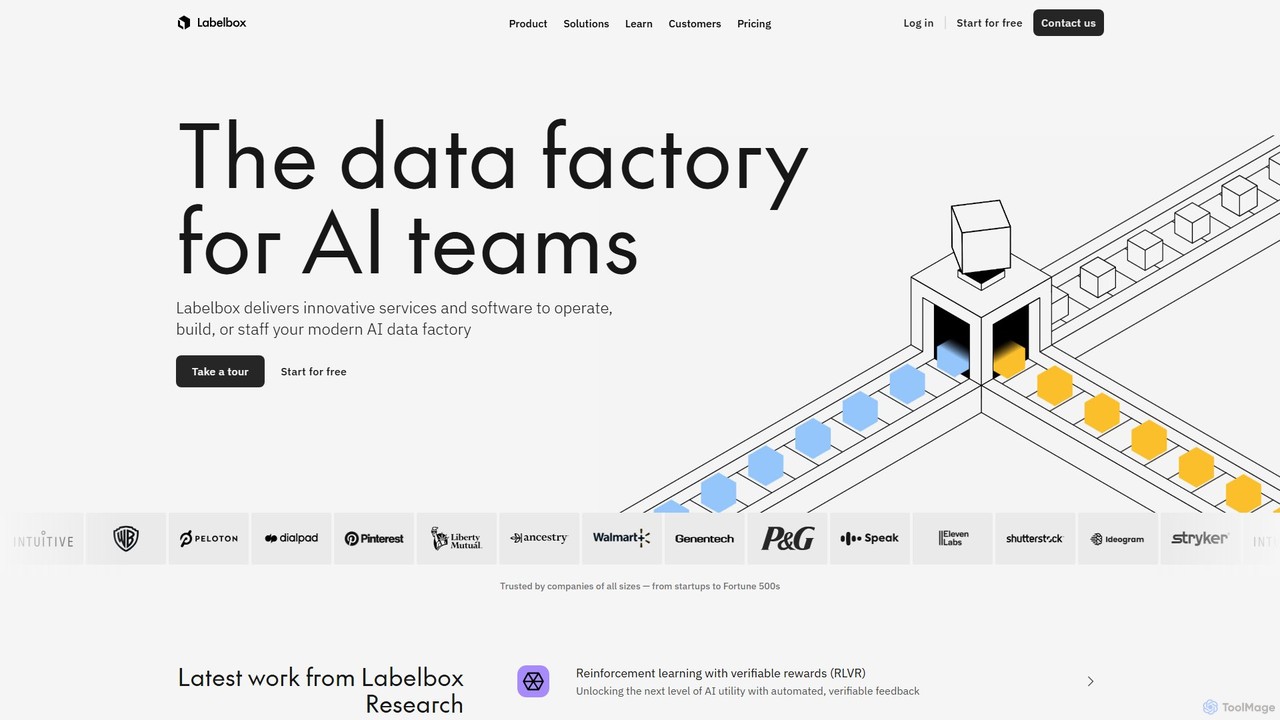
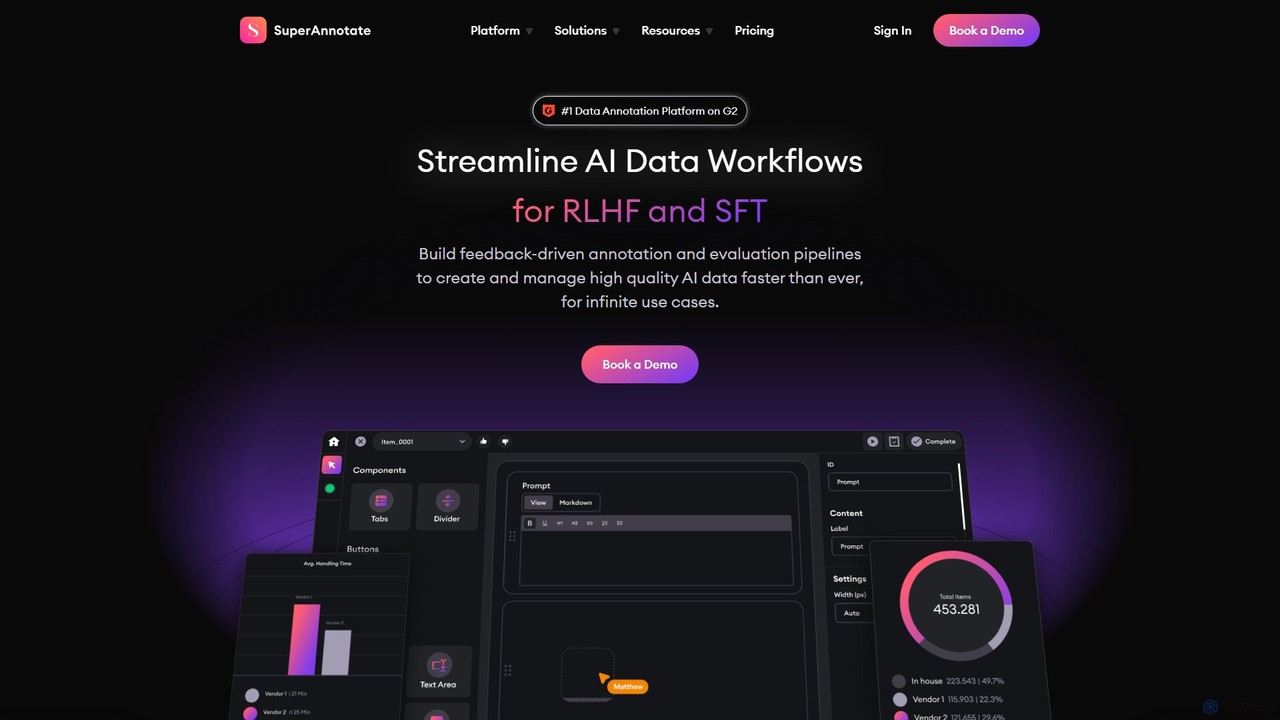
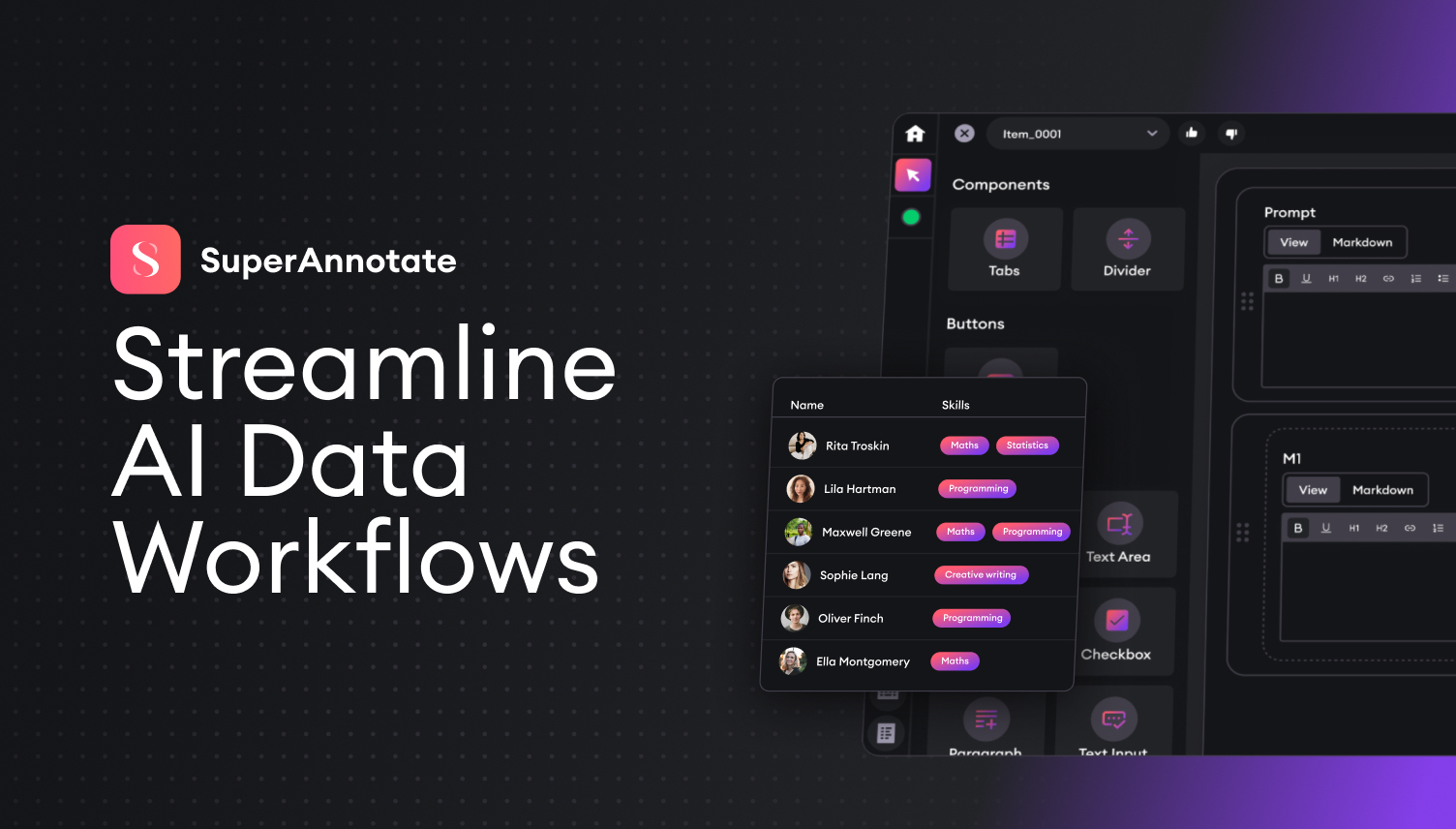
AI Labeling tools are specialized platforms for annotating raw data, such as images, text, and audio, to create high-quality training datasets for machine learning models. These tools provide a suite of features like bounding boxes, semantic segmentation, and text classification, often enhanced with AI assistance to accelerate the process. They are fundamental for developing accurate models in fields like computer vision and natural language processing. By streamlining the labor-intensive labeling process, these platforms improve data consistency, manage annotation workflows, and enable effective team collaboration.
Core Features
- Multi-Format Annotation: Supports various data types including images, video, text, audio, and 3D point clouds with specialized interfaces.
- AI-Assisted Labeling: Utilizes pre-labeling with existing models or interactive segmentation to significantly speed up manual annotation tasks.
- Workflow & Team Management: Provides tools for assigning tasks, reviewing annotations, tracking progress, and managing annotator performance.
- Quality Assurance Tools: Includes consensus mechanisms, reviewer roles, and automated error detection to ensure high data accuracy and consistency.
- Data Export & Integration: Offers flexible export options in formats compatible with major ML frameworks like COCO, YOLO, and Pascal VOC.
Use Cases
AI Labeling tools are crucial for data scientists, machine learning engineers, and specialized annotation teams. They are widely used in industries such as autonomous driving for scene perception, healthcare for medical image analysis, retail for product recognition, and finance for document understanding. Any project involving supervised machine learning relies on precisely labeled data produced by these tools.
How to Choose
When selecting an AI Labeling tool, consider the specific data types you work with (e.g., DICOM, LiDAR). Evaluate the complexity of annotation required, from simple bounding boxes to intricate polygons. For team projects, assess the collaboration and quality assurance features. Finally, consider the tool's scalability for large datasets and its ability to integrate with your existing MLOps pipeline.