Data Best in category 2 results Reporting AI Tool

Popular AI tools in the Reporting field of Data include ChartGen、GoX, etc., helping you quickly improve efficiency.

ChartGen

ChartGen

ChartGen is an AI-powered chart generator that transforms raw data into stunning, professional visualizations in seconds. Users simply …

101.4K
GoX

GoX

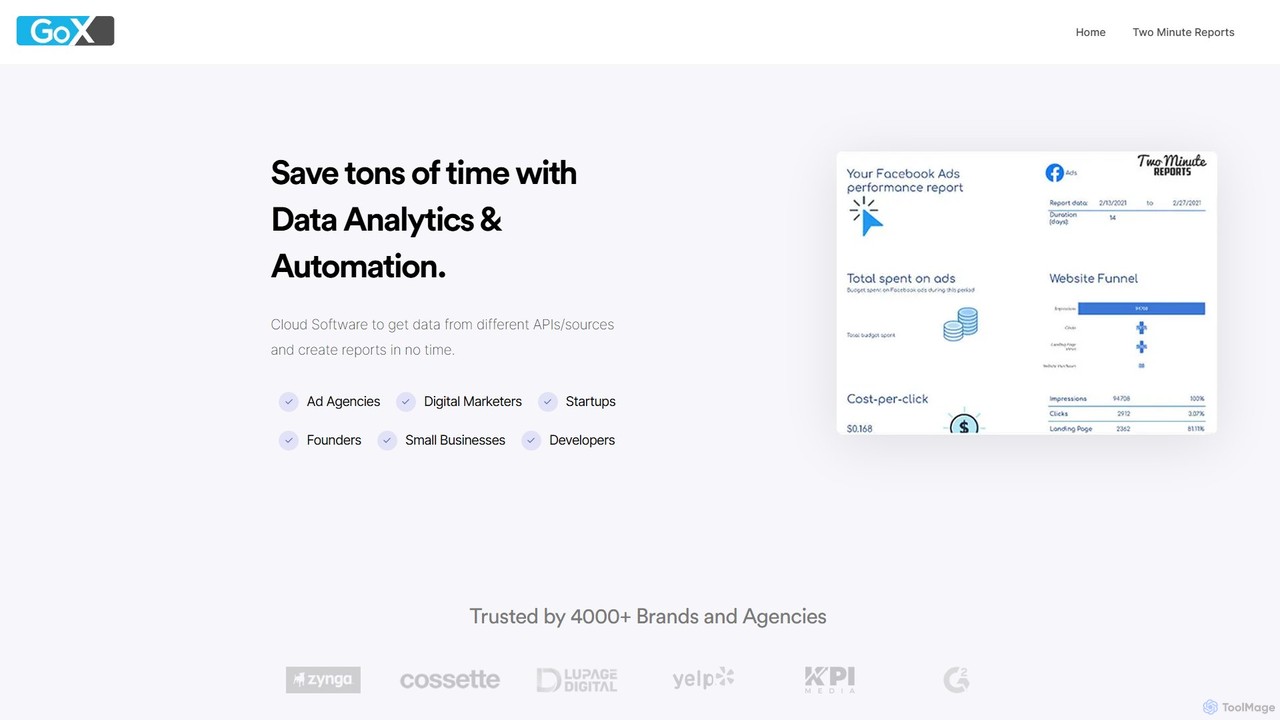
GoX is a data automation and analytics platform, delivered through its flagship product 'Two Minute Reports'. It helps …

11.2K

About Reporting

AI Reporting tools are a category of AI-powered solutions designed to automate the collection, analysis, and visualization of data to generate insightful reports. These tools leverage advanced machine learning algorithms to process vast datasets, identify complex patterns, and present findings in an easily digestible format, moving beyond static data presentation. They empower businesses to gain actionable intelligence, monitor performance metrics, and make data-driven decisions with unprecedented efficiency and accuracy, transforming raw data into strategic assets and fostering a culture of continuous improvement.

Core Features

  • Automated Data Integration: Seamlessly connect and gather data from diverse sources like databases, APIs, cloud platforms, and spreadsheets, ensuring comprehensive data coverage.
  • Intelligent Data Analysis: Utilize AI and machine learning to uncover hidden trends, detect anomalies, and identify complex correlations within vast and disparate datasets.
  • Customizable Dashboards & Visualizations: Generate interactive reports, dynamic dashboards, and a variety of charts and graphs tailored to specific business needs, user roles, and presentation preferences.
  • Predictive Analytics: Forecast future outcomes, anticipate market shifts, and identify potential risks or opportunities based on historical data patterns and advanced statistical models.
  • Natural Language Generation (NLG): Automatically convert complex data insights and statistical findings into clear, concise, and human-readable narratives and summaries, simplifying comprehension for all stakeholders.

Applicable Scenarios

AI Reporting tools are indispensable for roles across various industries seeking to transform raw data into actionable insights. Marketing teams use them to analyze campaign performance, optimize ad spend, and understand customer journeys. Finance departments rely on them for real-time financial health monitoring, budget variance analysis, and compliance reporting. Operations managers employ these tools to track efficiency, identify supply chain bottlenecks, and optimize resource allocation. They provide critical insights for strategic planning, operational improvements, and competitive advantage.

How to Choose

When selecting an AI Reporting tool, consider its compatibility with your existing data infrastructure and the breadth of its data integration capabilities, ensuring it can connect to all your critical sources. Evaluate the flexibility of its visualization options and the depth of its AI-driven analytics, such as predictive modeling, anomaly detection, or natural language generation, to match your specific analytical needs. Also, assess its scalability to handle growing data volumes and increasing user demands, alongside robust security features and compliance certifications to protect sensitive information and meet regulatory requirements.

ReportingUse Cases

1

Automated Sales Performance Reporting

Sales managers use AI reporting tools to automatically aggregate sales data from CRM systems, identify top performers, analyze regional trends, and generate weekly performance summaries. This saves hours of manual data compilation, allowing for quicker strategic adjustments, more effective coaching, and proactive identification of sales opportunities or challenges.

2

Marketing Campaign ROI Analysis

Marketing teams leverage AI reporting tools to track campaign metrics across multiple channels, automatically calculate return on investment (ROI), pinpoint underperforming ads, and generate comprehensive reports. These insights inform future budget allocation, optimize campaign strategies, and ensure maximum effectiveness of marketing spend.

3

Financial Health Dashboard Creation

Finance departments utilize AI reporting to consolidate financial data from ERP systems, accounting software, and other sources. They create real-time dashboards for cash flow, profit & loss, and balance sheets, enabling proactive financial monitoring, budget variance analysis, and streamlined compliance reporting, crucial for sound fiscal management.

4

Customer Service Trend Identification

Customer support leads employ AI reporting to analyze ticket volumes, resolution times, common issue categories, and sentiment from customer interactions. This generates reports that highlight service bottlenecks, identify areas for agent training or product improvement, and ultimately enhance overall customer satisfaction by addressing root causes efficiently.

5

Operational Efficiency Monitoring

Operations managers use AI reporting to track production metrics, supply chain performance, and resource utilization across various departments. The tools automatically flag inefficiencies or potential delays, providing real-time insights for process optimization, predictive maintenance scheduling, and strategic resource allocation to maintain smooth and cost-effective operations.

6

Personalized Executive Summaries

C-suite executives receive AI-generated personalized daily or weekly reports that distill key performance indicators, market trends, and strategic insights from vast amounts of enterprise data. This enables rapid decision-making without sifting through raw data, providing a concise, high-level overview tailored to their specific strategic focus and information needs.

ReportingFrequently Asked Questions