ToolMage
Sign in

Best 4 Text Analysis AI tools for Data

Popular Text Analysis AI tools in Data include Aylien, Blix, Fathom Lexicon, and Painboard, helping you work more efficiently.

Blix

Blix

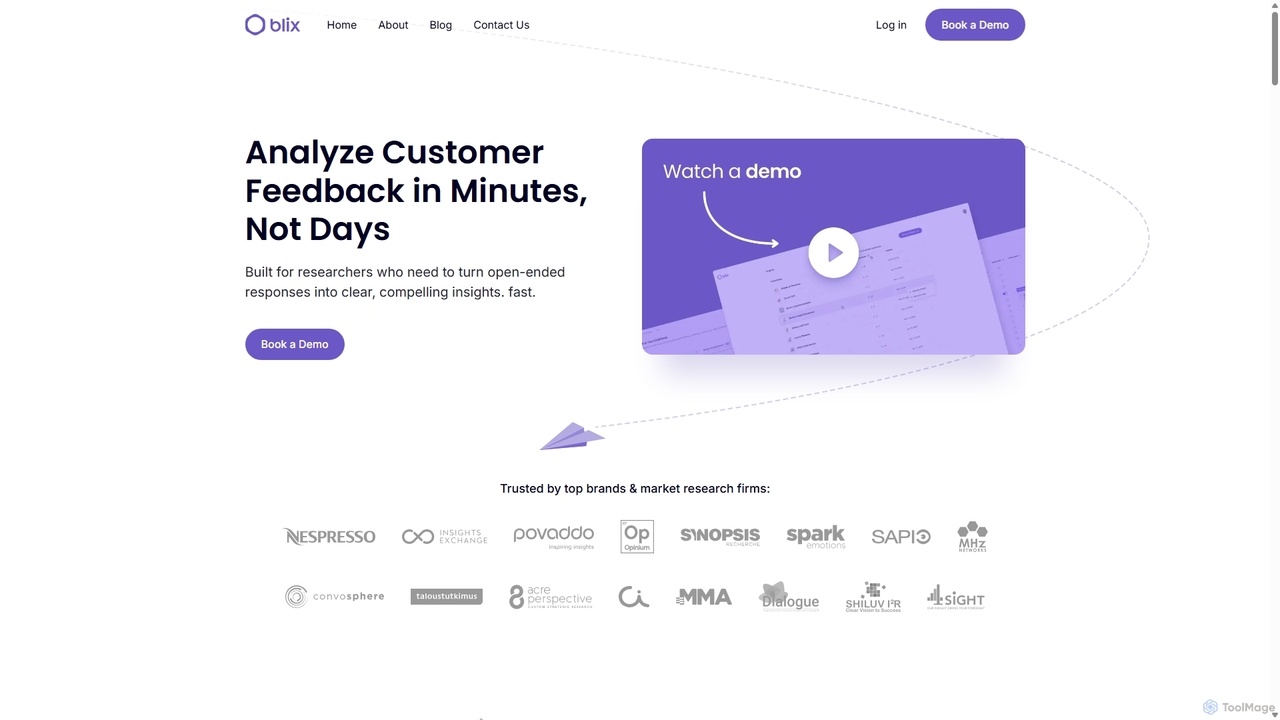
Blix is an AI-powered text analysis platform designed to transform qualitative data into actionable insights. It automates the analysis of customer feedback, survey responses, online reviews, and support tickets, using thematic and sentiment analysis to uncover key trends and motivations, saving significant time and manual effort.

Customer Support
Visits 9.8KFavorites 134Likes 115

Fathom Lexicon
Paid

Fathom Lexicon

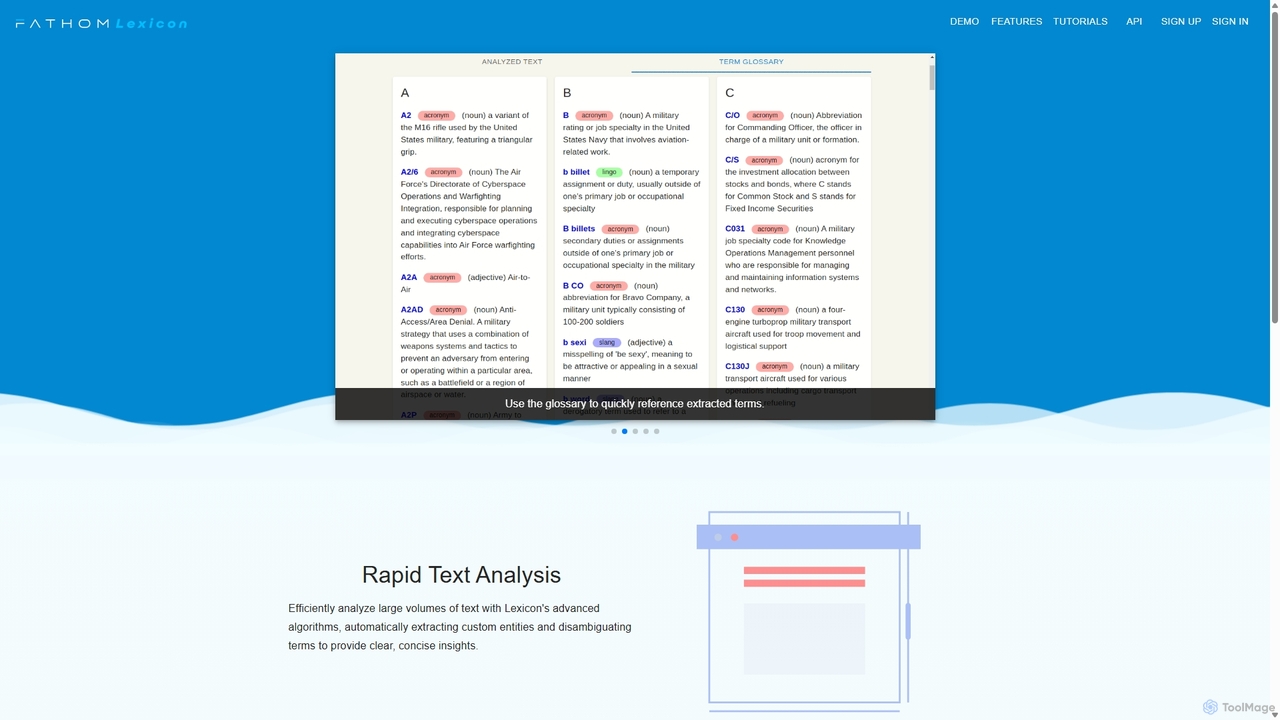
Fathom Lexicon is an AI-powered text analysis platform that automatically finds, defines, and organizes organization-specific nomenclature. It extracts jargon, acronyms, and lingo from large volumes of text to create a centralized, searchable glossary, improving communication and knowledge management.

Communication
Visits 4.1KFavorites 136Likes 111
Aylien
Paid

Aylien

Aylien is an advanced AI-powered Text Analysis and News API platform, designed for developers and enterprises. It provides a suite of NLP tools to extract insights from text data, including sentiment analysis, entity extraction, and real-time news aggregation. Now part of the Quantexa Decision Intelligence Platform.

Market Intelligence
Visits 61.2KFavorites 97Likes 102
Painboard
Freemium

Painboard

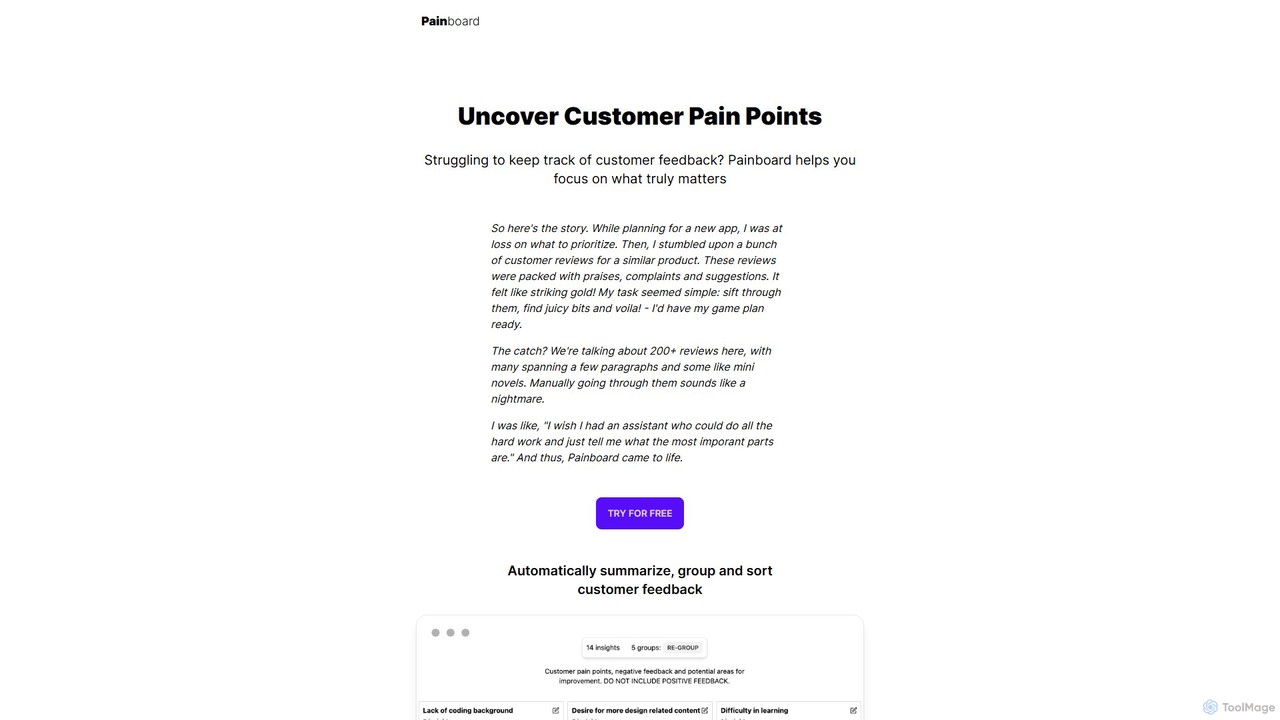
Painboard is an AI-powered tool designed to help businesses uncover customer pain points by automatically analyzing feedback. It summarizes, groups, and sorts reviews, support tickets, and surveys to provide actionable insights. This helps product managers, marketers, and founders prioritize features, refine messaging, and build a user-centric roadmap without manually sifting through mountains of data.

Customer Support
Visits 4KFavorites 138Likes 137

About Text Analysis

Text Analysis tools are AI-powered solutions designed to extract meaningful insights and patterns from unstructured text data. Leveraging advanced natural language processing (NLP) and machine learning, these tools can automatically identify, categorize, and interpret textual information at scale. They transform vast amounts of qualitative data into actionable intelligence, enabling better decision-making across various domains.

Core Features

  • Sentiment Analysis: Automatically determines the emotional tone (positive, negative, neutral) of text.
  • Entity Recognition: Identifies and classifies key entities like names, organizations, locations, and dates within text.
  • Topic Modeling: Discovers abstract topics present in a collection of documents.
  • Keyword Extraction: Automatically pulls out the most important words and phrases from text.
  • Text Summarization: Generates concise summaries of longer texts while retaining key information.

Applicable Scenarios

Text Analysis tools are invaluable for businesses and researchers dealing with large volumes of textual data. They are widely used in market research to understand consumer opinions, in customer service to categorize feedback, and in legal firms to review contracts. These tools streamline the process of deriving insights from qualitative data, which would otherwise be time-consuming and prone to human error.

How to Choose

When selecting a Text Analysis tool, consider its accuracy and robustness across different text types and languages. Evaluate its specific NLP capabilities, such as sentiment analysis granularity or entity recognition precision, to match your project needs. Look for integration options with existing data platforms and assess its scalability to handle growing data volumes. Finally, review customization options for domain-specific terminology and model training.

Featured tool rankings

Text Analysis use cases

1

Analyze Customer Feedback for Product Improvement

A product manager uses text analysis tools to process thousands of customer reviews, support tickets, and social media comments. The tool automatically identifies recurring themes, common pain points, and sentiment trends related to specific features. This enables the manager to prioritize product improvements based on quantifiable customer needs and satisfaction levels, leading to more impactful development cycles.

2

Monitor Brand Reputation Across Social Media

A marketing team employs text analysis to continuously scan social media platforms, news articles, and forums for mentions of their brand and competitors. The tool tracks sentiment, identifies key influencers, and flags emerging crises or positive trends. This real-time monitoring allows the team to quickly respond to public perception shifts, manage brand reputation proactively, and identify opportunities for engagement, protecting brand value.

3

Automate Legal Document Review and e-Discovery

Legal professionals utilize text analysis tools to efficiently review vast quantities of legal documents, contracts, and litigation materials. The tools can automatically identify relevant clauses, extract key entities (e.g., parties, dates, obligations), and flag inconsistencies or high-risk areas. This significantly reduces the manual effort and time required for e-discovery and contract analysis, improving accuracy and compliance while cutting operational costs.

4

Extract Key Information from Research Papers

Academic researchers and data scientists leverage text analysis to quickly process vast libraries of scientific papers, patents, and technical reports. The tools can extract key findings, methodologies, author affiliations, and cited references. This accelerates literature reviews, helps identify emerging research trends, and supports the synthesis of information across diverse sources, significantly boosting research productivity and knowledge discovery.

5

Categorize and Route Customer Support Tickets

Customer service departments use text analysis to automatically categorize incoming support tickets based on their content, urgency, and topic. The tool can identify keywords, sentiment, and intent to route tickets to the most appropriate agent or department. This automation reduces response times, improves first-contact resolution rates, and ensures that critical issues are addressed promptly, enhancing overall customer satisfaction and operational efficiency.

6

Identify Market Trends from News and Publications

Market analysts and business strategists employ text analysis to scan vast amounts of news articles, industry reports, and financial publications. The tools identify emerging trends, shifts in market sentiment, competitive activities, and potential risks or opportunities. By processing this unstructured data, businesses gain a comprehensive understanding of the market landscape, enabling them to make informed strategic decisions and stay ahead of competitors.

Text Analysis FAQ

What are Text Analysis tools?

Text Analysis tools are AI-powered software that process and interpret human language from various text sources. They leverage natural language processing (NLP) to extract meaningful insights, patterns, and structured data from unstructured text. Key capabilities include identifying sentiment, extracting entities, summarizing content, and categorizing documents, transforming raw text into actionable intelligence for businesses and researchers.

How does AI enhance Text Analysis beyond traditional methods?

AI significantly enhances text analysis by moving beyond rule-based systems to leverage machine learning and deep learning. Traditional methods often rely on predefined dictionaries and patterns, limiting their ability to handle nuances, sarcasm, or evolving language. AI-powered tools, however, can learn from vast datasets, understand context, adapt to new terminology, and perform more sophisticated tasks like sentiment analysis with higher accuracy, topic modeling, and intent recognition, providing deeper and more dynamic insights.

What are the main applications of Text Analysis tools?

Text Analysis tools have diverse applications across various industries. In customer service, they categorize feedback and route support tickets. For marketing, they monitor brand sentiment and identify market trends from social media. Legal professionals use them for e-discovery and contract review. Researchers leverage them for literature reviews and data extraction from scientific papers. Additionally, they are crucial for content moderation, risk assessment, and competitive intelligence, transforming unstructured text into valuable business insights.

How to choose the right Text Analysis tool for my needs?

Choosing the right Text Analysis tool involves evaluating several factors. First, consider the specific NLP capabilities you need, such as advanced sentiment analysis, named entity recognition, or topic modeling. Second, assess its language support and accuracy for your target languages. Third, check for integration capabilities with your existing data sources and platforms. Fourth, evaluate its scalability to handle your current and future data volumes. Finally, consider customization options for domain-specific terminology and the vendor's support and pricing model to ensure it aligns with your budget and technical requirements.

What is the difference between Text Analysis and general Data Analysis?

Text Analysis is a specialized subset of Data Analysis, focusing specifically on unstructured textual data. While general Data Analysis deals with various data types (numerical, categorical, etc.) to find patterns and insights, Text Analysis employs natural language processing (NLP) techniques to extract meaning from human language. It addresses challenges unique to text, such as ambiguity, context, and sentiment, transforming qualitative information into structured data for broader analytical purposes. Thus, Text Analysis provides deeper insights into qualitative aspects that general data analysis might miss.