Developer Tools Best in category 2 results Code Repository AI Tool

Popular AI tools in the Code Repository field of Developer Tools include Papers with Code、Microsoft Open Source, etc., helping you quickly improve efficiency.

Free
Papers with Code

Papers with Code

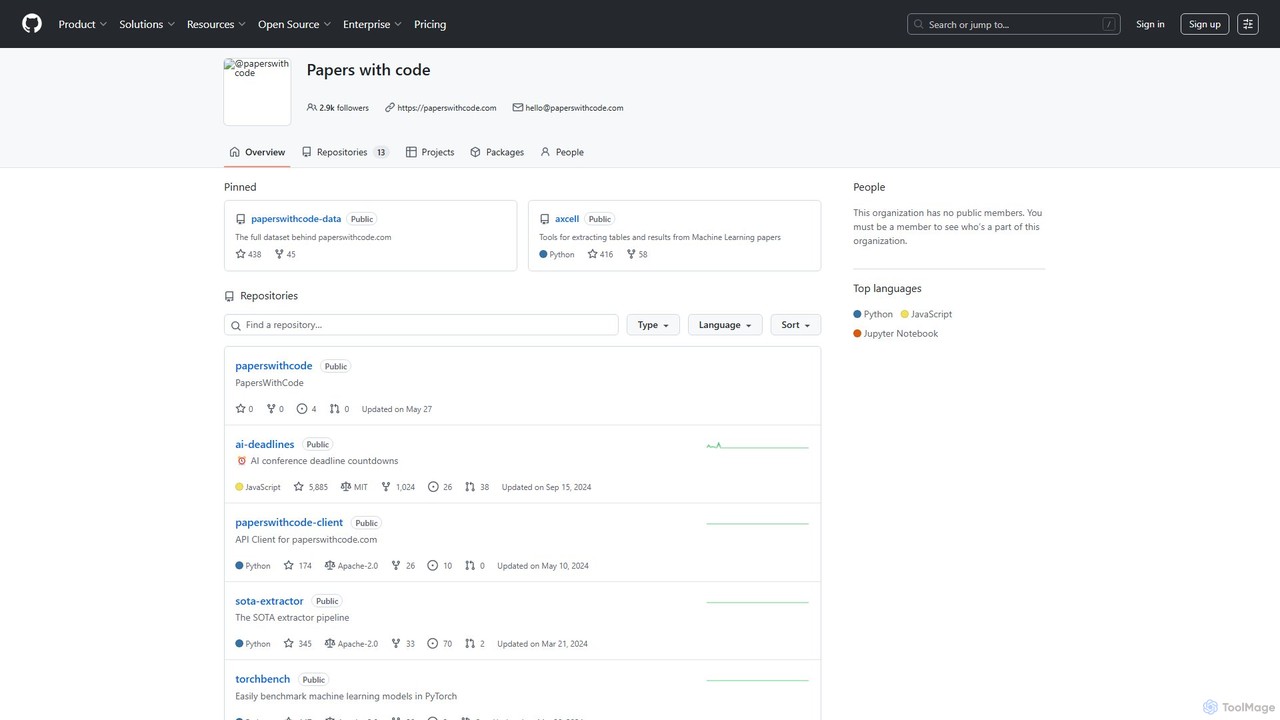
Papers with Code is a free, open resource for machine learning researchers and developers. It connects scientific papers …

636.1M
Free
Microsoft Open Source

Microsoft Open Source

Microsoft's central hub for discovering, using, and contributing to a vast portfolio of open-source projects. It offers developers …

213.5K

About Code Repository

Code Repository tools are essential platforms for developers to store, manage, and collaborate on source code and related assets, forming the backbone of modern software development. These systems leverage robust version control to track changes, facilitate team collaboration, and maintain a comprehensive historical record. They provide a secure and organized environment, increasingly integrating with AI for enhanced code analysis and intelligent search, enabling efficient project management and code integrity.

Core Features

  • Version Control System (VCS): Tracks every change to the codebase, allowing developers to revert to previous versions, branch for new features, and merge contributions seamlessly.
  • Collaboration Tools: Enables multiple developers to work on the same project simultaneously, with features like pull requests, code reviews, and issue tracking.
  • Access Control & Permissions: Manages who can view, modify, or administer specific parts of the repository, ensuring security and compliance.
  • Integration Capabilities: Connects with CI/CD pipelines, project management tools, and IDEs to streamline development workflows.
  • Code Search & Navigation: Provides powerful search functionalities and intuitive navigation to quickly find files, functions, or specific code snippets within large projects.

Applicable Scenarios

Software development teams use code repositories daily for managing their projects, from small open-source initiatives to large enterprise applications. Individual developers utilize them for personal projects and portfolio building. Educational institutions employ them for teaching version control and collaborative coding practices.

How to Choose

When selecting a code repository, consider its support for your preferred version control system (e.g., Git), collaboration features like pull requests and issue tracking, integration with your existing development ecosystem, and security measures. Scalability, pricing models (free tiers, enterprise plans), and community support are also important factors.

Code RepositoryUse Cases

1

Collaborative Software Development

A distributed team of software engineers uses a code repository to jointly develop a new web application. They create branches for new features, submit pull requests for peer review, and merge approved code into the main branch, ensuring code quality and seamless integration.

2

Open Source Project Management

An open-source community maintains a public code repository for their project. Contributors fork the repository, make changes, and submit pull requests, allowing maintainers to review, discuss, and integrate contributions from around the world, fostering community engagement.

3

Version Control for Data Science Projects

Data scientists use a code repository to manage their Jupyter notebooks, Python scripts, and data processing pipelines. This allows them to track changes to their analytical code, experiment with different models in separate branches, and ensure reproducibility of their research.

4

Automated CI/CD Pipeline Triggering

A DevOps team configures their code repository to automatically trigger continuous integration (CI) builds and continuous deployment (CD) pipelines whenever new code is pushed to specific branches. This ensures that code changes are continuously tested and deployed, accelerating delivery.

5

Code Review and Quality Assurance

Development leads use the code repository's pull request and commenting features to conduct thorough code reviews. They provide feedback, suggest improvements, and ensure adherence to coding standards before merging new features, significantly enhancing code quality.

6

Personal Project Portfolio Hosting

An individual developer uses a code repository to host their personal projects, showcasing their coding skills and project history to potential employers. The repository serves as a live portfolio, demonstrating their ability to use version control and deliver functional code.

Code RepositoryFrequently Asked Questions