CharmShotAI
CharmShotAI is an AI-powered image editor that transforms plain screenshots and images into visually appealing graphics with one …
CharmShotAI is an AI-powered image editor that transforms plain screenshots and images into visually appealing graphics with one click. It offers features like automatic background generation, text balancing, sensitive information redaction, and code snapshot creation, all within your browser for maximum privacy.
MyPaste
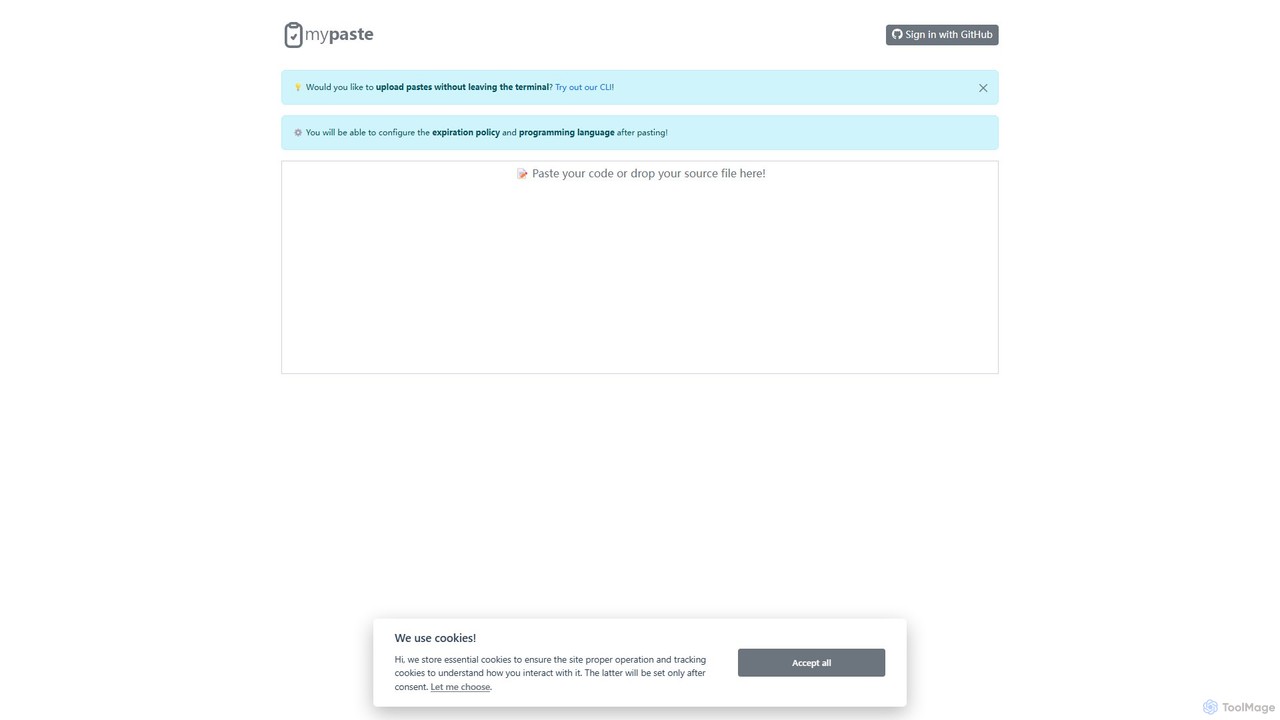
MyPaste is an AI-powered smart code pasting tool for developers. It goes beyond a traditional pastebin by offering …
MyPaste is an AI-powered smart code pasting tool for developers. It goes beyond a traditional pastebin by offering features like AI-driven language detection, code explanation, and refactoring suggestions. Share code snippets seamlessly from your browser or directly from the terminal with its powerful CLI.
About Code Sharing
Code Sharing tools are essential developer tools that facilitate the collaborative creation, review, and distribution of source code. These platforms enable developers to securely share code snippets, projects, and entire repositories with teams or the wider community. They streamline development workflows, enhance code quality through peer review, and foster knowledge exchange among programmers, making collaborative coding more efficient and transparent.
Core Features
- Version Control Integration: Seamlessly connect with Git, SVN, or other VCS for tracking changes.
- Collaborative Editing: Allow multiple users to work on the same code in real-time or asynchronously.
- Snippet Management: Store, organize, and quickly retrieve reusable code fragments.
- Access Control & Permissions: Define who can view, edit, or comment on shared code.
- Code Review & Feedback: Provide tools for commenting, suggesting changes, and approving code contributions.
Applicable Scenarios
Code sharing tools are indispensable for software development teams, open-source contributors, and educational institutions. They are used in agile development for daily stand-ups, in remote teams for synchronized coding, and by educators to distribute assignments and review student work.
How to Choose
When selecting a code sharing tool, consider its integration with existing development environments and version control systems. Evaluate the collaboration features, such as real-time editing and robust code review workflows. Security protocols, access control options, and support for various programming languages are also critical factors. Finally, assess the ease of use and community support for troubleshooting and best practices.

Code SharingUse Cases
Real-time Collaborative Feature Development
Software development teams often need to collaborate on a single feature or bug fix simultaneously. Using a code sharing tool, multiple developers can access and edit the same codebase in real-time, seeing each other's changes instantly. This facilitates pair programming, accelerates problem-solving, and ensures everyone is working on the most up-to-date version, significantly reducing merge conflicts and speeding up development cycles.
Streamlining Code Review Workflows
Before merging new code into the main branch, developers submit their changes for peer review. Code sharing platforms provide dedicated interfaces for reviewers to comment on specific lines of code, suggest improvements, and track discussions. This structured feedback loop ensures code quality, identifies potential bugs early, and promotes knowledge sharing among team members, leading to more robust and maintainable software.
Centralized Snippet & Component Library
Developers frequently use common code snippets, utility functions, or configuration files across different projects. A code sharing tool allows teams to create a centralized repository for these reusable components. Engineers can easily search, retrieve, and integrate validated snippets, ensuring consistency, reducing redundant coding efforts, and accelerating project setup for new initiatives or microservices.
Onboarding New Developers to Projects
When new developers join a team, providing them with immediate and secure access to the project's codebase is crucial. Code sharing tools enable administrators to grant granular permissions, ensuring new hires can quickly clone repositories, explore existing code, and understand project structure without compromising security. This accelerates the onboarding process, allowing new team members to contribute effectively sooner.
Facilitating Open Source Project Contributions
Open source projects thrive on community contributions from developers worldwide. Code sharing platforms serve as the primary hub for these collaborations, allowing contributors to fork repositories, submit pull requests, and engage in discussions with project maintainers. This fosters a vibrant ecosystem, enabling rapid iteration, bug fixes, and feature enhancements driven by a global network of programmers.
Conducting Technical Interview Coding Tests
Hiring managers and technical interviewers use code sharing tools to conduct live coding assessments for potential candidates. Interviewers can present coding challenges in a shared environment, observing the candidate's problem-solving approach, coding style, and debugging skills in real-time. This provides a practical and objective evaluation of technical proficiency, offering insights beyond traditional resume reviews.