ToolMage
Sign in

Best 4 Learning Platforms for Developer Tools

Popular Learning Platforms in Developer Tools include Turing College, Atheros, CodeFriends, and Theheadstarter, helping you work more efficiently.

Atheros
Paid

Atheros

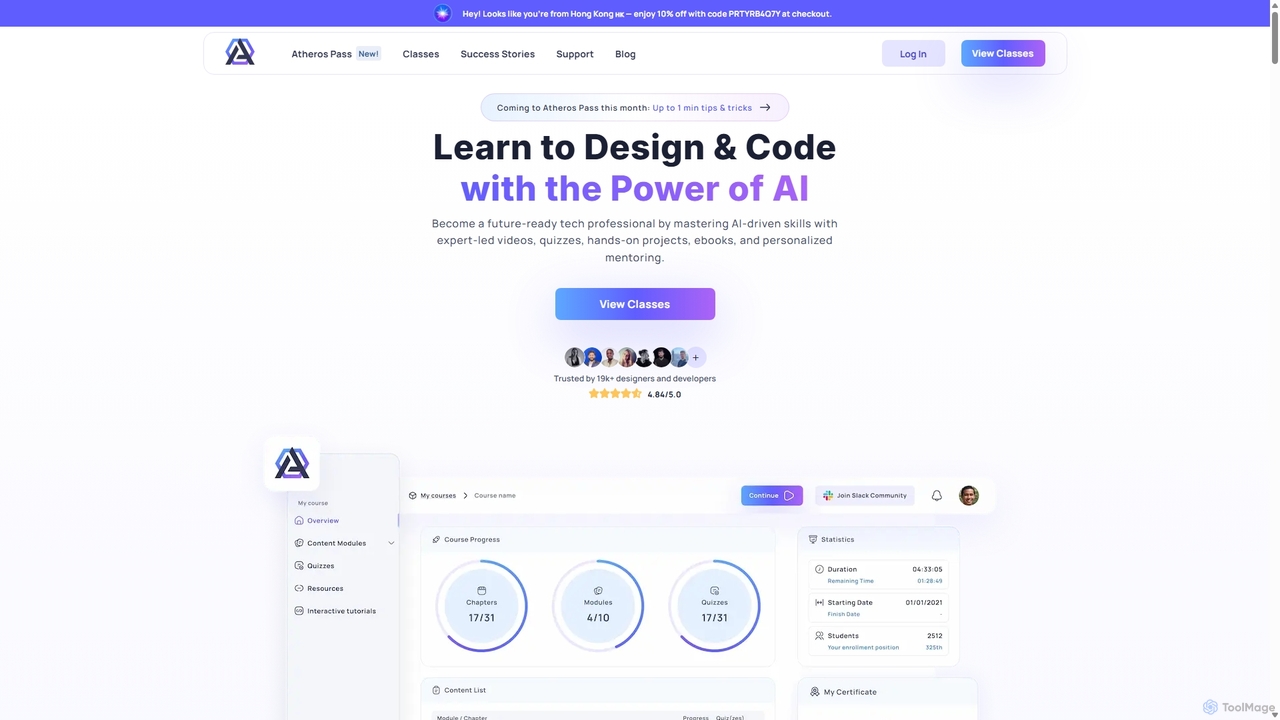
Atheros is an online educational platform designed to equip tech professionals with future-ready, AI-driven skills in design and development. Through its 'Atheros Pass' subscription, it provides unlimited access to expert-led video courses, ebooks, and hands-on projects. The curriculum focuses on practical skills like UX/UI design, frontend development (HTML, CSS, GraphQL), and no-code web design, preparing students for the AI era with community and mentor support.

Ux & Ui
Visits 26KFavorites 146Likes 158
CodeFriends
Freemium

CodeFriends

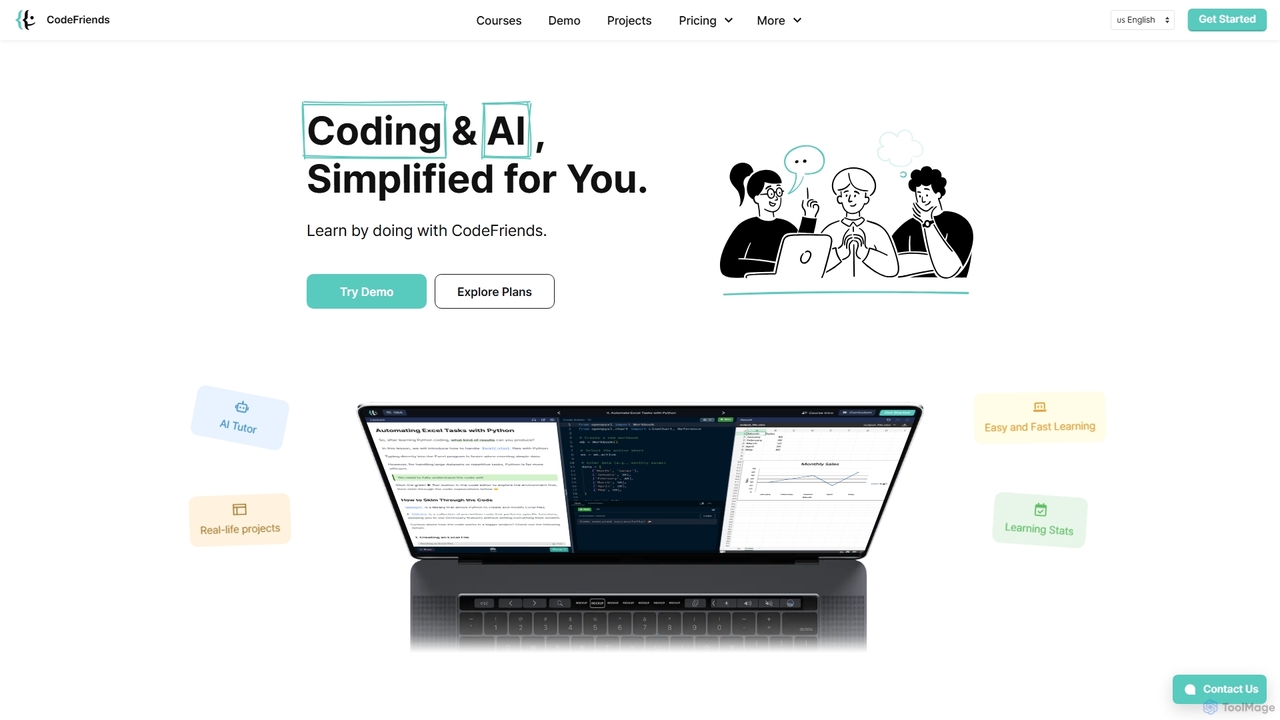
CodeFriends is an interactive, browser-based learning platform designed to teach coding and AI through hands-on projects. It features a real-time code editor, an AI tutor for instant feedback, and one-click project deployment. Suitable for beginners, professionals, and educational institutions, it simplifies the learning process without requiring any software installation.

Learning Platforms
Visits 12.8KFavorites 132Likes 110
Theheadstarter
Paid

Theheadstarter

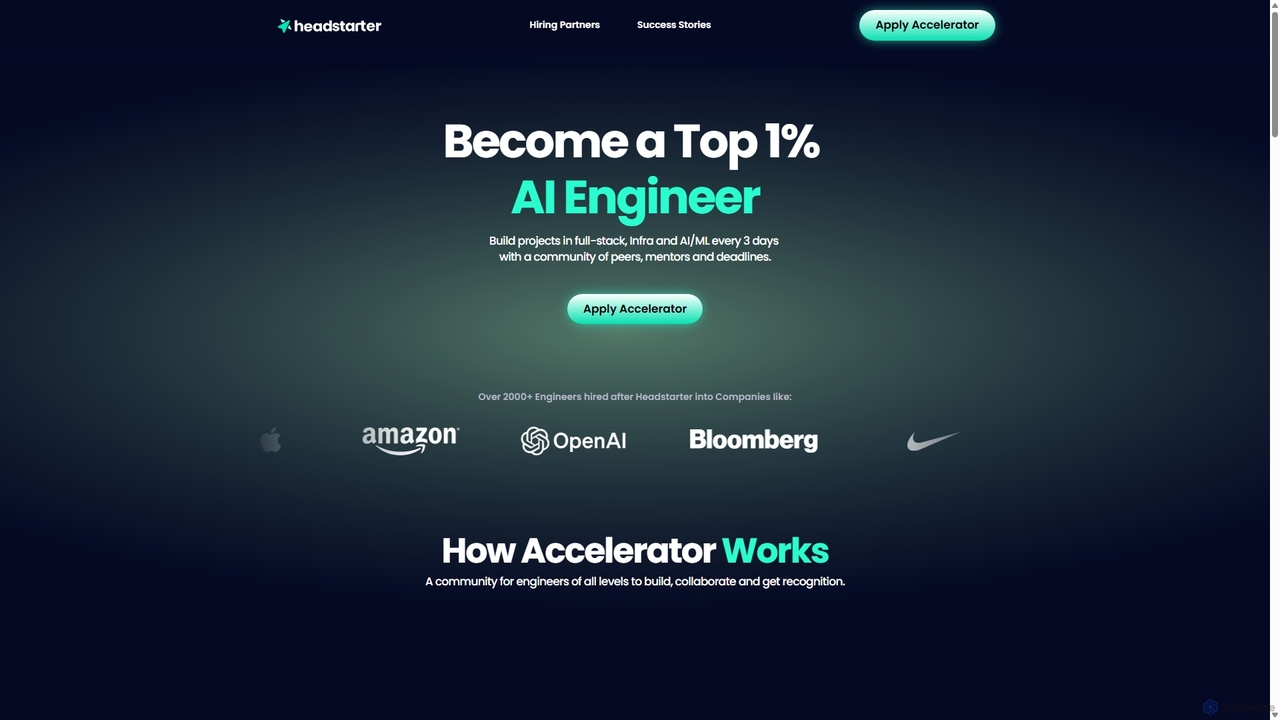
An AI engineering career accelerator designed to help software engineers become top 1% AI talent. Participants build real-world AI/ML, full-stack, and infrastructure projects in a community-driven environment with mentorship, deadlines, and direct connections to top tech companies and startups for high-paying roles.

Learning Platforms
Visits 7KFavorites 146Likes 139
Turing College
Paid

Turing College

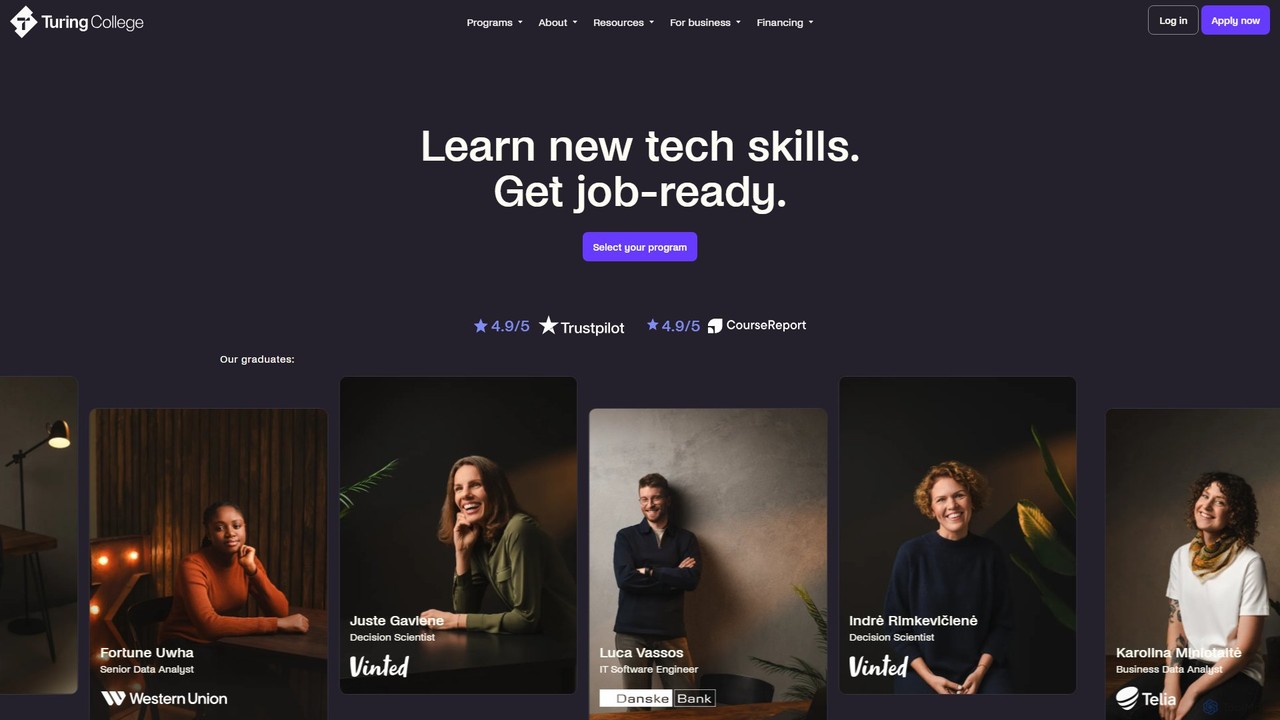
Turing College is an online educational platform for busy professionals seeking to master in-demand tech skills. It offers self-paced, project-based courses in Data Science, AI, Software Engineering, and Data Analytics. With 1-on-1 mentorship from industry experts and a focus on practical, real-world projects, Turing College prepares students for career changes or advancements, boasting a high employment rate for its graduates. The flexible learning model allows students to build a job-ready portfolio around their own schedules.

Job Training
Visits 176.5KFavorites 145Likes 164

About Learning Platforms

AI Learning Platforms are specialized developer tools designed to accelerate skill acquisition in programming and software engineering. They leverage artificial intelligence to create personalized, interactive learning experiences that go beyond traditional video courses. These platforms analyze a developer's existing knowledge to generate custom learning paths, provide real-time feedback on code, and simulate real-world development challenges. The primary value lies in making technical education more efficient, adaptive, and practical for developers at all levels.

Core Features

  • Personalized Learning Paths: AI assesses your current skills and career goals to build a customized curriculum, focusing on relevant topics and bridging knowledge gaps.
  • Interactive Coding Environments: Provides in-browser sandboxes to write and execute code, offering immediate, AI-driven feedback on syntax, logic, and performance.
  • AI-Powered Code Review: Simulates a peer review process by automatically analyzing code for quality, style, and adherence to best practices, offering constructive suggestions.
  • Intelligent Q&A and Tutoring: Employs natural language processing to understand complex technical questions and provide clear explanations, code examples, or links to relevant documentation.
  • Skill Assessment and Tracking: Continuously measures progress through quizzes, coding challenges, and project analysis, providing a clear view of acquired competencies.

Use Cases

These platforms are ideal for individual developers aiming to learn a new programming language or framework for a career change. Tech companies use them for onboarding new engineers, ensuring a consistent understanding of their tech stack and coding standards. They are also valuable for entire development teams that need to upskill collectively for a new project or technology migration.

How to Choose

When selecting an AI Learning Platform, first consider the breadth and depth of its technology coverage—does it support the languages and frameworks you need? Evaluate the quality of the AI feedback; it should be specific and actionable, not generic. Also, assess the learning formats (e.g., interactive exercises, projects, video content) and whether they match your learning style. For teams, look for features like progress tracking dashboards and collaborative learning tools.

Learning Platforms use cases

1

Onboarding Junior Developers to a Company's Tech Stack

A tech lead is responsible for integrating new junior developers into the team. Instead of relying solely on documentation and peer mentoring, the lead assigns a curated learning path on an AI Learning Platform. This path covers the company's specific tech stack (e.g., Python with Django, React, and PostgreSQL) and internal coding standards. The platform provides interactive exercises where new hires can practice building small features in a simulated environment. The AI tutor offers instant feedback on their code, correcting common mistakes and suggesting more efficient patterns, which significantly reduces the senior developers' mentoring workload and helps new hires become productive faster.

2

Learning a New Programming Language for Career Transition

A backend developer with years of experience in Java wants to transition to a full-stack role, which requires learning JavaScript and a modern framework like Vue.js. They use an AI Learning Platform that first assesses their existing programming knowledge. Based on this, the AI generates a personalized curriculum that highlights the differences between Java and JavaScript syntax and paradigms. The developer works through interactive modules, from basic DOM manipulation to complex state management with Vuex. The platform's AI code review helps them adopt JavaScript best practices and avoid common pitfalls for developers coming from an object-oriented background.

3

Mastering a Complex API for a Data Science Project

A data scientist needs to use a new, complex machine learning library like PyTorch for a computer vision project. Instead of just reading dense documentation, they use an AI learning platform. The platform provides a series of interactive notebooks where they can run code snippets and see the results immediately. An AI assistant explains complex concepts like tensor operations and neural network layers in simple terms. When the data scientist gets stuck on an error, they can ask the AI tutor for help, which analyzes their code and suggests a specific fix, accelerating their learning curve and allowing them to apply the new API to their project much faster.

4

Team-wide Upskilling for a Cloud Technology Migration

A company is migrating its infrastructure to serverless computing on AWS Lambda. The entire development team, with varying levels of cloud experience, needs to get up to speed. A manager uses an AI Learning Platform to create a team-specific learning program. The platform assesses each developer's knowledge and assigns modules on topics like Infrastructure as Code with Terraform, API Gateway, and Lambda function optimization. The manager can track the team's overall progress through a dashboard. The platform's collaborative features allow team members to discuss challenges and share solutions, fostering a collective learning environment and ensuring the migration project is successful.

5

Preparing for Technical Interviews with AI Mock Interviews

A computer science graduate is preparing for software engineering interviews at top tech companies. They use an AI Learning Platform that offers a specialized module for interview preparation. The platform provides a vast library of coding challenges categorized by topic (e.g., arrays, graphs, dynamic programming). After solving a problem, the AI not only checks for correctness but also analyzes the code's time and space complexity, suggesting optimizations. Crucially, the platform includes an AI-powered mock interview feature where the user explains their thought process aloud, and the AI provides feedback on their communication clarity and problem-solving approach, simulating a real interview scenario.

6

Continuous Learning for Senior Developers

An experienced software architect wants to stay current with emerging design patterns and language features in Go. They subscribe to an AI Learning Platform that offers advanced, project-based courses. The platform suggests a project to build a high-performance microservice using the latest concurrency patterns in Go. As the architect writes code, the AI acts as a sparring partner, challenging their design choices and suggesting alternative approaches based on modern best practices. This allows the senior developer to explore advanced topics in a practical, hands-on manner, ensuring their skills remain sharp and relevant in a rapidly evolving industry.

Learning Platforms FAQ

What are AI Learning Platforms for developers?

AI Learning Platforms are a specialized category of developer tools focused on education and skill development. Unlike traditional online courses that rely on passive video watching, these platforms use AI to create active, personalized learning experiences. They typically feature interactive coding environments, AI-powered tutors that provide real-time feedback, and customized learning paths that adapt to a user's individual pace and knowledge gaps. Their main goal is to make learning to code more efficient and effective.

How do AI Learning Platforms differ from traditional online courses like Udemy or Coursera?

The key difference lies in interactivity and personalization. Traditional platforms primarily offer pre-recorded video lectures, making learning a passive experience. AI Learning Platforms, however, create an active learning loop. You write code in an interactive environment and get immediate, AI-driven feedback, much like having a personal tutor. They also personalize the curriculum based on your performance, whereas traditional courses follow a fixed, one-size-fits-all structure. In short, AI platforms focus on 'learning by doing' with guidance, while traditional courses focus on 'learning by watching'.

Who can benefit most from using AI Learning Platforms?

A wide range of individuals in the tech field can benefit, but some groups find them particularly useful:

  • Beginners: The instant feedback and guided paths help build a strong foundation and prevent the formation of bad habits.
  • Career Changers: Developers transitioning from one tech stack to another can accelerate their learning by focusing only on the knowledge gaps identified by the AI.
  • Self-Taught Developers: These platforms provide the structure and expert-level feedback that is often missing in unstructured, self-directed learning.
  • Development Teams: Companies use them to standardize onboarding and efficiently upskill entire teams on new technologies or internal coding standards.
How should I choose the right AI Learning Platform for my needs?

Choosing the right platform depends on your specific goals. Consider the following factors:

  • Technology Stack: Ensure the platform offers comprehensive courses on the programming languages, frameworks, or tools you want to learn.
  • Learning Style: Look for a platform that matches how you learn best. Some focus on short, interactive exercises, while others emphasize building large, real-world projects.
  • Quality of AI Feedback: Try to find reviews or trials that demonstrate the depth and accuracy of the AI tutor's feedback. Is it generic, or does it provide specific, actionable advice?
  • Career Goals: If your goal is to get a job, choose a platform that offers interview preparation modules, resume help, or connections to employers.
Are AI Learning Platforms only for beginners?

No, not at all. While they are excellent for beginners due to their structured guidance and instant feedback, many platforms offer advanced content for experienced developers. Senior engineers can use these platforms to quickly learn a new niche technology, explore advanced architectural patterns, or stay up-to-date with the latest features of a language they already know. For them, the value is in the efficiency and the ability to practice complex concepts in a controlled, project-based environment without the risks of a production setting.