Dank
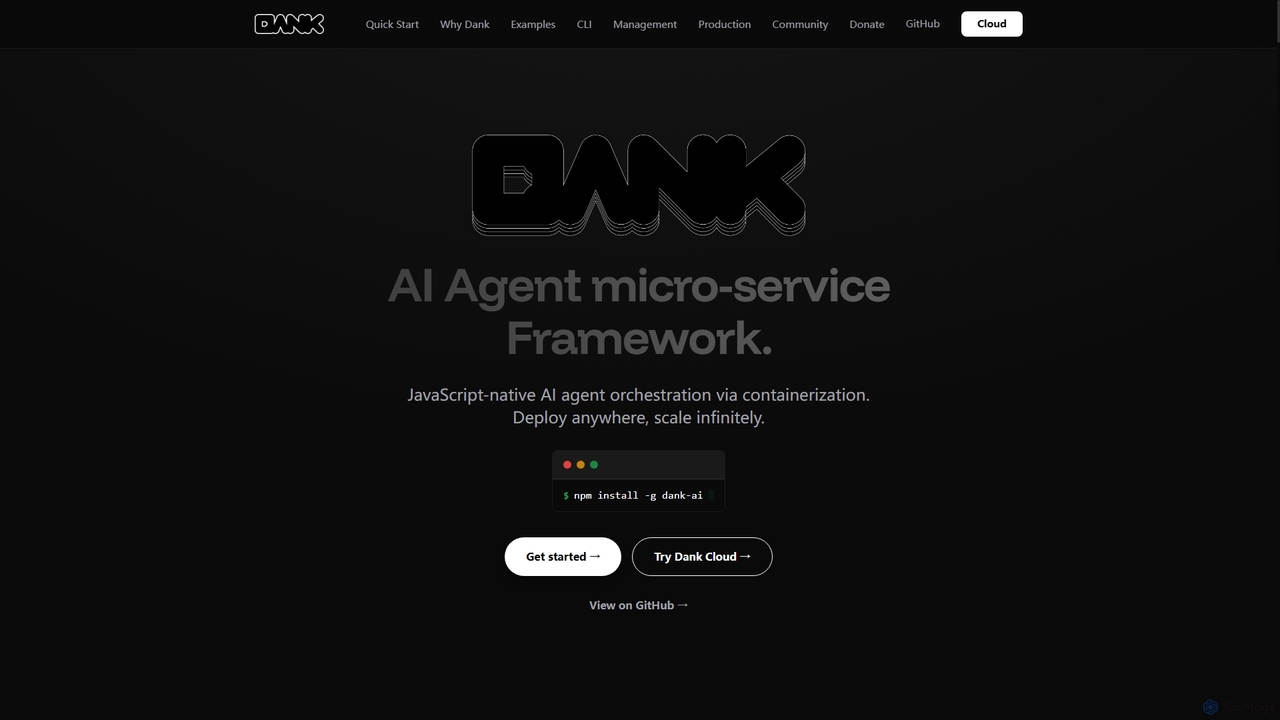
Dank is a JavaScript-native, open-source framework for orchestrating and deploying containerized AI agents. It enables developers to build, …
Dank is a JavaScript-native, open-source framework for orchestrating and deploying containerized AI agents. It enables developers to build, manage, and scale multiple AI agents as microservices across any cloud infrastructure, simplifying complex AI deployments with Docker-native architecture and real-time monitoring.
AIConsole
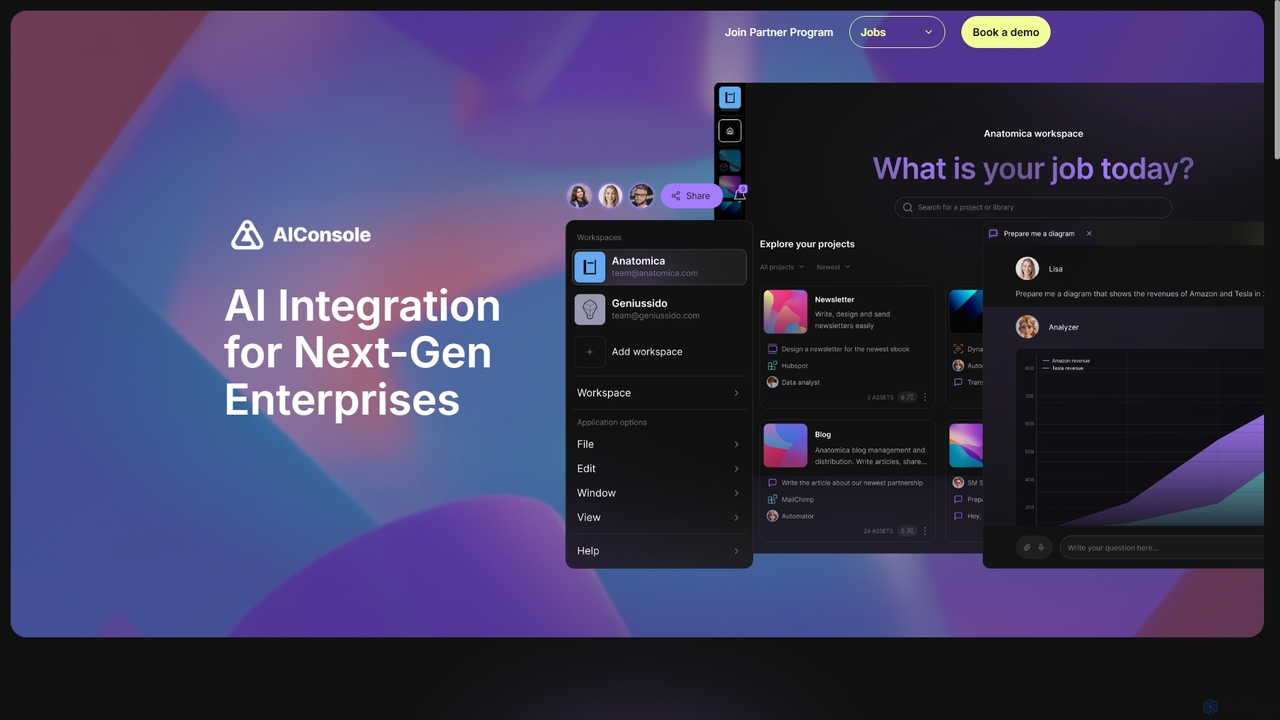
AIConsole is an enterprise-grade AI integration and orchestration platform designed to unify disjointed AI efforts. It enables businesses …
AIConsole is an enterprise-grade AI integration and orchestration platform designed to unify disjointed AI efforts. It enables businesses to seamlessly connect diverse AI models, deploy autonomous agents to automate complex workflows, and ensure security and compliance, ultimately boosting ROI and driving process optimization.
Flyte
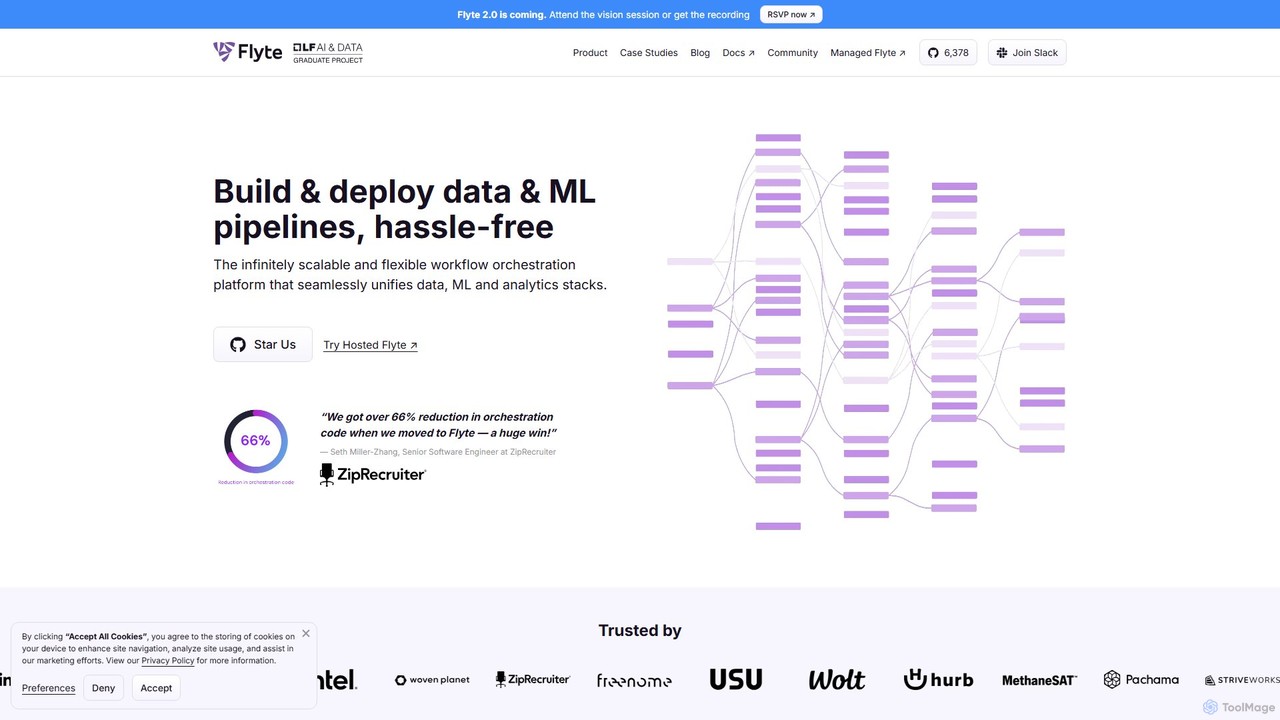
Flyte is an open-source, cloud-native workflow orchestration platform designed for building, deploying, and managing production-grade data, machine learning, …
Flyte is an open-source, cloud-native workflow orchestration platform designed for building, deploying, and managing production-grade data, machine learning, and analytics pipelines. It emphasizes scalability, reproducibility, and ease of use, enabling teams to move from local development to large-scale production seamlessly. With a Python-first SDK and support for multiple languages, Flyte empowers data scientists and engineers to create complex, versioned, and maintainable workflows.
About Orchestration
Orchestration tools are AI-powered platforms designed to automate the configuration, coordination, and management of complex systems, services, and workflows. These tools leverage AI to streamline the deployment, scaling, and monitoring of distributed applications and machine learning pipelines. They provide a centralized control plane to manage dependencies, resources, and execution across various environments, significantly enhancing operational efficiency and reliability for developers and MLOps teams.
Core Features
- Workflow Automation: Automates sequences of tasks, from data ingestion to model deployment, ensuring smooth execution.
- Resource Management: Dynamically allocates and optimizes computational resources across cloud or on-premise infrastructure.
- Monitoring & Logging: Provides real-time insights into system performance, identifies bottlenecks, and logs all activities for auditing.
- Scalability & Elasticity: Automatically scales resources up or down based on demand, ensuring optimal performance and cost efficiency.
- Integration Capabilities: Connects seamlessly with various development tools, cloud services, and AI frameworks to create cohesive ecosystems.
Applicable Scenarios
Orchestration tools are crucial for DevOps engineers managing microservices, MLOps teams deploying and monitoring AI models at scale, and cloud architects coordinating complex infrastructure. They are used in scenarios requiring automated resource provisioning, continuous integration/continuous deployment (CI/CD) for AI applications, and managing distributed data processing pipelines.
How to Choose
When selecting an orchestration tool, consider its integration ecosystem with your existing tech stack, its scalability features for handling future growth, and the level of automation it offers for your specific workflows. Evaluate its monitoring and logging capabilities for operational visibility, ease of use for your team, and the pricing model based on your resource consumption and feature needs.

OrchestrationUse Cases
Automating MLOps Pipelines
ML engineers can use orchestration tools to automate the entire lifecycle of machine learning models, from data preparation and model training to deployment and continuous monitoring. This ensures that models are always up-to-date, perform optimally, and are seamlessly integrated into production systems, reducing manual effort and potential errors in complex AI workflows.
Deploying Microservices Architectures
DevOps teams leverage orchestration tools to manage the complex deployment and scaling of microservices. These tools coordinate the provisioning of containers, load balancing, service discovery, and network configurations across distributed environments, ensuring high availability and efficient resource utilization for modern cloud-native applications.
Managing Cloud Infrastructure Dynamically
Cloud engineers use orchestration platforms to provision, configure, and manage cloud resources (VMs, databases, networks) dynamically and automatically. This allows for infrastructure as code (IaC) practices, enabling rapid deployment of environments, efficient scaling based on demand, and consistent configuration across development, staging, and production environments.
Automating Data Processing Pipelines
Data engineers utilize orchestration tools to schedule, execute, and monitor complex data pipelines involving extraction, transformation, and loading (ETL/ELT) processes. These tools ensure data consistency, manage dependencies between tasks, and handle error recovery, which is critical for maintaining data quality and availability for analytics and AI model training.
Managing Event-Driven Workflows
Developers building reactive systems can use orchestration tools to manage event-driven workflows, where actions are triggered by specific events (e.g., a new file upload, an API call, a sensor reading). These tools ensure that the correct sequence of operations is executed reliably and efficiently in response to events, enabling highly responsive and scalable applications.
Coordinating Hybrid Cloud Resources
IT architects and operations teams use orchestration tools to manage and coordinate workloads and resources across hybrid cloud environments, spanning on-premise data centers and multiple public clouds. This enables consistent policy enforcement, optimized resource allocation, and seamless migration of applications, ensuring operational continuity and flexibility in complex IT landscapes.