
ToolMage
Sign in

Best 1 Customer Management AI tools for Ecommerce

Popular Customer Management AI tools in Ecommerce include 99minds, helping you work more efficiently.

99minds
Freemium

99minds

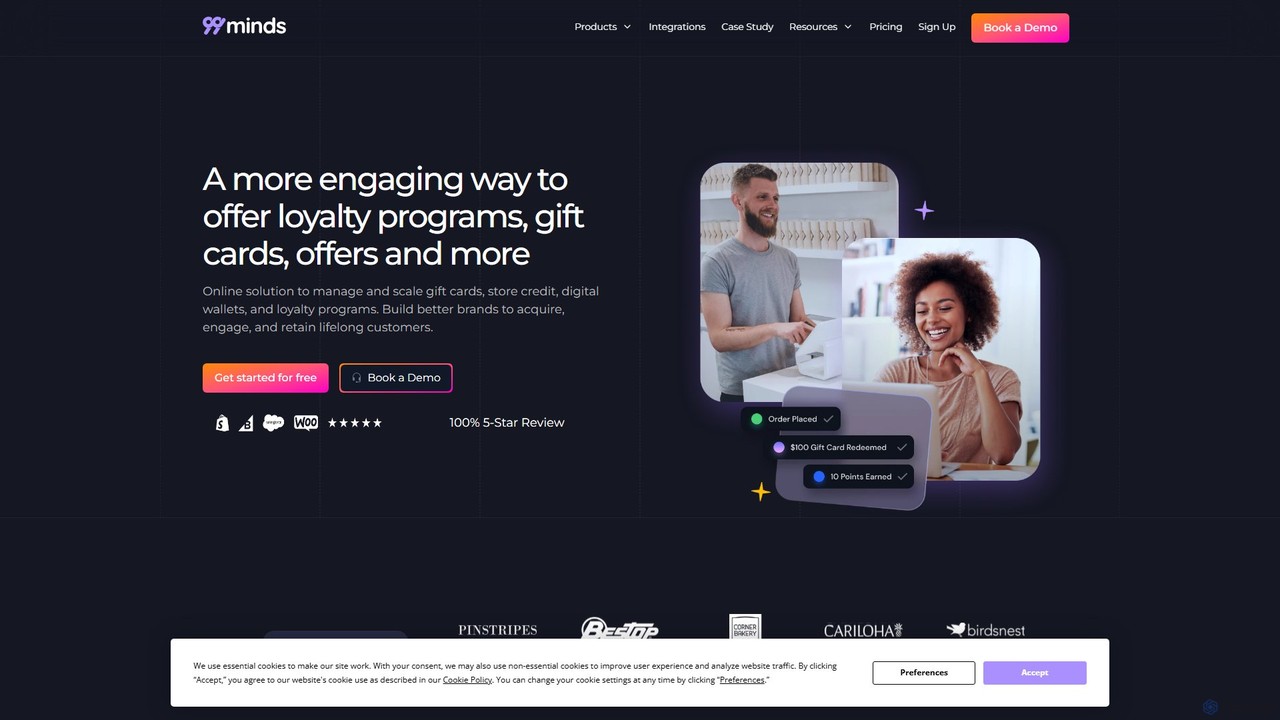
99minds is an all-in-one loyalty and gift card platform for omnichannel retail and e-commerce. It helps businesses boost sales, customer retention, and brand loyalty through customizable gift cards, loyalty programs, store credits, and AI-powered marketing automation workflows, seamlessly integrating with platforms like Shopify and major POS systems.

Customer Management
Visits 48KFavorites 123Likes 127

About Customer Management

AI Customer Management tools are a class of software that uses artificial intelligence to automate and enhance how e-commerce businesses interact with their customers. These tools analyze vast amounts of customer data, such as purchase history and browsing behavior, using machine learning algorithms to uncover patterns and predict future actions. The primary value lies in enabling highly personalized marketing, improving customer retention, and maximizing customer lifetime value (CLV). They transform raw data into actionable strategies for building stronger, more profitable customer relationships.

Core Features

  • Predictive Segmentation: Automatically groups customers into dynamic segments based on their predicted behavior, such as likelihood to purchase or churn.
  • Personalization Automation: Delivers individually tailored product recommendations, offers, and content across email, ads, and on-site experiences.
  • Churn Prediction & Prevention: Identifies customers at risk of leaving and can trigger automated retention campaigns to re-engage them.
  • Customer Lifetime Value (CLV) Forecasting: Uses historical data to predict the total revenue a business can expect from a single customer account.

Use Cases

These tools are primarily used by e-commerce marketing managers, retention specialists, and business owners. For instance, an online fashion retailer can use them to automatically send personalized style recommendations to high-value customers. A subscription box service can identify users likely to cancel and proactively offer them a discount or an exclusive item to encourage them to stay.

How to Choose

When selecting an AI Customer Management tool, consider its integration capabilities with your e-commerce platform (like Shopify, Magento, or WooCommerce). Evaluate the sophistication of its AI models for segmentation and prediction. Also, assess its data privacy compliance, scalability to handle your customer volume, and the clarity of its analytics dashboard for measuring ROI.

Customer Management use cases

1

Automated Churn Prevention Campaigns

An e-commerce marketing manager for a subscription box service notices a gradual increase in customer churn. Instead of manual analysis, they use an AI Customer Management tool that integrates with their sales data. The AI identifies a segment of customers who haven't engaged in the last 45 days and whose purchase frequency has dropped. The system automatically triggers a personalized re-engagement campaign, sending these at-risk users an email with a special discount on their next box, successfully reducing churn by 15% within a quarter.

2

Dynamic Segmentation for Personalized Marketing

An online fashion retailer wants to promote its new collection of evening wear. Using an AI Customer Management tool, they create a dynamic segment of users who have recently viewed dresses, added high heels to their cart, or previously purchased formal attire. This segment updates in real-time. The marketing team then targets this specific group with a highly relevant ad campaign on social media and a dedicated email blast, resulting in a click-through rate 3 times higher than their general campaigns.

3

Predicting Customer Lifetime Value for VIP Programs

A high-end cosmetics brand uses an AI tool to forecast the Customer Lifetime Value (CLV) for every new customer upon their first purchase. The model analyzes factors like the initial order value, product categories purchased, and acquisition channel. Customers predicted to have a high CLV are automatically enrolled into an exclusive VIP program, receiving early access to new products and a dedicated support line. This proactive approach fosters loyalty from the very beginning, increasing repeat purchase rates among this valuable cohort by 25%.

4

AI-Powered Product Recommendations in Emails

An online bookstore aims to increase engagement with its weekly newsletter. Instead of sending a generic list of bestsellers, they implement an AI customer tool that analyzes each subscriber's reading history and browsing patterns. The tool then populates each email with a unique set of personalized book recommendations. For example, a user who bought sci-fi novels and browsed fantasy authors receives suggestions for new releases in those specific genres, leading to a significant uplift in email-driven sales and user engagement.

5

Analyzing Customer Feedback at Scale

A large e-commerce marketplace receives thousands of product reviews and support tickets daily. Manually processing this feedback is impossible. They deploy an AI Customer Management tool with natural language processing (NLP) capabilities. The AI analyzes all incoming text, categorizes feedback into topics like 'shipping issues,' 'product quality,' or 'payment problems,' and identifies sentiment (positive, negative, neutral). This provides the management team with a real-time dashboard of customer pain points, enabling them to quickly address systemic issues and improve the overall customer experience.

6

Optimizing Post-Purchase Communication Flow

An online retailer selling complex electronics wants to reduce returns and support queries. They use an AI customer management platform to create an intelligent post-purchase communication sequence. Based on the specific product purchased, the AI triggers a series of timed emails. For example, a customer buying a high-end camera receives an email with a link to a setup video one day after delivery, followed by an email with advanced photography tips a week later. This proactive support reduces customer frustration and builds brand trust, leading to fewer returns and more positive reviews.

Customer Management FAQ

What are AI Customer Management tools?

AI Customer Management tools are specialized software for e-commerce that use artificial intelligence to analyze customer data, predict behavior, and automate personalized interactions. Unlike general CRMs, they focus on increasing sales and loyalty by understanding shopping patterns. Key functions include predicting customer churn, forecasting lifetime value (CLV), and creating dynamic customer segments for targeted marketing campaigns.

How to choose the right AI Customer Management tool for my e-commerce store?

To choose the right tool, consider these factors:

  • Integration: Ensure it seamlessly connects with your e-commerce platform (e.g., Shopify, WooCommerce, BigCommerce) and other marketing tools.
  • AI Capabilities: Evaluate if its predictive models (for churn, CLV, segmentation) are sophisticated enough for your needs.
  • Data Handling: Check if it can handle your current and future volume of customer data securely and in compliance with regulations like GDPR.
  • Usability: The platform should have an intuitive interface and clear dashboards that allow your team to easily build campaigns and understand results without needing a data scientist.
What's the difference between a standard CRM and an AI Customer Management tool for e-commerce?

A standard CRM (Customer Relationship Management) is primarily a system of record for contact information and interaction history, often used by sales teams. An AI Customer Management tool for e-commerce is a proactive system. It not only stores data but also uses machine learning to analyze e-commerce-specific behaviors (like cart abandonment, product views) to predict future outcomes and automate marketing actions. Its main goal is to drive revenue and retention, whereas a standard CRM's goal is often contact organization.

What key features should I look for in an AI Customer Management tool?

Look for features that directly impact e-commerce success. The most critical ones include:

  • Predictive Analytics: The ability to forecast churn, predict a customer's next purchase date, and estimate lifetime value.
  • Dynamic Segmentation: Automatically grouping customers based on real-time behavior, not just static attributes like location.
  • Personalization Engine: A system that can recommend products and tailor marketing messages for each individual user.
  • Marketing Automation: The capability to trigger emails, SMS, or ads based on specific customer actions or predictive scores.
Who benefits most from using AI Customer Management tools?

While any e-commerce business can benefit, those who gain the most are typically:

  • Direct-to-Consumer (DTC) Brands: Businesses that rely heavily on building long-term customer relationships and encouraging repeat purchases.
  • Subscription Businesses: Companies where customer retention is the primary driver of revenue and churn prediction is critical.
  • Retailers with Large Catalogs: Stores that can use AI to personalize product discovery from thousands of items for each customer.
  • Marketing Teams: Marketers who want to move beyond generic campaigns and implement highly targeted, data-driven strategies to improve ROI.