ToolMage
Sign in

Best 1 Retail Media AI tools for Ecommerce

Popular Retail Media AI tools in Ecommerce include Quartile, helping you work more efficiently.

Quartile
Paid

Quartile

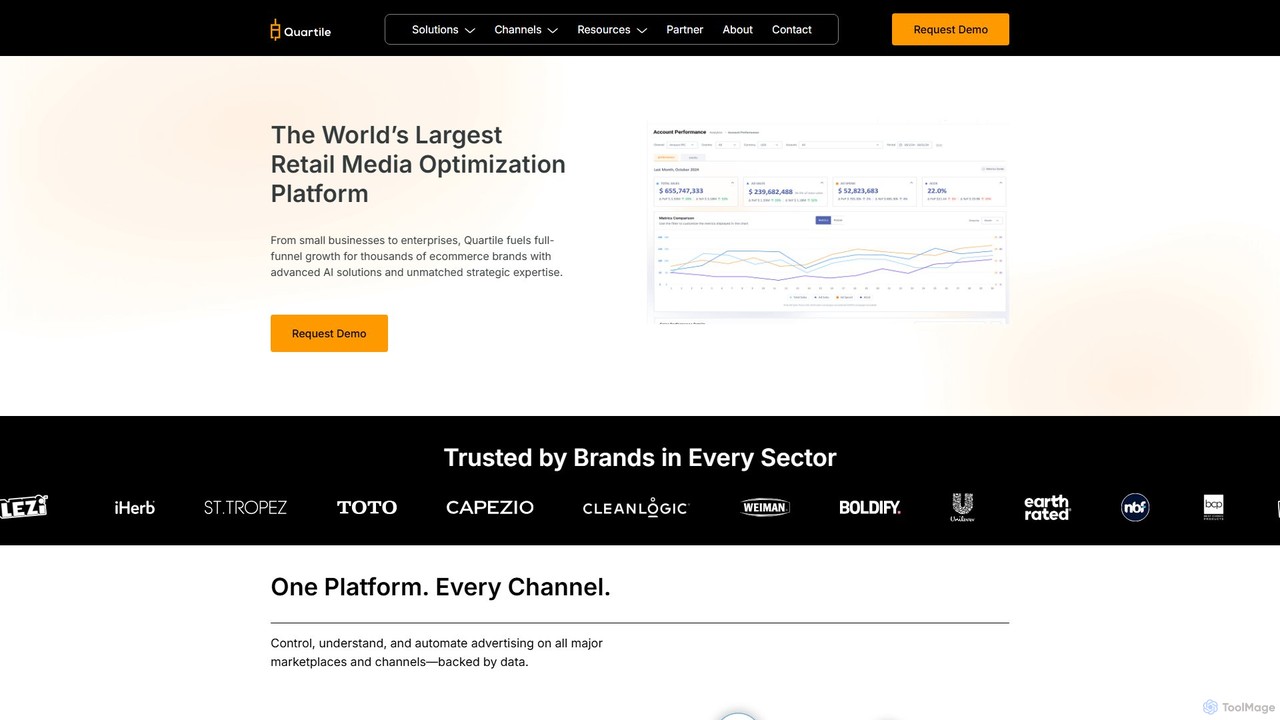
Quartile is the world's largest AI-powered retail media optimization platform. It helps e-commerce brands of all sizes fuel full-funnel growth by automating and optimizing advertising campaigns across major channels like Amazon, Walmart Connect, and Google Ads. The platform combines advanced AI with expert managed services to maximize Return on Ad Spend (ROAS) and drive sales.

Retail Media
Visits 40.6KFavorites 171Likes 168

About Retail Media

Retail Media are AI-powered tools designed to optimize advertising placements directly on a retailer's digital properties, such as e-commerce websites and mobile apps, or within physical stores. These platforms leverage advanced AI algorithms to analyze first-party customer data, enabling highly targeted and personalized ad campaigns at the point of purchase. Within the broader context of e-commerce, Retail Media AI tools empower brands and sellers to enhance product visibility, drive sales, and improve return on ad spend by reaching consumers with relevant messages precisely when they are ready to buy.

Core Features

  • AI-Powered Ad Targeting: Utilizes machine learning to analyze customer browsing history, purchase patterns, and demographics for precise ad delivery.
  • Dynamic Ad Creative Optimization: Automatically generates and tests various ad creatives (images, headlines, product recommendations) to maximize engagement and conversion rates.
  • Real-time Performance Analytics: Provides immediate insights into ad campaign performance, including impressions, clicks, conversions, and ROI, allowing for agile adjustments.
  • Inventory and Placement Management: Automates the allocation of ad inventory across different retail touchpoints and optimizes placement for maximum impact.
  • First-Party Data Integration: Securely integrates and activates a retailer's proprietary customer data for enhanced targeting and audience segmentation.

Applicable Scenarios

E-commerce brands and sellers utilize Retail Media AI tools to boost product visibility and sales directly on retailer platforms. This includes launching sponsored product campaigns on Amazon or Walmart, promoting new arrivals on a grocery chain's app, or running targeted display ads on a fashion retailer's website to customers who have viewed similar items. Retailers themselves use these tools to monetize their digital real estate and offer valuable advertising opportunities to their brand partners.

How to Choose

When selecting Retail Media AI tools, consider the platform's integration capabilities with your existing e-commerce infrastructure and data sources. Evaluate the sophistication of its AI targeting algorithms, its ability to optimize ad creatives dynamically, and the depth of its real-time analytics and reporting features. Additionally, assess the pricing model, scalability for future growth, and the level of support provided, ensuring it aligns with your specific advertising goals and budget within the competitive e-commerce landscape.

Retail Media use cases

1

Optimizing Sponsored Product Campaigns

An e-commerce brand manager uses AI Retail Media tools to automatically bid on keywords and optimize product placements for sponsored listings on a major online retailer's platform. The AI analyzes real-time sales data and competitor activity to adjust bids and product visibility, ensuring maximum ROI for high-priority products and driving increased sales conversions directly at the point of purchase.

2

Personalized Product Recommendations in Retail Apps

A grocery retailer leverages AI to power personalized product recommendations within their mobile app. Based on a customer's past purchases, browsing history, and loyalty program data, the AI dynamically displays relevant sponsored products or promotions from CPG brands, enhancing the shopping experience and increasing basket size for both the retailer and the advertised brands.

3

Dynamic Display Ad Creation for E-commerce Sites

A fashion brand utilizes AI Retail Media to generate dynamic display ads that appear on a partner e-commerce website. The AI automatically selects product images, headlines, and calls-to-action based on the viewer's browsing behavior and demographic profile, ensuring highly relevant and engaging ads that lead to higher click-through rates and direct sales.

4

Measuring and Attributing Retail Media ROI

A marketing analyst employs AI-driven analytics within a Retail Media platform to precisely measure the return on investment (ROI) for various campaigns. The AI tracks impressions, clicks, and conversions across different ad formats and placements, providing granular attribution insights that help optimize future spending and demonstrate the direct impact of retail media efforts on sales.

5

Automated Inventory Monetization for Retailers

A large online retailer uses AI to automate the monetization of its digital ad inventory. The AI platform intelligently allocates ad slots across its website and app, matching available inventory with brand demand and optimizing pricing based on real-time performance and audience segments, thereby maximizing advertising revenue without compromising user experience.

6

Targeted Promotions for Loyalty Program Members

A consumer electronics retailer integrates AI Retail Media with its loyalty program data to deliver highly targeted promotions. The AI identifies specific loyalty members who have shown interest in certain product categories or are due for an upgrade, then serves them exclusive deals or new product announcements directly within the retailer's digital ecosystem, fostering brand loyalty and driving repeat purchases.

Retail Media FAQ

What is Retail Media AI?

Retail Media AI refers to artificial intelligence technologies applied to advertising within a retailer's owned digital and physical channels. It leverages machine learning to analyze first-party customer data, optimize ad targeting, personalize content, and automate campaign management, ultimately driving more effective advertising and sales directly at the point of purchase within the e-commerce ecosystem.

How does Retail Media AI differ from traditional e-commerce advertising?

Retail Media AI primarily differs by utilizing a retailer's proprietary first-party customer data for highly precise targeting and placement directly on their platforms. Unlike broader e-commerce advertising (e.g., social media ads, search engine marketing), Retail Media operates within the retailer's ecosystem, offering unique access to purchase intent signals and direct attribution to sales on that specific platform.

What are the key benefits of using AI in Retail Media?

The key benefits of using AI in Retail Media include enhanced ad targeting accuracy, leading to higher conversion rates and improved ROI. AI enables dynamic creative optimization, real-time performance analytics, and automated campaign management, significantly reducing manual effort. It also allows for deeper personalization of ad content, improving customer experience and fostering brand loyalty in the retail environment.

Who uses Retail Media AI tools?

Retail Media AI tools are primarily used by two main groups: brands and sellers who want to advertise their products directly on retailer platforms, and retailers themselves who seek to monetize their digital real estate and offer valuable advertising services to their brand partners. E-commerce managers, marketing teams, and data analysts within these organizations are typical users.

What should I look for in a Retail Media AI platform?

When evaluating a Retail Media AI platform, prioritize its ability to integrate seamlessly with your existing data and e-commerce systems. Look for robust AI-driven targeting and optimization capabilities, comprehensive real-time analytics, and flexible ad format support. Consider the platform's scalability, user-friendliness, and the quality of customer support, ensuring it meets your specific advertising objectives and budget.