Ecommerce Best in category 5 results Shopify AI Tool

Popular AI tools in the Shopify field of Ecommerce include Marketer、Aimerce、Weaverse、tinyalbert、AI Buster, etc., helping you quickly improve efficiency.

Aimerce

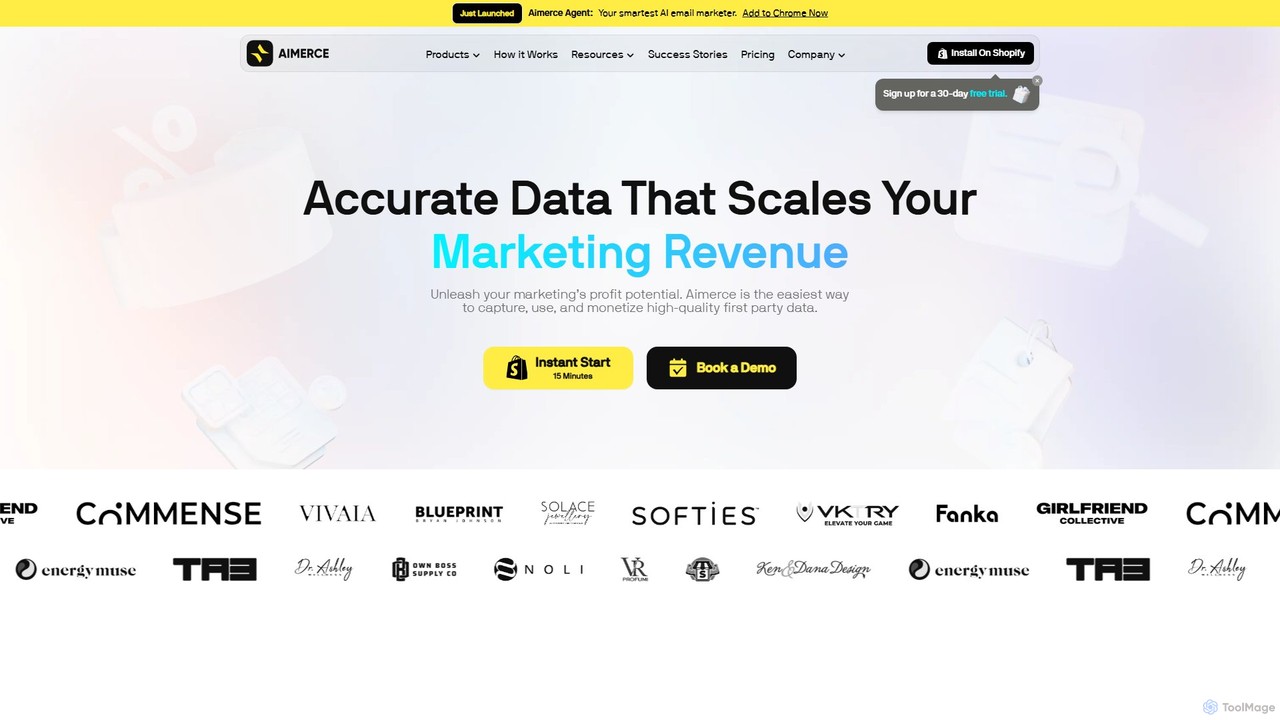
Aimerce

Aimerce is an AI-powered marketing platform for Shopify brands, designed to combat the cookieless world. It uses server-side …

33.7K
tinyalbert

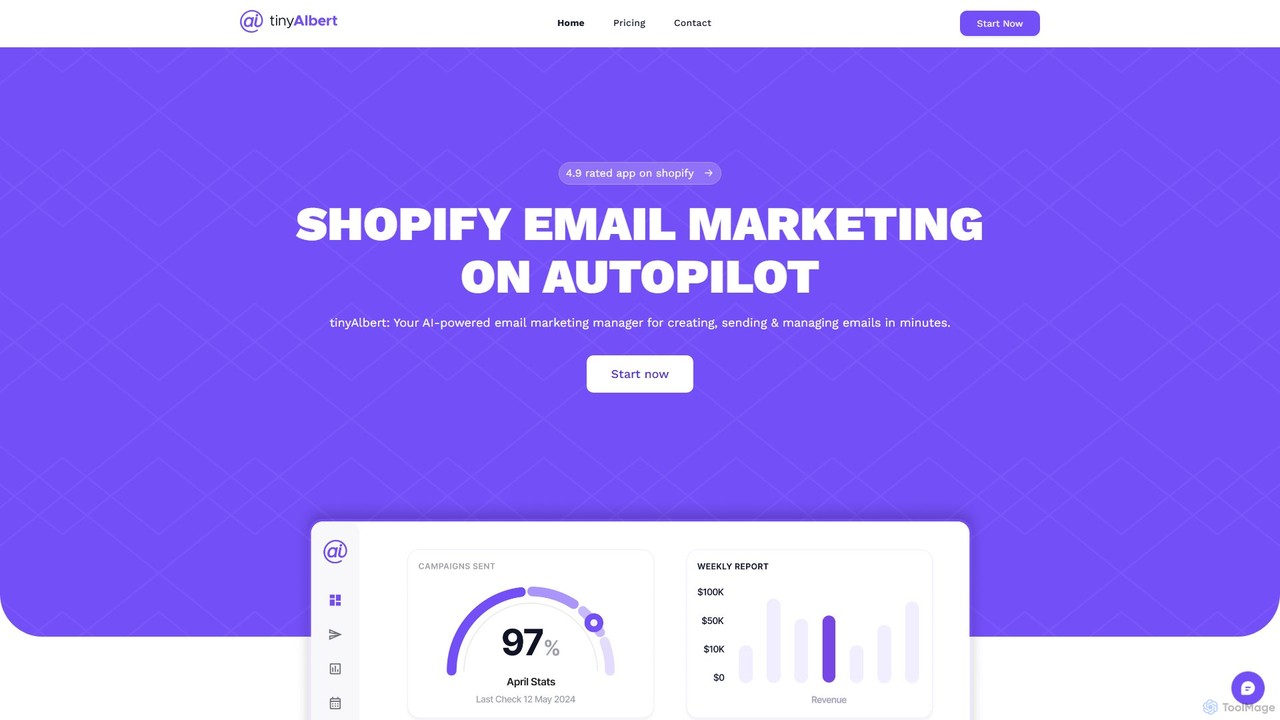
tinyalbert

tinyalbert is an AI-powered email marketing manager designed specifically for Shopify stores. It automates the entire email marketing …

4.0K
Weaverse

Weaverse

Weaverse is a visual page builder and headless CMS specifically designed for Shopify Hydrogen. It empowers developers to …

14.0K
Marketer

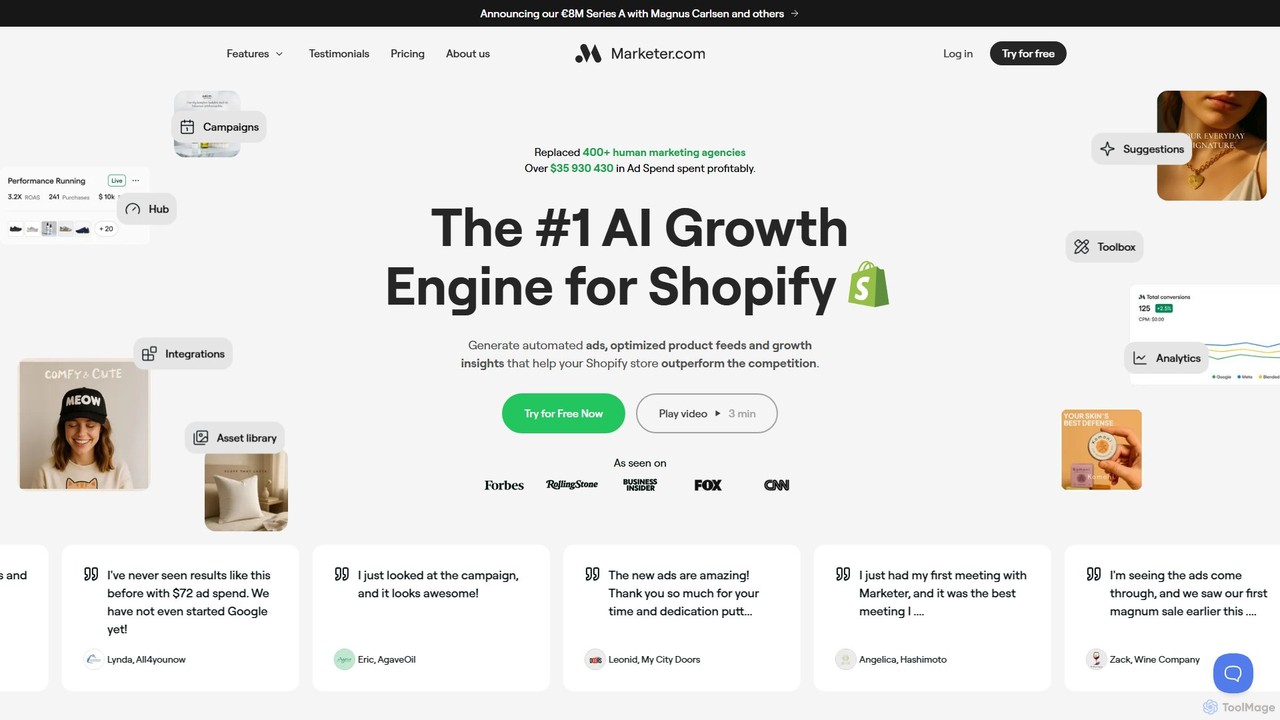
Marketer

Marketer is an AI-powered growth engine for Shopify stores, designed to automate advertising and maximize Return on Ad …

34.1K
AI Buster

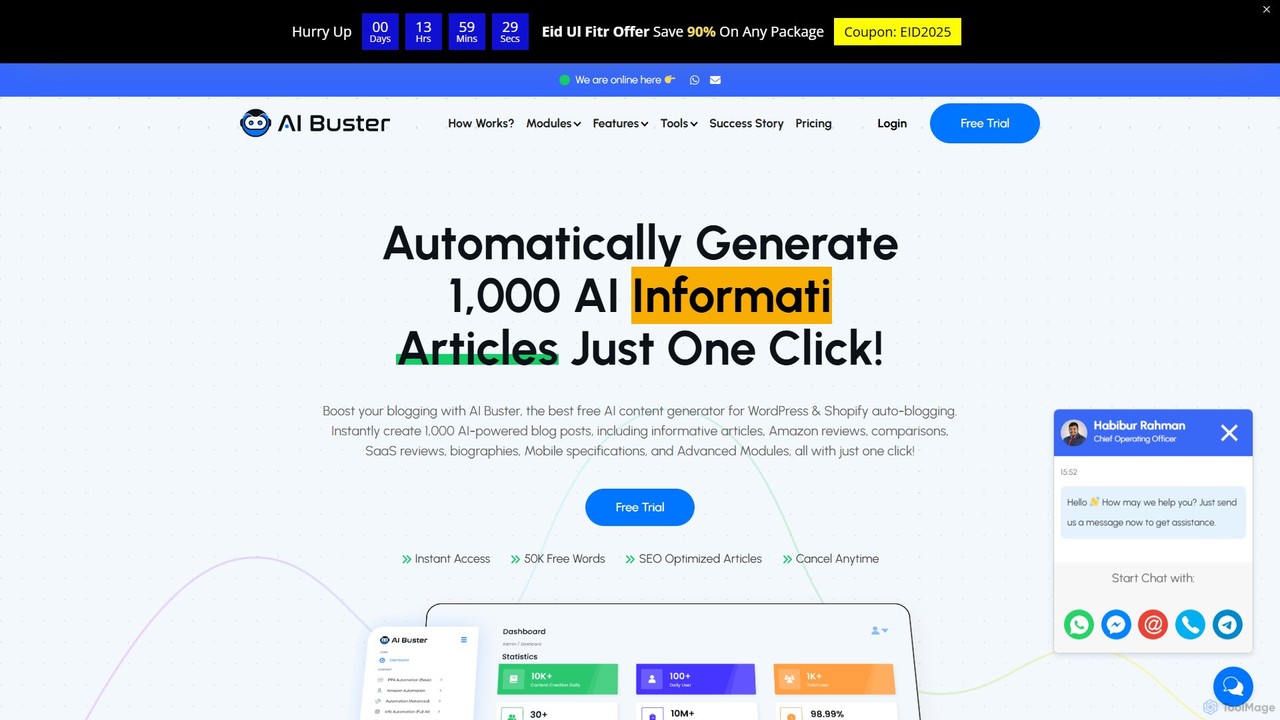
AI Buster

AI Buster is a powerful AI content generator designed for auto-blogging on WordPress and Shopify. It enables users …

3.9K

About Shopify

AI tools for Shopify are specialized applications designed to integrate with the Shopify platform, leveraging artificial intelligence to automate and optimize ecommerce operations. These tools analyze store data, customer behavior, and market trends to power features like automated content creation, personalized marketing, and intelligent customer support. They help merchants enhance efficiency, improve customer experience, and drive sales growth without requiring deep technical expertise. The primary advantage lies in their seamless integration, turning complex AI capabilities into accessible features within the Shopify dashboard.

Core Features

  • AI Product Description Generation: Automatically creates unique, SEO-friendly product descriptions, saving hours of manual writing.
  • Personalized Recommendations: Analyzes customer browsing history and purchase data to display relevant product suggestions, increasing conversion rates.
  • Automated Customer Service: Deploys AI chatbots to answer common customer inquiries 24/7, reducing support workload and improving response times.
  • Marketing Automation: Creates and manages targeted email campaigns, social media ads, and customer segmentation using predictive analytics.
  • Fraud Detection: Uses machine learning algorithms to identify and flag potentially fraudulent orders, minimizing chargebacks and losses.

Use Cases

These tools are primarily used by Shopify store owners, ecommerce managers, and digital marketing teams. Common applications include automating the creation of thousands of product listings for large inventories, implementing dynamic pricing strategies based on competitor data and demand, and providing personalized shopping experiences that mimic in-person sales assistance. They are valuable for both new startups looking to scale quickly and established brands aiming to optimize their operations.

How to Choose

When selecting an AI tool for Shopify, consider its specific function and integration depth; ensure it addresses a key pain point like marketing, support, or content. Evaluate the pricing model in relation to your store's size and sales volume. Check user reviews on the Shopify App Store for real-world performance and reliability. Finally, assess the user interface and ease of setup, prioritizing tools that can be implemented without extensive technical assistance.

ShopifyUse Cases

1

Automate Product Description Writing for Large Inventories

An ecommerce manager for a fashion brand with over 2,000 SKUs needs to create unique, engaging, and SEO-optimized descriptions for each product. Manually, this task would take weeks. By installing an AI product description generator from the Shopify App Store, they can input key product attributes (e.g., material, style, color, occasion) into the tool. The AI then generates multiple description variants for each item in a consistent brand voice. The manager can review, edit, and publish hundreds of descriptions daily, reducing the content creation timeline by over 90% and ensuring all product pages are well-optimized for search engines from day one.

2

Provide 24/7 AI-Powered Customer Support

A small business selling handmade goods globally receives customer inquiries at all hours. The owner cannot be available 24/7 to answer questions about shipping, product details, or return policies. By integrating an AI chatbot with their Shopify store, common questions are answered instantly, even outside of business hours. The chatbot can access order information to provide real-time status updates. For complex issues, it collects customer details and creates a support ticket for the owner to handle later. This improves customer satisfaction by providing immediate responses and frees up the owner to focus on creating products and fulfilling orders.

3

Increase Average Order Value with Personalized Recommendations

An online electronics store wants to increase its average order value (AOV). A marketing manager implements an AI-powered recommendation engine app. The tool analyzes a visitor's real-time behavior—such as products viewed, items added to the cart, and past purchases. It then displays personalized 'Frequently Bought Together' bundles on product pages and 'You Might Also Like' carousels at checkout. For example, when a customer adds a camera to their cart, the AI suggests a compatible memory card and camera bag. This targeted upselling and cross-selling strategy leads to a measurable increase in AOV and enhances the customer's shopping experience by helping them discover relevant products.

4

Optimize Ad Spend with AI-Powered Audience Segmentation

A direct-to-consumer brand running ads on social media wants to improve its return on ad spend (ROAS). They use an AI marketing tool connected to their Shopify store. The tool analyzes customer data, identifying patterns and creating predictive segments like 'likely to churn,' 'high-value customers,' and 'potential repeat buyers.' Instead of targeting a broad audience, the marketing team can now create highly specific campaigns. For example, they can run a re-engagement campaign targeting the 'likely to churn' segment with a special offer, effectively reducing customer acquisition costs and maximizing the impact of their advertising budget.

5

Minimize Losses with AI-Powered Fraud Detection

A high-volume Shopify store selling luxury watches is a frequent target for fraudulent transactions. Chargebacks are cutting into their profit margins. They install an AI fraud detection app that analyzes hundreds of data points for each order in real-time, including IP address location, email address history, and unusual purchasing behavior. The AI assigns a risk score to each transaction. High-risk orders are automatically flagged for manual review before fulfillment, while low-risk orders are processed immediately. This system significantly reduces the number of successful fraudulent purchases and chargebacks, protecting the store's revenue without slowing down the fulfillment process for legitimate customers.

6

Generate Engaging Email and SMS Marketing Campaigns

A marketing coordinator for a cosmetics brand needs to create fresh and compelling copy for weekly email newsletters and SMS promotions. Coming up with new ideas consistently is challenging. They use an AI marketing suite integrated with Shopify. By providing a simple prompt, such as 'a flash sale on lipstick,' the AI generates a variety of subject lines, email body content, and concise SMS messages. It can also suggest optimal send times based on past customer engagement data. This allows the coordinator to launch more frequent and better-targeted campaigns, increasing open rates and driving repeat purchases with minimal creative effort.

ShopifyFrequently Asked Questions