Finance Best in category 3 results Document Management AI Tool

Popular AI tools in the Document Management field of Finance include Stable、Tennr、WhatLetter, etc., helping you quickly improve efficiency.

Tennr

Tennr

Tennr is an AI-powered platform that automates complex back-office workflows. It uses AI agents to read, understand, and …

60.8K
Stable

Stable

Stable provides an AI-powered virtual address and mailbox for businesses. It digitizes physical mail, automates workflows, and enables …

153.5K
WhatLetter

WhatLetter

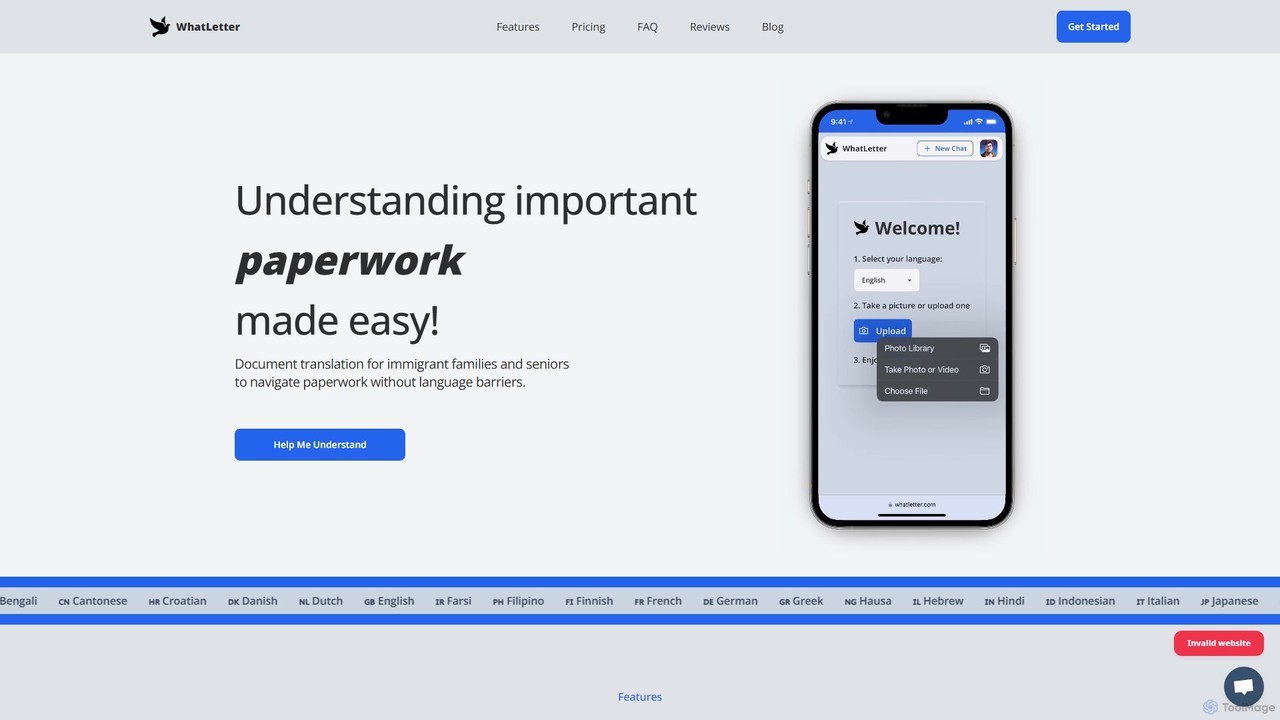
WhatLetter is an AI-powered document translator designed to eliminate language barriers. Simply snap a photo of any document, …

2.5K

About Document Management

AI Document Management tools are specialized platforms that use artificial intelligence to automate the processing, analysis, and organization of financial documents. Leveraging technologies like Optical Character Recognition (OCR) and Natural Language Processing (NLP), these tools intelligently extract, classify, and validate data from invoices, receipts, contracts, and financial statements. Their primary value lies in transforming unstructured document data into structured, actionable insights, significantly improving efficiency, accuracy, and compliance within financial workflows. This focus on financial data makes them distinct from general-purpose cloud storage.

Core Features

  • Intelligent Data Extraction: Automatically captures key information such as invoice numbers, amounts, dates, and line items from various document formats.
  • Automated Classification: Sorts and categorizes documents (e.g., invoices, purchase orders, bank statements) based on their content and context.
  • Compliance & Audit Trail: Maintains a secure, version-controlled log of all document activities to meet regulatory requirements like SOX or GDPR.
  • Semantic Search: Enables users to search for concepts and specific data points within documents, not just keywords.
  • Workflow Integration: Connects with accounting, ERP, and other financial systems to automate processes like invoice approvals and payment reconciliation.

Use Cases

These tools are essential for roles in finance and accounting departments, including accounts payable/receivable clerks, controllers, financial analysts, and compliance officers. Common applications include automating invoice processing from receipt to payment, streamlining expense report management, analyzing contracts for financial obligations, and preparing for audits by providing a clear, searchable document trail.

How to Choose

When selecting an AI Document Management tool for finance, prioritize the accuracy of its data extraction models for your specific document types. Evaluate its integration capabilities with your existing accounting or ERP software (e.g., QuickBooks, SAP, NetSuite). Also, consider its security certifications (like SOC 2) and compliance features, as well as a pricing model that aligns with your document volume and processing needs.

Document ManagementUse Cases

1

Automated Invoice Processing for Accounts Payable

An Accounts Payable (AP) team receives hundreds of invoices daily in various formats like PDF, JPG, and email attachments. Using an AI Document Management tool, they create an automated workflow. Invoices are automatically ingested from a dedicated email inbox. The AI then uses OCR to read the document, identifies it as an invoice, and extracts key data fields: vendor name, invoice number, due date, total amount, and line-item details. This structured data is then validated against purchase orders in the ERP system and routed to the appropriate manager for approval, significantly reducing manual data entry and processing time from days to minutes.

2

Streamlining Expense Report Audits

A financial controller needs to ensure compliance with company travel and expense policies. Instead of manually reviewing every receipt, they use an AI document tool. Employees upload photos of their receipts via a mobile app. The AI extracts the merchant, date, and amount, and automatically categorizes the expense (e.g., 'Meals', 'Transportation'). It then cross-references this data with company policies, flagging potential violations like expenses exceeding daily limits or missing itemized receipts for hotel stays. This allows the finance team to focus their attention only on flagged exceptions, auditing 100% of reports in a fraction of the time.

3

Financial Contract Analysis for Risk Management

A corporate legal team needs to analyze 500 vendor contracts to identify non-standard payment terms and liability clauses. Manually, this would take weeks. They upload all contracts to an AI Document Management platform. Using its NLP capabilities, the tool scans each document, identifies clauses related to 'Payment Terms', 'Liability', and 'Termination', and extracts the specific text. It presents the findings in a dashboard, allowing the team to quickly see which contracts deviate from the company's standard template and quantify potential financial risks across the entire portfolio of agreements.

4

Preparing for a Financial Audit

An auditor requests all invoices over $10,000 from a specific vendor for the last fiscal year. In a traditional system, this would require manually searching through folders and files. With an AI Document Management system, the finance manager uses the semantic search function. They simply type: 'invoices from Vendor X > $10,000 between Jan 1 and Dec 31'. The system instantly retrieves all relevant documents, along with their complete audit trails showing who accessed or approved them. This allows the company to respond to audit requests in minutes, demonstrating strong internal controls and compliance.

5

Automating Bank Statement Reconciliation

An accountant for a small business spends hours each month manually matching transactions from bank statements to entries in their accounting software. By connecting their bank feed to an AI document platform, the process becomes automated. The tool ingests digital bank statements, extracts each transaction (date, description, amount), and uses AI to match it with corresponding invoices or expense records in the accounting system. It automatically reconciles matched items and flags discrepancies, such as duplicate charges or unrecorded payments, for the accountant's review. This reduces reconciliation time by over 80% and minimizes human error.

6

Centralizing Client Financial Documents for Wealth Managers

A wealth management firm struggles to manage a wide array of client documents, including KYC forms, investment statements, and tax returns, stored across different systems. They implement an AI Document Management platform as a central repository. When a new client statement arrives, it's automatically classified and linked to the client's profile. The AI extracts key data points like portfolio value and asset allocation, updating the client's summary view. This provides advisors with a single, up-to-date source of truth for all client documentation, improving service quality and ensuring regulatory compliance for record-keeping.

Document ManagementFrequently Asked Questions