Finance Best in category 13 results Financial Analysis AI Tool

Popular AI tools in the Financial Analysis field of Finance include PrometAI、CambioML、Search+、Veltrix、Zillion、FinanceGPT Chat、Oda Studio、Alomana、Ask Astro、Three Sigma, etc., helping you quickly improve efficiency.

Ask Astro

Ask Astro

Ask Astro is an AI-powered collaborative intelligence platform designed for business leaders, advisors, and franchisors. It integrates real-time …

2.9K
Hiddenq

Hiddenq

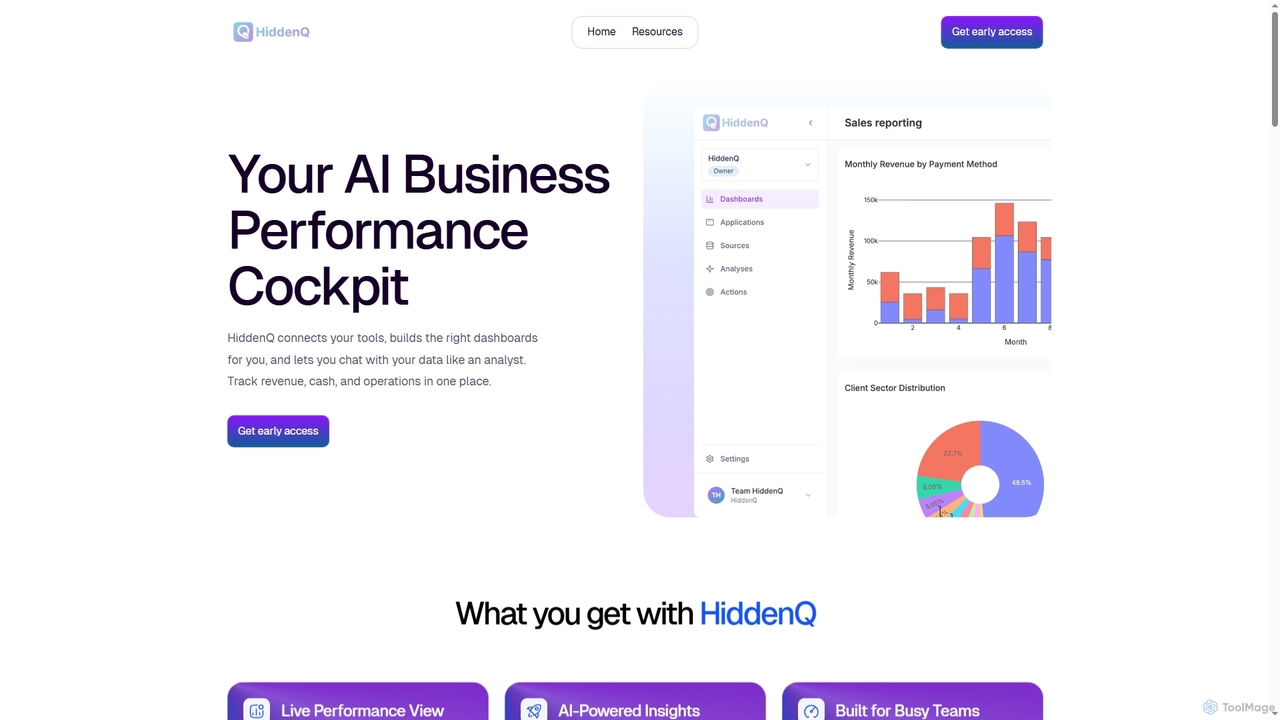
HiddenQ is an AI-powered business performance cockpit designed for SMBs. It connects scattered data sources, automates dashboard creation, …

2.7K
Veltrix

Veltrix

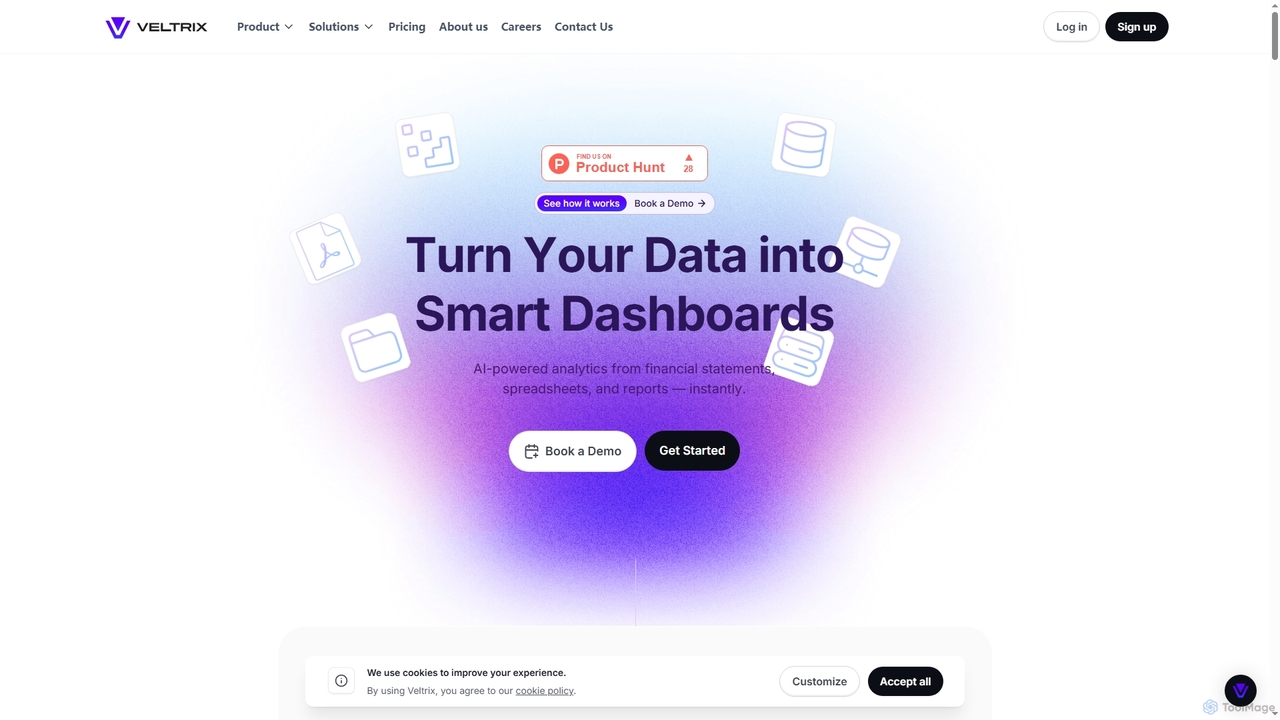
Veltrix is an AI-powered, no-code platform that transforms raw data from files and connected sources into interactive dashboards. …

9.1K
Secinsights

Secinsights

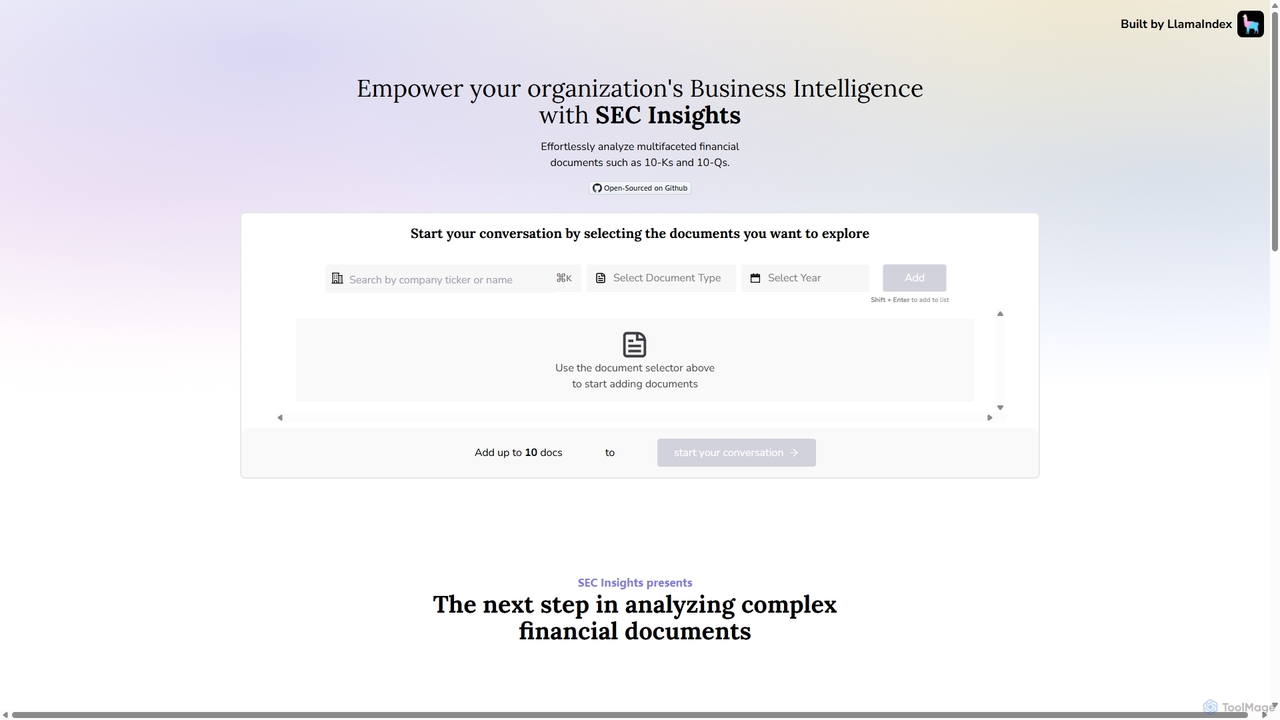
Secinsights is an AI-powered platform designed for in-depth analysis of SEC financial documents. Built by LlamaIndex, it allows …

2.7K
FinanceGPT Chat

FinanceGPT Chat

FinanceGPT Chat is a platform for building custom AI co-pilots tailored for financial analysis, market insights, and investment …

4.4K
Alomana

Alomana

Alomana is an enterprise-grade multi-AI agent platform designed to automate complex business processes. It provides a library of …

3.3K
PrometAI

PrometAI

PrometAI is an AI-powered platform designed for entrepreneurs and business professionals to generate comprehensive business plans and financial …

142.1K
Zillion

Zillion

Zillion is an AI platform designed for finance professionals, providing a workforce of AI analysts to automate tedious …

4.9K
CambioML

CambioML

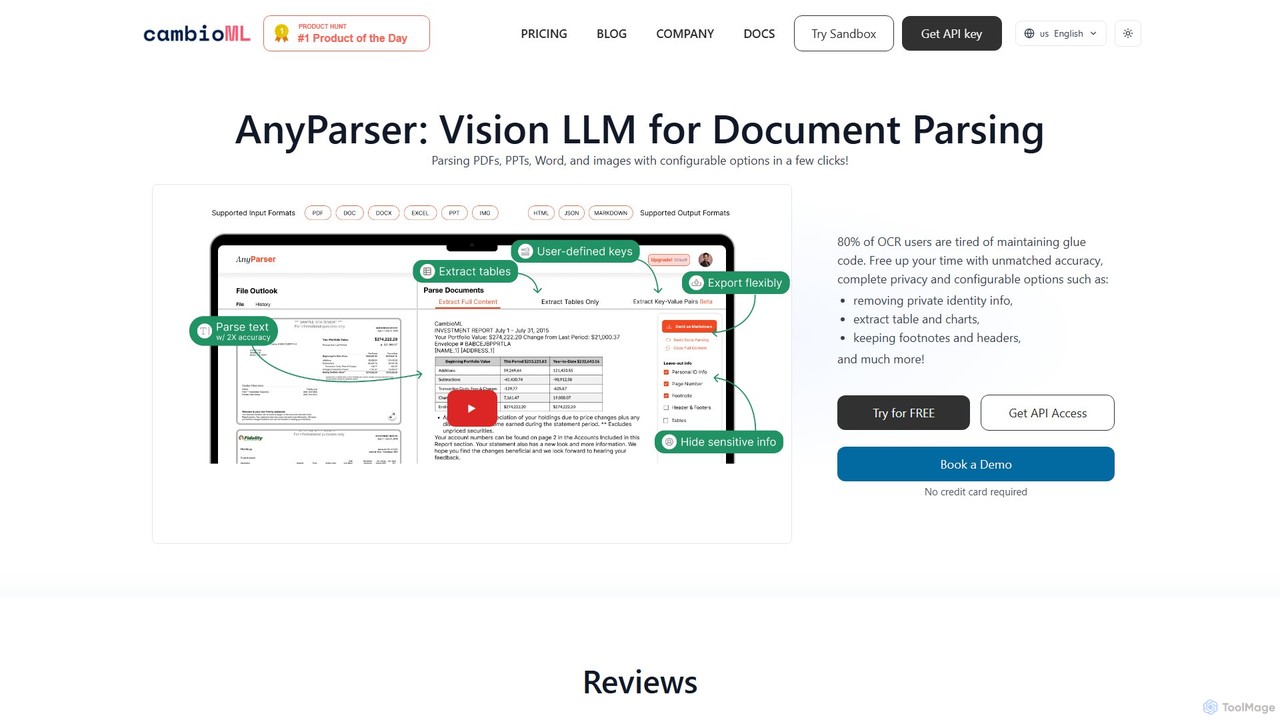
CambioML offers the AnyParser API, a powerful Vision LLM designed for high-accuracy document parsing. It extracts text, tables, …

13.5K
Three Sigma

Three Sigma

Three Sigma is an AI-powered research assistant that allows you to chat with your documents. Upload PDFs, Word …

2.8K
Oda Studio

Oda Studio

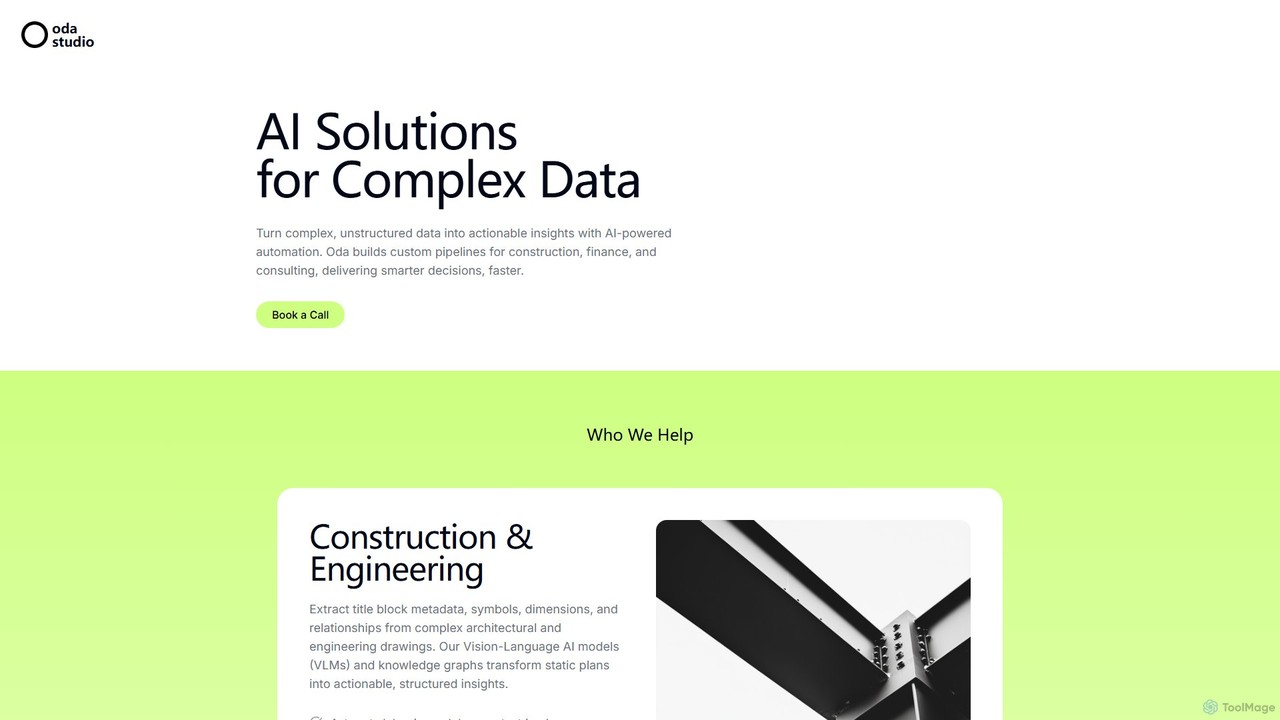
Oda Studio provides bespoke AI solutions to transform complex, unstructured data into actionable insights. Specializing in Vision-Language Models …

3.8K
Search+

Search+

Search+ is an AI-powered document intelligence platform designed for professionals. It allows users to chat with large documents, …

11.7K
DocumentLLM

DocumentLLM

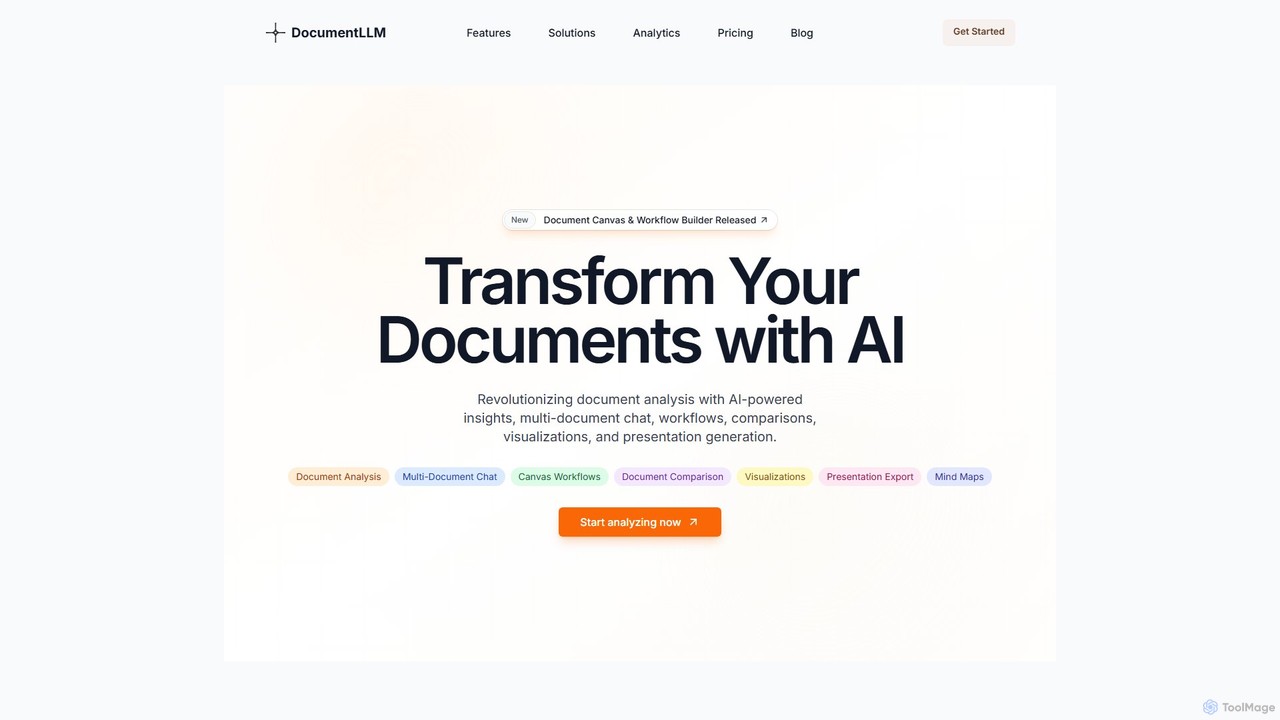
DocumentLLM is an AI-powered platform that revolutionizes document analysis. It enables users to chat with multiple documents, build …

2.8K

About Financial Analysis

AI Financial Analysis tools are a specialized category of software that leverages machine learning to interpret complex financial data and generate actionable insights. These tools automate the analysis of financial statements, market trends, and economic indicators, moving beyond traditional spreadsheet limitations. They are primarily used by investors, analysts, and businesses to enhance decision-making in areas like investment strategy, risk management, and corporate planning. By identifying subtle patterns and correlations in vast datasets, these AI platforms provide more accurate forecasts and deeper understanding of financial health.

Core Features

  • Predictive Forecasting: Utilizes historical data and machine learning models to project future financial performance, such as revenue, earnings, and stock prices.
  • Automated Data Extraction: Automatically pulls and structures financial data from various sources like SEC filings, PDFs, and news articles.
  • Risk Assessment Modeling: Identifies and quantifies potential financial risks by simulating market scenarios and analyzing portfolio volatility.
  • Real-time Sentiment Analysis: Gauges market sentiment by analyzing news, social media, and earnings call transcripts for specific assets or markets.
  • Automated Reporting: Generates customizable reports and visualizations that summarize key findings and financial metrics.

Use Cases

These tools are essential for professionals in investment banking, asset management, corporate finance, and venture capital. For instance, an investment analyst can use them to screen thousands of stocks based on custom criteria in minutes, while a CFO can automate the generation of quarterly performance reports and identify key business drivers or areas of concern.

How to Choose

When selecting an AI Financial Analysis tool, consider the breadth and reliability of its data sources. Evaluate the transparency and customizability of its analytical models—whether it's a 'black box' or allows for user input. Also, assess the quality of its reporting and visualization features, as well as its integration capabilities with your existing software ecosystem. Finally, ensure the tool complies with relevant financial regulations and data security standards.

Financial AnalysisUse Cases

1

Automating Equity Research for Investment Analysts

An equity research analyst at an investment firm is tasked with covering hundreds of stocks. Manually gathering data from quarterly reports, news, and market feeds is time-consuming and prone to oversight. By using an AI Financial Analysis tool, the analyst can automate data aggregation from diverse sources. The tool can instantly screen stocks based on complex criteria like P/E ratios, debt-to-equity, and revenue growth forecasts. It can also generate initial summaries of a company's financial health, highlighting trends and anomalies, allowing the analyst to focus their time on higher-value strategic analysis and client recommendations rather than data collection.

2

Streamlining Corporate Financial Planning and Analysis (FP&A)

A corporate FP&A team needs to prepare the annual budget and quarterly forecasts. This process often involves consolidating data from multiple departments' spreadsheets, which is inefficient. An AI Financial Analysis tool can connect directly to the company's ERP and accounting systems. It automates the consolidation process and uses predictive models to generate baseline forecasts for revenue and expenses. The team can then run various what-if scenarios, such as the impact of a new product launch or a change in raw material costs, to create more robust and dynamic financial plans, reducing manual effort by over 70%.

3

Assessing Credit Risk for Lenders

A loan officer at a fintech company needs to evaluate the creditworthiness of small business applicants quickly and accurately. Traditional credit scores may not capture the full picture. An AI Financial Analysis tool can analyze a wider range of data, including bank transaction history, cash flow statements, and even industry-specific market trends. The AI model can identify patterns indicative of high or low risk that a human might miss. This results in a more nuanced credit score, enabling the company to make faster lending decisions, reduce default rates, and offer more competitive loan terms to deserving businesses.

4

Performing Due Diligence for Mergers & Acquisitions (M&A)

During an M&A deal, an investment banker needs to conduct thorough due diligence on a target company. This involves analyzing years of financial statements to identify risks, synergies, and valuation drivers. An AI tool can ingest all historical financial documents and automatically generate key ratio analyses, trend charts, and cash flow models. It can also flag unusual transactions or accounting inconsistencies that warrant further investigation. This accelerates the due diligence process significantly, allowing the M&A team to focus on strategic negotiations and integration planning rather than manual data crunching.

5

Monitoring Portfolio Performance for Asset Managers

An asset manager oversees multiple investment portfolios for various clients, each with different risk tolerances and goals. Manually tracking performance against benchmarks and identifying attribution (what drove performance) is complex. An AI analysis platform can continuously monitor all portfolios in real-time. It automatically calculates key metrics like Sharpe ratio and alpha, performs attribution analysis to pinpoint successful (or unsuccessful) investment decisions, and generates customized performance reports for clients. It can also alert the manager to significant market events or portfolio deviations, enabling proactive management.

6

Analyzing Market Sentiment for Traders

A quantitative trader relies on identifying market trends and sentiment shifts to execute profitable trades. Sifting through millions of news articles, social media posts, and analyst reports is impossible for a human. An AI Financial Analysis tool with natural language processing (NLP) capabilities can scan these unstructured data sources in real-time. It quantifies sentiment (positive, negative, neutral) for specific stocks or the market as a whole, identifies emerging topics, and can even detect subtle shifts in tone from corporate communications. This provides the trader with a unique data edge to inform their trading algorithms and strategies.

Financial AnalysisFrequently Asked Questions