ToolMage
Sign in

Best 10 Lending AI tools for Finance

Popular Lending AI tools in Finance include Nexu, Monet, onefin, Pagaya, Casca, OmniAI, Salient, Addy AI, and finbots.ai, helping you work more efficiently.

Addy AI
Paid

Addy AI

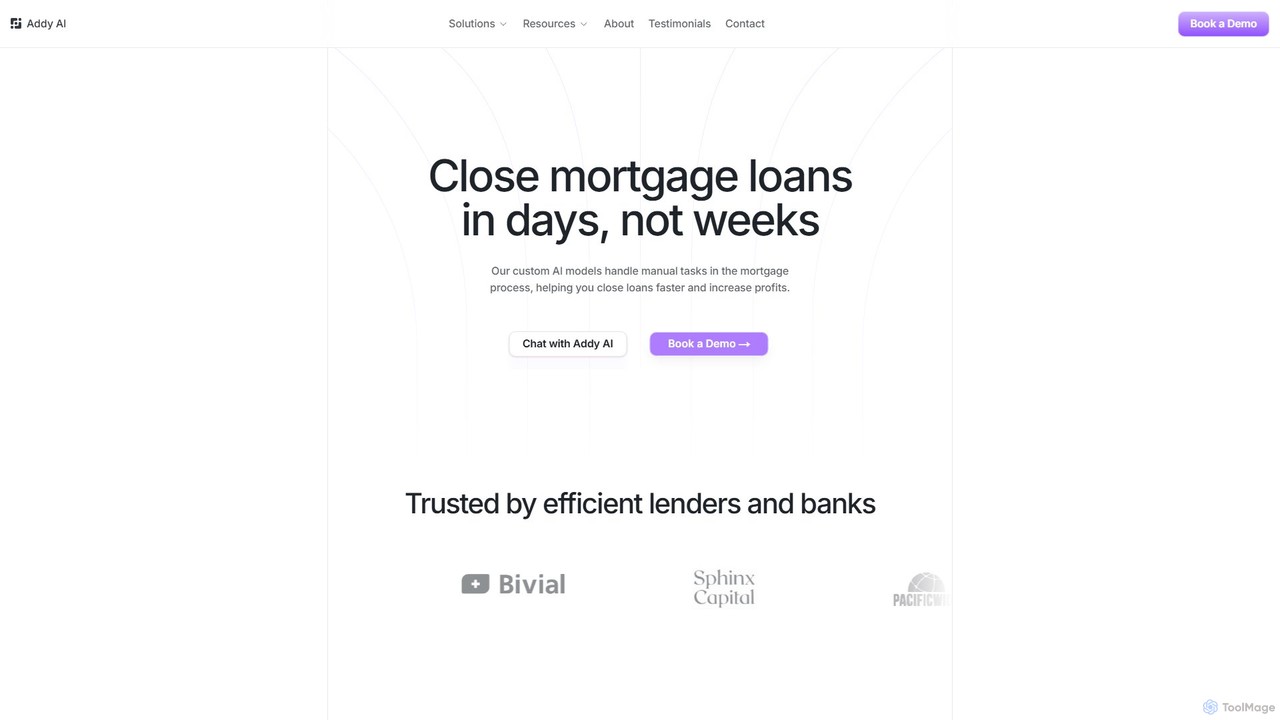
Addy AI is a specialized AI platform for the mortgage industry, designed to automate manual tasks and accelerate loan closing by up to 90%. It provides instant loan assessments, automated data extraction from documents, seamless CRM integration, and a customizable AI chatbot for lending guidelines. This streamlines the entire mortgage process, enhancing efficiency and profitability for lenders, banks, and loan officers.

Chatbot
Visits 6KFavorites 138Likes 131
Pagaya

Pagaya

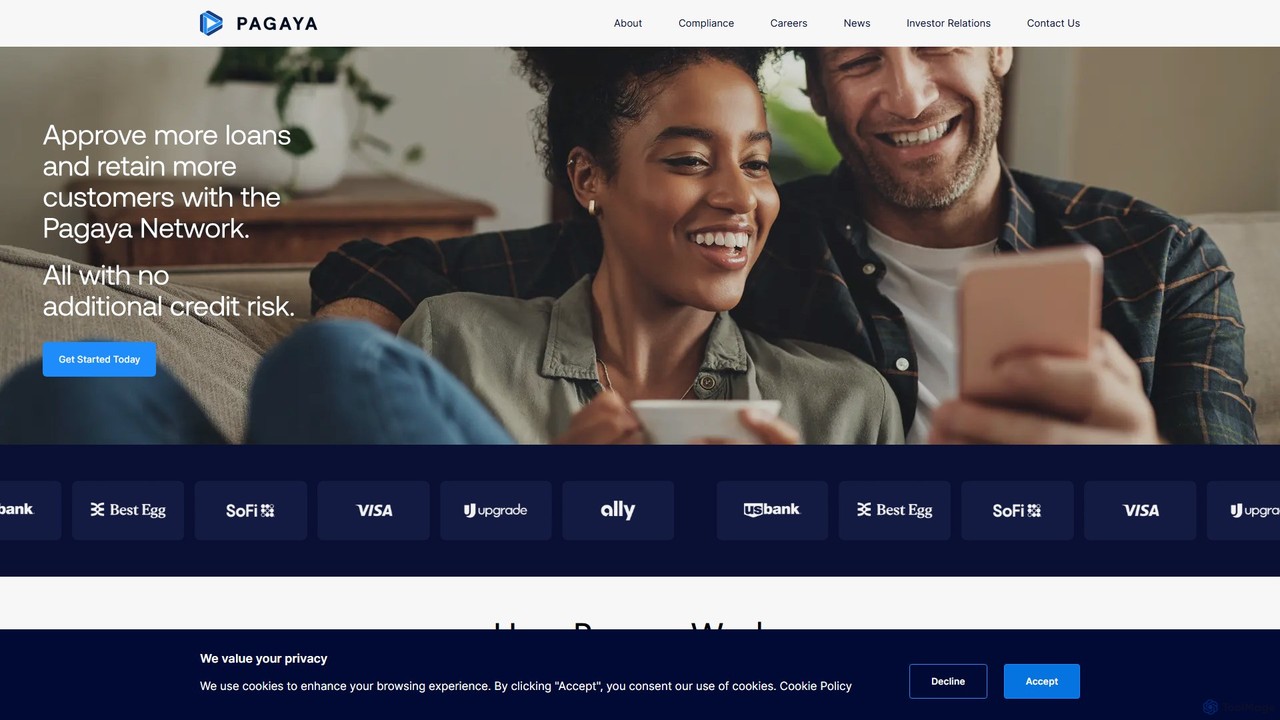
Pagaya is an AI-powered lending network that enables financial institutions to approve more loan applications with greater confidence. By integrating via API, partners can leverage Pagaya's sophisticated AI models to analyze credit risk in real-time, expanding their customer base without increasing balance sheet risk. This B2B fintech solution helps banks, credit unions, and auto lenders grow their portfolios, deepen customer relationships, and increase approval rates while maintaining full compliance and security.

Risk Management
Visits 31.4KFavorites 167Likes 151
onefin
Paid

onefin

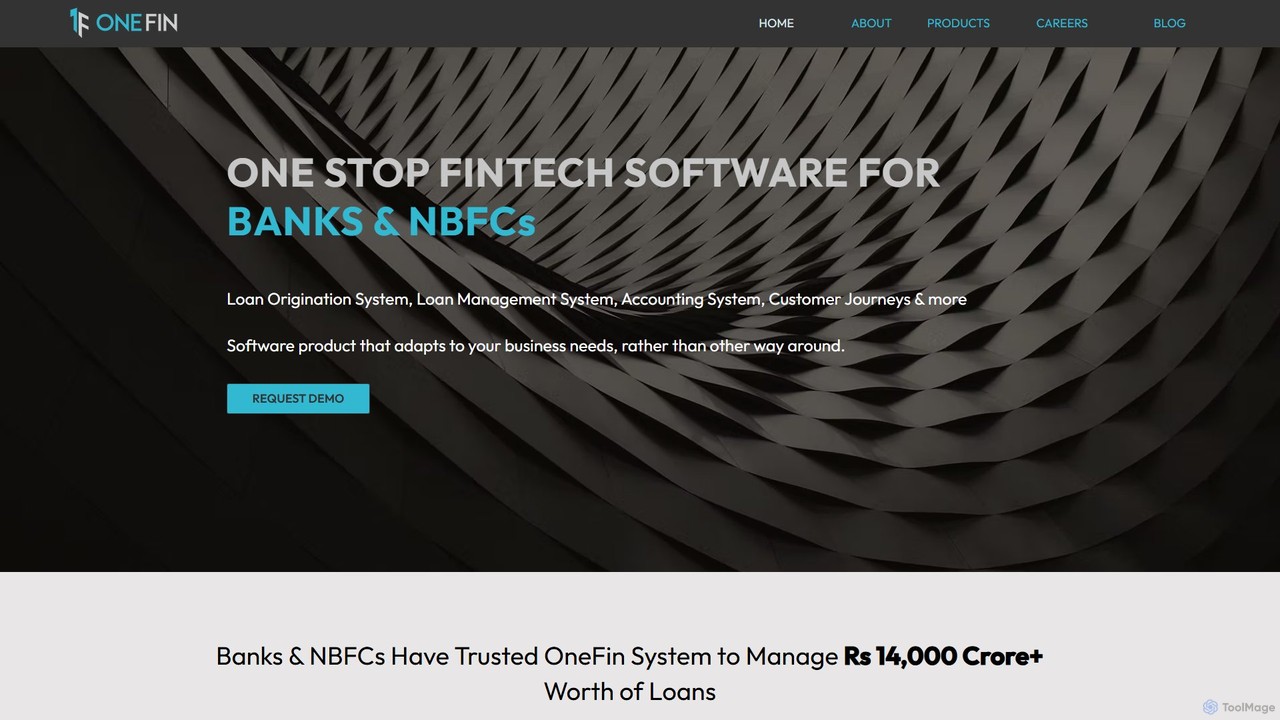
onefin is an end-to-end, AI-powered loan management platform for banks, NBFCs, and fintechs. It offers a comprehensive suite including a Loan Origination System (LOS), Loan Management System (LMS), and collection modules. Built on a low-code architecture, it allows for high customizability, rapid deployment, and seamless integration with over 70 external services, automating the entire lending lifecycle from application to settlement.

Enterprise Software
Visits 51.5KFavorites 144Likes 160
Casca
Paid

Casca

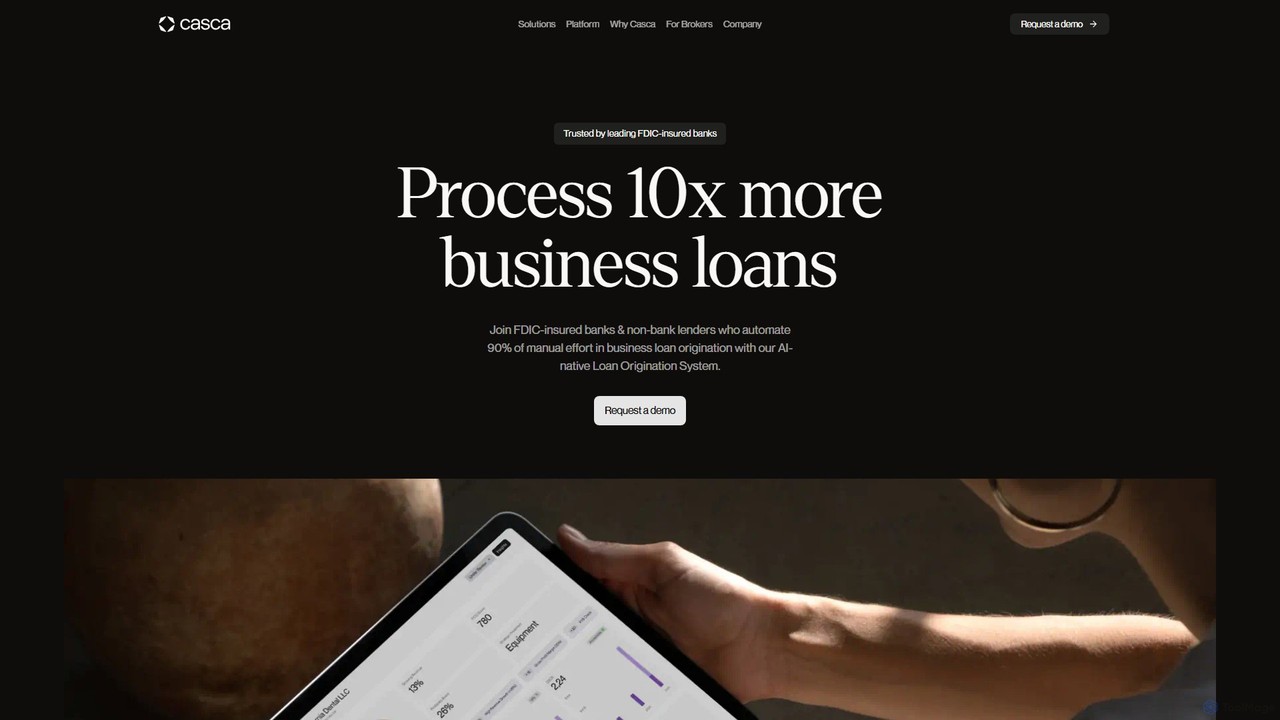
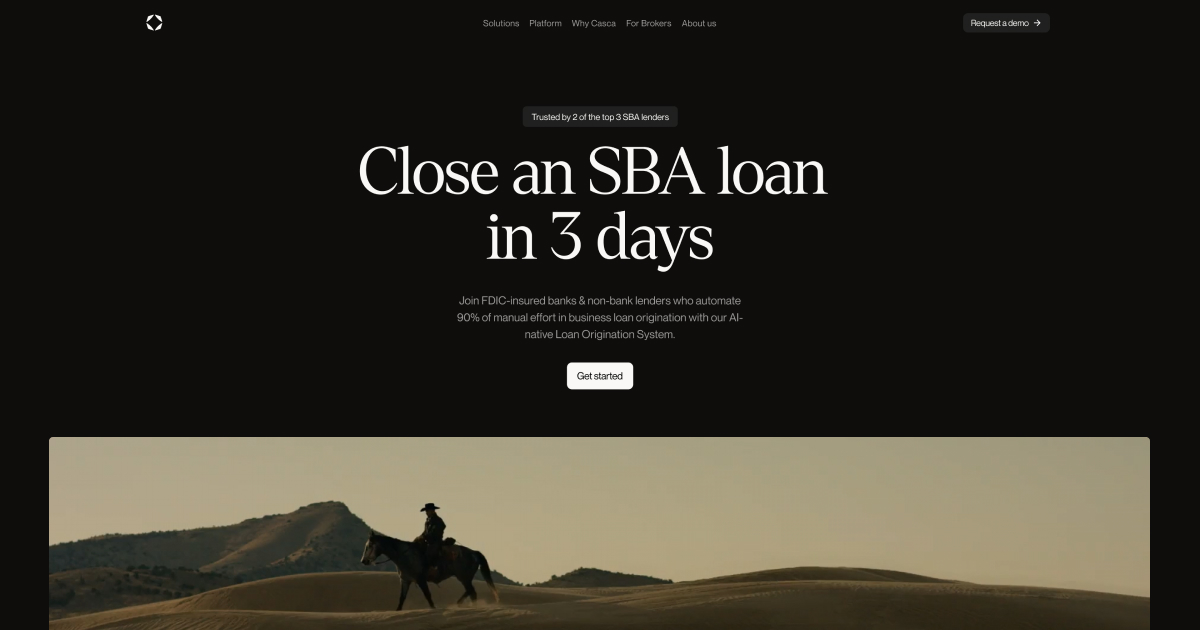
Casca is an AI-powered lending platform designed for banks and financial institutions to modernize their business loan origination process. It automates underwriting, document analysis, and applicant communication, significantly reducing manual effort and loan cycle times while increasing conversion rates.

Financial Services
Visits 21KFavorites 144Likes 125
Addy AI
Paid

Addy AI

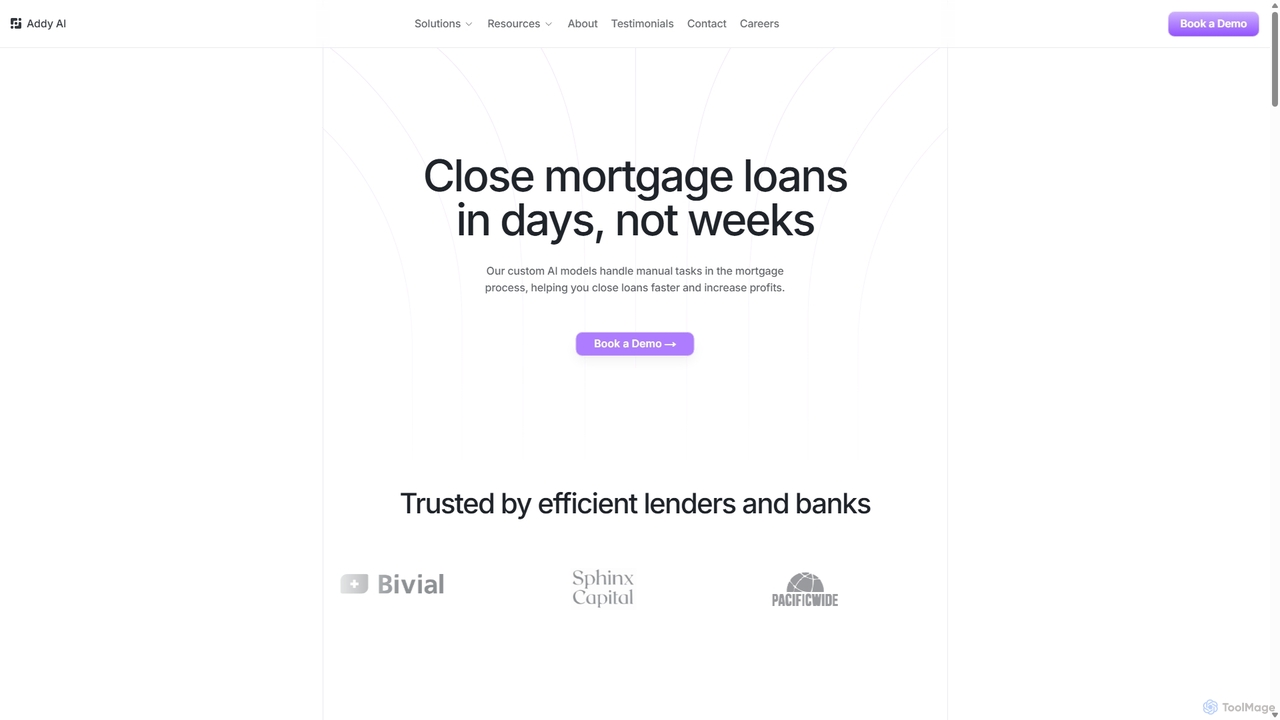
Addy AI is an intelligent platform for the mortgage industry, using custom AI models to automate manual tasks, from loan assessment to client follow-ups. It helps lenders and loan officers close loans up to 90% faster, increasing efficiency and profitability while enhancing client satisfaction.

Chatbot
Visits 11.5KFavorites 116Likes 109
OmniAI
Paid

OmniAI

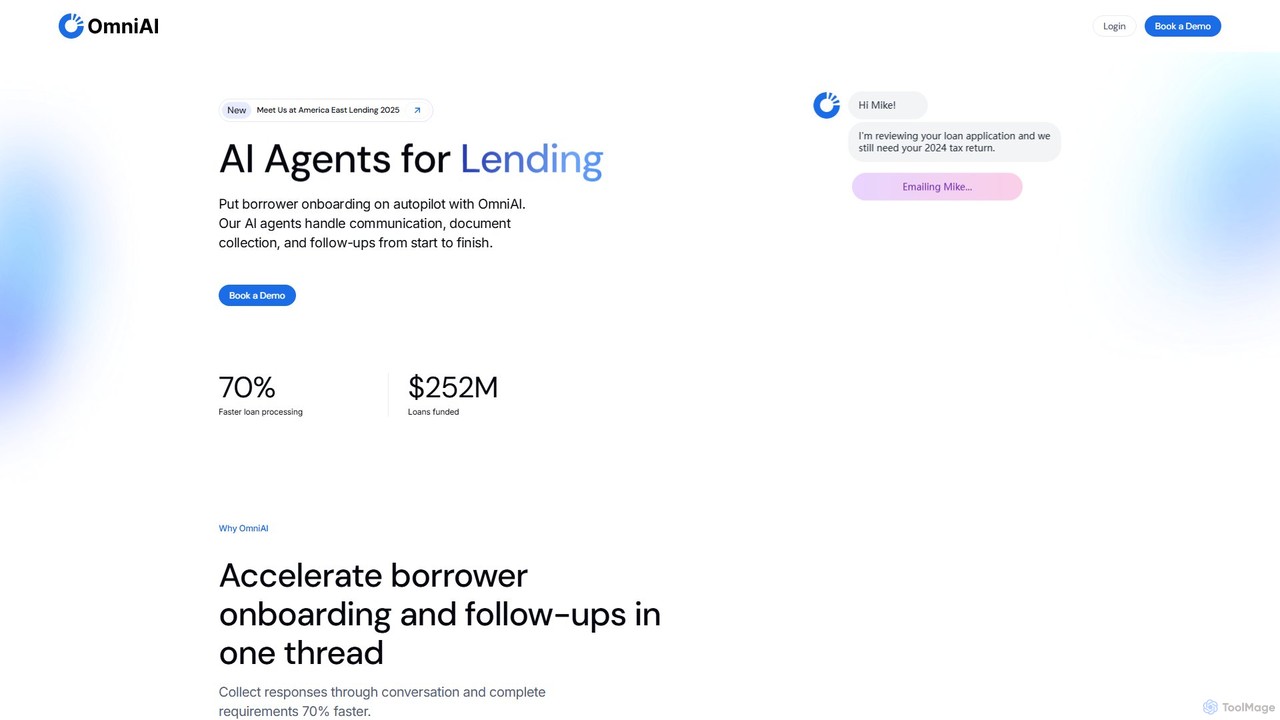
OmniAI provides intelligent AI agents for the lending industry, designed to automate and accelerate borrower onboarding. It handles communication, document collection, and follow-ups via SMS and email, significantly reducing loan processing times and improving the borrower experience.

Virtual Assistant
Visits 20.7KFavorites 127Likes 127
finbots.ai
Paid

finbots.ai

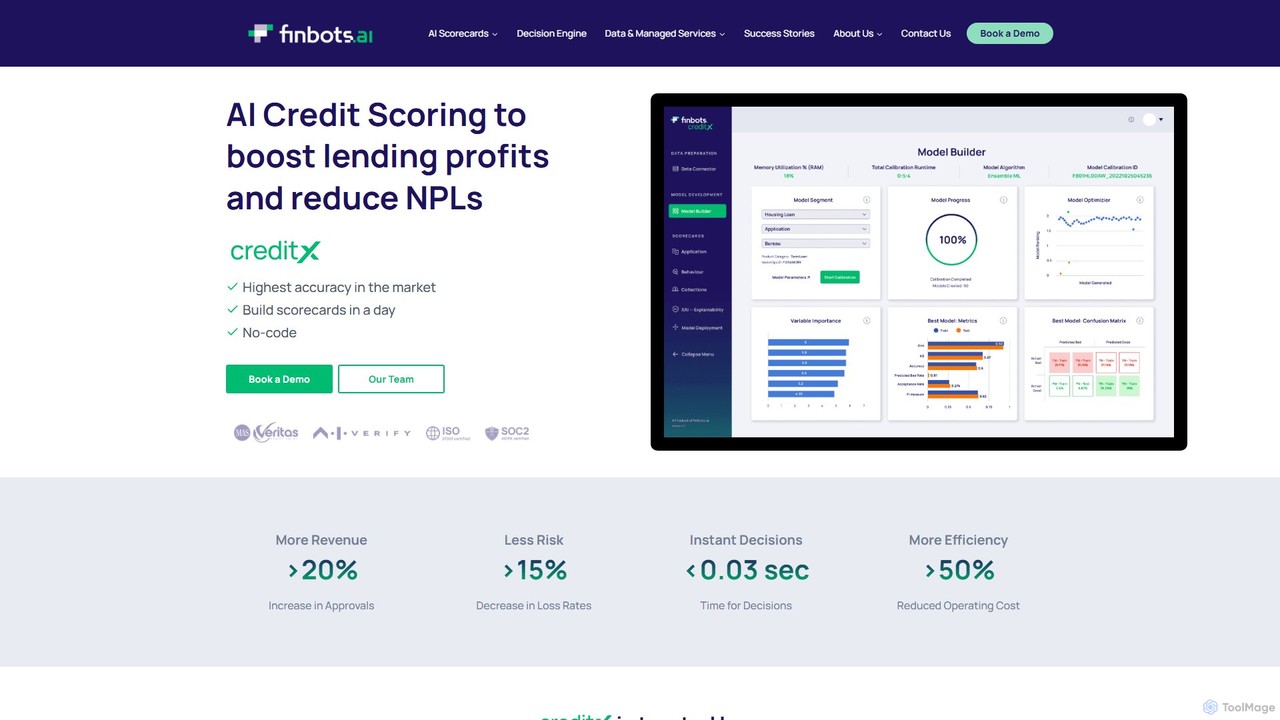
finbots.ai is an AI-powered credit risk management platform for lenders. Its core product, creditX, is a no-code SaaS solution that enables banks, fintechs, and financial institutions to rapidly build, validate, and deploy high-accuracy credit scorecards. It significantly reduces risk, increases loan approvals, and enhances operational efficiency.

Data Analytics
Visits 6.5KFavorites 140Likes 124
Nexu
Free

Nexu

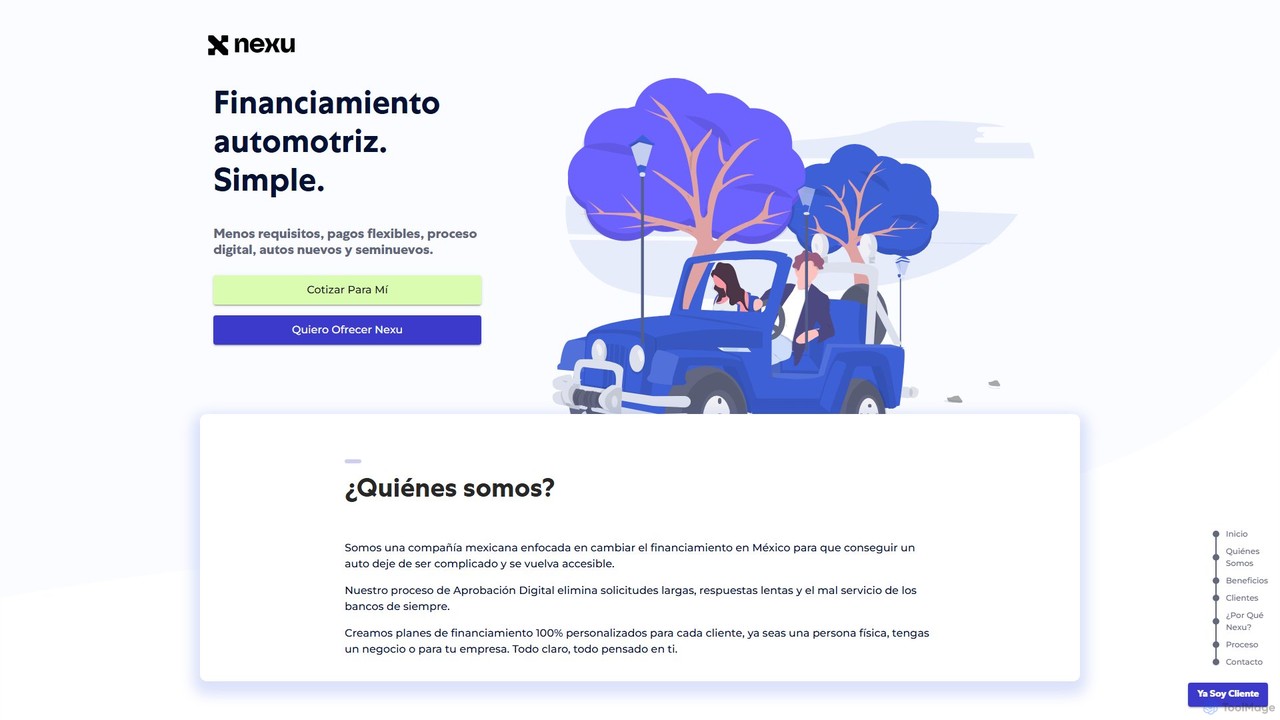
Nexu is an AI-powered FinTech platform that revolutionizes automotive financing. It offers a fast, fully digital process for securing car loans and leases in Mexico, providing pre-authorization in seconds and full approval in hours. Nexu simplifies the car buying journey with its user-friendly interface and convenient at-home services.

Automotive
Visits 165KFavorites 99Likes 104
Monet
Freemium

Monet

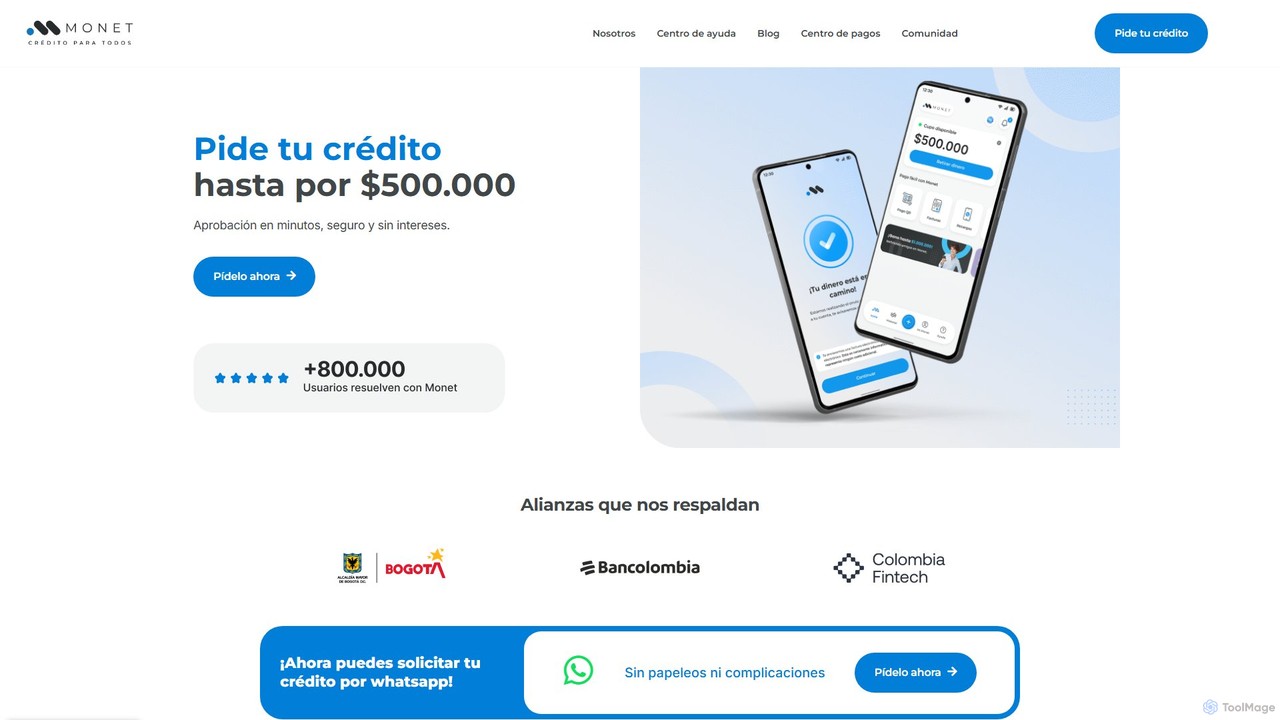
Monet is an AI-powered financial platform in Colombia offering fast, accessible online loans. It leverages Open Banking technology to analyze financial data for instant credit approval, even for users with a poor credit history. The platform provides a simple, secure, and paperless way to obtain short-term funds directly to your bank account.

Lending
Visits 95KFavorites 154Likes 128
Salient
Paid

Salient

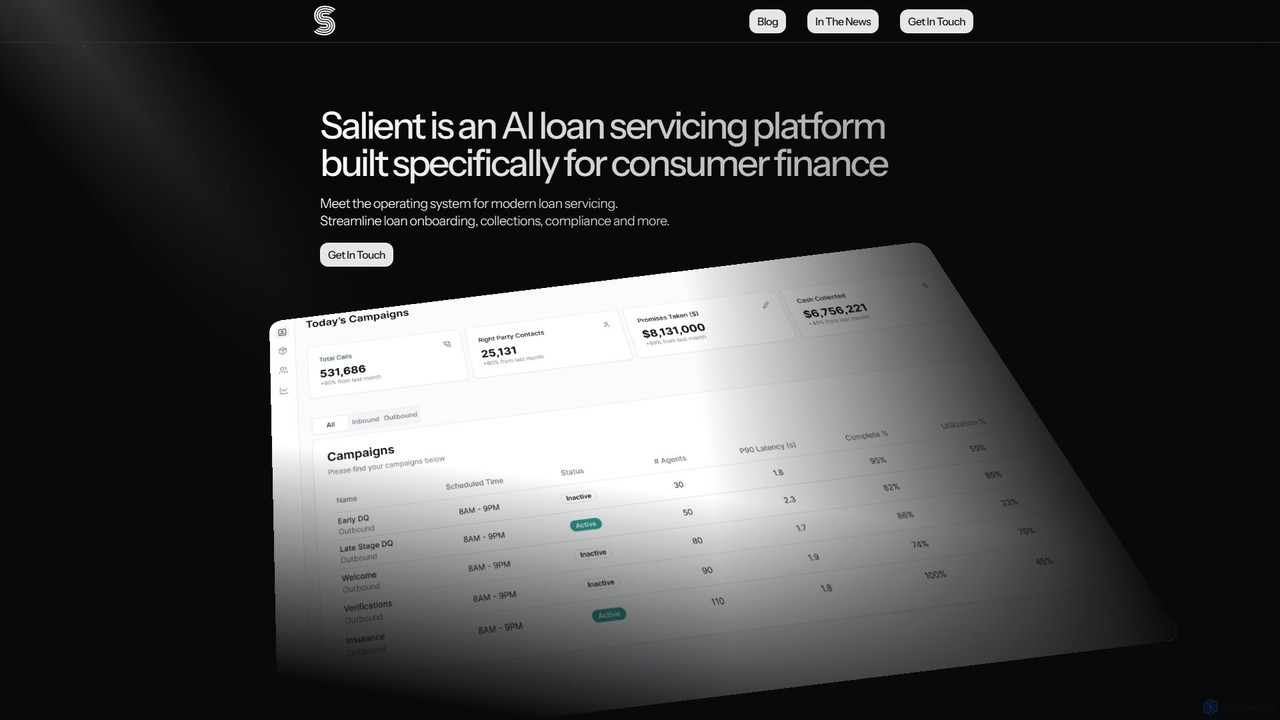
Salient provides enterprise-grade AI agents specialized in loan servicing for the financial industry. These agents automate customer interactions across voice, text, and email to handle payments, due date changes, and inquiries while ensuring strict regulatory compliance (FDCPA, CFPB). It integrates seamlessly with existing lending systems to reduce handle times and improve operational efficiency.

Virtual Agent
Visits 18.4KFavorites 112Likes 122

About Lending

AI Lending tools are a specialized category of financial technology that uses machine learning and data analytics to automate and enhance the entire loan lifecycle. These platforms analyze vast datasets, including traditional and alternative data, to produce more accurate credit scores and risk assessments. This results in faster loan approvals, reduced default rates, and more inclusive access to credit. By automating underwriting and fraud detection, these tools significantly improve operational efficiency for financial institutions.

Core Features

  • Automated Credit Scoring: Utilizes machine learning models to assess creditworthiness with higher accuracy than traditional methods.
  • Real-time Fraud Detection: Identifies and flags suspicious application patterns and inconsistencies instantly.
  • Predictive Risk Analysis: Forecasts the probability of loan defaults by analyzing borrower behavior and market trends.
  • Loan Origination Automation: Streamlines the entire process from application submission and document verification to final approval.
  • Alternative Data Integration: Incorporates non-traditional data sources like rent payments or utility bills to evaluate applicants with thin credit files.

Use Cases

AI Lending tools are primarily used by banks, credit unions, fintech startups, and online lending platforms. They are applied across various loan types, including personal loans, small business financing, mortgages, and auto loans. These tools are essential for institutions looking to scale their lending operations, improve decision-making accuracy, and offer a faster, more seamless experience to borrowers.

How to Choose

When selecting an AI Lending tool, consider the model's accuracy and explainability to meet regulatory requirements. Evaluate its data integration capabilities with your existing core banking and CRM systems. Assess its scalability to handle your expected loan volume and ensure it complies with relevant financial regulations like fair lending laws. Finally, consider the level of customization available to tailor the risk models to your specific portfolio.

Featured tool rankings

Lending use cases

1

Automating Small Business Loan Underwriting

A fintech lender uses an AI platform to process loan applications from small businesses. Instead of days of manual review, the AI analyzes financial statements, cash flow data, and market position in minutes. It provides a comprehensive risk score and recommended loan terms, allowing the lender to make decisions 90% faster and serve a larger volume of clients with lower operational costs.

2

Real-Time Mortgage Application Fraud Detection

A large bank integrates an AI lending tool into its online mortgage application portal. The AI cross-references applicant data against multiple internal and external databases in real-time. It can instantly flag inconsistencies, synthetic identities, or suspicious document uploads, alerting the fraud prevention team to investigate high-risk applications before any funds are disbursed, significantly reducing potential losses.

3

Improving Credit Access with Alternative Data

A micro-lender focused on underserved communities uses an AI tool to assess applicants with thin or no credit history. The model analyzes alternative data such as mobile phone usage, utility payment history, and rental data. This allows the lender to build a more holistic risk profile, enabling them to approve loans for individuals who would be automatically rejected by traditional scoring systems, thereby promoting financial inclusion.

4

Proactive Loan Default Prediction

A credit union employs an AI-powered portfolio monitoring tool. The system continuously analyzes the payment behavior and financial health of its existing borrowers. It identifies subtle patterns that indicate an increased risk of future default, allowing the credit union to proactively reach out to at-risk members with financial counseling or loan restructuring options, reducing overall portfolio risk and improving member relations.

5

Automating Document Verification and Data Extraction

An auto loan provider uses an AI tool to streamline its application process. Applicants upload photos of their driver's license, pay stubs, and insurance documents. The AI uses Optical Character Recognition (OCR) to instantly extract all relevant information, verify its authenticity, and populate the application fields automatically. This reduces manual data entry errors by over 95% and cuts down application processing time by half.

6

Generating Personalized Loan Offers at Scale

An online lending platform uses an AI engine to create dynamic, personalized loan offers. Based on an applicant's real-time credit assessment, the AI calculates multiple loan scenarios with varying interest rates, repayment terms, and loan amounts. This allows the platform to present the most suitable options to each individual, significantly increasing the likelihood of conversion compared to offering static, one-size-fits-all loan products.

Lending FAQ

What are AI Lending tools?

AI Lending tools are software platforms that use artificial intelligence, particularly machine learning, to automate and improve the lending process. They analyze large volumes of data to perform tasks like credit scoring, risk assessment, and fraud detection with greater speed and accuracy than traditional methods. The primary goal is to help lenders make smarter, faster, and more consistent loan decisions.

How do AI Lending tools differ from traditional credit scoring?

Traditional credit scoring, like FICO, relies on a limited set of historical data and fixed rules. AI Lending tools use machine learning models that can analyze thousands of data points in real-time, including non-traditional data (e.g., utility payments). This allows them to identify more complex patterns and produce more predictive risk assessments. AI models can also adapt and learn over time, improving their accuracy, whereas traditional scores are static.

What are the main benefits of using AI in lending?

The primary benefits of using AI in lending include:

  • Increased Speed: Loan application decisions can be made in minutes instead of days.
  • Improved Accuracy: AI models can reduce default rates by identifying risks more effectively.
  • Enhanced Efficiency: Automation of manual tasks like data entry and verification reduces operational costs.
  • Greater Inclusivity: By using alternative data, AI can help provide credit to individuals overlooked by traditional systems.
  • Consistent Decisions: AI removes human subjectivity, leading to more consistent and fair application of lending criteria.
Is it difficult to integrate an AI Lending tool with existing systems?

The difficulty of integration depends on the specific AI tool and the lender's existing technology stack. Modern AI lending platforms are often designed with integration in mind, offering APIs (Application Programming Interfaces) to connect seamlessly with core banking systems, CRMs, and data warehouses. However, it's crucial to assess a tool's integration capabilities and the level of technical support provided by the vendor before making a selection. A successful integration typically requires collaboration between the lender's IT team and the AI tool provider.

How to choose the right AI Lending tool?

To choose the right AI Lending tool, consider these factors:

  • Model Explainability: Ensure the tool can explain its decisions to comply with regulations like the Equal Credit Opportunity Act (ECOA).
  • Data Integration: Verify it can easily connect with your existing data sources, core banking system, and CRM.
  • Scalability: Choose a platform that can grow with your loan volume without performance degradation.
  • Customization: The tool should allow you to tailor its risk models and decision logic to your specific lending policies and risk appetite.
  • Vendor Support: Evaluate the provider's reputation, customer support, and expertise in the financial industry.