ToolMage
Sign in

Best 56 Personal Finance AI tools for Finance

Popular Personal Finance AI tools in Finance include Rocket Money, Cleo, Kudos, Origin, almowafir, Mint, DealDrop, DoNotPay, 19pine, and Monet, helping you work more efficiently.

ShowMeMoney
Paid

ShowMeMoney

ShowMeMoney is an AI-powered expense tracking application designed for smarter spending and saving. It leverages OpenAI to automatically process and categorize financial data from plain text or bank statements. With features like auto-sync, budget notifications, and interactive charts, it provides a clear, simple way to manage personal finances and stay on budget.

Budgeting
Visits 5.9KFavorites 139Likes 163

lowerebill
Free

lowerebill

lowerebill is an AI-powered energy marketplace that helps homeowners and businesses in deregulated US markets find the most affordable electricity plan. By analyzing your actual energy usage data or forecasting it with AI, the platform compares over 3,000 plans to provide personalized, transparent recommendations, saving you time and money on your utility bills. The service is completely free for consumers.

Utilities
Visits 11.1KFavorites 116Likes 118
Kudos
Free

Kudos

Kudos is a free, AI-powered financial companion that helps you maximize credit card rewards automatically. It functions as a smart wallet browser extension and app, selecting the best card at checkout, finding hidden perks, tracking spending, and monitoring your credit score to help you save money effortlessly.

Utilities
Visits 928.8KFavorites 152Likes 142
drahim
Freemium

drahim

drahim is a Sharia-compliant robo-advisor and personal finance app based in Saudi Arabia. It offers automated, diversified investment portfolios with low fees, expense tracking via Open Banking, and an AI financial assistant, Drahim GPT, to provide personalized financial guidance.

Investment
Visits 42.9KFavorites 120Likes 146
Zactortech
Freemium

Zactortech

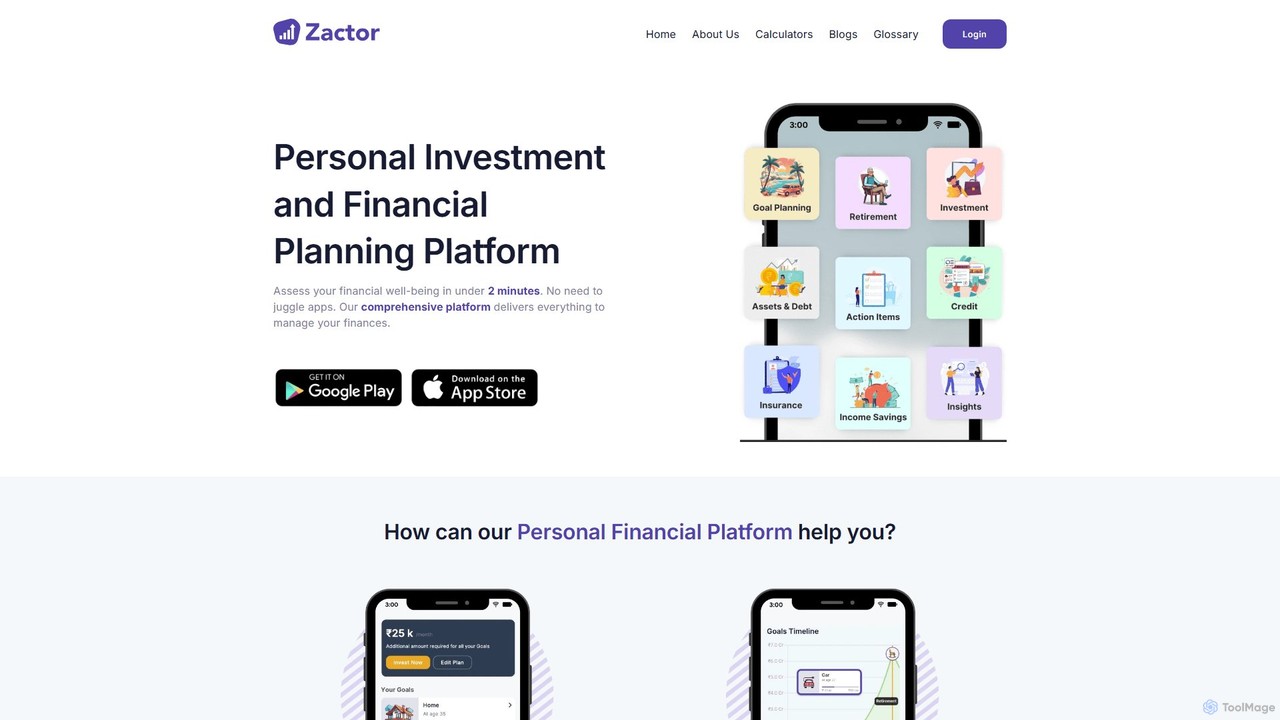
Zactortech is an AI-powered personal investment and financial planning platform designed to simplify finance management. It combines AI-driven insights with human expertise to provide users with a clear, actionable roadmap for achieving their financial goals, from savings and investments to retirement planning.

Investment
Visits 8.2KFavorites 145Likes 141
MyHustleAI
Freemium

MyHustleAI

MyHustleAI is an AI-powered platform designed to help you discover personalized side hustle opportunities in under a minute. By analyzing your unique skills, interests, and financial goals, it generates a curated list of viable business ideas. Move beyond generic suggestions and find an actionable path to earning extra income that's perfectly suited to you, complete with initial steps and resource guidance.

Side Hustle
Visits 5.9KFavorites 123Likes 136
Origin
Freemium

Origin

Origin is an all-in-one financial management platform that combines AI-powered insights with human expertise. It allows users to track net worth, budget, invest, and plan for the future in a single app. With features like an AI finance assistant, access to Certified Financial Planners®, and tools for couples and estate planning, Origin aims to simplify wealth building for a new generation.

Financial Advice
Visits 590.1KFavorites 124Likes 141
mymapleadvisor
Paid

mymapleadvisor

mymapleadvisor, also known as MAPLE, is an AI-powered financial advisor designed to provide personalized wealth management. It analyzes your assets, tracks goals, and delivers specific recommendations to optimize your portfolio, manage debt, and plan for retirement. With a strong focus on privacy and security, it offers a comprehensive financial checkup without ads or hidden fees.

Investment
Visits 6KFavorites 145Likes 159

About Personal Finance

AI Personal Finance tools are applications that leverage artificial intelligence to help individuals manage their money, track expenses, and plan for financial goals. These tools connect to your financial accounts and use machine learning algorithms to automatically categorize transactions, identify spending patterns, and provide predictive forecasts. Their primary value lies in transforming complex financial data into actionable insights, empowering users to make smarter decisions about budgeting, saving, and investing. Unlike general financial software, they offer personalized recommendations tailored to an individual's unique financial situation and objectives.

Core Features

  • Automated Transaction Categorization: Automatically sorts bank and credit card transactions into categories like groceries, transport, and entertainment.
  • Predictive Budgeting: Analyzes past spending to forecast future expenses and cash flow, helping to prevent budget shortfalls.
  • Personalized Financial Insights: Offers tailored advice on saving opportunities, debt reduction strategies, and investment options based on user data.
  • Goal Setting and Tracking: Allows users to set financial goals (e.g., saving for a house, retirement) and monitors progress towards them.
  • Investment Portfolio Analysis: Assesses investment accounts to provide insights on asset allocation, performance, and potential risks.

Applicable Scenarios

These tools are ideal for individuals and families seeking to gain control over their finances. They are particularly useful for young professionals building a budget for the first time, freelancers managing fluctuating income, and anyone planning for major life events like buying a home or retiring. They simplify complex financial management tasks that were once time-consuming or required professional help.

Selection Criteria

When choosing an AI Personal Finance tool, consider its security protocols, such as bank-level encryption and two-factor authentication. Evaluate the range of supported financial institutions to ensure compatibility with your accounts. Assess the tool's core focus—whether it excels at budgeting, investment tracking, or all-in-one management. Finally, compare pricing models, from free versions with basic features to subscription plans with advanced analytics.

Featured tool rankings

Personal Finance use cases

1

Automated Budgeting for Young Professionals

A recent graduate starting their first job wants to build healthy financial habits. They connect their bank accounts to an AI personal finance tool. The AI automatically categorizes all their spending—rent, groceries, student loan payments, and entertainment—providing a clear visual breakdown. Based on their income and spending patterns, the tool suggests a realistic monthly budget and sets up alerts to notify them when they are approaching category limits. This proactive management helps them stay on track with their savings goals for a future down payment without tedious manual tracking.

2

Optimizing Investment Portfolios for Growth

An amateur investor with a portfolio spread across stocks, ETFs, and mutual funds wants to ensure their investments are aligned with their long-term goals and risk tolerance. They use an AI tool to aggregate all their investment accounts into a single dashboard. The AI analyzes the portfolio's asset allocation, identifies areas of over-concentration, and highlights underperforming assets. It then provides personalized suggestions, such as rebalancing into different sectors or considering alternative investments to improve diversification. This data-driven insight helps the investor make informed adjustments to optimize for growth.

3

Strategic Debt Reduction Planning

An individual is struggling with multiple sources of debt, including credit cards with high interest rates and a personal loan. They use an AI finance tool to get a clear overview of all their liabilities. The AI analyzes the interest rates, balances, and minimum payments for each debt. It then simulates different payoff strategies, such as the 'Avalanche' method (paying off highest-interest debt first) and the 'Snowball' method (paying off smallest balances first). The tool presents a clear, actionable plan showing how much they could save in interest and how quickly they could become debt-free with each strategy, empowering them to choose the best path forward.

4

Managing Finances for Freelancers

A freelance designer deals with fluctuating monthly income and needs to separate business expenses from personal spending for tax purposes. They use an AI finance app that allows them to link both business and personal accounts. The AI helps categorize income streams and automatically identifies tax-deductible expenses like software subscriptions and office supplies. It also analyzes their income patterns to help them set aside an appropriate amount for quarterly tax payments and build a cash reserve for slower months. This provides financial stability and simplifies tax preparation significantly.

5

Collaborative Family Financial Planning

A couple wants to manage their joint finances more effectively and plan for shared goals like a family vacation and their children's education. They use an AI personal finance tool that supports joint accounts and shared budgets. The tool provides a unified view of their combined income and expenses, automatically categorizing spending from both partners. They can create specific savings goals and the AI calculates the required monthly contribution from their joint income. This transparency eliminates financial miscommunication and helps them work together as a team to reach their family's financial milestones.

6

Forecasting for Major Life Purchases

A user is planning to buy their first home within the next three years and needs to understand their financial readiness. They input their savings goal for a down payment into an AI finance tool. The tool analyzes their current income, spending habits, and savings rate to project when they will reach their goal. It can also run simulations based on different scenarios, such as increasing their monthly savings or receiving a salary raise. This forecasting capability provides a clear timeline and helps them make necessary adjustments to their budget to accelerate their path to homeownership.

Personal Finance FAQ

What are AI Personal Finance tools?

AI Personal Finance tools are applications that use artificial intelligence to help individuals manage their financial life. They automate tasks like categorizing expenses, tracking bills, and monitoring investments. Unlike traditional spreadsheets or basic budgeting apps, these tools use machine learning to analyze your spending habits, provide predictive forecasts about your cash flow, and offer personalized recommendations to help you save money, reduce debt, and reach your financial goals faster.

How do I choose the right AI Personal Finance tool?

To choose the right tool, consider these four factors:

  • Security: Ensure the tool uses bank-level encryption and two-factor authentication to protect your sensitive financial data.
  • Account Connectivity: Check if it supports all your financial institutions, including banks, credit cards, and investment brokers.
  • Features: Identify your primary need. Do you need a strong budgeting and expense tracking tool, or one focused on investment analysis and portfolio management? Some offer an all-in-one solution.
  • Cost: Compare the pricing models. Many offer a free tier with basic features, while premium subscriptions unlock advanced analytics, personalized advice, and customer support.
Are AI Personal Finance tools safe to use?

Reputable AI personal finance tools prioritize security. They typically use bank-level 256-bit encryption to protect your data both in transit and at rest. Most tools also connect to your accounts using secure, read-only access through trusted third-party aggregators like Plaid, meaning the app cannot move money or make changes to your accounts. However, it is always crucial to review a tool's privacy policy, understand how your data is used, and enable two-factor authentication for an extra layer of security.

What's the difference between a standard budgeting app and an AI-powered one?

The key difference is automation and intelligence. A standard budgeting app often requires you to manually categorize transactions and set up budget rules. An AI-powered tool automates this process by learning from your behavior. Furthermore, AI tools go beyond simple tracking. They can provide predictive insights, such as forecasting your account balance at the end of the month, identifying unusual spending, and offering personalized recommendations to optimize your finances, which standard apps typically cannot do.

Who can benefit from using AI Personal Finance tools?

A wide range of individuals can benefit. This includes:

  • Students and Young Professionals: For learning to budget, track spending, and build credit responsibly.
  • Families: To manage household budgets, track shared expenses, and plan for long-term goals like college savings.
  • Freelancers and Gig Workers: To manage irregular income, track business expenses for tax purposes, and plan for taxes.
  • Aspiring Investors: To get a consolidated view of their portfolio, analyze performance, and receive data-driven insights.
  • Anyone Seeking Financial Clarity: For those who feel overwhelmed by their finances and want an automated, simplified way to understand where their money is going.