Plask
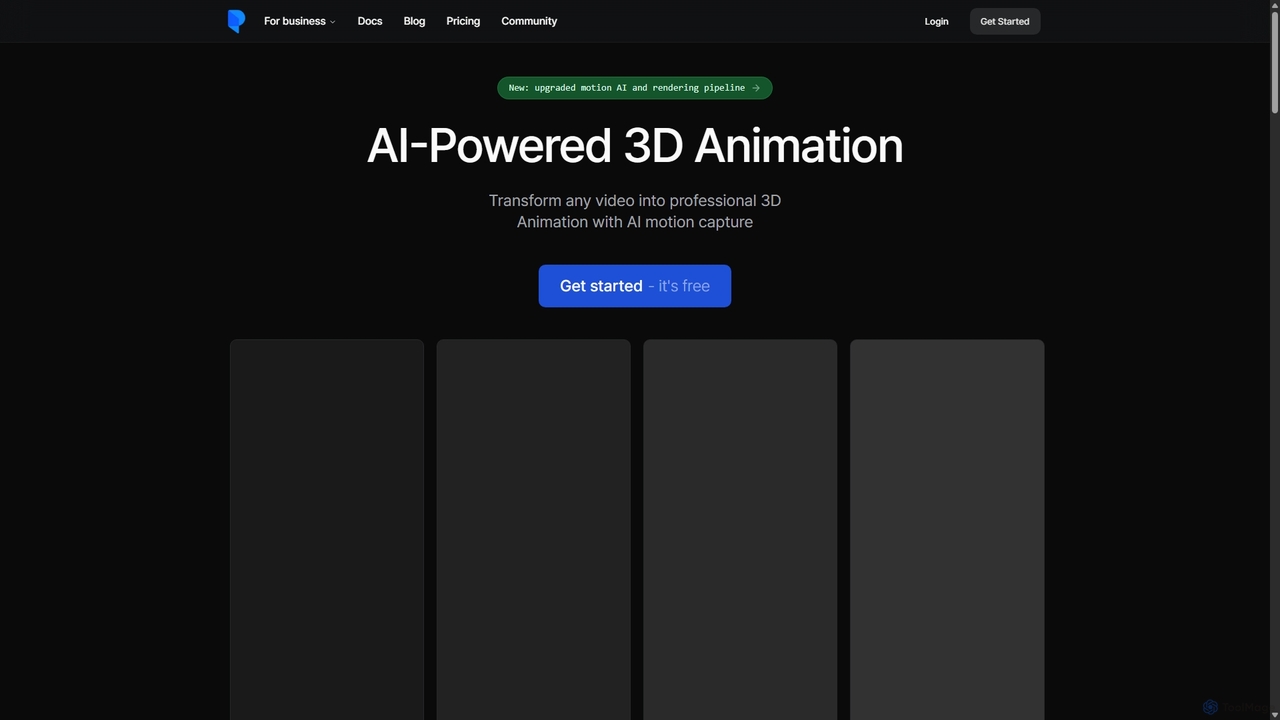
Plask is an AI-powered motion capture and 3D animation tool that transforms any video into professional-grade animations. Simply …
Plask is an AI-powered motion capture and 3D animation tool that transforms any video into professional-grade animations. Simply upload a video, and its AI extracts precise motion data to apply to your 3D characters. It's designed for game developers, animators, and content creators to streamline their workflow and create stunning visuals effortlessly.

audeering
audeering is a leading Voice AI technology platform that enables machines to understand human emotion and expression through …
audeering is a leading Voice AI technology platform that enables machines to understand human emotion and expression through advanced voice analysis. By detecting over 7,000 acoustic parameters, it provides deep insights for applications in automotive, healthcare, robotics, market research, and gaming, fostering a new era of empathetic human-machine interaction.
About Development
Development tools in the gaming context are specialized AI-powered solutions designed to assist and automate various stages of video game creation. These tools leverage machine learning, procedural generation, and intelligent automation to streamline tasks from concept to deployment. They enhance efficiency, foster innovation, and enable developers to create richer, more dynamic gaming experiences. This category empowers developers to tackle complex challenges, accelerate iteration cycles, and push the boundaries of interactive entertainment.
Core Features
- Procedural Content Generation: Automatically create diverse levels, textures, quests, or entire game worlds.
- AI-driven NPC Behavior: Design complex, adaptive non-player character intelligence that reacts realistically.
- Automated Testing & Debugging: Identify bugs, optimize game performance, and ensure stability across various scenarios.
- Asset Creation & Optimization: Generate 3D models, animations, or optimize existing game assets efficiently.
- Code Generation & Refinement: Assist in writing, refactoring, or optimizing game-specific code for better performance.
Applicable Scenarios
These tools are invaluable for indie developers accelerating asset creation, large studios prototyping new game mechanics, and game designers crafting dynamic narratives. They support tasks ranging from environmental design to character AI, significantly reducing manual effort and opening new creative avenues.
How to Choose
When selecting AI Development tools for gaming, consider their integration capabilities with your existing game engine (e.g., Unity, Unreal Engine). Evaluate the specific functionality offered, whether it's content generation, AI behavior scripting, or automated testing. Assess the tool's scalability for projects of varying sizes and its ease of use for your development team's technical expertise. Finally, review the community support and documentation available.
DevelopmentUse Cases
Automated Level Design for Game Worlds
Game designers and level artists utilize AI development tools to automatically generate diverse and challenging level layouts. By defining parameters like theme, difficulty, and structural elements, the AI can produce numerous unique iterations, significantly reducing manual iteration time and ensuring high replayability across various game genres. This allows teams to focus on refining gameplay mechanics rather than repetitive environment creation.
Dynamic NPC Behavior Scripting
Game developers employ AI tools to create non-player characters (NPCs) with adaptive intelligence. Instead of rigid, pre-scripted actions, NPCs can react realistically to player actions, environmental changes, and other in-game events. This enhances immersion and provides a more unpredictable and engaging experience, allowing for complex social interactions or challenging combat scenarios without extensive manual coding for every possibility.
Procedural Asset Generation for Game Environments
3D artists and environment designers leverage AI to rapidly generate variations of environmental assets such as trees, rocks, buildings, or entire biomes. By inputting core stylistic guidelines and parameters, the AI can produce a vast library of unique assets that maintain artistic consistency, saving significant manual modeling and texturing time. This accelerates the creation of rich, detailed game worlds, especially for open-world titles.
Intelligent Game Testing and Quality Assurance
QA teams and game testers utilize AI development tools to simulate player interactions, identify bugs, and stress-test game mechanics across various scenarios. AI agents can perform repetitive tests, explore edge cases, and even learn to exploit game flaws more efficiently than human testers. This significantly improves game stability, performance, and overall quality before release, reducing the time and cost associated with manual testing.
AI-Assisted Code Refactoring and Optimization
Game programmers use AI development tools to analyze existing game code, suggest optimizations, and refactor complex sections for better performance and maintainability. These tools can identify bottlenecks, recommend more efficient algorithms, or even generate boilerplate code, freeing up developers to focus on core logic and innovative features. This leads to cleaner, faster, and more robust game engines and systems.
Personalized Game Content Delivery
Developers integrate AI to dynamically adapt game content, quests, or difficulty based on individual player performance, preferences, and playstyle. This creates a highly personalized experience, keeping players engaged longer by offering challenges that are neither too easy nor too hard, or by tailoring narrative elements to their choices. AI analyzes player data in real-time to make these adjustments, enhancing player retention and satisfaction.