ToolMage
Sign in

Best 1 Esports AI tools for Gaming

Popular Esports AI tools in Gaming include Twitch, helping you work more efficiently.

Twitch
Freemium

Twitch

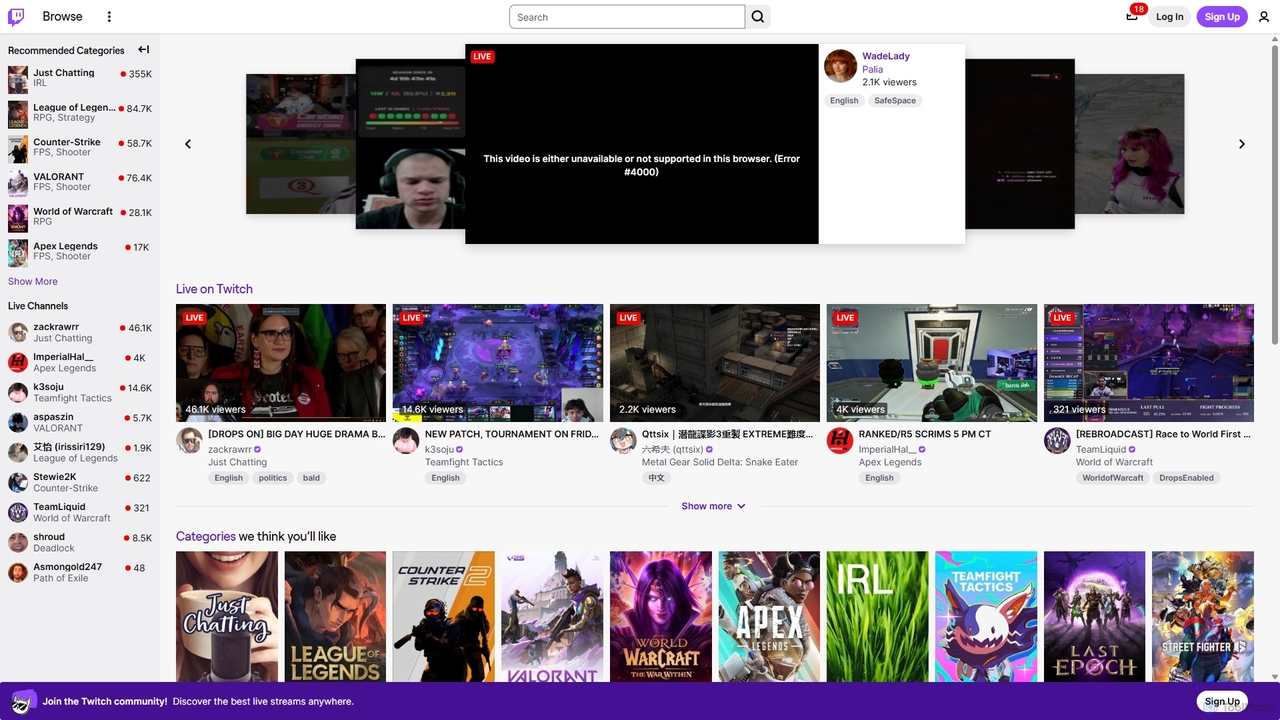
Twitch is the world's leading live streaming platform for gamers, entertainers, musicians, and creative communities. It offers an interactive space for creators to broadcast their content in real-time, engage with a global audience through live chat, and build dedicated communities. Viewers can watch, chat, and support their favorite streamers through subscriptions and virtual goods.

Video Platform
Visits 1BFavorites 148Likes 135

About Esports

AI Esports tools are specialized applications that use machine learning to analyze gameplay, optimize player performance, and refine competitive strategies. These tools process vast amounts of in-game data, such as player positioning, ability usage, and decision-making, to provide actionable insights that surpass human analysis. As a focused segment within AI Gaming, they are specifically designed for the high-stakes, data-rich environment of competitive play, helping players and teams gain a critical edge. They transform raw replay files and live data into clear, strategic guidance.

Core Features

  • Performance Analysis: Automatically evaluates player metrics like APM, accuracy, and positioning to pinpoint strengths and weaknesses.
  • Strategy Optimization: Recommends optimal team compositions, item builds, or in-game rotations based on meta-analysis and opponent data.
  • Automated Coaching: Delivers personalized feedback and suggests specific drills to improve targeted skills after a match.
  • Opponent Scouting: Analyzes public replays of opponents to identify their tendencies, common strategies, and exploitable habits.
  • Predictive Analytics: Forecasts match outcomes, key objectives, and player performance during live games for broadcast or analysis.

Use Cases

These tools are primarily used by professional esports teams, aspiring competitive players, coaches, and analysts across titles like League of Legends, Valorant, and Dota 2. For instance, a coach can use an AI tool to automate the review of practice matches (scrims), quickly identifying team-wide coordination issues. Individual players use them to receive objective feedback on their performance, accelerating their skill improvement cycle.

How to Choose

When selecting an AI Esports tool, first verify it supports your specific game. Evaluate the depth of analysis provided—does it offer high-level summaries or granular, actionable data? Consider whether you need real-time, in-game feedback or detailed post-match analysis. Finally, assess its integration capabilities with game clients or recording software and the clarity of its data visualization.

Esports use cases

1

Individual Player Skill Improvement

An aspiring competitive player uses an AI Esports tool to analyze their match replays. The tool automatically flags moments of poor positioning, inefficient ability usage, and missed opportunities. Based on this analysis, it generates a personalized training plan with specific in-game drills, such as practicing last-hitting under pressure or executing complex ability combos. This data-driven feedback loop allows the player to identify and correct subtle mistakes much faster than through self-review alone, accelerating their climb up the competitive ladder.

2

Team Strategy Formulation and Opponent Scouting

A professional esports coach uses an AI tool to prepare for an upcoming championship match. The tool ingests public match data of their opponents and generates a detailed report on their strategic tendencies, preferred team compositions, and common warding patterns. The AI also simulates thousands of draft scenarios against the opponent's likely picks, recommending optimal counter-picks and ban strategies. This allows the coach to develop a highly tailored game plan that directly exploits the opponent's weaknesses, saving dozens of hours of manual VOD review.

3

Automated VOD Review for Teams

After a long day of practice matches (scrims), an esports analyst uploads hours of gameplay footage to an AI platform. Instead of manually watching every minute, the AI automatically processes the videos, tagging key events like team fights, objective captures, and critical errors. It generates a summary report for each player, highlighting their performance metrics and areas for improvement. The analyst can then use these time-stamped, data-rich summaries to lead a more efficient and focused team review session, cutting down review time by over 70%.

4

Enhancing Live Broadcasts with Predictive Analytics

A tournament organizer integrates an AI Esports tool into their live broadcast production. During a match, the AI analyzes the game state in real-time to generate compelling statistics for viewers, such as win probability percentages that shift after key plays. It can also automatically identify and queue up instant replays of spectacular moments that the human production team might miss. This enriches the viewing experience, making complex games more understandable for casual fans and providing deeper insights for hardcore enthusiasts.

5

Talent Scouting and Recruitment

An esports organization's scouting department uses an AI platform to analyze gameplay data from thousands of high-ranked amateur players. The AI ranks players based on objective metrics like mechanical skill, decision-making consistency, and adaptability, rather than just win rate. This allows scouts to uncover hidden gems who may have a lower rank but demonstrate pro-level potential in specific areas. The system flags top prospects, providing scouts with a data-validated shortlist for further evaluation and potential recruitment, making the scouting process more efficient and less biased.

6

Creating Personalized Training Regimens

A gaming coaching platform integrates an AI Esports tool to offer adaptive training plans. When a user signs up, the AI analyzes their initial performance across several matches to create a baseline profile of their skills. It then generates a weekly training regimen focused on their most significant weaknesses. As the player completes drills and plays more matches, the AI continuously updates their profile and adjusts the training plan accordingly, ensuring they are always working on the skills that will provide the most improvement. This creates a dynamic and highly effective learning path for players of all levels.

Esports FAQ

What are AI Esports tools?

AI Esports tools are specialized software that use machine learning to analyze competitive gameplay. Unlike general gaming tools, they focus specifically on performance metrics, strategic patterns, and opponent tendencies relevant to high-level competition. Their primary purpose is to provide players, coaches, and analysts with data-driven insights to improve skills, optimize strategies, and gain a competitive advantage.

How to choose the right AI Esports tool?

Choosing the right tool depends on your specific needs. Consider these factors:

  • Game Support: Ensure the tool is compatible with the game you play competitively.
  • Analysis Depth: Determine if you need high-level summaries or detailed, granular data on specific actions.
  • Real-time vs. Post-game: Decide if you require live feedback during a match or comprehensive analysis after it ends.
  • Role Focus: Some tools are better for individual players, while others are designed for coaches and team analysts.
What's the difference between AI Esports tools and general game analytics?

The main difference lies in their focus and output. General game analytics platforms often provide descriptive statistics (e.g., 'You had a 60% win rate'). AI Esports tools go further by offering prescriptive and diagnostic insights (e.g., 'You lose team fights because you consistently use your ultimate ability too early'). They are designed not just to report what happened, but to explain why it happened and suggest how to improve, specifically within the context of competitive play.

Who can benefit from using AI Esports tools?

A wide range of individuals in the competitive gaming scene can benefit:

  • Aspiring Players: To accelerate skill development and get objective feedback.
  • Professional Players: To find marginal gains, refine strategies, and study opponents.
  • Coaches and Analysts: To automate VOD reviews, scout talent, and develop data-driven game plans.
  • Tournament Organizers: To enhance broadcasts with real-time stats and automated highlights.
Are AI Esports tools considered cheating?

Generally, no. Most AI Esports tools are used for post-game analysis and practice, similar to how traditional athletes review game footage with coaches. They provide insights for improvement outside of live matches. Tools that provide real-time assistance during a competitive match (like aimbots or scripts) are strictly forbidden and are considered cheating. Reputable AI Esports tools operate within tournament rules and focus on training and strategy, not in-game automation.